
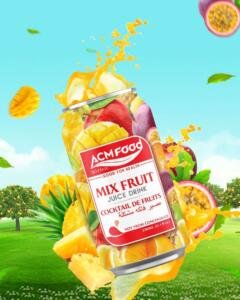
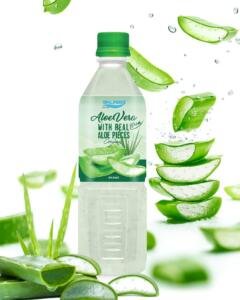
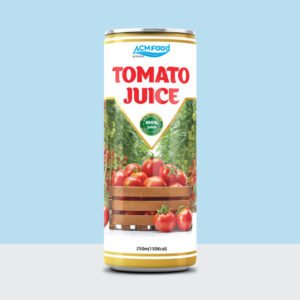
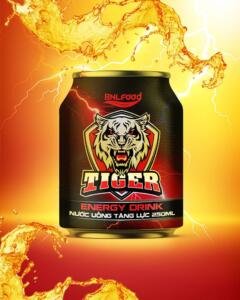
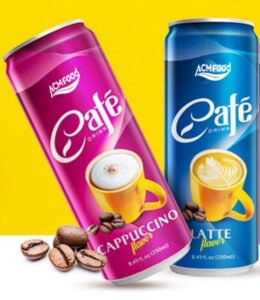
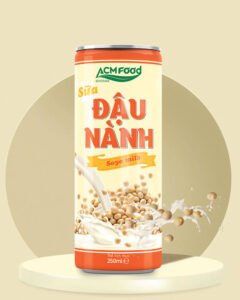
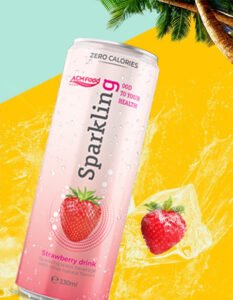
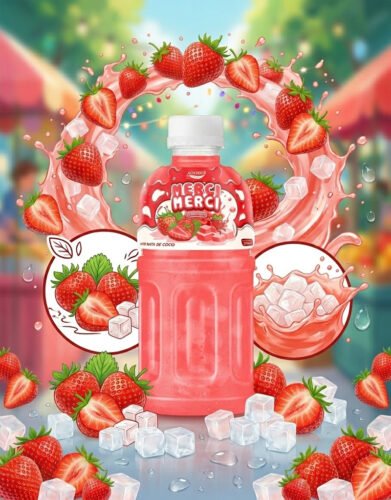
Aluminium cans give coconut water the longest shelf life — up to 24 months — and the best light and oxygen barrier. PET and Tetra Pak typically reach about 18 months. The right choice depends on shipping distance, target market regulation and how much shelf visibility the product needs.
Quick answer by use case
- Long-haul export: alu-can. Longest shelf life, best barrier, most tolerant of transit conditions.
- Sustainability-led markets: Tetra Pak. Lightest per unit, lowest freight, strong environmental positioning.
- Local and fast-moving FMCG: PET. Most flexible sizing, product visible on shelf, lowest tooling cost.
- Premium or gifting: glass. Heaviest and most fragile, but highest perceived value.
Why packaging matters more for coconut water than for most drinks
Coconut water is unusually demanding. Three properties drive every packaging decision:
- Near-neutral pH. Unlike citrus juice, coconut water offers no acid protection against microbial growth. It relies entirely on thermal processing and package integrity.
- Heat and light sensitivity. Exposure causes the characteristic pink or yellow discoloration, driven by polyphenol oxidase activity and pigment changes. A product can be microbiologically safe and still be rejected on colour.
- Delicate aroma. The volatile compounds that make coconut water taste fresh are the first thing lost to oxygen ingress and heat.
The result: barrier performance is not a nice-to-have in this category. It determines whether the product still looks and tastes right when it reaches the shelf.
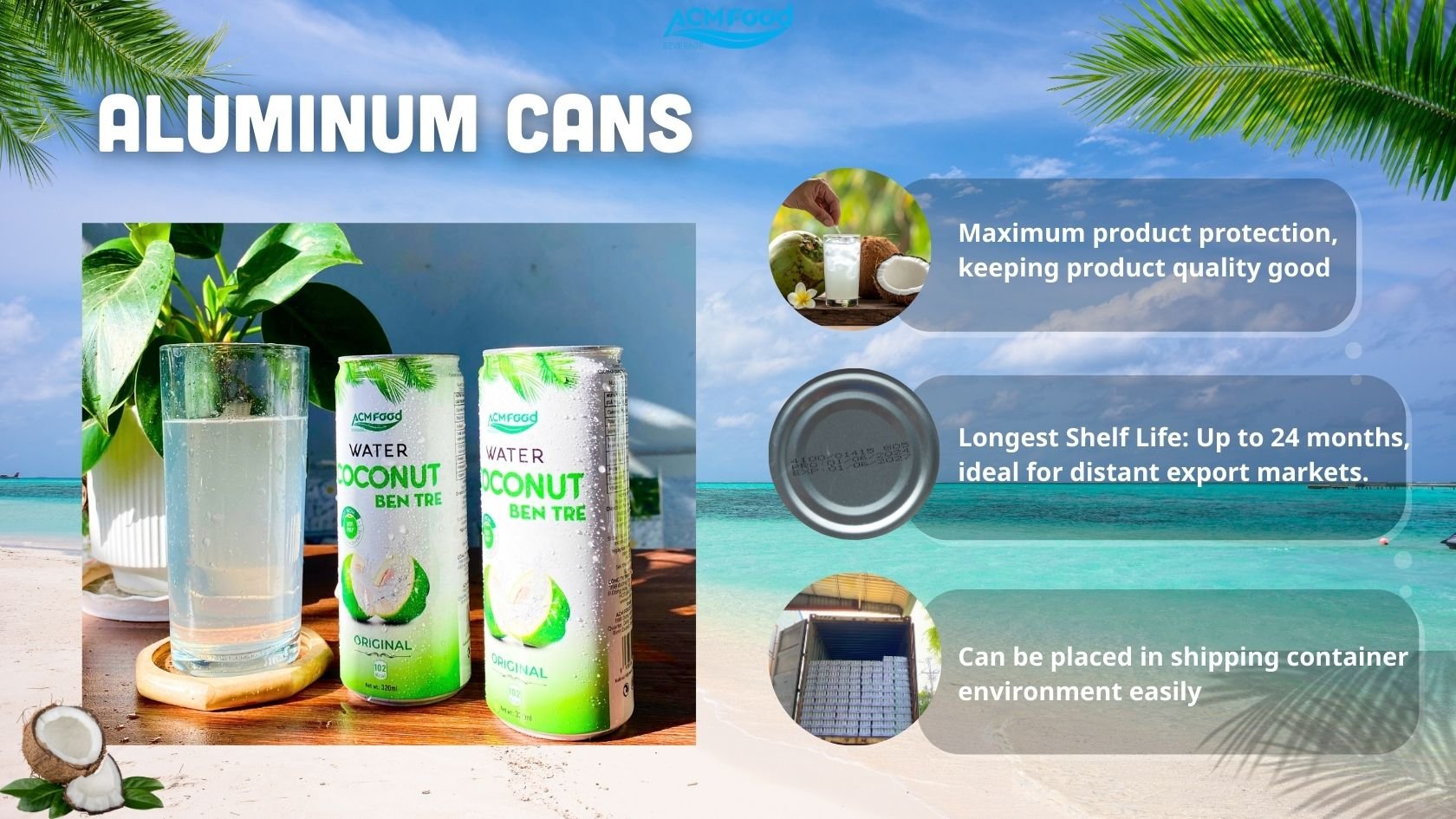
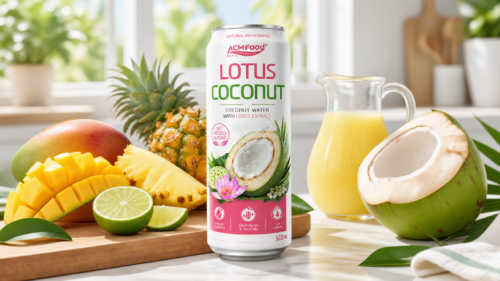
Aluminium cans
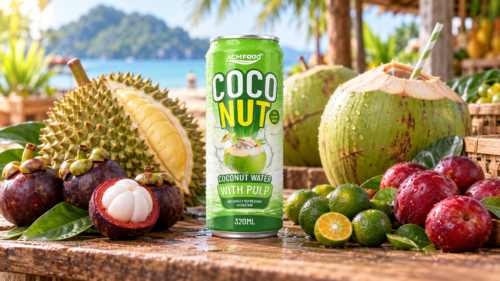
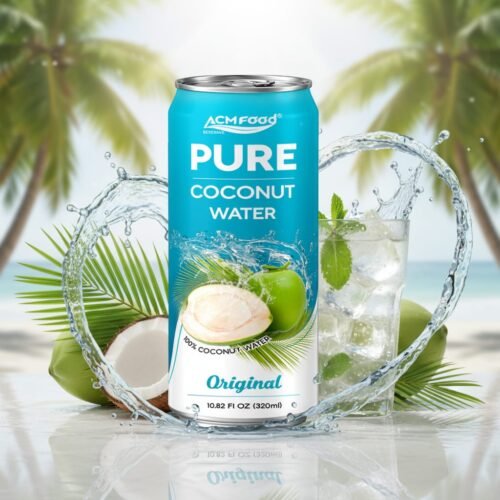
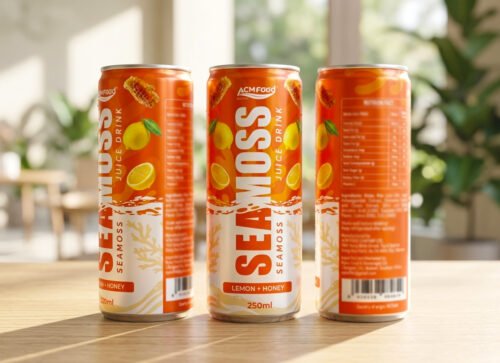
Processed by hot fill or high-temperature pasteurisation. The can is opaque and hermetically sealed, giving a total light barrier and an oxygen barrier that no plastic matches.
| Feature | Detail |
|---|---|
| Process | Hot fill or high-temperature pasteurisation |
| Shelf life | Up to 24 months ambient |
| Barrier | Total light block, excellent oxygen barrier |
| Common volumes | 250 ml, 320 ml, 330 ml, 500 ml |
| Decoration | Direct print or shrink sleeve |
Strengths: longest shelf life in the category, maximum protection in transit, no colour drift from light exposure, and aluminium recycles indefinitely without quality loss.
Trade-offs: heavier than carton, which raises sea freight cost per unit. Sizing is constrained by available can tooling, so bespoke volumes are not practical. The product is not visible, so the label carries the whole proposition.
More on the format in aluminium cans as a sustainable trend and cold fill technology in canned coconut water.
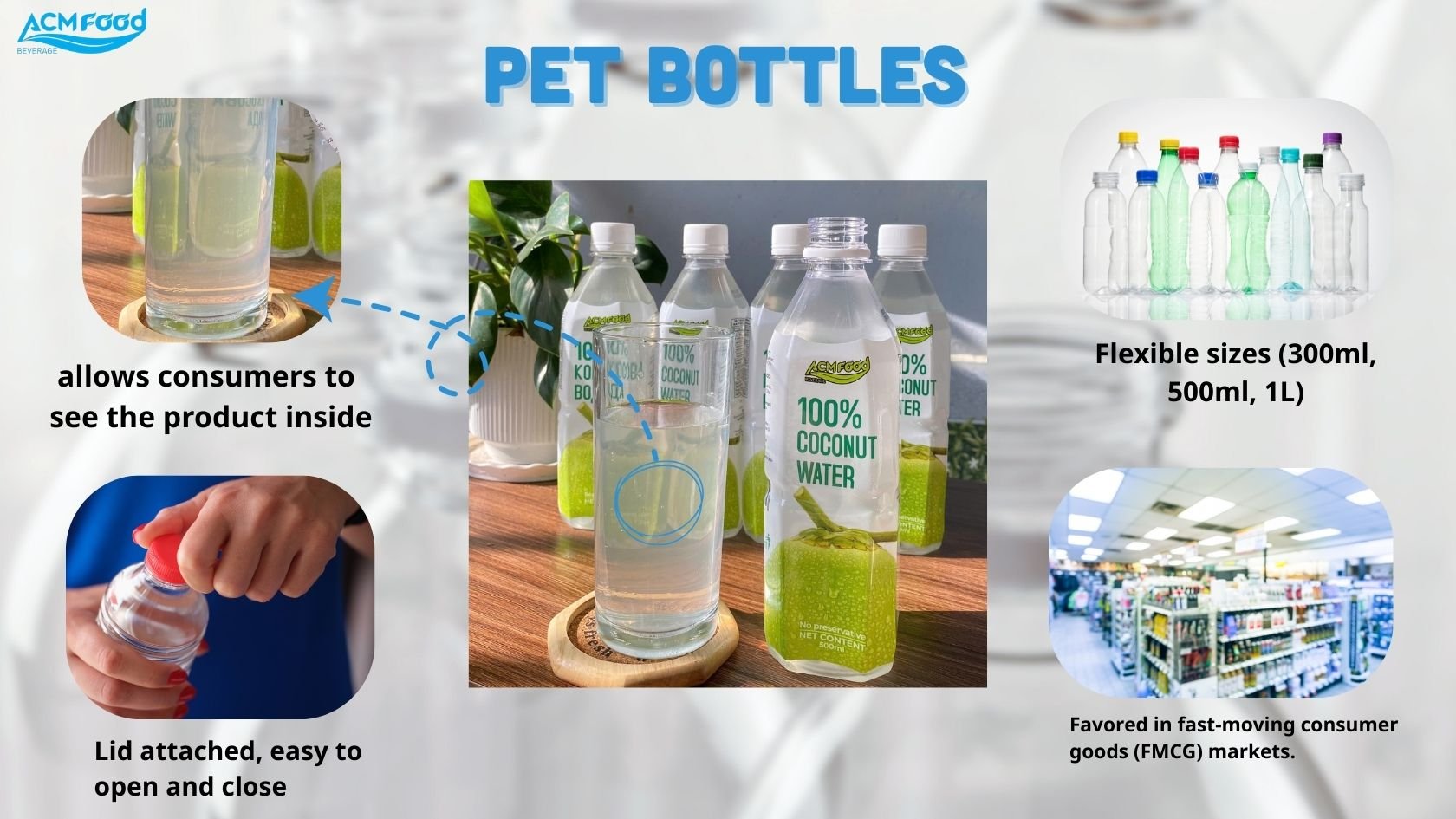
PET bottles
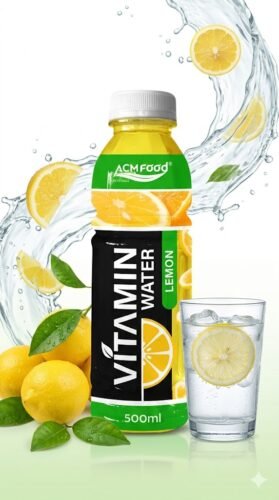
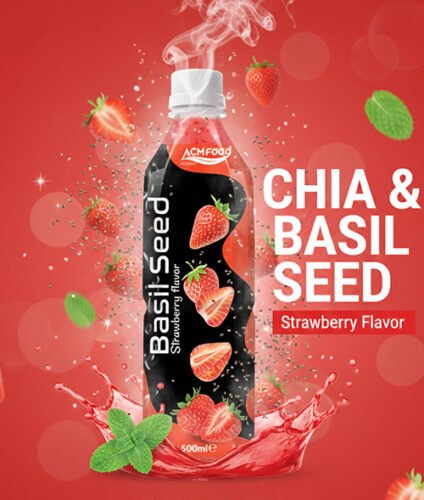
Filled either aseptically after UHT treatment, or by hot fill into heat-set bottles. The trade-off is visibility against barrier performance.
| Feature | Detail |
|---|---|
| Process | UHT with aseptic cold fill, or hot fill |
| Shelf life | ~18 months, shorter if stored warm or in light |
| Barrier | Weakest of the three — transparent, some oxygen permeability |
| Common volumes | 300 ml, 350 ml, 500 ml, 1 L |
| Decoration | Wrap or sleeve label |
Strengths: the widest size flexibility, light weight for its volume, resealable, and the only format where the consumer sees the product. In markets where clarity signals purity, that is a real commercial advantage.
Trade-offs: clear PET lets light through, so colour drift is the main risk and warehouse conditions matter. EU markets increasingly require tethered caps and minimum recycled (rPET) content — check the destination regulation before committing to artwork.
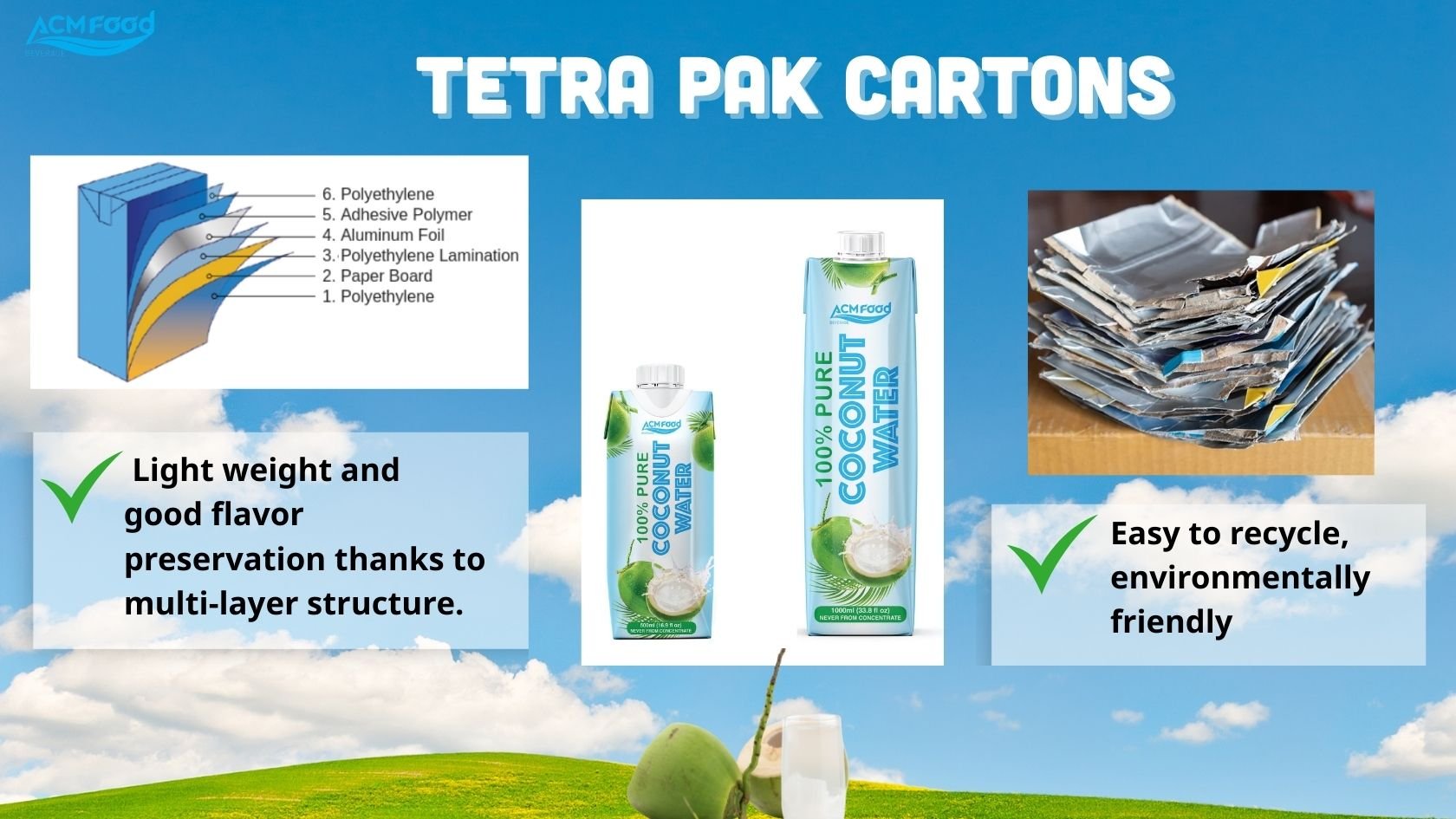
Tetra Pak and aseptic cartons
A laminate of paperboard, aluminium foil and polyethylene, filled aseptically after UHT treatment. The foil layer gives near-total light protection at a fraction of a can’s weight.
| Feature | Detail |
|---|---|
| Process | UHT with aseptic filling |
| Shelf life | ~18 months ambient, no preservatives |
| Barrier | Very good — foil layer blocks light |
| Common volumes | 200 ml, 330 ml, 500 ml, 1 L |
| Decoration | Direct print on the laminate |
Strengths: lightest per unit volume, so freight cost is lowest. The rectangular footprint stacks and palletises more efficiently than round formats, which compounds the freight advantage. Strong sustainability perception in Western European and Nordic markets.
Trade-offs: highest capital and setup cost, and the highest minimum volumes of the three. Multi-layer laminate is recyclable but needs specialised facilities, which not every market has — worth verifying before leaning on a recyclability claim.
Side-by-side comparison
| Criterion | Alu-can | PET bottle | Tetra Pak |
|---|---|---|---|
| Light / oxygen barrier | Best | Weakest | Very good |
| Max shelf life | 24 months | ~18 months | ~18 months |
| Freight cost per unit | Highest | Moderate | Lowest |
| Setup cost | Moderate | Lowest | Highest |
| Minimum order volume | Moderate | Lowest | Highest |
| Size flexibility | Limited by tooling | Highest | Limited |
| Product visible | No | Yes | No |
| Recycling | Infinitely recyclable | Recyclable; rPET often required | Recyclable, needs specialist facility |
| Resealable | No | Yes | Depends on closure |
How to decide
- Start with transit time and climate. Anything over 60 days at sea, or a hot-climate destination without cold chain, points to alu-can.
- Check destination packaging regulation next. EU tethered-cap and rPET rules can rule out an artwork before you have priced it.
- Then weigh freight against setup cost. High volume amortises Tetra Pak’s setup cost; low volume rarely does.
- Decide whether visibility sells the product. If clarity is the proposition, PET; if the label is, can or carton.
- Confirm recycling infrastructure exists in the destination market before making any environmental claim on pack.
Frequently asked questions
Which packaging keeps coconut water fresh longest?
Aluminium cans, at up to 24 months ambient. The can is fully opaque and hermetically sealed, so neither light nor oxygen reaches the product. PET and Tetra Pak typically reach around 18 months.
Why does coconut water turn pink in the bottle?
Pink discoloration is an enzymatic and polyphenol reaction driven by heat and light exposure. It is usually a quality and appearance problem rather than a safety one, but it causes rejections. Opaque packaging — can or carton — prevents it; clear PET is where it most often appears.
Is Tetra Pak cheaper than cans for export?
On freight, yes — it is the lightest format and its rectangular shape palletises more efficiently. On setup, no: it carries the highest capital cost and the highest minimum volumes. Cartons win on high-volume, long-running programmes; cans usually win on smaller ones.
Do PET bottles need recycled content?
In several markets, yes. EU rules set minimum recycled content for PET beverage bottles and require tethered caps. Requirements differ by market and change over time, so confirm the current rule for your destination before finalising packaging.
Can coconut water be packed without preservatives?
Yes, in all three formats. Shelf stability comes from thermal processing — UHT, pasteurisation or hot fill — combined with a sealed package, not from added preservatives.
What volume should I choose?
330 ml is the global standard for single-serve impulse. 500 ml suits sports and convenience channels. 1 L is a take-home format and works mainly in PET and carton. Cans are constrained to standard tooling sizes.
How ACM Beverage can help
ACM Beverage manufactures coconut water in Vietnam under OEM and private label terms, in facilities certified to ISO 22000, FSSC 22000 and HACCP, exporting to more than 40 countries. We fill alu-can, PET and glass, and advise on format selection against destination regulation, transit conditions and target shelf price.
See the fresh coconut water range (96 SKUs), or read cans, PET or glass — which is most cost-effective and why coconut water suits a private label launch. To discuss a specific programme, contact our export team.