














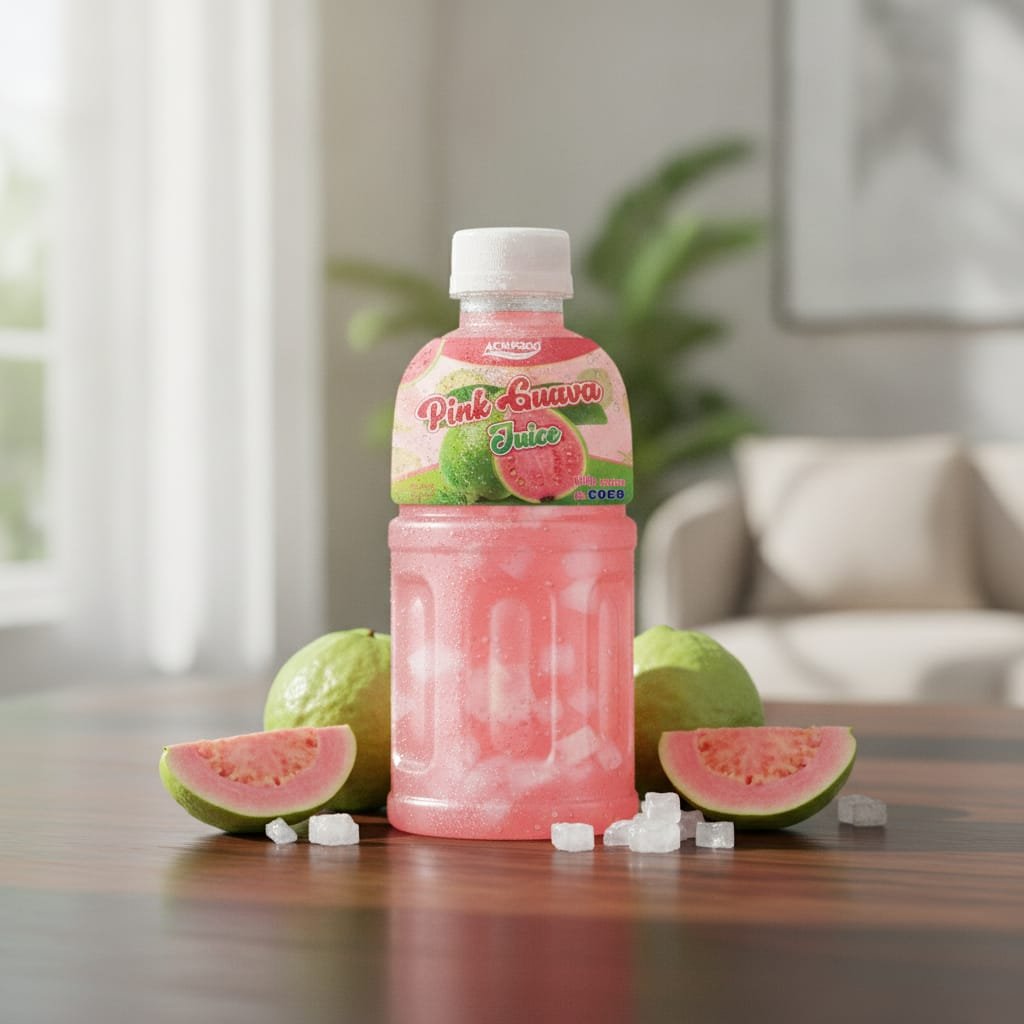
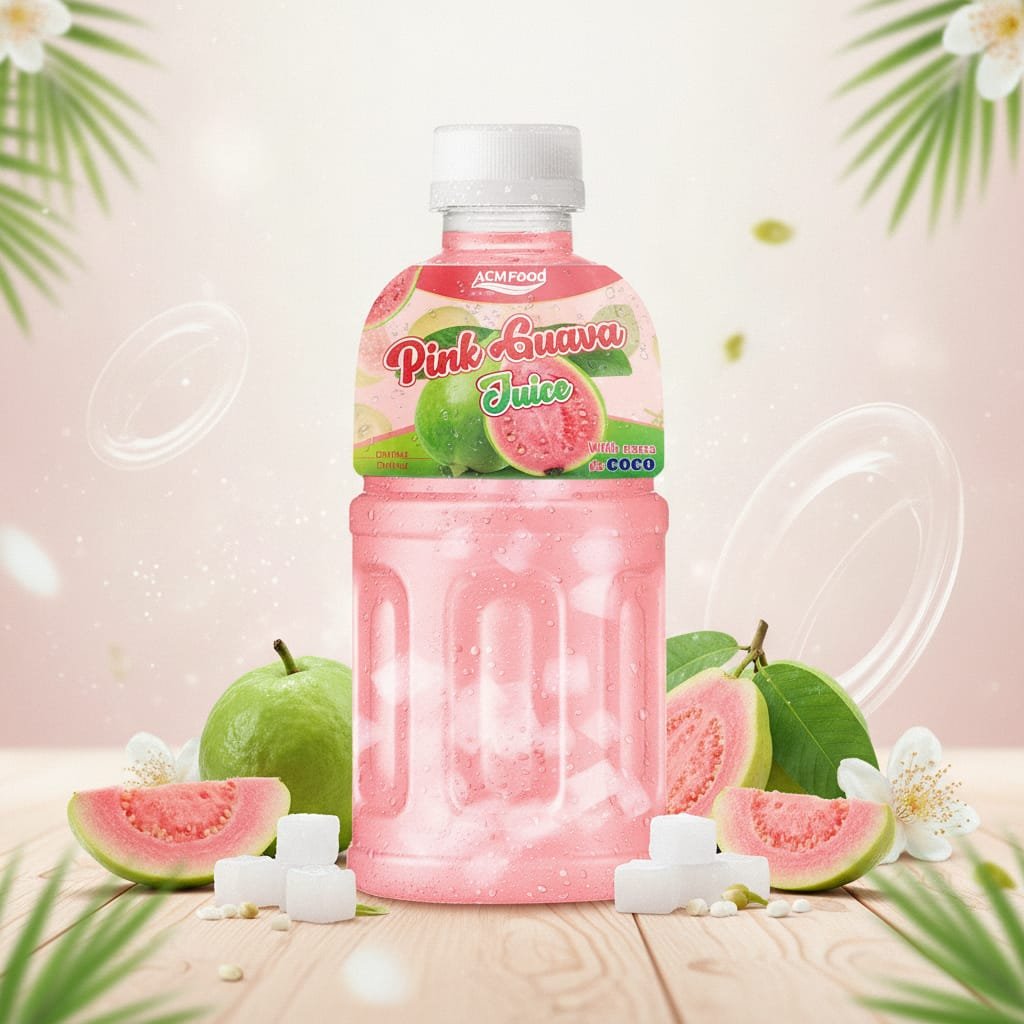
Guava juice with nata de coco is a guava nectar or juice drink containing chewy cubes of coconut-derived cellulose. Raw guava is one of the richest common sources of vitamin C at 228 mg per 100 g, about four times an orange. A drink keeps only part of that, depending on guava content and heat losses.
Key facts at a glance
- Guava: 228 mg vitamin C, 5.4 g fibre and 68 kcal per 100 g raw fruit (USDA).
- Pink guava also contains lycopene, the red pigment found in tomatoes.
- Guava drinks are usually nectars — the purée is too thick to drink undiluted.
- Nata de coco adds texture and a little insoluble fibre, but almost no other nutrition.
- Sugar in guava nectars typically sits at 8–12 g per 100 ml; check the label.
What guava contributes
| Nutrient | Raw guava, per 100 g | Raw orange, per 100 g |
|---|---|---|
| Energy | 68 kcal | 47 kcal |
| Vitamin C | 228 mg | 53 mg |
| Fibre | 5.4 g | 2.4 g |
| Potassium | 417 mg | 181 mg |
| Lycopene (pink guava) | about 5 mg | 0 |
Source: USDA FoodData Central.
What carries over into a drink: a 30% guava nectar starts with roughly 60 mg of vitamin C per 100 ml before processing. Pasteurisation and months of storage reduce it further, so a declared vitamin C figure on the label is the only reliable number. Much of the fibre is in the pulp and seeds; smooth nectars keep some soluble pectin, while clear juices keep very little.
Health claims: what holds up
- Vitamin C — supported, in proportion to guava content and processing losses.
- Antioxidants — present, including lycopene in pink varieties.
- Blood sugar control — not established for juice drinks. Studies used whole fruit or leaf extracts, not sweetened nectars.
- Gut health from nata de coco — marginal. The amount of fibre in a can is small.
How the drink is formulated
| Parameter | Typical range |
|---|---|
| Guava purée or juice content | 20–40% |
| Nata de coco inclusion | 15–25% by weight |
| pH | 3.5–4.0 |
| Sugars | 8–12 g per 100 ml |
| Shelf life, unopened can | 12–24 months |
What brands should specify with an OEM
- Guava type — pink for colour and lycopene, white for a lighter taste.
- Guava percentage, which sets label category, cost and flavour intensity.
- Sugar level, including reduced or no-added-sugar versions for sugar-tax markets.
- Vitamin C claim — test at end of shelf life before printing a figure.
- Nata content and cube size, measured by drained weight.
- Certifications your market requires, such as FSSC 22000, HACCP or Halal.
Frequently asked questions
Is guava juice high in vitamin C?
Raw guava is exceptionally high, at 228 mg per 100 g. A guava drink provides much less, depending on guava content and heat losses; check the label for a declared figure.
Does guava have more vitamin C than orange?
Yes, about four times as much per 100 g of raw fruit.
What does nata de coco add?
A chewy texture and a small amount of insoluble fibre. It has almost no flavour or calories of its own.
How long does canned guava juice with nata de coco last?
Typically 12–24 months unopened at room temperature. Once opened, refrigerate and drink within 1–2 days.
Can the sugar level be customised for private label?
Yes. Sweetness, guava percentage and pack design are standard OEM variables.
Guava drinks from ACM Beverage
ACM Beverage produces guava juice drinks with nata de coco in Vietnam for OEM and private label customers, in facilities certified to ISO 22000, FSSC 22000 and HACCP, exporting to more than 40 countries. See the 320 ml guava juice with nata de coco or the fruit juice range. Related reading: mixed fruit juice with nata de coco. To discuss a formulation, contact our export team.






