
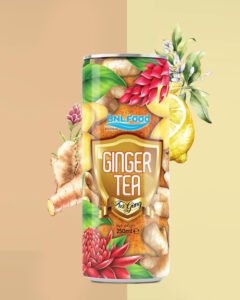

Ginger peppermint tea is an herbal blend that combines the warm, spicy bite of ginger root (Zingiber officinale) with the cooling freshness of peppermint, creating a drink that feels warm and cool at the same time. Both ingredients are caffeine-free, so the blend works as an all-day herbal drink, and in ready-to-drink form it offers a more complex taste than either ginger or mint on its own.
This guide looks at how to build a ginger and peppermint tea for cans and bottles: balancing heat and cooling, qualitative ratios, the role of lemon, colour, and the channels where the blend fits. Pure peppermint and other mint options are covered in our guide to peppermint tea flavour options. ACM Beverage does not currently list a ginger mint tea SKU; the steps below describe development on request.
Why do ginger and peppermint work together?
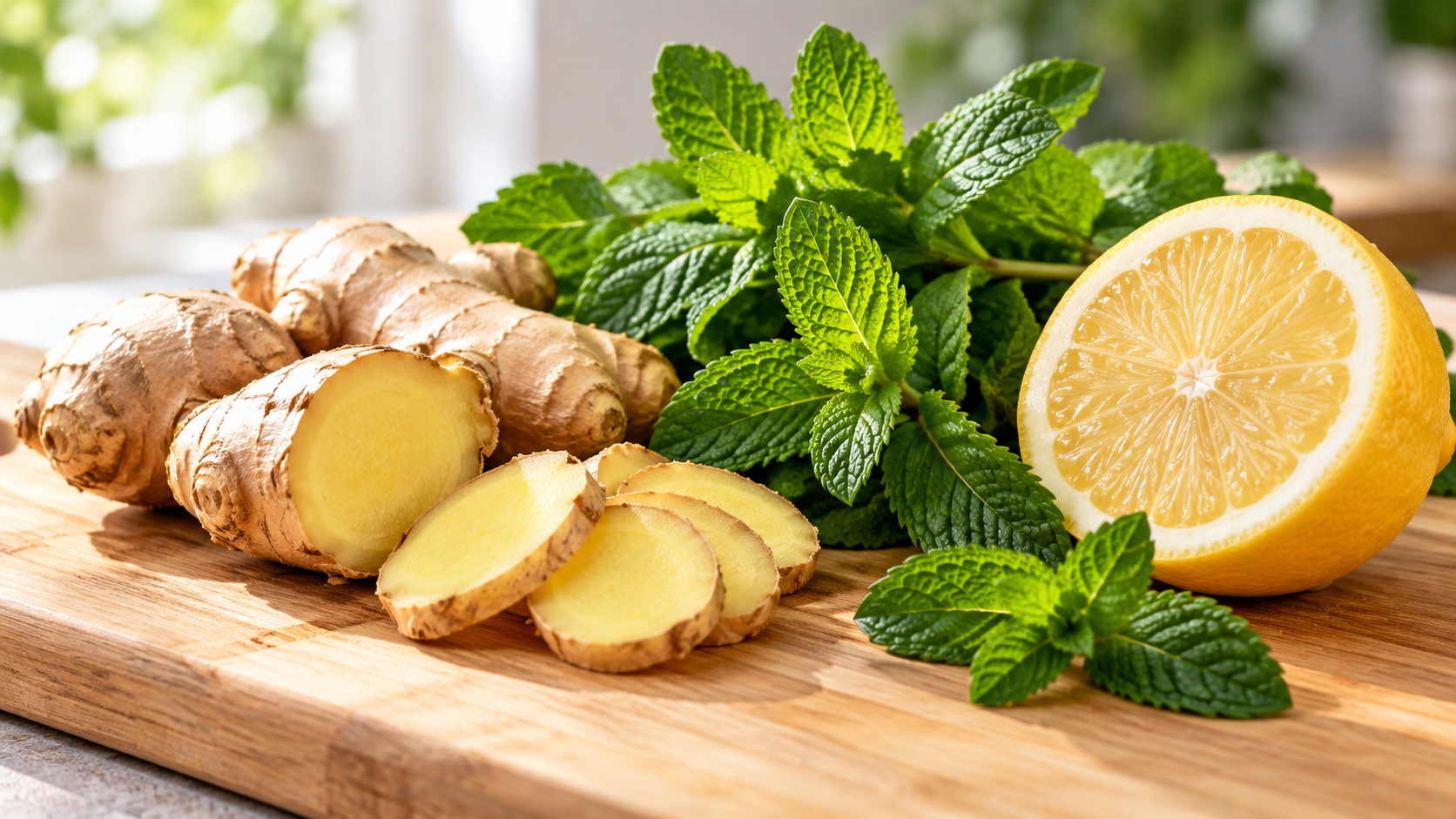
Ginger and peppermint work together because they create opposite sensations: ginger’s pungency feels warming, while peppermint’s menthol feels cooling, and the contrast gives the drink depth and a long, clean finish. Neither flavour overwhelms the other when the balance is right, so the blend tastes lively rather than harsh.
Ginger’s heat comes from compounds such as gingerols and shogaols, which create a spicy tingle at the back of the throat. Peppermint’s cooling comes mainly from menthol. On the palate, these sensations layer instead of cancelling out. The first sip often feels cool and fresh, followed by a gentle warmth that lingers.
That makes ginger mint tea a useful drink for brands that want an herbal RTD with more character than chamomile or pure mint, without moving into the strong heat of a ginger shot.
Balancing heat and cooling in ginger mint tea
The success of a ginger and mint tea depends almost entirely on balance. The table below describes qualitative ratios; actual dosages depend on raw material strength and should be set through tasting on processed samples.
| Balance | Taste impression | Best for |
|---|---|---|
| Mint-led, light ginger | Refreshing first, gentle warmth after | Iced tea, summer and convenience channels |
| Equal emphasis | Clear warm-and-cool contrast | Signature blend for herbal tea ranges |
| Ginger-led, light mint | Warming and spicy with a cool finish | Markets that already favour ginger drinks; cooler seasons |
For most RTD launches, a mint-led or equal profile is easier to accept for new drinkers, because strong ginger heat can be off-putting in a cold drink served in large volumes. Ginger-led versions suit audiences already familiar with spicy ginger beverages.
Does lemon improve ginger and peppermint tea?
Yes, a small amount of lemon usually improves ginger and peppermint tea by adding brightness and helping the two main flavours connect. Lemon also lowers the drink’s pH, which can influence processing options. The amount should stay low enough that the drink still reads as a ginger mint tea, not a lemonade.
Lemon can be added as juice, peel extract or natural flavour. Juice gives a more authentic taste but adds cloudiness and can fade sooner. Peel extract and natural flavour give a cleaner, more stable top note. Lemon mint tea is also a successful blend on its own; adding ginger to it creates a three-way profile that many consumers find familiar from hot tea cafés.
Ingredient choices for ginger
Ginger can be brought into the drink in several ways, each with different effects on taste and appearance.
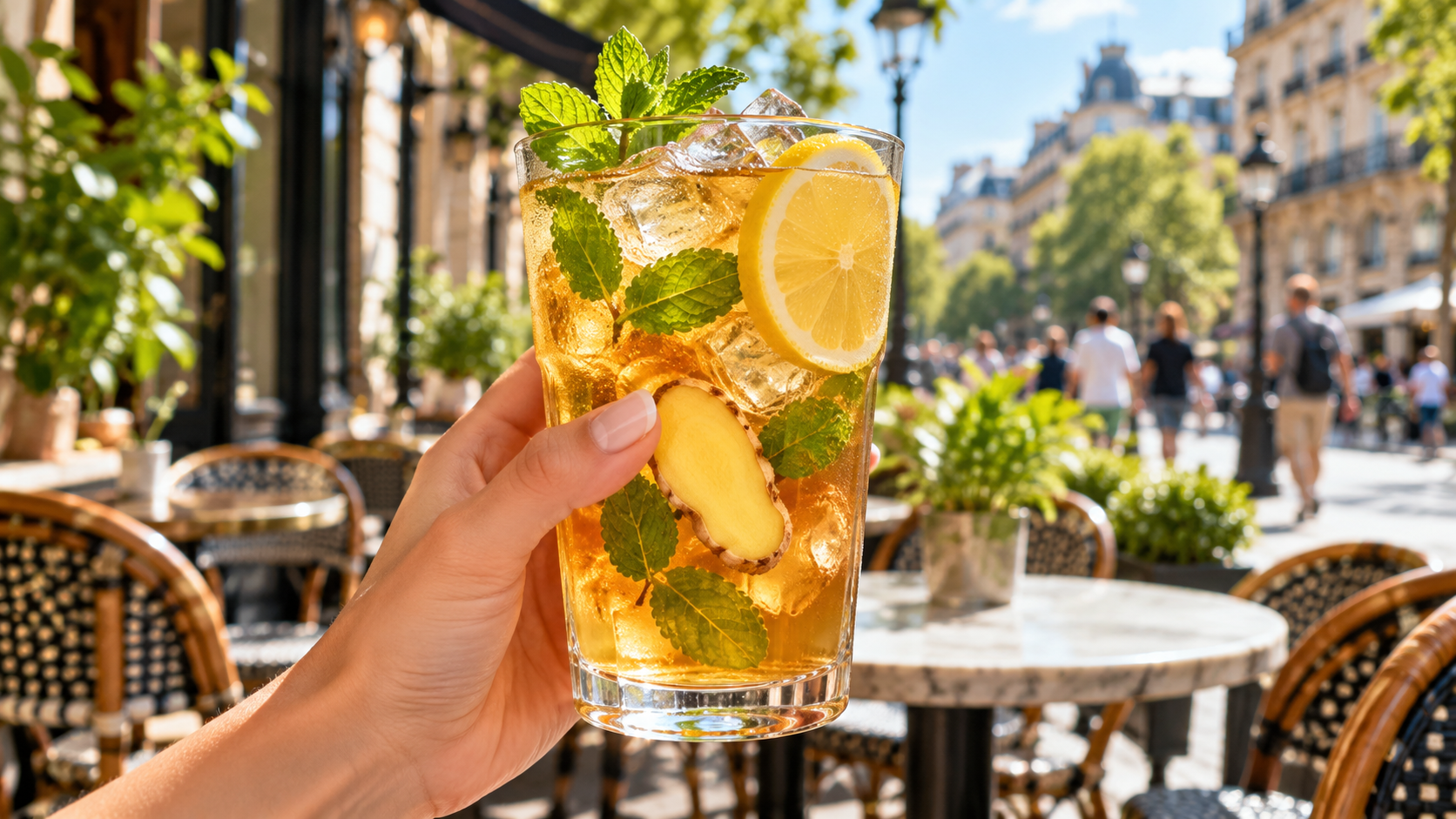
- Fresh ginger juice: brightest, most aromatic heat, but adds pulp and haze and needs good filtration.
- Dried ginger infusion: warmer, earthier heat with a slightly more cooked note.
- Ginger extract: consistent pungency and easier to dose; may need aroma support for freshness.
- Natural ginger flavour: restores top notes lost during heat treatment; declared as flavour.
Ginger’s pungency is relatively stable during heating, which is one reason ginger drinks perform well in cans. Our article on the herbal ginger tea drink for private label explains how ginger is handled in an existing canned product, and the ginger honey tea drink in a 330ml can is a useful benchmark for ginger intensity that shoppers already accept.
Ingredient choices for peppermint
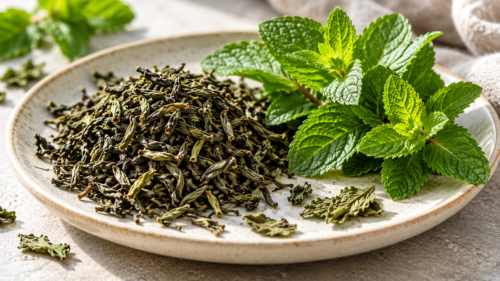
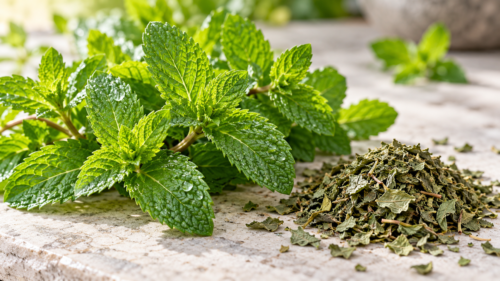
Peppermint is usually added as brewed leaves, leaf extract, essential oil or natural flavour. Leaves and extract give a rounded herbal tea taste, while oil adds intense cooling at very low dosage. In a ginger blend, a combination often works best: leaf-based mint provides body, and a small amount of oil or flavour lifts the cooling top note so it is not masked by ginger’s heat. Spearmint can replace part of the peppermint for a sweeter, softer mint.
What colour should ginger peppermint tea be?
Ginger peppermint tea usually ranges from pale gold to light amber, sometimes with a faint green tint from mint, and it may be slightly hazy if fresh ginger juice is used. A clear, golden drink signals freshness in transparent packs, while a little natural haze can be acceptable in cans where the liquid is not visible.
Colour can darken over shelf life through oxidation, particularly with honey or lemon juice in the formula. Controlling oxygen during filling and choosing light-protective packaging help keep the colour stable. Filtration is the main lever for clarity, especially when fresh ginger is used.
Sweetness options
Ginger mint tea can be unsweetened, lightly sweetened or honey-sweetened. Unsweetened versions emphasise refreshment and suit no-sugar shelves. Light sweetness softens ginger’s heat and rounds the mint. Honey is a natural partner for both ingredients and supports a “made with honey” message if used at a level that meets local rules. Sweetness should always be tuned at serving temperature, as cold drinks taste less sweet than warm ones.
Channels and markets for ginger mint tea
- Convenience and on-the-go: mint-led, lightly sweetened versions in slim cans or small bottles.
- Health food and premium grocery: unsweetened or honey-sweetened versions with simple ingredient lists.
- Cafés and hospitality: equal-balance blends as a caffeine-free alternative to iced tea.
- Markets familiar with ginger drinks: ginger-led versions where spicy profiles are already popular, including parts of Asia and Africa.
Positioning without digestive claims
Both ginger and peppermint are traditionally associated with digestion, but statements about digestion, nausea or stomach comfort are health claims that most markets do not allow without authorisation. Focus on flavour and experience instead: warm and cool, spicy and fresh, caffeine-free, a refreshing herbal drink for any time of day. This keeps the label compliant and avoids making the product feel medicinal.
Development checklist for a ginger peppermint blend
- Choose the balance: mint-led, equal or ginger-led.
- Select ginger and mint sources, and decide whether lemon is included.
- Set the sweetness position.
- Agree the pack type and heat treatment early.
- Taste processed samples chilled and adjust balance after processing.
- Run shelf-life checks on aroma, colour, clarity and stability in the final pack.
To compare cans, bottles and sizes in one place before writing your brief, use the beverage builder for packaging and flavour.
Common problems in ginger mint tea and how to fix them
Ginger and mint both have strong personalities, so most issues in development come from one ingredient overpowering the other or from changes during processing.
| Problem | Likely cause | Typical fix |
|---|---|---|
| Burning throat sensation | Ginger too strong for a cold, large-volume drink | Reduce ginger or shift to a milder ginger source |
| Mint disappears after processing | Volatile mint aroma lost to heat | Add mint later in the process or add natural mint flavour |
| Medicinal or harsh taste | Overdosed mint oil or very pungent extract | Lower oil dose; use leaf-based mint for body |
| Cloudiness and sediment | Fresh ginger particles and starch | Improve filtration or use clarified juice or extract |
| Flat, watery finish | Too little acidity or sweetness at cold temperature | Add a small amount of lemon or light sweetness |
Changes should be made one at a time, with processed samples tasted chilled after each change. Adjusting ginger, mint and lemon together makes it hard to know which change helped.
Extending a ginger mint range
Once a core ginger peppermint tea is established, a few extensions follow naturally: a honey ginger mint for a softer profile, a lemon ginger mint for summer, or a spearmint version for a sweeter mint. Each extension can share the same ginger base, which simplifies sourcing and production. Keep the range small at first and add variants only when the core SKU has proved itself in market.
Choosing a pack size for ginger mint tea
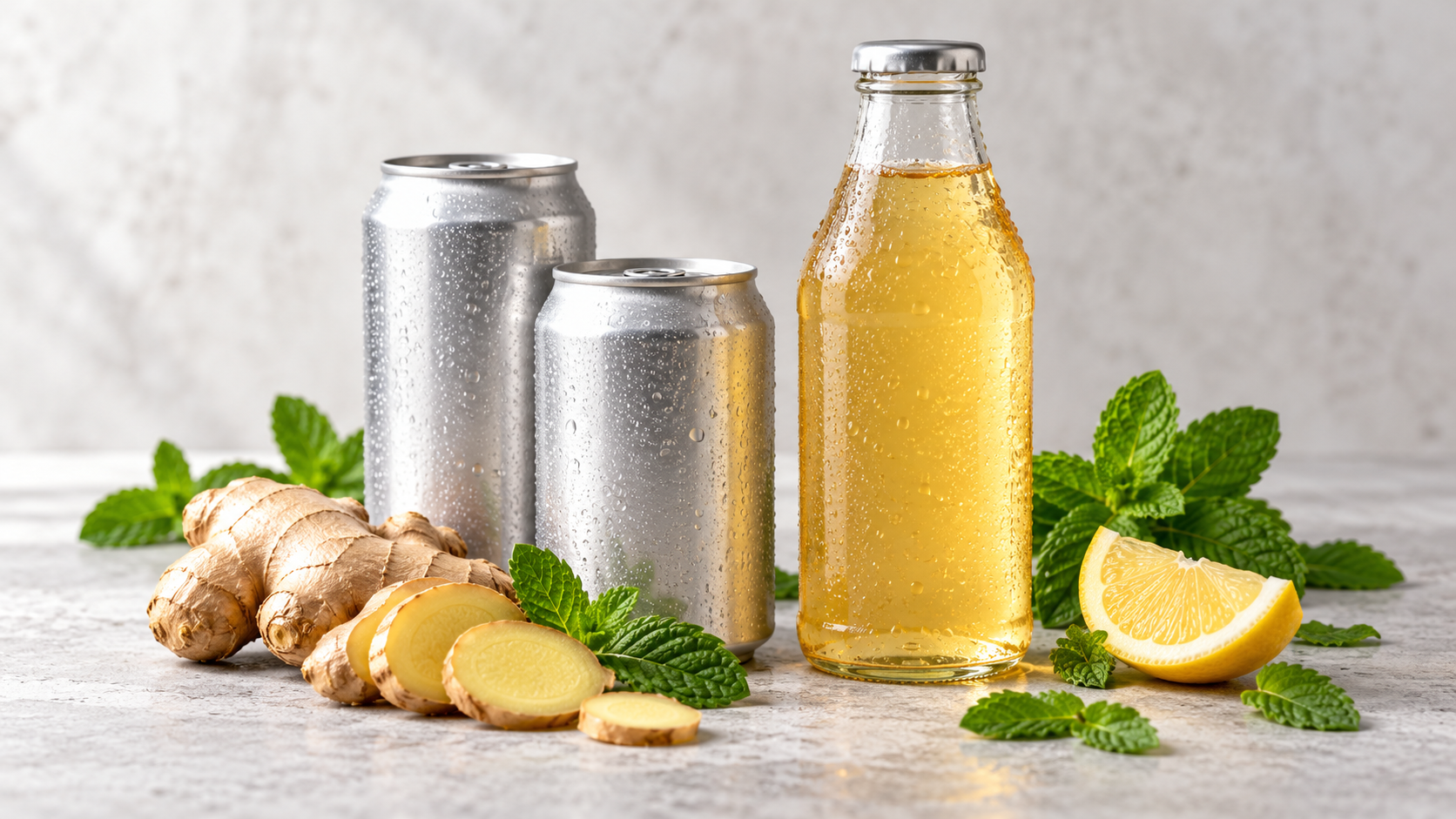
Pack size affects how the blend tastes in practice. A larger serving drunk over a longer time makes ginger heat accumulate, so ginger-led profiles often suit smaller cans, while mint-led versions can work in larger bottles meant for steady drinking. Slim cans fit premium and convenience positioning, and standard cans suit multipacks for supermarkets.
Think also about how the drink will be chilled. Cans cool quickly in fridges and coolers, which helps a cooling mint profile. Bottles, especially resealable PET, suit consumers who sip over several hours, where a gentler balance is more comfortable.
Finally, keep the label simple. A clear name such as ginger mint tea or ginger and peppermint tea, a short taste description and a visible caffeine-free statement where true usually communicate more than long lists of ingredients or benefits.
Frequently asked questions about ginger peppermint tea
Does ginger peppermint tea contain caffeine?
No. Ginger and peppermint are both naturally caffeine-free. A version that adds green or black tea would contain caffeine.
Is ginger mint tea better hot or cold?
It works both ways, but as an RTD it is usually served cold. Chilling increases the cooling effect of mint, so the ginger level may need adjustment for a cold drink.
Can I use spearmint instead of peppermint with ginger?
Yes. Spearmint gives a sweeter, softer mint that lets ginger stand out more. Peppermint gives stronger cooling and a sharper contrast.
Can honey be added to ginger peppermint tea?
Yes. Honey softens ginger’s heat and rounds the mint, and it supports a natural, comforting message. It can darken the drink over shelf life and adds sugar to the label, so the amount should be balanced against colour stability and any reduced-sugar positioning. A front-of-pack honey claim needs real honey at a level that meets local rules.
Building a balanced ginger peppermint tea
Ginger peppermint tea succeeds when the warm and cool sensations are balanced, the colour stays clean and the label focuses on taste rather than function. Start with a mint-led or equal profile for broad appeal, use lemon for brightness, and test in the final pack after processing. ACM Beverage can review your brief on balance, sweetness, packaging and target markets and explain how a custom ginger mint tea could be developed in cans or bottles.
A side-by-side tasting of mint-led, balanced and ginger-led samples, all served chilled, is often the quickest way for a brand team to agree on direction. Once that balance is fixed, sweetness, lemon level and pack format can be decided with far fewer sample rounds.