



Contents
- 1 The Rise of Textured Beverages: Consumer Demand for Multi-Sensory Experiences
- 2 Mixed Fruit Juice with Nata de Coco: A Case Study in Flavor Innovation
- 3 OEM and Private Label Opportunities in the Textured Juice Segment
- 4 Market Outlook: The Global RTD Juice Market and the Role of Innovation
- 5 Frequently Asked Questions
- 5.1 What makes mixed fruit juice with nata de coco a flavor innovation in the RTD market?
- 5.2 Can I source a private label version of this product for my brand?
- 5.3 What quality certifications does ACM FOOD hold for export?
- 5.4 How is nata de coco preserved in the juice without degrading?
- 5.5 What are the key market trends driving demand for textured fruit juices?
In the crowded ready-to-drink beverage aisle, flavor innovation has become the primary battleground for brands seeking consumer attention. Yet a quieter revolution is underway, one that shifts focus from mere taste to a full sensory experience. Texture, once an afterthought in juice-based drinks, is now emerging as a powerful differentiator, and no ingredient exemplifies this trend better than nata de coco — the chewy, translucent coconut gel that has leaped from Asian desserts into mainstream RTD formulations.
This textural ingredient, now combined with mixed fruit juices, is reshaping how manufacturers approach product development. The emergence of products like mixed fruit juice with nata de coco signals a market pivot toward multi-sensory beverages that deliver surprise and satisfaction in every sip. For importers and distributors, understanding this shift is essential to capturing a growing segment of consumers who crave novelty and authenticity in their drink choices.

The Rise of Textured Beverages: Consumer Demand for Multi-Sensory Experiences
Consumer behavior in global beverage markets has undergone a profound transformation. The modern drinker no longer seeks only hydration or refreshment; they expect an experience. This has fueled the rapid expansion of textured beverages, from bubble tea and fruit jellies to aloe vera and chia seed drinks. The inclusion of chewable, gel-like pieces adds a layer of engagement that static liquids cannot provide.
This trend is particularly pronounced in Asia, where nata de coco has been a staple for decades. However, its appeal is now crossing borders. In North America and Europe, products featuring nata de coco are gaining traction in specialty stores and mainstream retailers alike. The mixed fruit juice variant combines the familiar flavor of tropical fruits with a unique mouthfeel, creating a product that stands out on the shelf.
Why Texture Matters in Modern Beverage Innovation
Flavor innovation is no longer limited to taste profiles. The mouthfeel, the visual appeal, and even the sound of a beverage can influence consumer perception. Chewy inclusions like nata de coco provide a satisfying contrast to smooth juice, making the drink more memorable. This multi-sensory approach aligns with the broader trend toward premiumization, where consumers are willing to pay more for a distinctive experience.
From a manufacturing perspective, integrating solid inclusions into a liquid matrix poses technical challenges. However, advancements in aseptic processing and packaging have made it possible to maintain the integrity of both the juice and the nata de coco over extended shelf lives. This opens up new possibilities for OEM partners looking to differentiate their portfolios.

Mixed Fruit Juice with Nata de Coco: A Case Study in Flavor Innovation
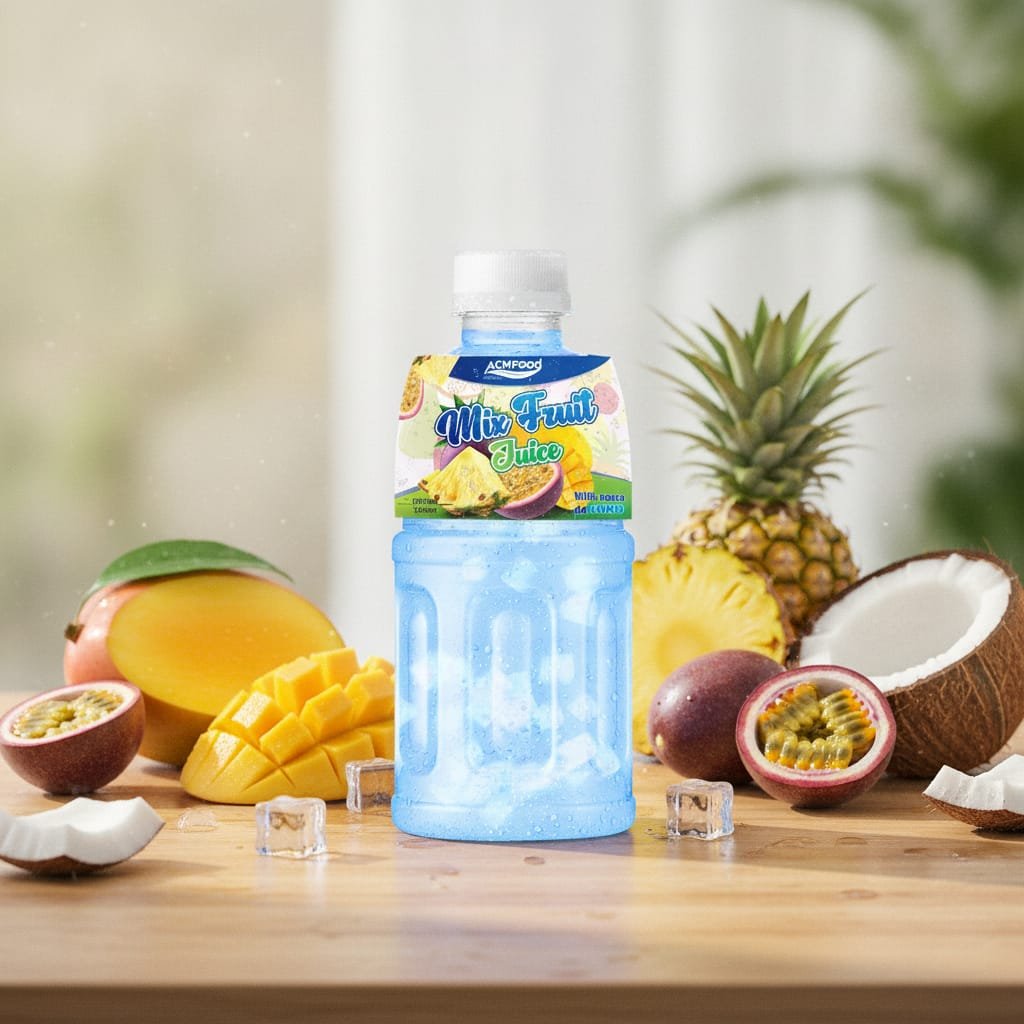
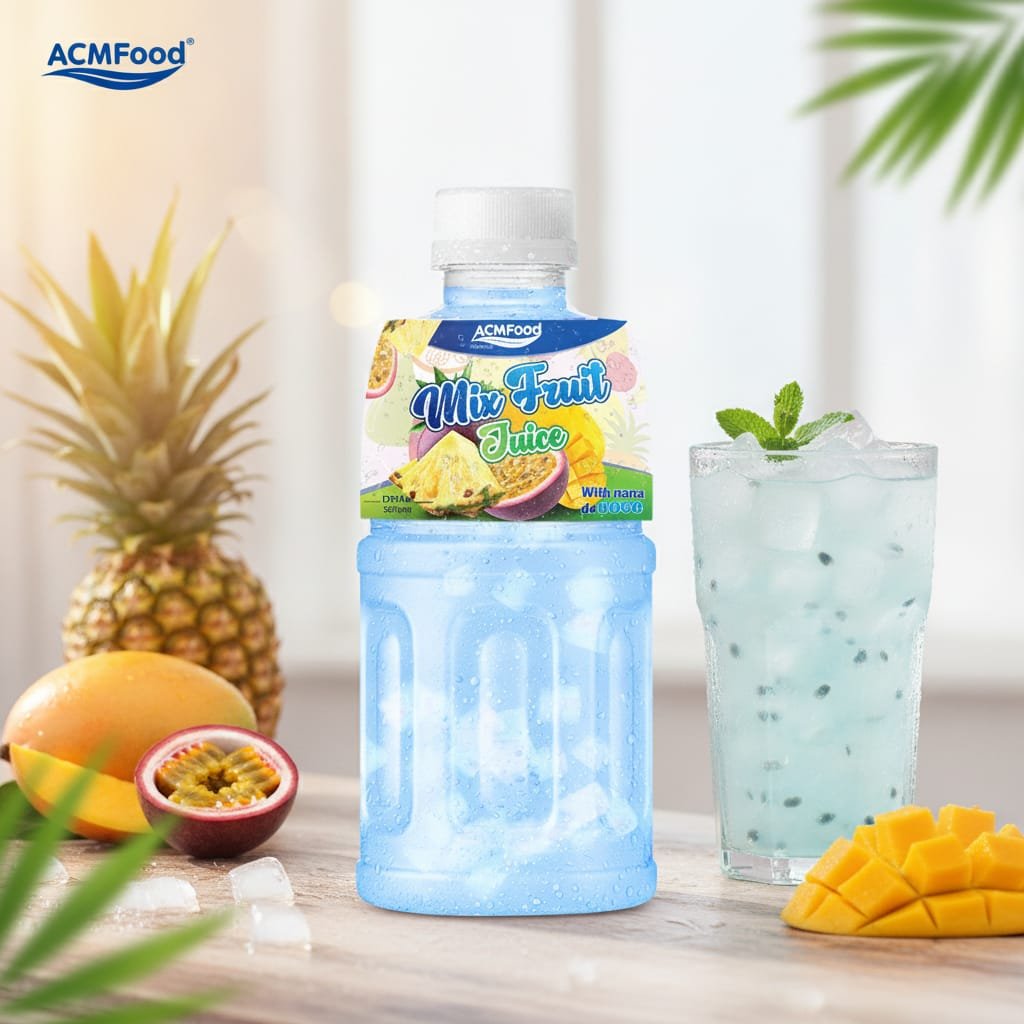
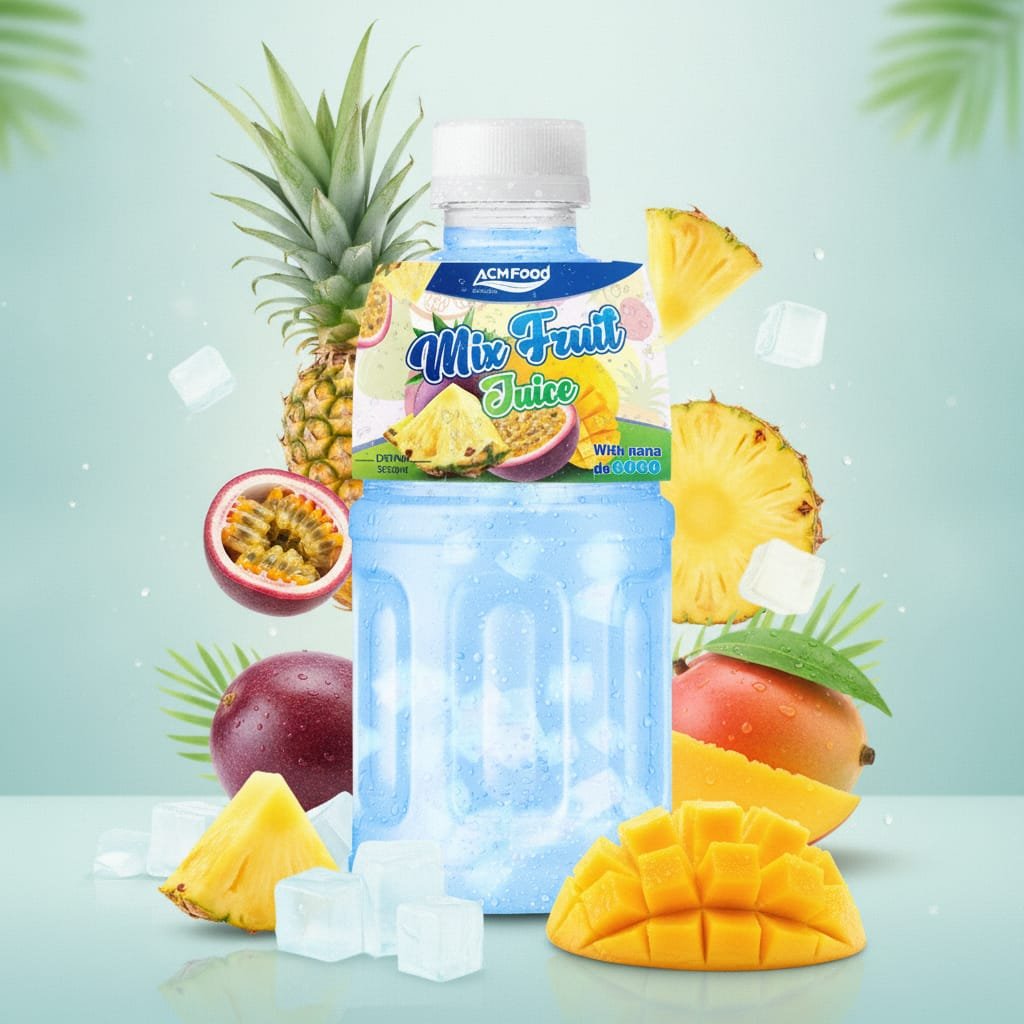
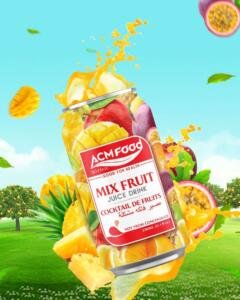
The 320ml ACM Mixed fruit Juice with nata de Coco exemplifies the successful marriage of tropical fruit flavors with textural innovation. While the exact fruit blend is proprietary, the product likely draws on Vietnam’s abundant harvest of mango, pineapple, passion fruit, and guava. The addition of nata de coco cubes introduces a slightly sweet, jelly-like pop that complements the acidity of the fruit juices.
This product is positioned as a convenient, ready-to-drink option that brings the complexity of a dessert or snack into a portable format. For busy consumers in urban markets, it offers a moment of indulgence without the guilt, as the natural fruit juices provide vitamins and antioxidants. The 320ml aluminum can is modern and shelf-stable, making it ideal for both domestic and export channels.
The Appeal of Nata de Coco: From Dessert to Beverage
Nata de coco originates from the Philippines, where it is produced by fermenting coconut water with bacterial culture. The resulting cellulose gel is cut into cubes and sweetened. In Southeast Asia, it has been widely used in desserts, drinks, and even salads. Its neutral taste and satisfying chewiness make it a versatile ingredient.
Translating nata de coco into the RTD juice segment required careful formulation to ensure the pieces remain firm without becoming mushy over time. Proper pH balance, sweetener levels, and sterilization methods all play a role. The success of products like this mixed fruit juice proves that the technology has matured, enabling consistent quality across large production runs.

For illustrative purposes only
OEM and Private Label Opportunities in the Textured Juice Segment
For beverage importers and distributors, partnering with a manufacturer that specializes in textured juices can be a strategic advantage. ACM FOOD, the company behind ACM Beverage, offers comprehensive OEM and ODM services that cover everything from recipe development to packaging design. Their experience with mixed fruit juice with nata de coco demonstrates their capability to handle complex formulations.
ACM FOOD operates a modern factory in Cu Chi District, Ho Chi Minh City, with over ten automated production lines and a monthly export capacity exceeding 300 containers. They hold key certifications including FSSC 22000, ISO, BSCI, HALAL, and organic standards (USDA, EU). This makes them a reliable partner for brands targeting the US, European, and Middle Eastern markets.
Customization and Scaling: Meeting Global Demand
One of the critical factors for B2B clients is flexibility. ACM FOOD offers low MOQ options for test runs and private label programs, allowing brands to launch new products with minimal risk. The 320ml can format is just one of many packaging options available, including paper boxes, PET bottles, and glass bottles. Export logistics are streamlined, with experience shipping to over 30 countries.
The textured juice segment, particularly with nata de coco, is poised for growth. Brands that enter early can establish category leadership. By leveraging the fresh fruit juice expertise of ACM FOOD, partners can develop unique recipes that resonate with local tastes while maintaining global quality standards.
For those exploring sparkling or carbonated variants, ACM also offers a line of sparkling water drinks that could serve as a base for incorporating nata de coco in a carbonated format. Such innovations would further expand the application of this trending ingredient.
Market Outlook: The Global RTD Juice Market and the Role of Innovation
The global RTD juice market is projected to grow steadily, driven by rising health consciousness and demand for natural ingredients. Within this landscape, products that offer added value through texture, functionality, or exotic flavors are outperforming standard offerings. The mixed fruit juice with nata de coco fits squarely in this sweet spot.
Flavor innovation, especially the integration of Asian ingredients like nata de coco, is no longer a niche strategy. Major retailers in North America and Europe are allocating shelf space to textured beverages. For B2B buyers, sourcing such products from a certified OEM provider like ACM FOOD reduces time-to-market and ensures regulatory compliance across jurisdictions.
Strategic Advantages for Distributors
Distributors who add a textured juice line to their portfolio can capture a new demographic: young adults and millennials who actively seek unique food experiences. The novelty factor drives trial, while the good-for-you positioning encourages repeat purchases. Moreover, the can format is convenient for on-the-go consumption, e-commerce sales, and vending channels.
As competition intensifies, early movers who secure supply agreements with agile manufacturers will have a distinct edge. ACM FOOD’s commitment to innovation and quality positions them as a long-term partner in the evolving beverage ecosystem.
Frequently Asked Questions
What makes mixed fruit juice with nata de coco a flavor innovation in the RTD market?
It combines the familiar taste of tropical fruit juices with the unique chewy texture of nata de coco, creating a multi-sensory drinking experience that differentiates it from standard juices. This textural innovation aligns with consumer demand for novel and engaging beverages.
Can I source a private label version of this product for my brand?
Yes. ACM FOOD offers comprehensive OEM/ODM services, including private label production. You can customize the fruit blend, sweetness level, packaging design, and labeling to fit your brand’s specifications, with low MOQ options for initial runs.
What quality certifications does ACM FOOD hold for export?
ACM FOOD’s facilities are certified with FSSC 22000, ISO, BSCI, HALAL, and organic standards (USDA, EU). These certifications facilitate entry into major markets including the US, Europe, and the Middle East.
How is nata de coco preserved in the juice without degrading?
Advanced aseptic processing and precise pH control ensure the nata de coco cubes maintain their firmness and texture throughout the product’s shelf life. The manufacturing process is optimized to prevent the gel from softening or dissolving.
What are the key market trends driving demand for textured fruit juices?
Key trends include the rise of experiential consumption, increasing interest in Asian flavors, and a shift toward functional beverages with added texture. The convenience of canned RTD formats and the natural health halo of fruit juices also contribute to growth.


Related blogs insights
The Benefits of Drinking Aloe Vera Juice
Aloe vera juice benefits: Aloe vera juice first and foremost contains antioxidants, or substances that [...]
1 Comment
Sep
Valentine’s Day: A Celebration of Love and Affection
Contents1 Valentine’s Day: A Celebration of Love and Affection2 The History of Valentine’s Day3 Modern-Day [...]
1 Comment
Jan
Coconut Carbonated Water The Refreshing and Healthy Drink You Need to Try
Contents1 1. What is Coconut Carbonated Water?1.1 a. The Basics of Carbonation1.2 b. Introducing Coconut [...]
1 Comment
Mar
Pure Orange Juice: A Golden Ray for Health and Energy
Contents1 I. Pure Orange Juice: A Symbol of Freshness and Vitality2 II. Unlocking the Nutritional [...]
1 Comment
Jan
No Preservatives, No Artificial Sugar – Truly Real Juice from ACMFOOD
Contents1 No Preservatives, No Artificial Sugar – Truly Real Juice from ACMFOOD2 ACMFOOD – 100% [...]
1 Comment
Jan
Apple Juice Benefits
Contents1 Why It’s a Popular and Healthy Beverage Choice1.1 Nutritional Value of Apple Juice1.2 Top [...]
1 Comment
Mar