














Mango sparkling water is carbonated water flavoured with mango — either with natural flavouring only (0–5 kcal per 100 ml, no sugar) or with added mango juice or purée (typically 20–40 kcal per 100 ml). Only the juice-based version delivers any of mango’s vitamin C or vitamin A, and only in proportion to its declared juice percentage.
Key facts at a glance
- Two categories share one name: flavoured sparkling water and sparkling mango juice drink.
- Flavoured versions are essentially zero-calorie; they provide hydration and taste, not nutrients.
- Juice-based versions carry natural sugar and some vitamins, scaled by juice content.
- Whole mango provides 36 mg of vitamin C and 13.7 g of sugar per 100 g (USDA).
- Look for a juice percentage on the label — it is the fastest way to tell them apart.

Flavoured water versus juice-based drink
| Mango-flavoured sparkling water | Sparkling mango juice drink | |
|---|---|---|
| Main ingredients | Carbonated water, natural flavour | Carbonated water, mango juice or purée, often sugar |
| Energy per 100 ml | 0–5 kcal | About 20–40 kcal |
| Sugar per 100 ml | 0 g (unless sweetened) | About 5–10 g |
| Vitamins from mango | None | Small amounts, depending on juice % |
| Colour and body | Clear, light | Cloudy, fuller mouthfeel |
| Best for | Replacing plain water or diet soda | Replacing regular soft drinks |
Neither is “better”. A flavoured version suits people cutting sugar entirely; a juice-based one tastes more like fruit and has more body. The problem is only when a flavoured drink is marketed with nutritional claims that belong to the fruit.
What mango contributes
| Nutrient | Raw mango, per 100 g |
|---|---|
| Energy | 60 kcal |
| Sugars | 13.7 g |
| Vitamin C | 36.4 mg |
| Vitamin A | 54 µg RAE |
| Potassium | 168 mg |
Source: USDA FoodData Central. A drink with 20% mango purée contains roughly one-fifth of these amounts, less any vitamin C lost to heat treatment.
How to read the label
- Juice percentage. Declared means real fruit. No figure usually means flavouring.
- Sugars per 100 ml. Under 5 g falls below most sugar-tax thresholds; over 8 g is closer to a regular soft drink.
- Sweeteners. Some “zero sugar” versions use sucralose, stevia or erythritol. Fine if you want them; worth knowing if you do not.
- Acidulants. Citric acid is standard; combined with carbonation it makes the drink acidic, which matters for tooth enamel if sipped all day.
PET bottle or can?
- Cans block light and oxygen completely, hold carbonation longer and chill faster.
- PET bottles are resealable and lighter, but lose CO₂ slowly through the wall, so shelf life for sparkling drinks is typically shorter than in cans.
- Both are widely recyclable where collection exists.
Serving ideas
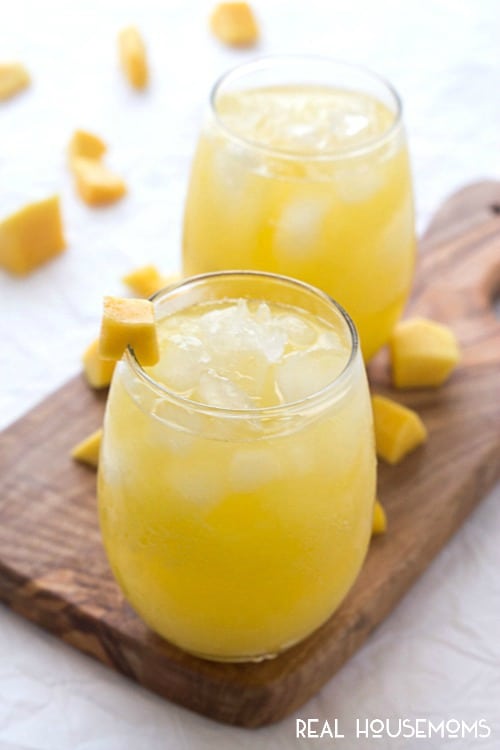
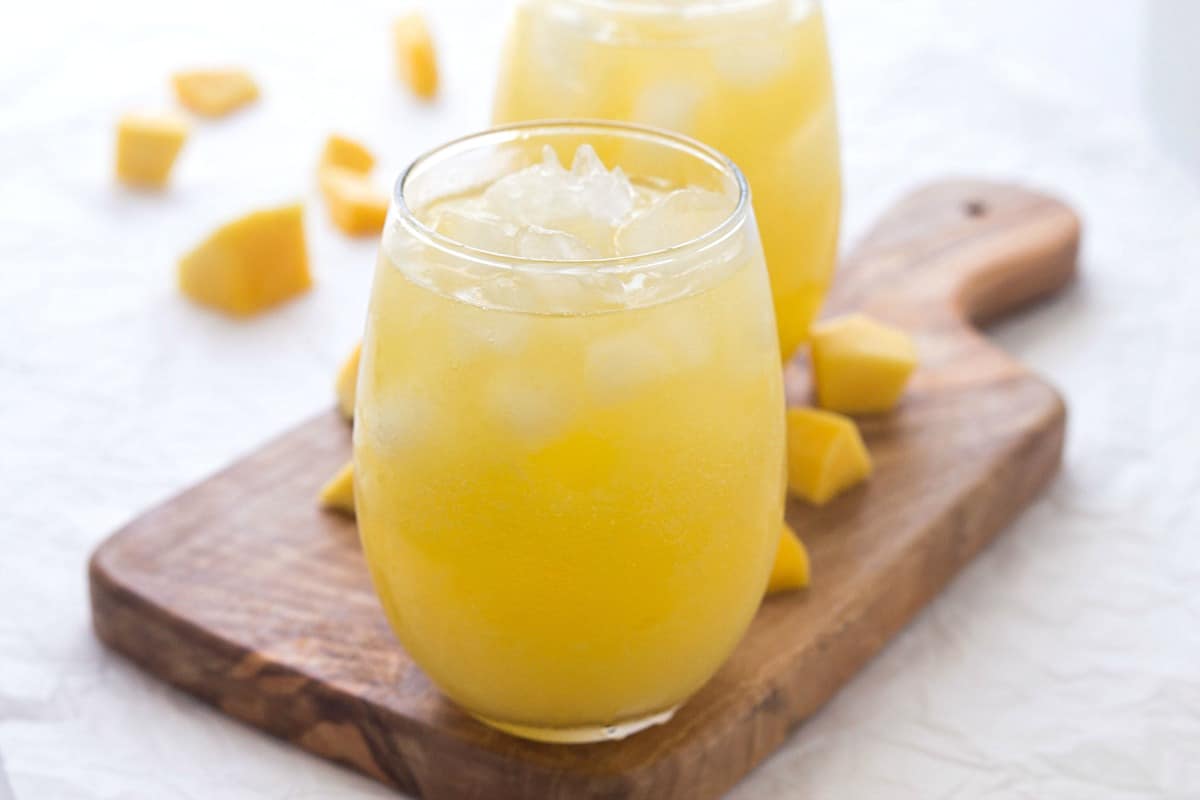
- Over ice with a squeeze of lime and a few mint leaves.
- As a mixer with white rum or tequila for a mango spritz.
- Topped onto fresh mango cubes and chia seeds for a textured mocktail.
Frequently asked questions
Is mango sparkling water healthy?
Unsweetened flavoured versions are as healthy as plain sparkling water. Juice-based versions add natural sugar and small amounts of vitamins; they are a better choice than regular soda but still count towards daily sugar intake.
Does mango sparkling water contain real mango?
Only if the ingredient list shows mango juice or purée, ideally with a percentage. “Natural mango flavour” alone means no fruit content.
Does mango sparkling water have sugar?
Flavoured versions usually have none. Juice-based versions typically have 5–10 g per 100 ml, from the fruit and sometimes added sugar.
Is it alcoholic?
No. Mango sparkling water is a soft drink. It can be used as a mixer, but it contains no alcohol itself.
Is sparkling water bad for your teeth?
Plain sparkling water is only mildly acidic. Fruit-flavoured versions with citric acid are more erosive, so drinking them with meals rather than sipping all day is gentler on enamel.
Mango sparkling drinks from ACM Beverage
ACM Beverage manufactures mango sparkling drinks in Vietnam in PET bottles and cans for OEM and private label buyers, with juice content, sweetness and carbonation set to each market. See the 300 ml mango sparkling water or the full sparkling drink range. For pairing ideas see how to combine mango with other fruits. To discuss a formulation, contact our export team.






