

Contents
- 1 The Rise of Tropical Fusion: Orange Juice Meets Coconut Cream
- 2 Market Dynamics: Consumer Demand for Tropical Flavor Innovation
- 3 OEM/ODM Solutions: How Tropical Flavor Innovation Unlocks Business Growth
- 4 Case Study: Positioning the Orange Juice with Coconut Cream in Global Retail
- 5 Future Outlook: Scaling Tropical Flavor Innovation
- 6 Frequently Asked Questions
- 6.1 What makes tropical flavor innovation a sustainable trend?
- 6.2 How can a distributor source the orange juice with coconut cream for their portfolio?
- 6.3 What certifications are needed to import this product into the USA?
- 6.4 Can the product be adapted for different markets, such as reducing sugar?
- 6.5 What is the typical lead time for a private label order of 320ml cans?
- 6.6 How does the 320ml can format compare to PET bottles for export?
Tropical flavor innovation is redefining the boundaries of the global beverage industry, with creamy fruit juice blends emerging as a key growth driver. The fusion of orange juice and coconut cream delivers a taste and nutritional profile that resonates with increasingly adventurous consumers.
This product category addresses two simultaneous market demands: the desire for natural, functional ingredients and the craving for novel sensory experiences. For OEM manufacturers and international buyers, understanding this trend is critical to capturing share in the competitive RTD segment.
The Rise of Tropical Fusion: Orange Juice Meets Coconut Cream
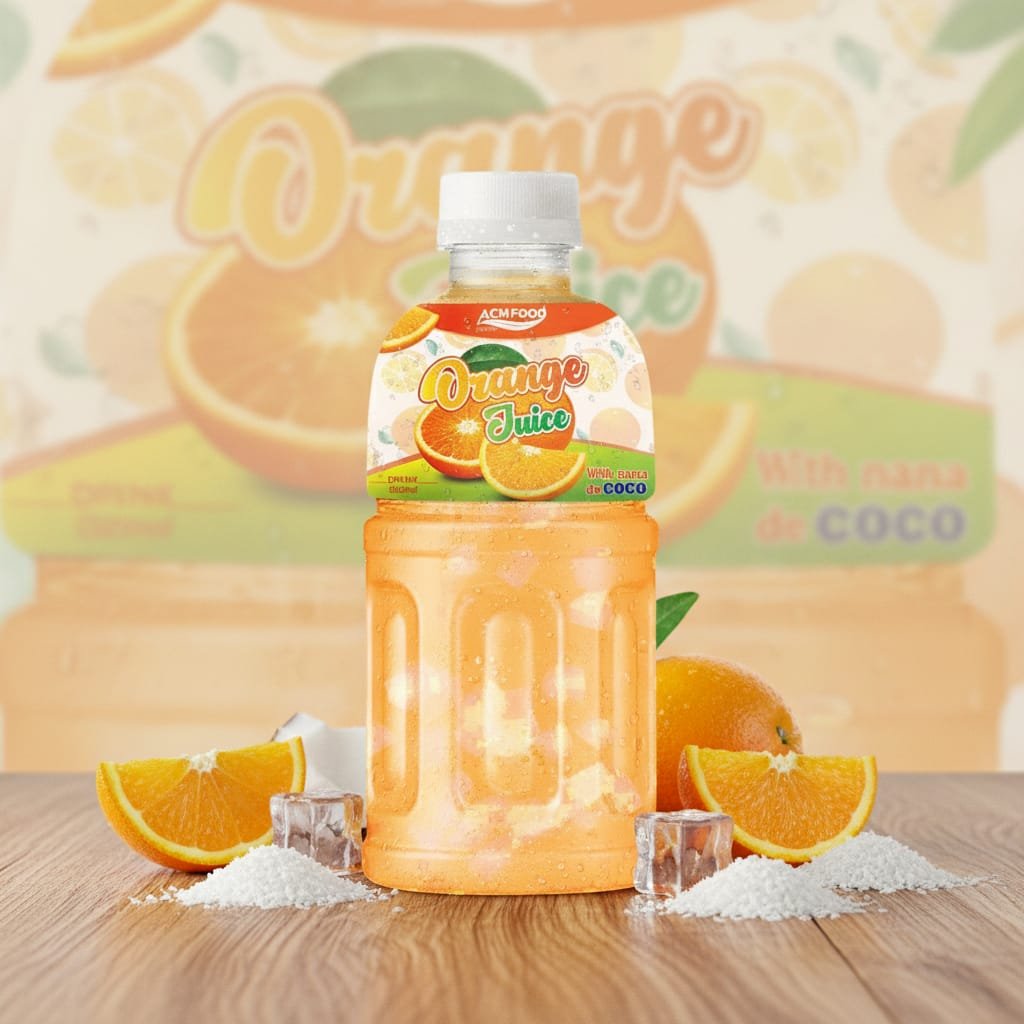
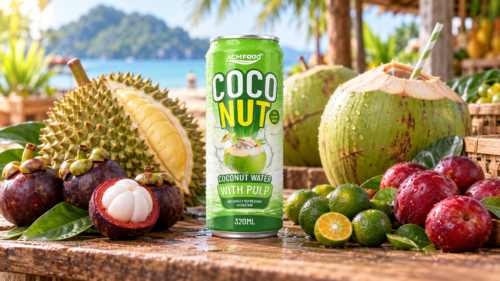
Tropical flavor innovation is reshaping the global beverage industry, and nowhere is this more evident than in the surge of creamy fruit juice blends. The 320ml ACM Orange Juice with nana de coco epitomizes this trend, combining familiar citrus notes with the rich, hydrating profile of coconut cream. This hybrid category addresses consumer demand for both indulgence and nutrition, creating a new segment within the functional drinks market.
According to recent industry reports, the tropical fruit juice market is projected to grow at a CAGR of 6.2% through 2030, driven by flavor experimentation and health awareness. Coconut-infused beverages alone saw a 14% sales increase in the US last year. For OEM manufacturers and global distributors, the integration of coconut cream into traditional juices offers a clear pathway to differentiation and value addition.

Why Coconut Cream Elevates Juice Formulations
Coconut cream brings a smooth mouthfeel and natural sweetness that reduces the need for added sugars. In the 320ml ACM Orange Juice with nana de coco, this combination provides a balanced taste profile that appeals to both Asian and Western palates. The product leverages a 320ml aluminum can format, ideal for on-the-go consumption and export logistics.
From a functional standpoint, coconut cream supplies medium-chain triglycerides (MCTs) and electrolytes, while orange juice delivers vitamin C. This dual-benefit positioning aligns perfectly with the clean-label movement, as the product contains no artificial flavors or preservatives. Manufacturers exploring tropical flavor innovation can use this formulation as a blueprint for cost-effective, health-forward SKUs.
Market Dynamics: Consumer Demand for Tropical Flavor Innovation
Global consumers are increasingly adventurous with flavors, seeking unique taste experiences from emerging markets. The shift toward tropical flavor innovation is fueled by exposure to Asian cuisine and travel. Products like the orange juice with coconut cream serve as an entry point for brands looking to capture this curiosity.
Data from Mintel indicates that 47% of global beverage launches in 2023 featured a tropical fruit note, with coconut-based variants leading the category. This trend is particularly strong in the functional beverage segment, where consumers expect both great taste and added benefits. The orange juice with nana de coco directly caters to this demand by offering a shelf-stable, ready-to-drink option with a premium positioning.
Regional Preferences and Export Opportunities
North America and Europe remain the largest importers of tropical beverages, but the Middle East and Asia-Pacific are catching up rapidly. Vietnam has emerged as a strategic sourcing hub due to its abundant raw materials and cost-competitive manufacturing. ACM Beverage’s facility, equipped with over ten production lines and certifications like FSSC 22000, HALAL, and USDA Organic, enables partners to bring tropical flavor innovation to shelves with confidence.
For example, the fresh fruit juice category offers a broad portfolio, while the sparkling water line complements the still drinks range. Distributors can bundle these products to maximize container utilization and shelf presence.

OEM/ODM Solutions: How Tropical Flavor Innovation Unlocks Business Growth
For brands that lack in-house R&D or production capacity, partnering with an established OEM manufacturer is the fastest route to market. ACM FOOD’s OEM/ODM expertise allows clients to customize the orange juice with coconut cream formulation—adjusting sweetness, Brix level, or even adding functional ingredients like collagen or probiotics.
One of the key advantages is low minimum order quantities (MOQs). ACM FOOD offers flexible MOQs to accommodate market testing phases and regional launches. This reduces financial risk for importers and enables rapid scaling based on demand. The company also provides private label packaging design, from can artwork to shrink sleeves, ensuring brand consistency across markets.
Quality Certifications and Supply Chain Reliability
Trust is paramount in cross-border trade. ACM FOOD holds certifications required for entry into the US, EU, and Middle Eastern markets, including FSSC 22000, BSCI, HALAL, KOSHER, and USDA/EU ORGANIC. Every batch of the 320ml ACM Orange Juice with nana de coco is produced under strict HACCP guidelines with full traceability. This level of compliance simplifies regulatory approval for importers.
Export logistics are streamlined through ACM FOOD’s Tan Phu Trung factory, located near Ho Chi Minh City ports. With a monthly export capacity exceeding 300 containers, the company can handle high-volume orders for chain retailers and multinational beverage groups. The 320ml can format is particularly efficient for palletization and reduces shipping weight compared to glass bottles.
Case Study: Positioning the Orange Juice with Coconut Cream in Global Retail
Consider a retailer in the UAE looking to introduce a tropical juice line targeting health-conscious expats and locals. The orange juice with coconut cream fits neatly into the chilled juice aisle or ambient shelf, depending on the supply chain. Its 320ml single-serve can appeals to lunchtime shoppers and convenience store customers.
Marketing the product around its natural ingredients and dual citrus-coconut flavor creates a strong narrative. Retailers can run promotional bundles with other tropical products from the same OEM source, such as mango or guava juices. The product’s shelf-stable nature also opens up e-commerce channels, especially in markets where chilled distribution is limited.
For a more premium approach, brand owners can position it as a post-workout recovery drink due to the electrolyte and MCT content. This cross-category strategy increases the addressable market and justifies a higher price point. The 320ml ACM Orange Juice with nana de coco serves as a versatile platform for such a positioning.

For illustrative purposes only
Future Outlook: Scaling Tropical Flavor Innovation
The global thirst for tropical flavor innovation shows no signs of slowing. As climate change affects traditional citrus-growing regions, diversifying into coconut-based blends offers supply chain resilience. Orange juice with coconut cream leverages two abundant crops—oranges from Vietnam and coconuts from the Mekong Delta—ensuring raw material availability.
ACM FOOD continues to invest in new product development, exploring variations like sparkling versions or lower-calorie stevia-sweetened options. For importers and distributors, establishing a relationship with a nimble OEM partner now positions them to capture the next wave of flavor trends. The ability to quickly adapt formulations to local tastes—for example, adding a hint of ginger for the Middle East or reducing sweetness for Europe—becomes a competitive advantage.
Strategic Considerations for B2B Buyers
When evaluating suppliers for tropical flavor innovation, consider the partner’s track record in quality assurance, flexibility in packaging, and speed of sample creation. ACM FOOD offers sampling within two weeks, allowing buyers to fine-tune the orange juice with coconut cream before committing to large volumes. This reduces time-to-market and ensures product-market fit.
Additionally, the company’s compliance with major certification schemes eliminates barriers to entry. For brands targeting the US FDA or EU food safety regulations, already-certified products shorten the import process. The 320ml can line is fully automated, ensuring consistent fill weights and low defect rates.
Frequently Asked Questions
What makes tropical flavor innovation a sustainable trend?
Tropical flavor innovation taps into lasting consumer preferences for exotic taste experiences and functional benefits. The combination of oranges and coconut cream offers a unique profile that stands out in crowded aisles, and the nutritional boost from coconut MCTs and vitamin C keeps it relevant in the health-and-wellness space.
How can a distributor source the orange juice with coconut cream for their portfolio?
Distributors can contact ACM FOOD directly through their website to request samples, pricing, and private label options. The OEM process begins with a brief, followed by formulation development and packaging design. Flexible MOQs allow for pilot runs of a few thousand cans before scaling.
What certifications are needed to import this product into the USA?
For US import, the product should meet FDA labeling requirements and have FSSC 22000 or equivalent certification. ACM FOOD holds FSSC 22000, BSCI, and HALAL, which cover most regulatory demands. Additional organic certifications are available upon request for the USDA Organic line.
Can the product be adapted for different markets, such as reducing sugar?
Yes, ACM FOOD’s R&D team can adjust the formulation to meet specific market requirements. They can reduce sugar content, swap sweeteners, or add functional ingredients. The base orange juice with coconut cream can be tweaked without losing its core identity.
What is the typical lead time for a private label order of 320ml cans?
Lead time depends on order size and packaging complexity. For a standard 20-foot container (around 10,000 cans), production and shipping documentation usually take four to six weeks. Express sampling and trial runs can be expedited to two weeks. ACM FOOD’s logistics team coordinates with freight forwarders to optimize shipping costs.
How does the 320ml can format compare to PET bottles for export?
Aluminum cans offer better oxygen and light barrier, extending shelf life without preservatives. They are also lighter per volume than glass and easier to palletize, reducing freight costs. The 320ml size is considered a convenient single-serve portion in many markets, especially for on-the-go consumption.


Related blogs insights
The Benefits of Pineapple Juice: A Healthy Addition to Your Diet
Contents1 The Benefits of Pineapple Juice: A Healthy Addition to Your Diet1.1 1. Boosts Immune [...]
1 Comment
Jan
The Benefits of Drinking Aloe Vera Juice
Aloe vera juice benefits: Aloe vera juice first and foremost contains antioxidants, or substances that [...]
1 Comment
Sep
DISCOVER FRUIT MILK & COCONUT MILK DRINKS – NATURAL FLAVOR, PURE NOURISHMENT
Contents1 1. Key Ingredients & Nutritional Value1.0.1 1.0.2 ✅ Fruit Milk Drinks:2 2. Health Benefits [...]
1 Comment
Jan
Coconut Water & Heart Health: The Surprising Truth Few People Know!
Contents1 1. How Supports Heart Health❤️1.1 Rich in Potassium – Helps Maintain Healthy Blood Pressure1.2 [...]
Jan
5 Key Factors for a Successful Beverage Product in the Global Market
Contents1 1. Consistent Taste & Quality2 2. Attractive & Market-Appropriate Packaging3 3. Compliance with International [...]
1 Comment
Jan
Coconut Water Leads Clean Label Hydration Revolution for B2B Buyers
Explore how clean label coconut water leads the hydration revolution. B2B analysis of market trends, [...]
Jun