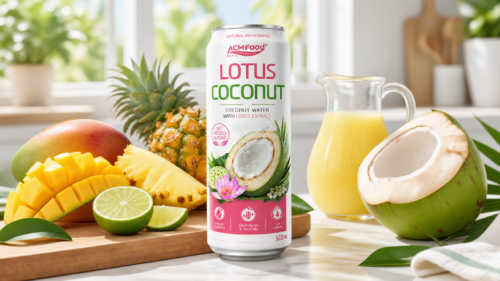

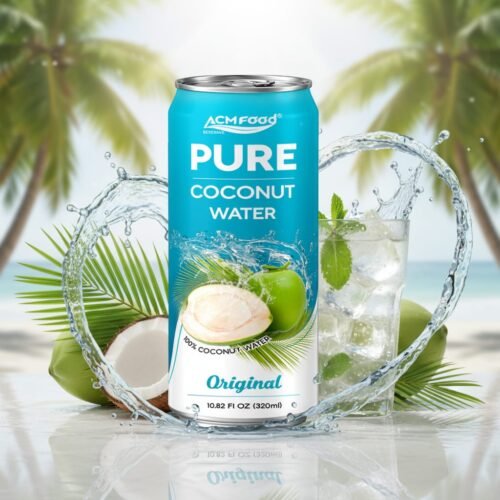
A clean label coconut water lists a single ingredient — coconut water — with no added sugar, flavouring, colour or preservative. The difficulty is technical: coconut water has a pH of about 5.0–5.4, so it must be sterilised by UHT or retort to be shelf-stable, and heat changes its flavour.
Key facts at a glance
- Clean label is not a legal term. Buyers and retailers define it, usually as short, recognisable ingredient lists.
- Low acidity drives processing. At pH above 4.6, coconut water is a low-acid food and needs a validated sterilisation step.
- Some producers add vitamin C as an antioxidant to prevent pinkening; it appears on the label as ascorbic acid.
- Natural sugar varies from roughly 2 to 6 g per 100 ml depending on coconut age and variety.
- Per 100 ml: about 19 kcal, 250 mg potassium and 105 mg sodium (USDA).
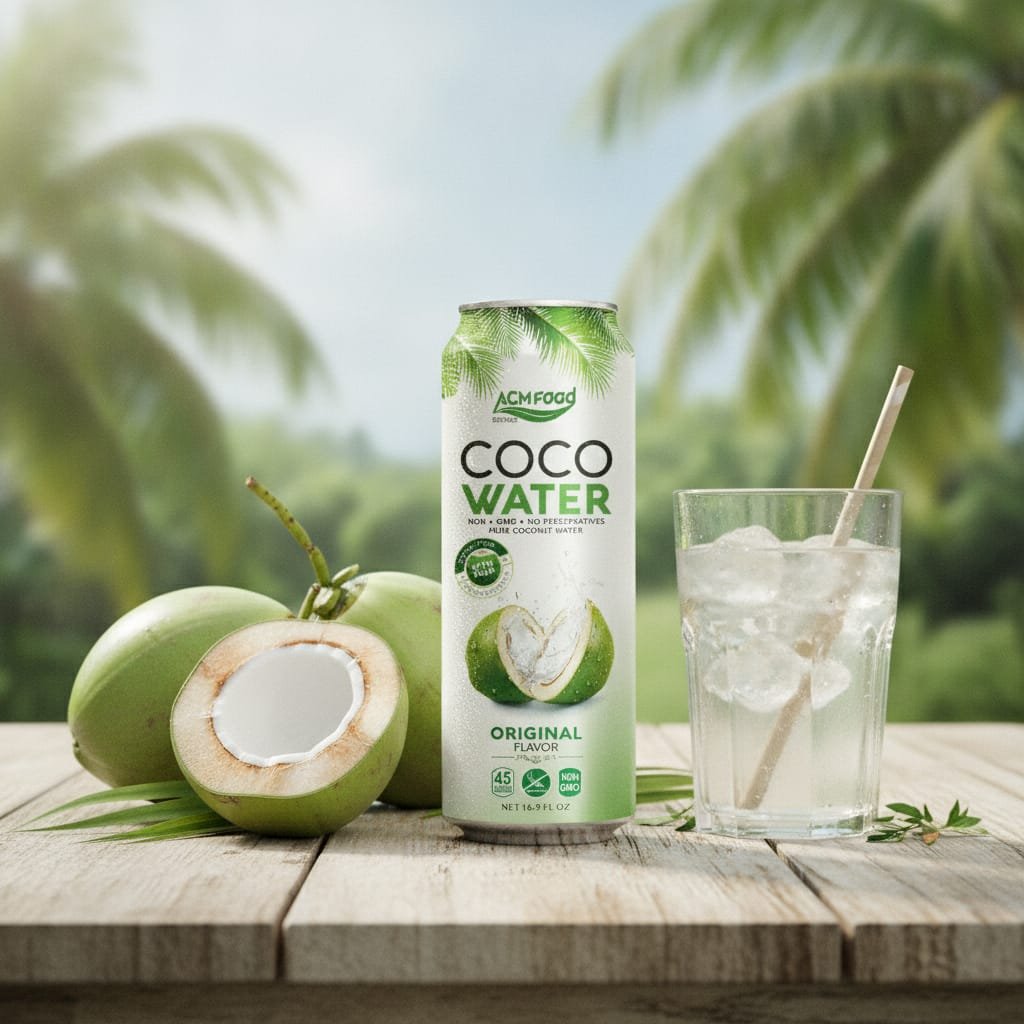
What “clean label” means for coconut water
| Label | Typical ingredient list | Clean label? |
|---|---|---|
| 100% coconut water | Coconut water | Yes |
| Coconut water with antioxidant | Coconut water, vitamin C | Usually accepted |
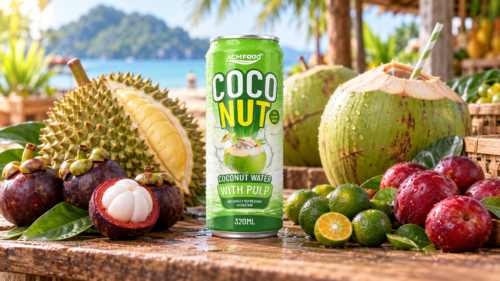
| Coconut water with pulp | Coconut water, coconut pulp | Yes |
| Sweetened coconut water | Coconut water, sugar, flavouring | No |
| Coconut water from concentrate | Water, coconut water concentrate | Debatable — retailers differ |
Why processing is the hard part
Once a coconut is opened, the water starts to oxidise and ferment within hours. Commercial producers have three main options:
- Retort (in-can sterilisation): shelf-stable for 12–24 months; the strongest heat, with a noticeably “cooked” note.
- UHT with aseptic filling: short high-temperature treatment; better flavour, shelf-stable in cartons or PET.
- HPP or chilled: closest to fresh taste, but requires cold chain and has a shelf life of weeks, not months.
Ask any supplier which method is used, what the validated process is, and for sensory samples at the end of stated shelf life, not just fresh from the line.
What OEM buyers should specify
- Coconut variety and age at harvest. Water from coconuts of about 6–8 months has the best sugar-to-mineral balance.
- Brix range. Set a target range so batches taste consistent through the seasons.
- Processing method and shelf-life claim, with supporting stability data.
- Additives allowed. Decide in advance whether vitamin C is acceptable to your retailer.
- Certifications required by your market, such as FSSC 22000, HACCP, Halal or organic.
- Packaging. Cans protect from light and oxygen best; PET and cartons suit different channels.
Where demand is coming from
- North America and Europe: replacing sports drinks and soft drinks with lower-sugar natural options.
- Middle East: hot-climate hydration, with Halal certification expected.
- Asia: established coconut water culture, with growth in premium single-ingredient formats.
Frequently asked questions
What is clean label coconut water?
Coconut water sold with a single ingredient, or with only widely accepted additions such as vitamin C, and no added sugar, flavour or preservatives.
Does pure coconut water need preservatives?
No, if it is properly sterilised and sealed. Retort or UHT processing makes it shelf-stable without preservatives.
Why does some coconut water turn pink?
Natural polyphenols oxidise, especially after exposure to light or heat. It is harmless, and is one reason some producers add vitamin C.
How long does packaged coconut water last?
Retorted or UHT products typically last 12–24 months unopened. Chilled or HPP products last a few weeks and must stay refrigerated.
Can coconut water be organic?
Yes, if the coconuts come from certified organic farms and the processor holds the relevant certification for the destination market.
Coconut water OEM with ACM Beverage
ACM Beverage produces coconut water in Vietnam for OEM and private label customers, sourcing coconuts from the Mekong Delta, in facilities certified to ISO 22000, FSSC 22000 and HACCP, exporting to more than 40 countries. See the 500 ml coconut water original or the full coconut water range. Related reading: choosing packaging for coconut water and FDA, HACCP and ISO in coconut water production. To discuss a specification, contact our export team.