














NFC (not from concentrate) fruit juice is juice pressed from fruit and packed without being evaporated into concentrate and later diluted with water. It is usually gently pasteurised, keeps a flavour closer to fresh fruit, and has about the same vitamins and minerals as the fruit, but almost none of its fibre. An adult portion is about 150 ml a day.
How is NFC juice made?
- Fruit is washed, sorted and pressed or extracted.
- The juice is filtered or left with pulp, depending on the product.
- It is pasteurised to make it safe and shelf-stable.
- It is filled into cans, bottles or cartons.
NFC vs from-concentrate juice
| Feature | NFC juice | From concentrate |
|---|---|---|
| Processing | Pressed and pasteurised | Water evaporated, later added back |
| Flavour | Closer to fresh fruit | Can taste slightly cooked; aroma often added back |
| Cost and logistics | Higher – more volume to ship | Lower – concentrate is compact |
| Can it be labelled 100% juice? | Yes | Yes, if fully reconstituted |
More detail: 100% juice, NFC and concentrate explained.
Is NFC juice healthy?
NFC juice has about the same vitamins, minerals and plant compounds such as flavonoids as the fruit it comes from. The main difference is fibre: juice keeps very little. Adults need about 25–30 g of fibre a day, so eat whole fruit, vegetables and whole grains too. As a sweet drink, NFC juice is a better choice than soda or energy drinks, but it still contains natural sugar.
NFC juices from ACM
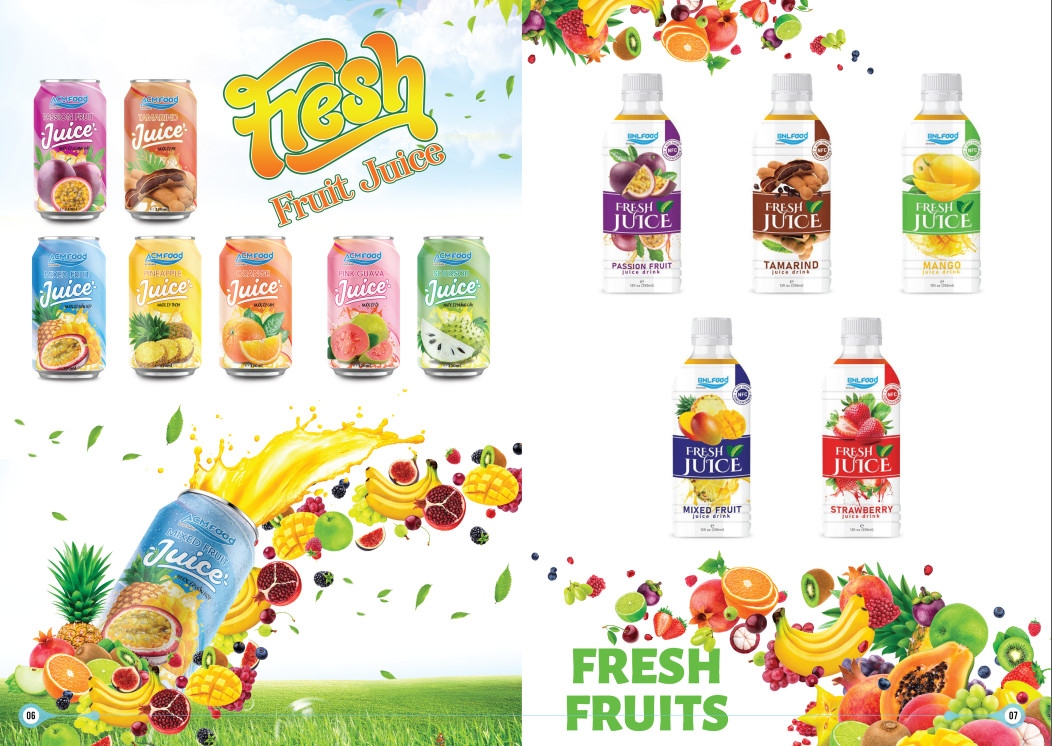
ACM produces NFC juices in flavours such as soursop, mango and mixed fruit, in cans and PET bottles, for OEM and private label. Browse the fruit juice range.
Frequently asked questions
What does NFC mean on juice?
Not from concentrate: the juice was not evaporated and reconstituted.
Is NFC juice fresh?
It is minimally processed but usually pasteurised, so it is not raw fresh-squeezed juice.
Does NFC juice have added sugar?
Pure NFC juice has none. Some NFC juice drinks add water and sugar, so check the label.






