





Fruit juice flavor combinations succeed or fail on a handful of pairing principles that are simple to state but frequently skipped in practice: matching or deliberately contrasting sweetness and acidity levels, using a shared aromatic quality as a genuine bridge between two otherwise unrelated fruits, and testing a combination carefully at the specific ratio it will actually be produced at rather than assuming a pairing that sounds appealing on paper will taste balanced in the glass.
This guide sets out the practical pairing logic behind genuinely successful fruit combinations, rather than simply listing trending flavor pairs, so a brand can evaluate and confidently develop its own combination with a clear rationale behind it.
Matching versus contrasting sweetness and acidity
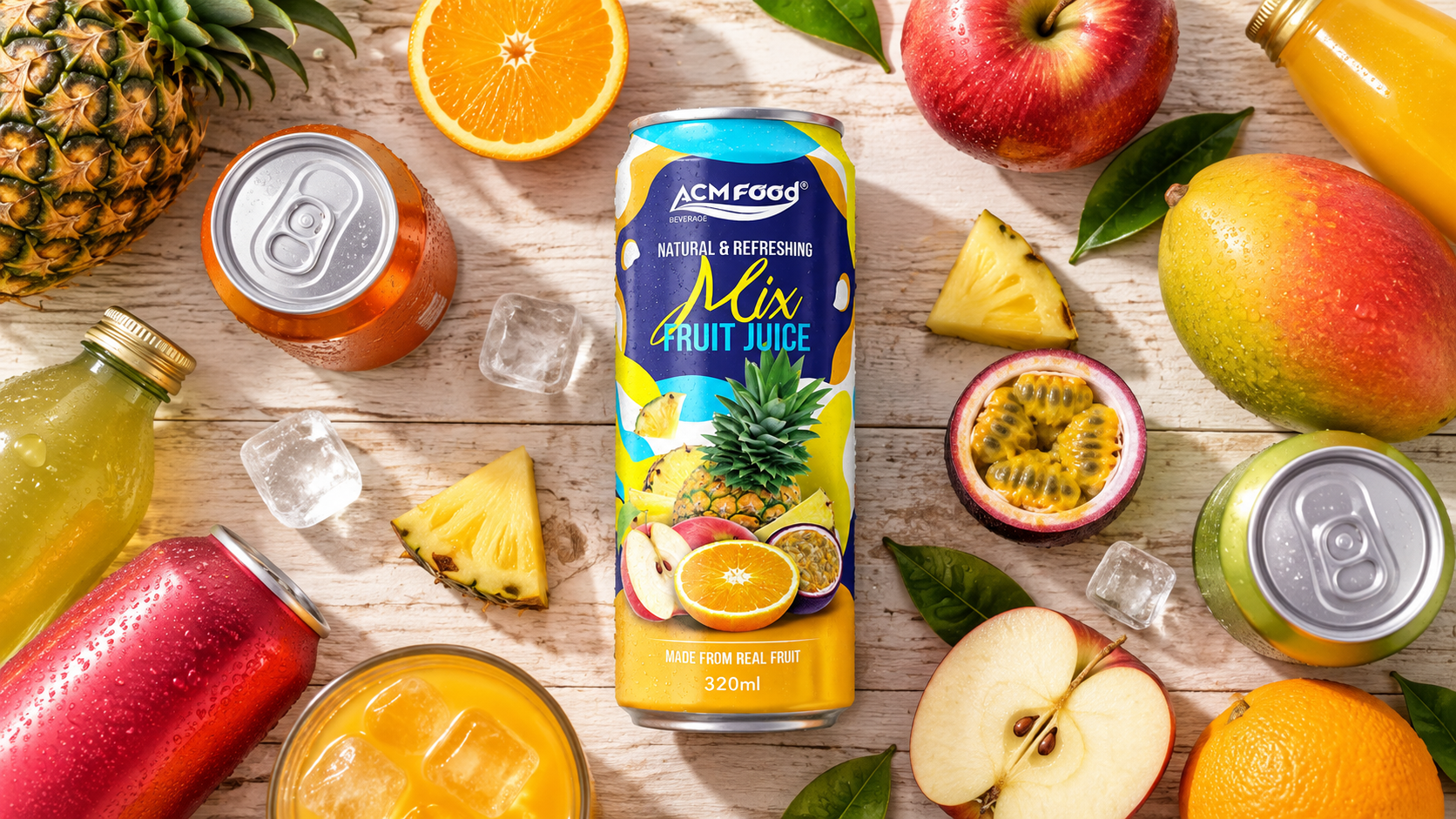
A successful fruit pairing generally follows one of two logics: matching, where both fruits sit at a similar sweetness and acidity level and blend into a harmonious, rounded profile, or contrasting, where a sweet, low-acid fruit is deliberately paired with a tart, higher-acid one to create a lively, dynamic profile with more perceived complexity. Both approaches work, but a pairing that accidentally lands between the two, neither harmoniously matched nor deliberately contrasted, often tastes unbalanced or confused rather than interesting.
Deciding which logic a specific pairing is aiming for, before development begins, gives the formulation team a clear target to test against. A matched pairing should taste smooth and rounded with no single element dominating; a contrasted pairing should have a clear tension between its sweet and tart elements that reads as lively rather than simply sour or cloying.
Using a shared aromatic quality as a bridge
Some of the most successful fruit combinations share an underlying aromatic quality, a floral note, a tropical character, or a citrus-adjacent brightness, even when the two fruits themselves are quite different. This shared quality acts as a bridge that makes the combination feel cohesive rather than like two unrelated flavors simply mixed together. A mango and hibiscus pairing, as covered in the mango hibiscus tea formulation, illustrates this well: mango’s tropical sweetness and hibiscus’s floral tartness share enough aromatic common ground to read as a coherent pairing rather than a mismatched one.
| Pairing principle | What it means in practice |
|---|---|
| Matching logic | Similar sweetness and acidity levels blend into a smooth, rounded profile |
| Contrasting logic | Sweet, low-acid fruit paired with tart, high-acid fruit for lively complexity |
| Aromatic bridge | A shared floral, tropical or citrus quality makes different fruits feel cohesive |
| Ratio testing | Pairings must be tested at the actual intended production ratio, not assumed |
| Dominant versus supporting role | One fruit usually needs to lead, with the other playing a supporting role |
A guava and nata de coco combination, covered in the guava juice with nata de coco formulation, illustrates a slightly different bridging principle: here the connection is textural and tropical rather than purely aromatic, with the inclusion piece adding a point of interest that complements rather than competes with the fruit’s own flavor.
Why ratio testing matters more than the pairing concept
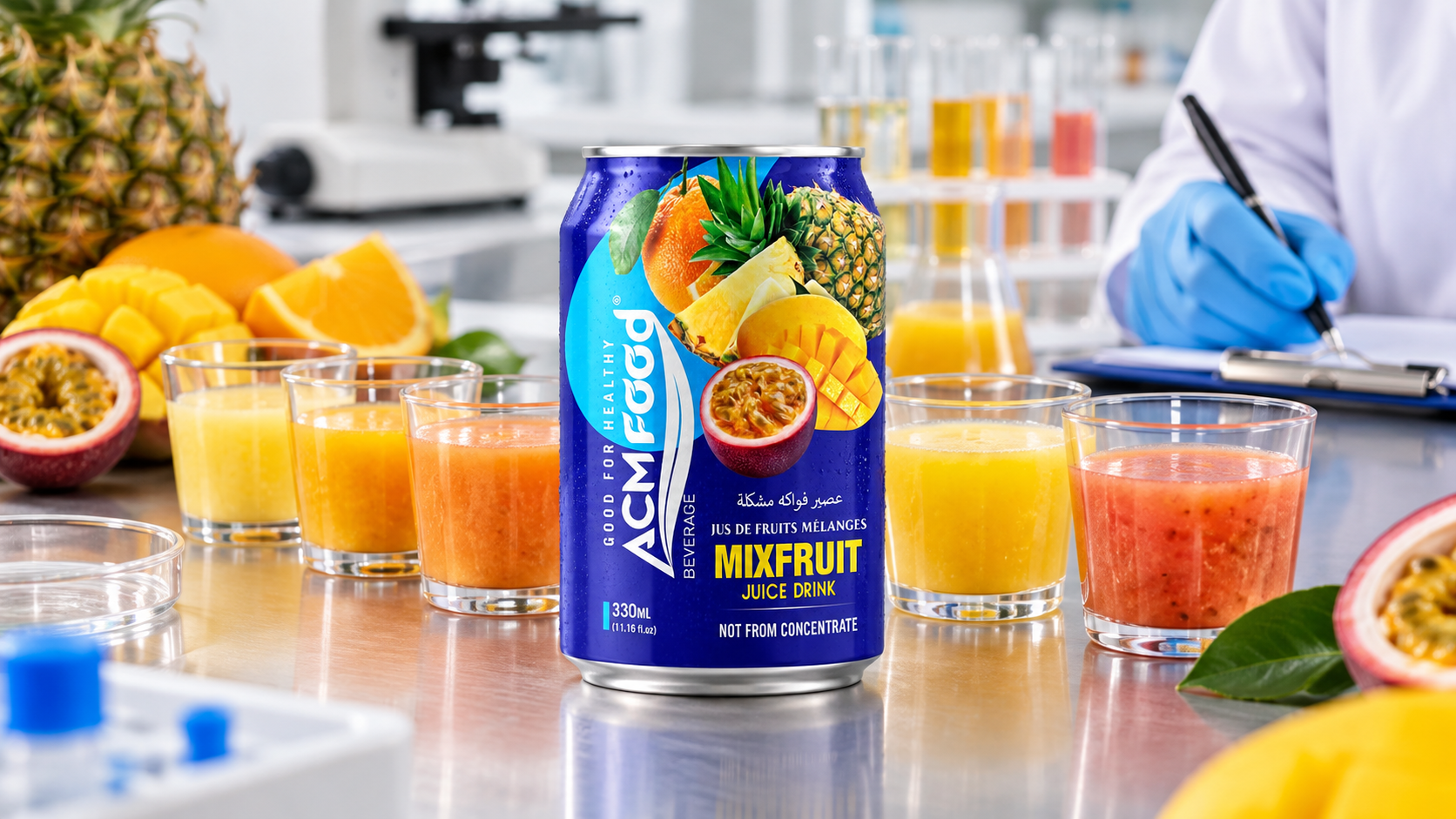
Two fruits that pair well conceptually can still produce a poor result if the ratio between them is wrong. A pairing intended to be led by one dominant fruit with a smaller supporting note from a second can taste muddled if both are included at similar proportions, since neither gets to establish itself clearly as the lead flavor. Testing several ratios during development, rather than settling on a single assumed proportion, is the reliable way to find the point where a pairing actually tastes intentional rather than accidental.
A practical way to run this testing is to prepare a small series of trial batches at incrementally different ratios, say five or six variations moving from a strongly lead-fruit-dominant blend through to a more evenly balanced one, and taste them side by side rather than sequentially over separate sessions. Tasting several ratios together makes the differences between them far easier to detect than tasting one formulation in isolation and trying to recall how it compared with a version tasted the previous day, since direct side-by-side comparison removes much of the memory-based guesswork from the evaluation.
A cherry and sparkling format pairing, as seen in the cherry sparkling juice formulation, shows how a single bold, dominant fruit note can carry a product well on its own, which is a useful reminder that not every product needs a complex multi-fruit combination; sometimes a single well-executed fruit flavor, supported by format rather than a second fruit, is the stronger choice.
Regional and familiarity considerations in fruit pairing
A pairing that reads as intuitive in one market can read as unusual or even confusing in another, since fruit familiarity varies considerably by region. A tropical pairing built around two fruits both common in Southeast Asian markets may need one element substituted or reframed for a Western market where one of the two fruits is far less recognisable, even if the underlying pairing logic, matching or contrasting sweetness and acidity, remains sound. This is worth checking early in a multi-market product’s development rather than assuming a pairing that tests well domestically will translate directly to an export market with different fruit familiarity.
A practical way to check this is a simple naming and recognition exercise: ask a small group of people from the target market to identify the fruits involved from the flavor alone, without seeing the packaging or label. A fruit that a domestic tasting panel recognises instantly but a target export market panel cannot identify at all is a signal that the pairing’s aromatic bridge, which relies on both fruits reading as familiar and complementary, may not translate the way it does at home. Substituting the less recognisable fruit for a regionally familiar equivalent that shares a similar flavor role can often preserve the pairing’s underlying logic while making it land better with the new market’s palate.
Superfruit-led combinations offer a useful case study in balancing familiarity and distinctiveness. A tropical superfruit pairing often works by pairing a genuinely novel or less familiar fruit with a more mainstream one, letting the familiar element carry the initial trial decision while the superfruit element provides the differentiation and functional story. A more assertive, tart superfruit pairing, as covered in tropical sour superfruit innovation, illustrates the contrasting logic applied deliberately: a sharp, sour fruit note paired against a sweeter element specifically to create the lively tension a contrasted pairing is meant to deliver.
Organic and clean-label considerations for fruit blends
Where a fruit combination is built around an organic or clean-label positioning, the pairing decision also needs to account for organic sourcing availability for each fruit involved. A pairing that works well conceptually can still run into practical sourcing friction if one of the two fruits has limited or inconsistent organic supply, which is worth confirming with a manufacturer before finalising a combination intended to carry an organic claim.
Building a fruit combination product brief
Five inputs help a brand develop a fruit juice flavor combination deliberately.
- Pairing logic. Decide upfront whether the combination aims to match or deliberately contrast sweetness and acidity.
- Aromatic bridge. Identify what shared quality, if any, connects the two fruits and makes the pairing feel cohesive.
- Dominant and supporting roles. Decide which fruit leads the flavor and which plays a supporting role, rather than treating both as equal.
- Ratio testing plan. Test multiple ratios during development rather than settling on a single assumed proportion.
- Production-realistic testing. Confirm the pairing tastes balanced at the actual concentration and format the finished product will use.
Common mistakes in developing fruit combinations
A consistent set of avoidable errors accounts for much of the friction brands encounter when combining fruit flavors.
- Choosing a pairing based on novelty alone. An unusual combination without a clear matching or contrasting rationale often tastes disjointed rather than interesting.
- Including both fruits at equal proportions without a lead flavor. This frequently produces a muddled result rather than a clear, memorable profile.
- Testing a pairing only in concept, not at production ratio. A combination that sounds appealing can taste unbalanced once actually formulated at real-world concentrations.
- Ignoring whether the two fruits share any aromatic common ground. A pairing with no bridging quality between two very different fruits can taste like two separate flavors competing rather than one coherent combination.
Each of these is avoidable by applying a clear pairing logic and testing ratios deliberately, rather than combining fruits based on trend appeal alone. A brand that documents its intended pairing logic, matching or contrasting, and its target dominant fruit before the first trial gives a manufacturer a much clearer brief to formulate against than a request that simply names two fruits and hopes the balance sorts itself out.
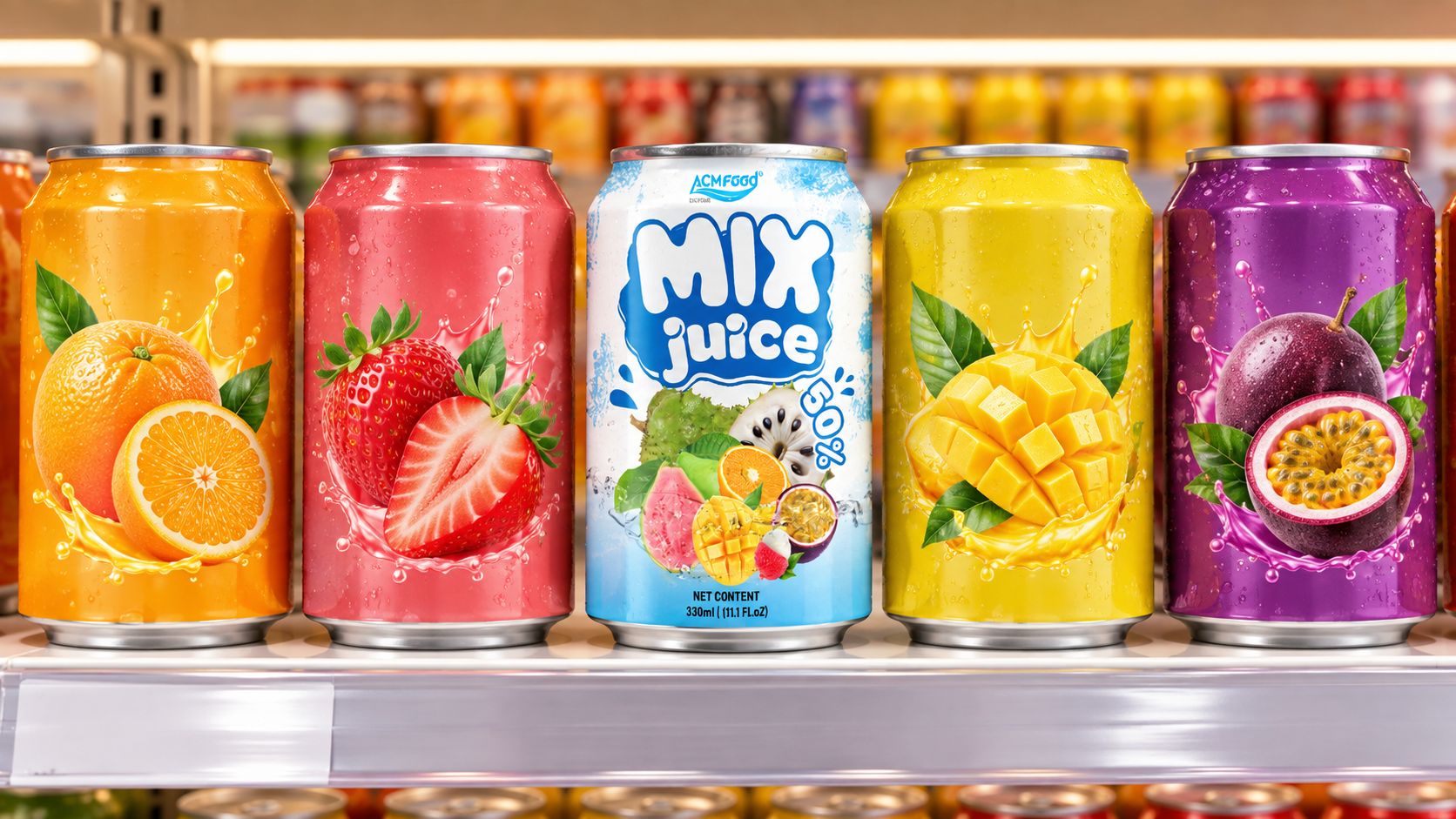
Frequently asked questions
Is it better to combine two fruits or focus on a single fruit flavor?
Neither is universally better; a single, well-executed fruit flavor can be just as strong as a combination, particularly where format, such as carbonation, adds its own point of interest. A combination is genuinely worth pursuing when it adds real complexity or true differentiation rather than simply because multi-fruit products happen to be currently popular in the market.
How many fruits can reasonably be combined in one product?
Most genuinely successful combinations use two fruits, occasionally three, with one fruit clearly leading throughout. Beyond that, it becomes increasingly difficult for a shopper to identify individual flavors, and the product risks tasting generic rather than distinctly fruity.
Should a fruit combination always include one familiar and one more exotic fruit?
This is a common and often effective approach, since the familiar fruit gives a shopper an easy entry point while the more exotic fruit provides differentiation, but it is not the only viable pairing logic. Two familiar fruits paired thoughtfully, or two more exploratory fruits paired around a strong aromatic bridge, can also work well depending on the target shopper.
Can an existing single-fruit formula be extended into a combination later?
Yes, this is a common way to create a line extension, adding a second fruit to an already-proven base to create a new variant without developing an entirely new product from scratch.
Starting a fruit combination product brief
A fruit juice flavor combination works best when it follows a clear matching or contrasting logic, uses a genuine aromatic bridge between its fruits, and is tested at real production ratios rather than assumed from concept alone.
ACM Beverage develops fruit juice flavor combinations against these pairing principles and can advise on which approach, matching or contrasting, and which ratio range suits a specific concept before a first trial begins. Reach out through the enquiry and contact page with the fruits, flavor direction and target market in mind to start that conversation, and naming both fruits under consideration upfront lets the first trial round test more than one ratio from the very start.