
Contents
- 1 The Rise of Functional Carbonated Beverages
- 2 The Health Science Behind Cherry as a Functional Superfruit
- 3 OEM Flexibility Enables Global Distribution of Cherry Sparkling Juice
- 4 Overcoming Production Challenges in Carbonated Juice
- 5 Export Opportunities for Cherry Sparkling Juice in Global Markets
- 6 The Future of Functional Carbonated Beverages
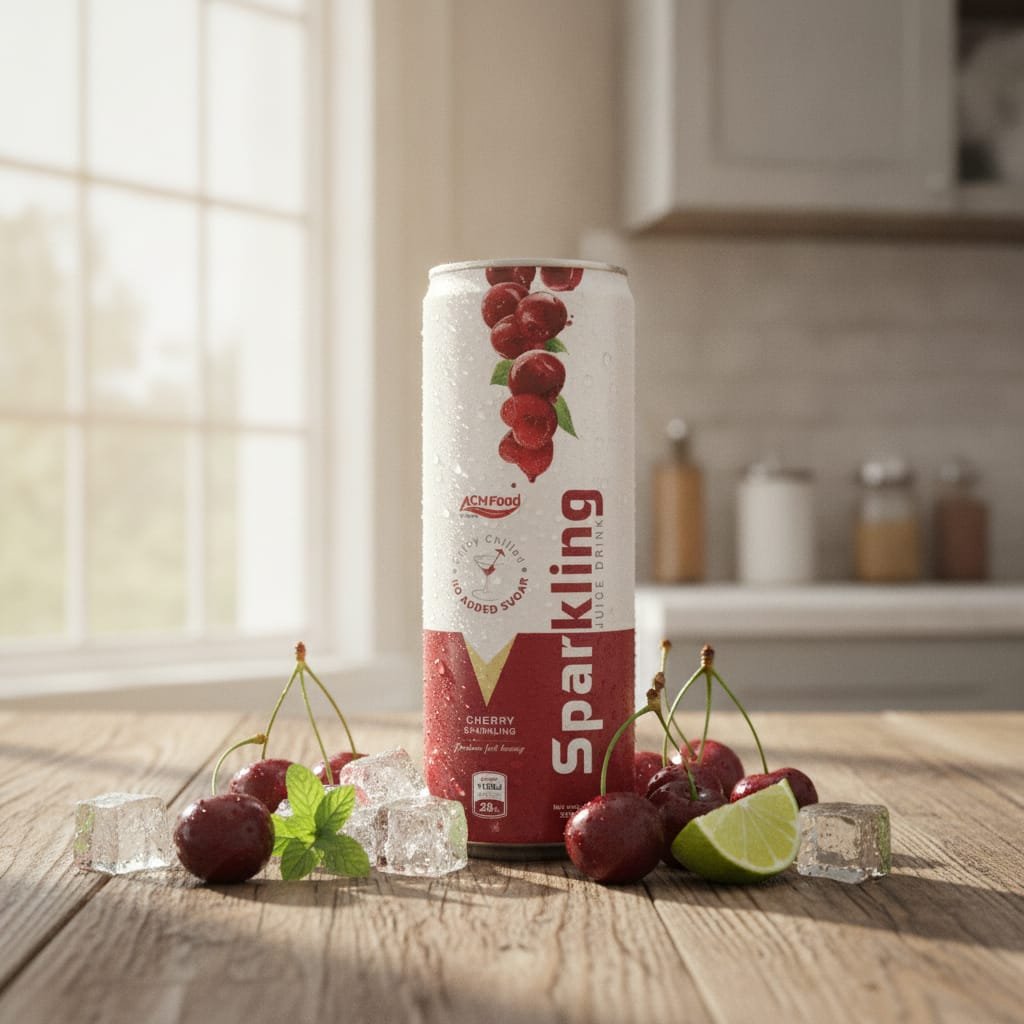
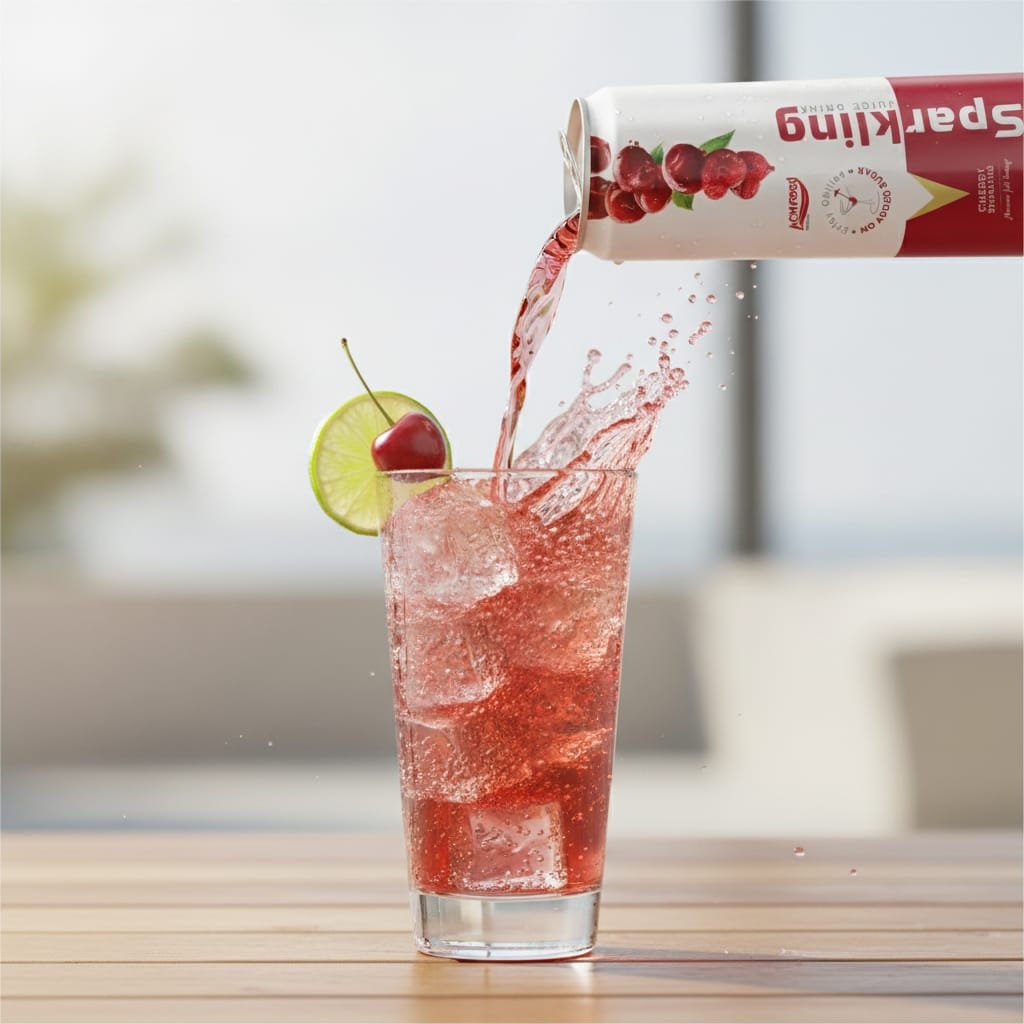
The functional beverage industry is witnessing a transformation as consumers seek drinks that deliver both refreshment and tangible health benefits. Cherry sparkling juice has emerged as a frontrunner, combining the proven functional properties of tart cherry with the sensory appeal of carbonation.
For global distributors and private label brands, this product category offers a rare convergence of consumer demand, scientific validation, and manufacturing feasibility. Understanding its market dynamics, health science, and production requirements is essential for capitalizing on this high-growth opportunity.
The Rise of Functional Carbonated Beverages
Cherry sparkling juice is redefining the premium hydration segment. Consumer demand shifts toward drinks that combine refreshment with tangible health benefits.
Carbonated beverages have traditionally been associated with sugar and empty calories. However a new wave of functional carbonated drinks is emerging. These products leverage natural fruit ingredients and clean labels to attract health-conscious buyers.

Market Momentum
The global sparkling juice market is projected to grow at over 8% annually through 2030. This surge is fueled by consumers rejecting artificial sodas in favor of real fruit alternatives.
Cherry sparkling juice occupies a unique intersection of indulgence and wellness. It delivers the sensory pleasure of carbonation without compromising nutritional integrity.
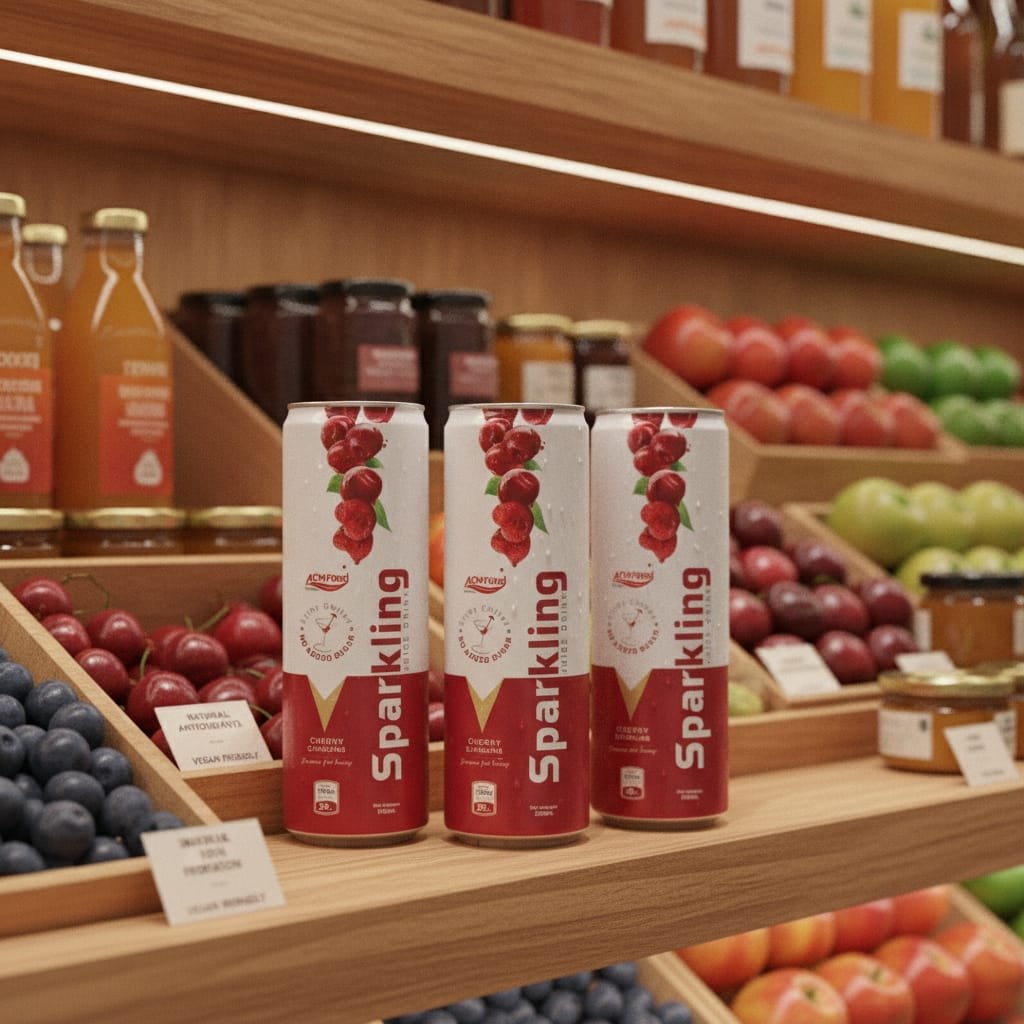
For distributors, this represents a high-growth category with strong margins. The ability to offer a product that satisfies both taste and health demands is increasingly rare.
The Health Science Behind Cherry as a Functional Superfruit
Cherries are among the most researched fruits for functional benefits. Tart cherry varieties contain high levels of anthocyanins and melatonin.
Anthocyanins are powerful antioxidants that combat oxidative stress. Melatonin supports sleep regulation and recovery.
Multiple clinical studies show that tart cherry juice reduces muscle soreness after exercise and improves sleep quality. These findings have propelled cherry-based beverages into the sports nutrition and wellness markets.
The sparkling format enhances appeal without destroying heat-sensitive nutrients. Low-temperature carbonation preserves active compounds better than thermal pasteurization.
Importantly, the 320ml can size is ideal for on-the-go consumption. It aligns with active lifestyles where convenience and functionality are paramount.
OEM Flexibility Enables Global Distribution of Cherry Sparkling Juice
The commercial viability of cherry sparkling juice depends on manufacturing agility. OEM partnerships allow brands to enter the market with customized formulations without heavy capital investment.
ACM FOOD offers complete cherry sparkling juice production under private label. Clients can adjust sweetness levels, carbonation intensity, and packaging formats.
This flexibility is critical for regional taste preferences. Markets in Southeast Asia may prefer lower sweetness, while European buyers often demand organic certification.
ACM FOOD’s facility holds FSSC 22000, USDA Organic, and Halal certifications. These credentials simplify regulatory compliance for export to North America, Europe, and the Middle East.
MOQs as low as one 20-foot container enable startups and mid-sized brands to test the category. Scalable production lines support volume growth as demand expands.
Distributors evaluating new beverage lines should prioritize partners that offer rapid sampling and label design support. The speed to market for a 320ml cherry sparkling juice can be as short as six weeks.

Category Expertise
ACM FOOD specializes in both fruit juice and sparkling water production. Their dual expertise ensures consistent product quality across these intersecting categories.
View their fresh fruit juice and sparkling water drink lines to understand their manufacturing breadth.
Overcoming Production Challenges in Carbonated Juice
Producing stable carbonated juice is technically demanding. Natural juices contain pulp and enzymes that can interfere with CO2 retention.
Advanced filtration systems remove particles without stripping flavor. This ensures consistent effervescence throughout the product’s shelf life.
R&D teams must also balance acid levels. Cherry’s natural tartness complements carbonation but requires careful calibration to avoid off-notes.
ACM FOOD’s in-house lab conducts stability testing under various temperature conditions. This guarantees the product arrives at international ports with the same quality as the day it was produced.
For brands, this manufacturing reliability translates into fewer returns and stronger retailer relationships.
Export Opportunities for Cherry Sparkling Juice in Global Markets
The United States is the largest importer of fruit juice beverages. Demand for functional, low-sugar options is particularly strong in the natural channels.
Europe’s clean label movement favors products with recognizable ingredients. Cherry sparkling juice fits perfectly, with no artificial colors or preservatives needed.
The Middle East presents growing demand for premium non-alcoholic sparkling drinks. Halal certification (held by ACM FOOD) is a mandatory requirement for market access.
Cold chain logistics are not required for shelf-stable canned products. This reduces shipping costs and opens distribution to regions with less developed refrigeration.
Distributors targeting these regions should consider exclusive agreements for their territories. The competitive advantage of being first to market with a cherry sparkling juice can be significant.

The Future of Functional Carbonated Beverages
Innovation in this space will likely focus on new superfruit combinations. Cherry may be blended with pomegranate, acai, or ginger for differentiated profiles.
Sustainability efforts are also becoming decisive. Aluminum cans are infinitely recyclable and align with consumer expectations for eco-friendly packaging.
Brands that invest in consumer education around the functional benefits of cherry will capture market share. Point-of-sale materials highlighting antioxidant content can boost trial rates.
For industry professionals, the key takeaway is clear. Cherry sparkling juice is not a fleeting trend. It represents a structural shift toward beverages that deliver both pleasure and purpose.


Related blogs insights
The health benefits of Soya
Top 5 health benefits: Source of protective antioxidants: Soya beans contain natural compounds called “isoflavones”. [...]
1 Comment
Sep
Introduction to ACM Food Sparkling Fruit Juice Brands
Contents1 Exploring the Trend of Sparkling Water in Coconut Flavor and Fruit2 The Rise of [...]
1 Comment
May
300ml ACM Strawberry Sparkling Water Pet Bottle A Refreshing Choice
Contents1 Indulge in the Sweetness of ACMFOOD’s Strawberry Sparkling Water1.1 The Taste of Strawberry Sparkling [...]
1 Comment
Mar
Benefits of Strawberry Drink Juice
Contents1 1. Rich in Antioxidants2 2. Strawberry Drink Boosts Immune System3 3. Strawberry Drink Promotes [...]
1 Comment
Jan
Pure Fruit Juice Innovation Reshapes Global RTD Beverage Industry Growth
Explore how pure fruit juice innovation, featuring exotic superfruits like lychee, is reshaping the global [...]
1 Comment
May
ACM Low Sugar Peach Juice Drives Wellness Beverage Growth Through Korean Innovation
Explore how ACM's low sugar peach juice drink meets global wellness trends, offering OEM flexibility [...]
Jun