














Pineapple sparkling juice is carbonated water or soda base with pineapple juice, commonly 10–50%, giving a sweet-tart, tropical soft drink. Pure pineapple juice has about 10 g of natural sugar per 100 ml, so a 30% juice drink starts at around 3 g before any added sugar. Pineapple’s natural acidity and strong aroma make it one of the easiest fruits to pair with carbonation.
Key facts at a glance
- Juice level decides sugar, cost and label category.
- Pineapple aroma survives carbonation and moderate heat well.
- Bromelain is inactivated by pasteurisation, so it plays no role in packaged drinks.
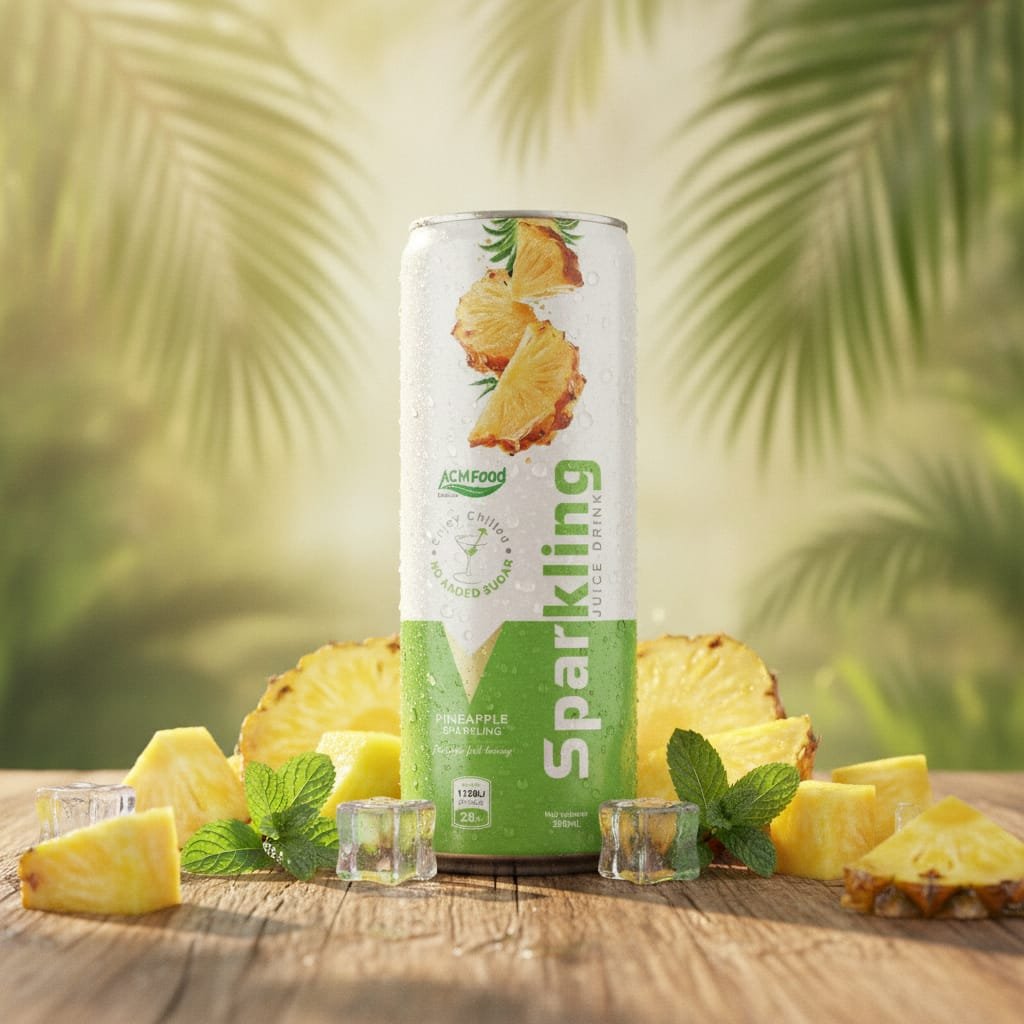
- Cans hold carbonation longest; 320 ml is a common export size.
- Sugar taxes reward versions under 5–8 g sugar per 100 ml.
Juice level and sugar
| Juice content | Sugar from juice (per 100 ml) | Positioning |
|---|---|---|
| 10% | about 1 g (plus added sugar) | Soda-style |
| 30% | about 3 g | Better-for-you soft drink |
| 50% | about 5 g | Juice spritzer |
| 100% | about 10 g | Sparkling juice, no added sugar |
What brands should specify
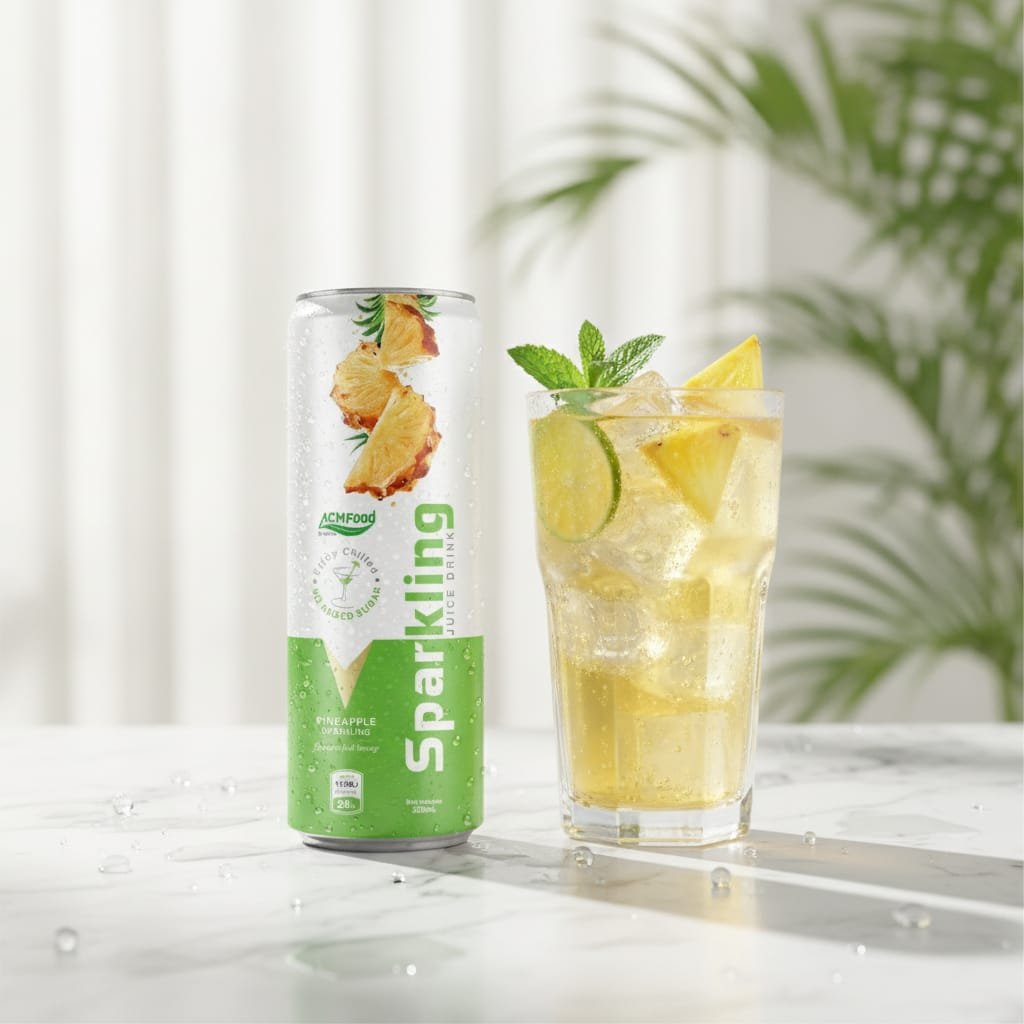
- Juice percentage and whether NFC or from concentrate.
- Sugar target and any sweeteners.
- Carbonation level (typically 2.5–3 volumes CO₂).
- Clear or cloudy style.
- Pack size and format.
Frequently asked questions
Is pineapple sparkling juice healthy?
Higher-juice, no-added-sugar versions are a better alternative to regular soda. Low-juice versions are similar to other sweet soft drinks.
Does it contain vitamin C?
Some, in proportion to juice content, unless vitamin C is added.
Does carbonation affect nutrients?
No. CO₂ does not change vitamin or mineral content.
Can it be customised for private label?
Yes. Juice level, sweetness, carbonation and packaging are standard OEM variables.
Pineapple drinks from ACM Beverage
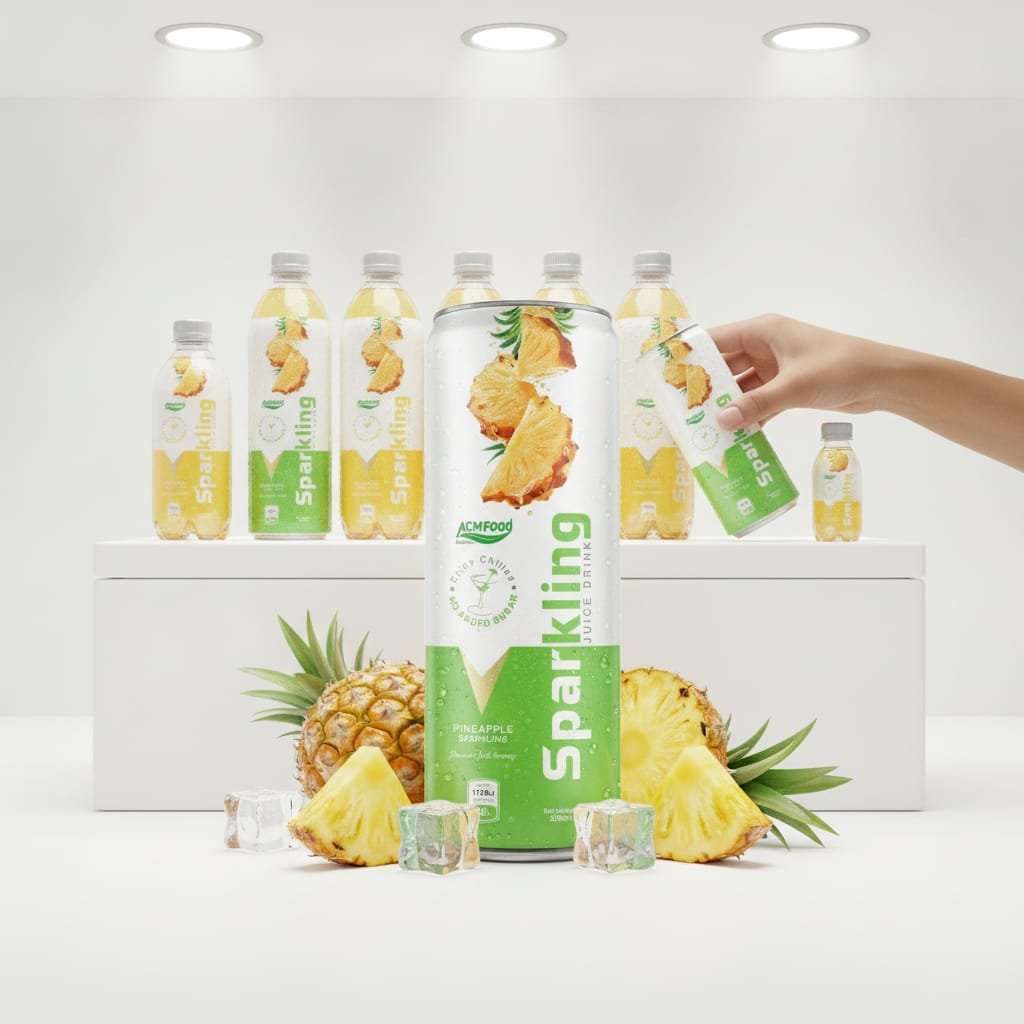
ACM Beverage produces pineapple sparkling juice in Vietnam for OEM and private label customers. See the 320 ml pineapple sparkling juice or the sparkling drink range. Related reading: pineapple juice nutrition.






