
Mango Hibiscus Tea Drives Flavor Innovation in Premium RTD Beverage Market

Mango Hibiscus Tea Drives Flavor Innovation in Premium RTD Beverage Market - article banner

The global ready-to-drink tea market is undergoing a fundamental shift, characterized by an insatiable demand for novel flavor combinations that deliver both sensory excitement and functional benefits. Within this evolving landscape, the fusion of tropical fruits with botanical infusions has emerged as a powerful consumer pull, moving beyond mere novelty to establish new category benchmarks. Industry analysts note that flavor innovation, particularly the integration of real fruit extracts with heritage teas, now represents the primary growth vector in the premium RTD segment, forcing brand owners and manufacturers to re-evaluate their product development strategies.

This transformation is not only about taste; it signals a deeper market realignment toward transparency, authenticity, and health-oriented indulgence. For international distributors and private label operators, understanding how to harness this wave of flavor innovation is critical for securing competitive differentiation. The Mango Hibiscus Tea Drink exemplifies this trend, offering a case study in how precise ingredient sourcing, production scalability, and cultural flavor cues can converge to create a globally viable product. This article analyzes the strategic implications of this innovation, providing actionable insights for B2B stakeholders.

The Emergence of Fusion Flavors in Functional Tea

Flavor innovation in the RTD tea category has moved past single-note offerings. The Premium Real Mango Flavored Hibiscus Tea Drink 330ml represents a deliberate union of two powerful flavor profiles: the sweet, tropical character of mango and the tart, earthy notes of hibiscus. This combination is not accidental but rooted in consumer research indicating a preference for complex, layered taste experiences. The LSI term ‘flavor pairing’ accurately describes the strategic alignment of mango’s sucrose content with hibiscus’s acidity, creating a balanced, thirst-quenching beverage suitable for warm-climate markets.

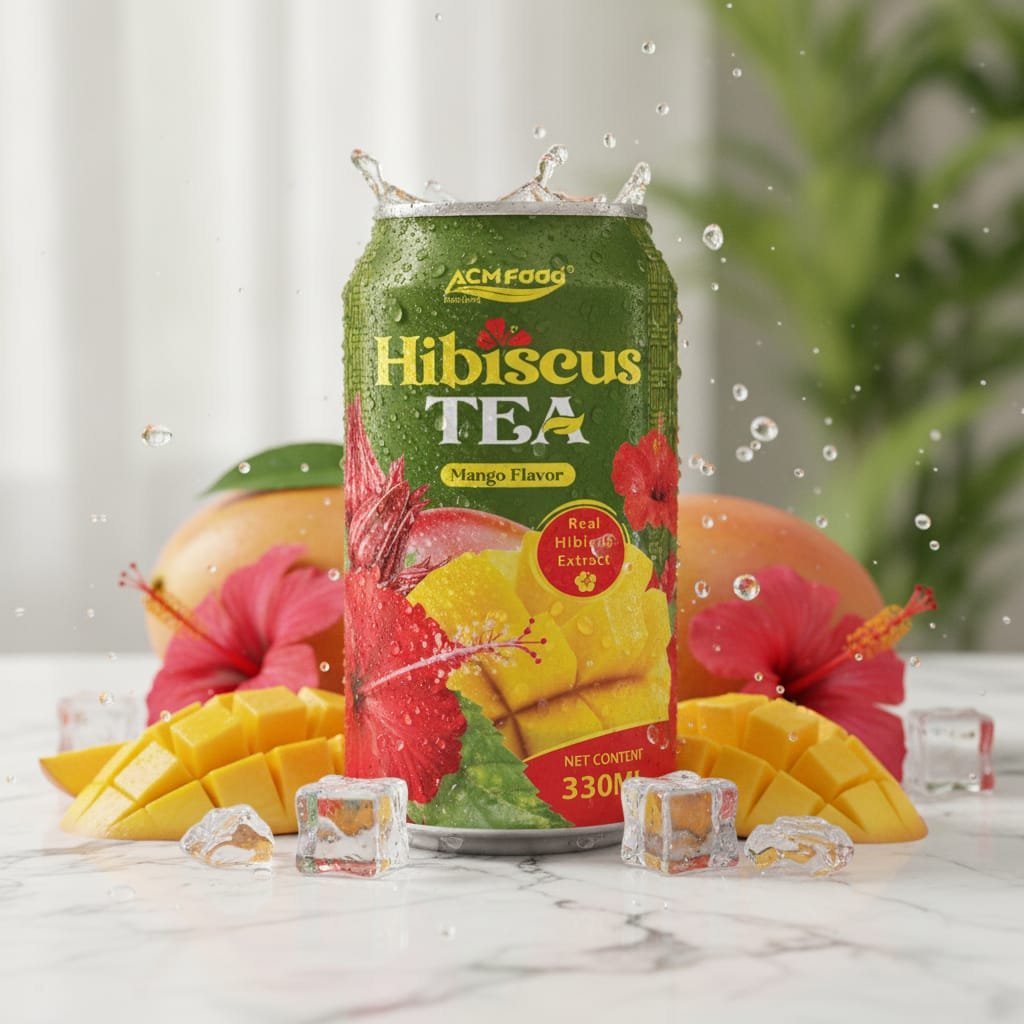
Mango hibiscus tea drink in sleek can with fresh mango slices and hibiscus flowers on white background

Mango and hibiscus fusion creates a vibrant RTD tea.

Why Mango Resonates

Mango, often termed the ‘king of fruits,’ enjoys universal recognition across Asian, Middle Eastern, and Latino markets. Its aroma and sweetness evoke tropical indulgence, making it a high-appeal ingredient for RTD formulations. When combined with hibiscus—a flower known for its vibrant crimson color and perceived cardiovascular benefits—the product transcends its category, appealing to both taste-focused and health-conscious consumers. This flavor architecture addresses a growing demand for ‘functional indulgence,’ where pleasure and wellness coexist.

Hibiscus as a Functional Anchor

Beyond flavor, hibiscus contributes visual appeal and a natural source of antioxidants, specifically anthocyanins. For B2B buyers evaluating product portfolios, the inclusion of functional ingredients like hibiscus can justify a premium price point. The ability to market a tea drink as both refreshing and beneficial aligns with the clean label movement. Distributors can leverage this dual proposition—real mango flavor meets herbal tea heritage—to penetrate health-oriented supermarket chains and specialty retailers.

The Business Case: OEM Flexibility and Market Entry

For importers and brand owners, the path to introducing innovative fusion beverages requires a manufacturing partner with proven OEM capabilities. The Mango Hibiscus Tea Drink is engineered for such partnerships. ACM Beverage offers complete customization—from flavor intensity to sweetness level—enabling clients to tailor the product to local palates. This OEM flexibility reduces time-to-market for new SKUs, a critical advantage in the fast-moving consumer goods sector.

The production ecosystem at ACM ensures consistent quality. With certifications like FSSC 22000, ISO, BSCI, USDA Organic, EU Organic, HALAL, and KOSHER, the facility satisfies the regulatory requirements of major markets including the USA, Europe, and the Middle East. For distributors concerned about supply chain integrity, these certifications provide the assurance needed to build long-term partnerships. Additionally, the company’s export capacity—over 300 containers monthly—underscores its reliability as a global supplier.

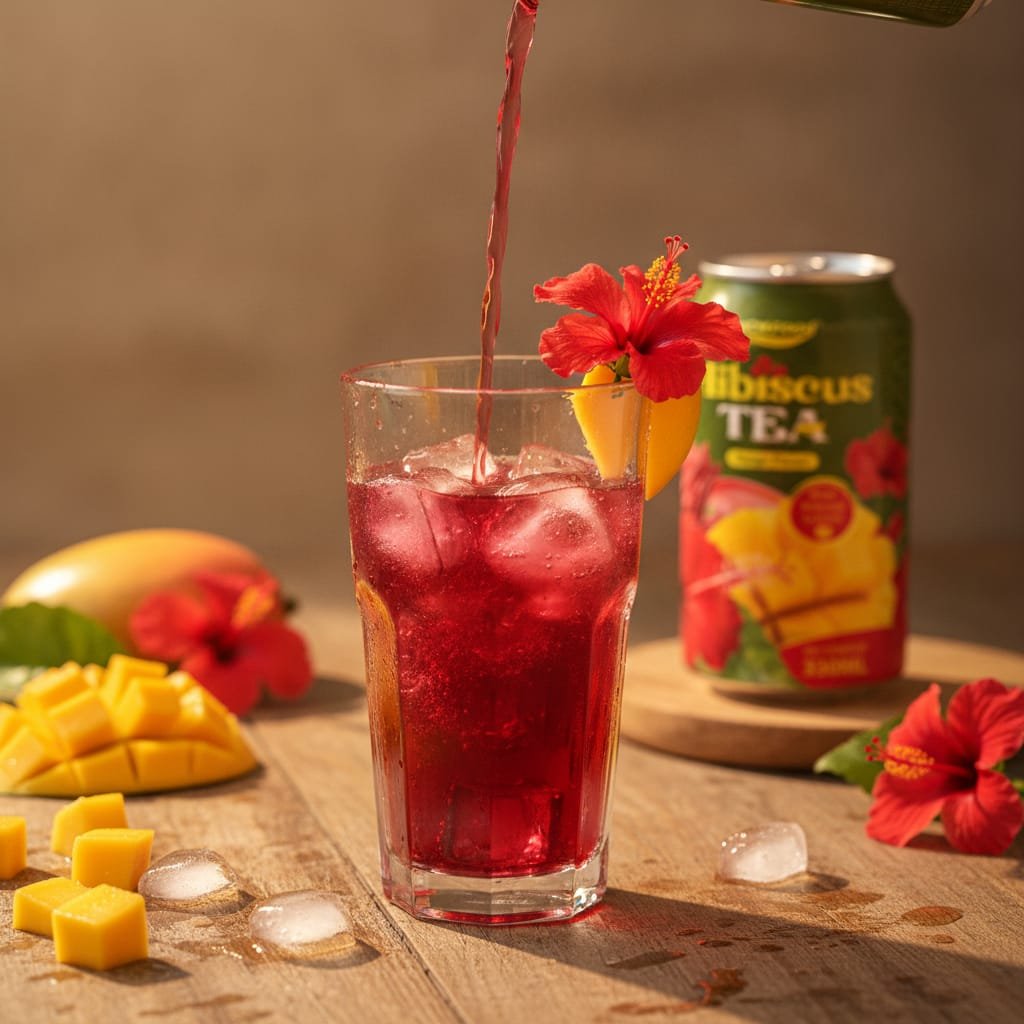
Close-up of a 330ml sleek can of mango hibiscus tea with a glass pour and ice, surrounded by mango pieces and hibiscus f

OEM customization allows tailored flavor profiles.

Private Label Opportunities

The premium real mango flavored hibiscus tea is available for private labeling, allowing distributors to launch their own brand without upfront R&D investment. ACM’s team manages recipe development, packaging design, and certification compliance. This turnkey model is particularly attractive for mid-sized retailers aiming to compete with multinational brands. The product’s 330ml sleek can format aligns with modern convenience trends, fitting neatly into on-the-go consumption occasions.

Low MOQ and Scalability

One of the most critical factors in flavor innovation is achieving scale without sacrificing agility. ACM offers flexible minimum order quantities, enabling test launches in select markets before committing to large volumes. Once a flavor gains traction, the manufacturer can ramp up production to full container loads. This scalability is essential for B2B clients who must manage inventory risk while pursuing aggressive growth targets.

Supply Chain and Quality Control in Export

Launching an innovative flavor like mango hibiscus tea internationally demands a robust supply chain. The mango hibiscus tea drink benefits from Vietnam’s well-developed tropical fruit sourcing network. Mangoes are harvested at peak ripeness and processed into puree or natural flavor extracts, preserving the fresh taste. Hibiscus flowers are sourced from regional farms, ensuring traceability and consistent quality. The production facility in Cu Chi District, Ho Chi Minh City, operates under strict hygiene protocols, with automated filling lines that minimize contamination risks.

For importers, logistics efficiency is paramount. ACM coordinates with shipping partners to optimize container loading and transit times. The company’s experience exporting to 50+ countries means they understand documentation requirements (including FDA prior notice, EU Rapid Alert System, and Halal certification renewal). This logistical expertise reduces friction for new distributors. As a strategic aloe vera juice and tea drink supplier, ACM has built a reputation for on-time delivery and product integrity.

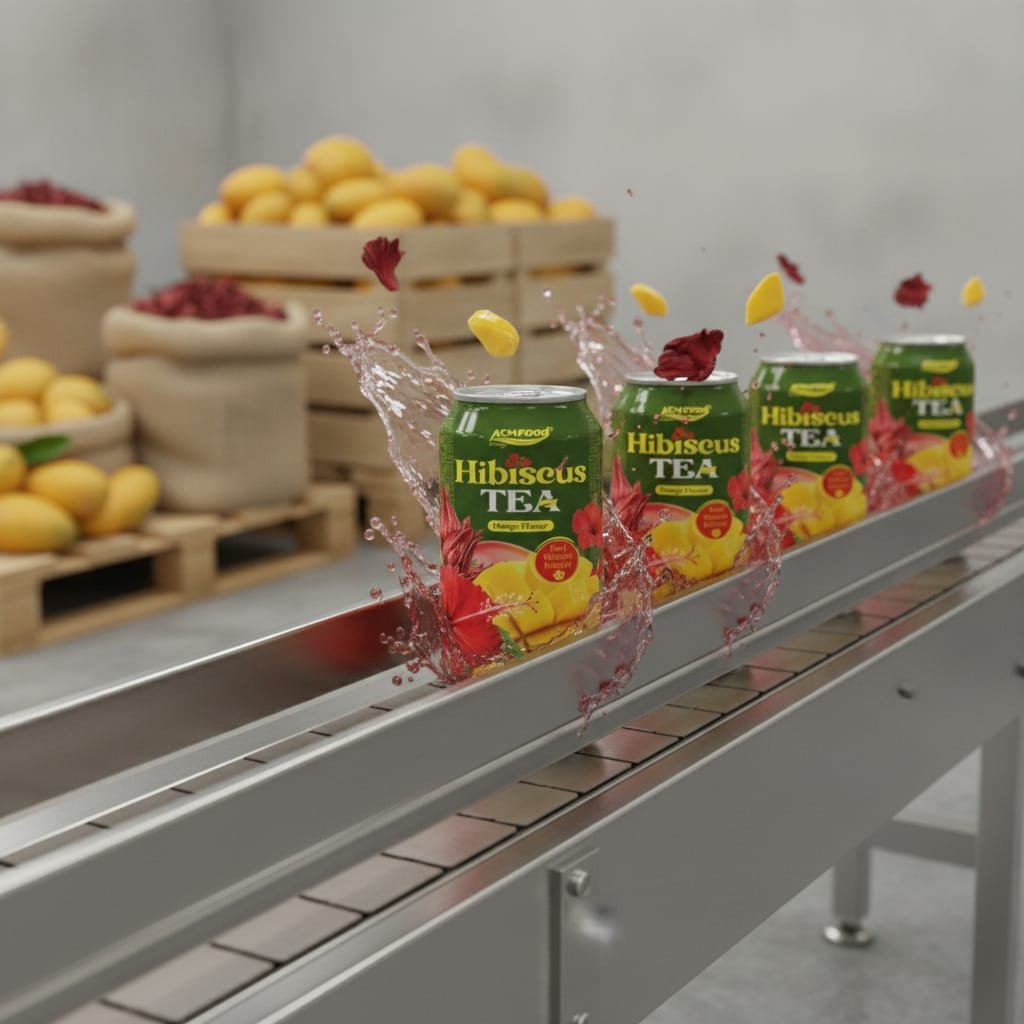
A row of mango hibiscus tea cans on a production line with green mangoes and hibiscus flowers in the background

Sourcing real mangoes ensures authentic flavor in every can.
For illustrative purposes only

Future Trends in RTD Tea Innovation

Looking ahead, the convergence of tropical fruit flavors with functional botanicals will accelerate. The success of mango hibiscus tea paves the way for other combinations like passion fruit & chamomile or lychee & rooibos. B2B buyers should monitor consumer interest in adaptogens and nootropics, which could be integrated into similar base flavors. The clean label movement will demand even more transparency: consumers will expect real fruit ingredients, no artificial colors, and low sugar alternatives.

Manufacturers like ACM are well-positioned to lead this next wave. Their investment in R&D and flexible packaging capabilities—including multiple can sizes (250ml, 320ml, 330ml, 500ml) and paper boxes (330ml, 1L, 1.5L)—allows partners to experiment with different price points and channels. For distributors, the lesson is clear: flavor innovation is no longer optional—it’s the core driver of shelf velocity.

Actionable B2B Strategies

To capitalize on this trend, importers should request samples and conduct blind taste tests with local focus groups. Understanding regional sweetness preferences is crucial; a formula that works in Dubai may need adjustment for Scandinavian markets. ACM’s product development team can modify recipes to achieve the perfect balance. Additionally, leveraging the product’s multi-certification status can open doors with retailers that demand sustainable and ethical sourcing.

For private label operators, the mango hibiscus tea SKU can be positioned as a premium alternative to mainstream iced teas. The visual impact—the deep magenta color of hibiscus combined with the golden hue of mango—creates Instagram-worthy appeal, an asset for social-media-driven marketing campaigns. Distributors should also consider seasonal promotions around summer and holiday periods, aligning with increased demand for refreshment beverages.

Frequently Asked Questions

What makes mango hibiscus tea a flavor innovation in the RTD category?

The combination is novel because it pairs a universally loved tropical fruit with a functional botanical, creating a layered taste profile that transcends traditional single-flavor teas. This fusion leverages mango’s broad appeal and hibiscus’s health halo, satisfying consumer demand for both indulgence and wellness.

How can distributors ensure product differentiation with this drink?

Using real mango flavor and hibiscus extract, rather than artificial alternatives, immediately sets the product apart in a crowded market. Additionally, the product’s clean label positioning and multi-certification (HALAL, Organic, Kosher) provide distinct advantages in culturally diverse markets.

Is the mango hibiscus tea drink suitable for private label partnerships?

Yes, ACM offers comprehensive OEM/ODM services including custom formulation, packaging design, and labeling compliance. Brands can launch their own version of this drink with minimal upfront investment, benefiting from ACM’s production expertise and supply chain reliability.

What export certifications does the product hold?

The product is manufactured in FSSC 22000, ISO, and BSCI certified facilities. It is also available with USDA Organic, EU Organic, HALAL, and KOSHER certifications, covering the requirements of North American, European, Middle Eastern, and Southeast Asian importers.

What packaging options are available for this drink?

Besides the 330ml alu-can, ACM offers various formats including 250ml, 320ml, 500ml cans, glass bottles, and paper boxes. This flexibility allows distributors to choose based on target retail channel and consumer preference.

Related blogs insights

Kiwi Sparkling Drinks A Refreshing and Flavorful Choice

Contents1 The Health Benefits of Kiwi Sparkling Water1.1 The Nutritional Value of Kiwi Sparkling Water1.2 [...]

1 Comment

Low Sugar Mango Juice Drives Health Conscious Beverage Market Growth

Explore how low-sugar mango juice from tropical OEM manufacturers meets rising global demand for healthier [...]

The health benefits of Soya

Top 5 health benefits:  Source of protective antioxidants: Soya beans contain natural compounds called “isoflavones”. [...]

1 Comment

ACM Low Sugar Coconut Water Drives Functional Beverage Growth Through Korean Innovation

Explore how ACM's low-sugar coconut water drives functional beverage growth with Korean innovation. OEM solutions [...]

How to Drink Aloe Vera Juice

Contents1 Drinking Pure Aloe Vera Juice2 Dosage of Pure Aloe Vera Juice3 Measuring Your Aloe [...]

1 Comment

Beetroot Juice OEM Production – Natural Energy in Every Drop | ACMFOOD

Contents1 Our OEM Process – From Root to Bottle2 Finished Product Features3 Why Beetroot Juice [...]

1 Comment

Leave a Reply

Your email address will not be published. Required fields are marked *