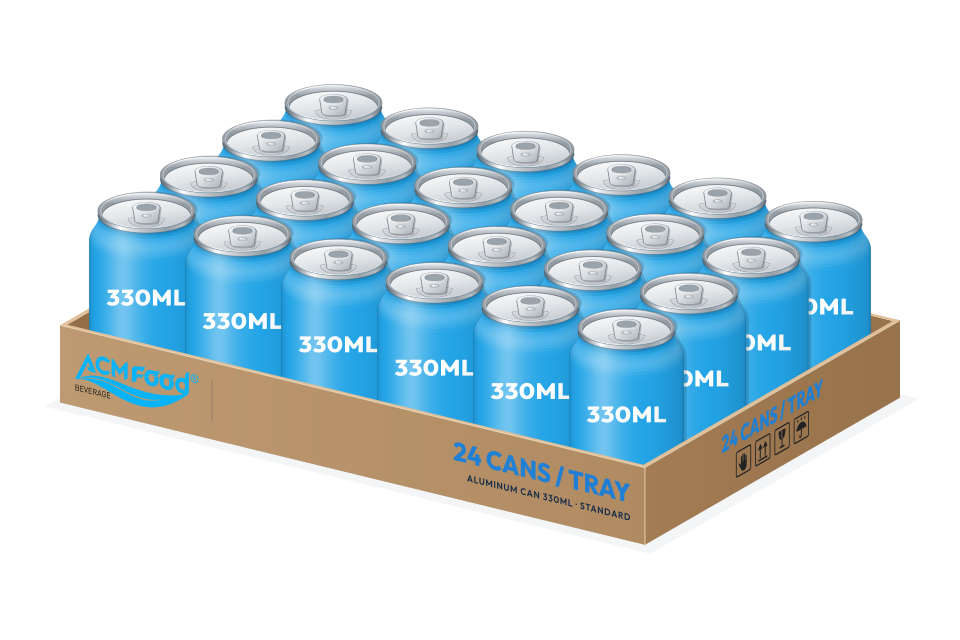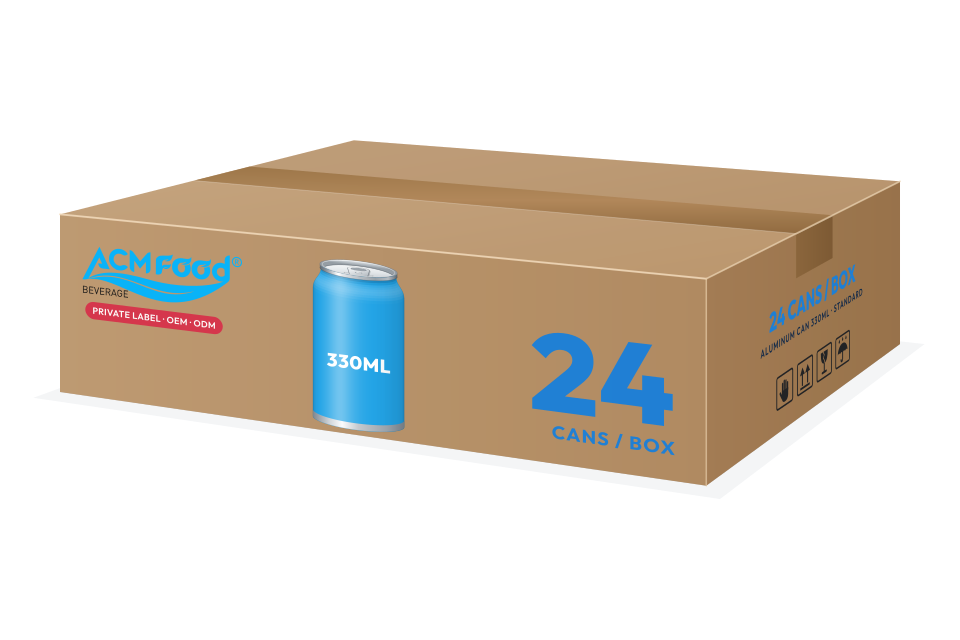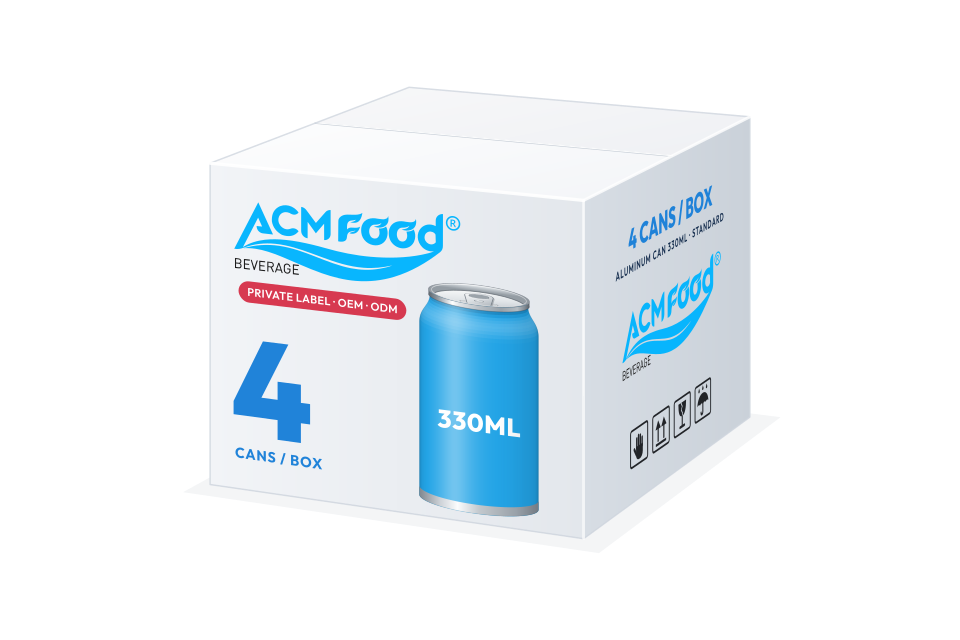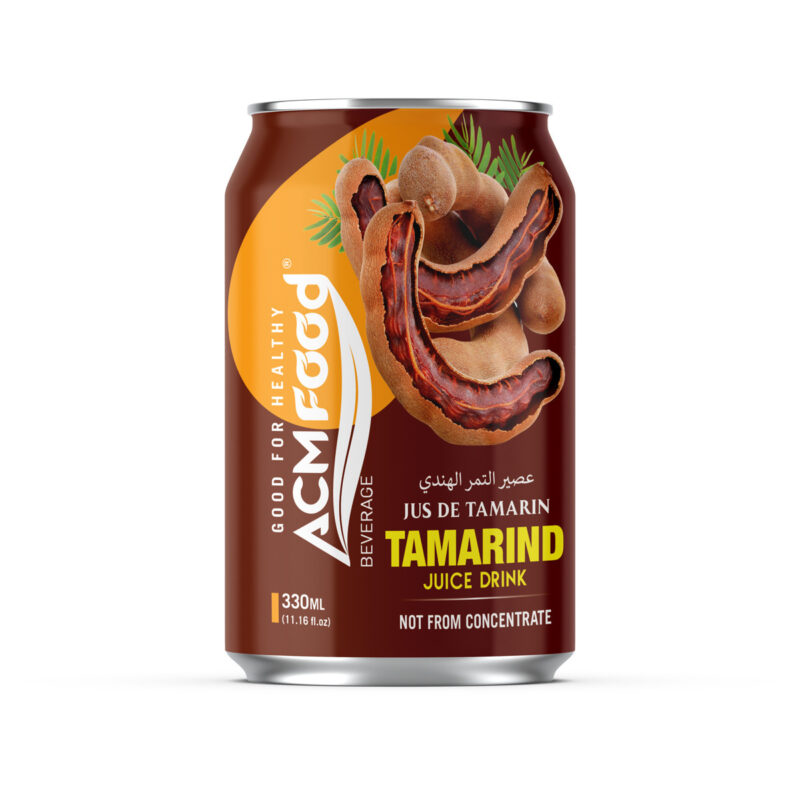









Tamarind is consumed differently from sweet tropical juices. Its sour edge makes it a genuine thirst-quencher, drunk with food or in heat rather than as a treat, and those occasions call for a full serve. A 250ml can suits a trial purchase; a 330ml can suits the customer who already drinks tamarind regularly.
Tamarind for Thirst-Quenching Occasions
The juice is pressed as not-from-concentrate and formulated with no sugar added, which keeps the tartness intact instead of rounding it into sweetness. No artificial colouring is used, so the amber tone is the fruit’s own. Tamarind drinkers are specific about this balance, and a version that has been sweetened to broaden appeal generally loses the core customer it was built for.
The 330ml Can in Practice
The standard dimension fits vending, cooler shelving and catering trolleys without adaptation, and it prices comfortably against soft drinks on a restaurant menu. Aluminium is opaque, light and durable, and the 24-month ambient shelf life means no chilled logistics anywhere between the filling line and the retail cooler – useful for a flavour whose demand is concentrated in hot markets with long inland distribution legs.
Production Framework
The line is made in Vietnam under FSSC 22000, HACCP and ISO 22000 certification, with capacity of 20,000 cartons per day and a 500-carton minimum. OEM services include adjusting the sweet-sour balance toward a specific market’s preference, plus complete can artwork in the required languages. Payment is T/T, loading at Ho Chi Minh City Port, with 15 to 30 days lead time. The broader fresh fruit juice range covers the mainstream flavours distributors usually pair with it.