
A noni drink is a ready-to-drink beverage made with juice from the noni fruit (Morinda citrifolia), usually blended or sweetened because plain noni juice tastes bitter and pungent. For an importer choosing a noni product, the label “noni drink” hides four separate decisions: how much noni juice the drink contains, how sweet it is and with what, whether it carries pulp, and whether it is still or carbonated. This guide sets out those four choices so a buyer can write a usable product brief.
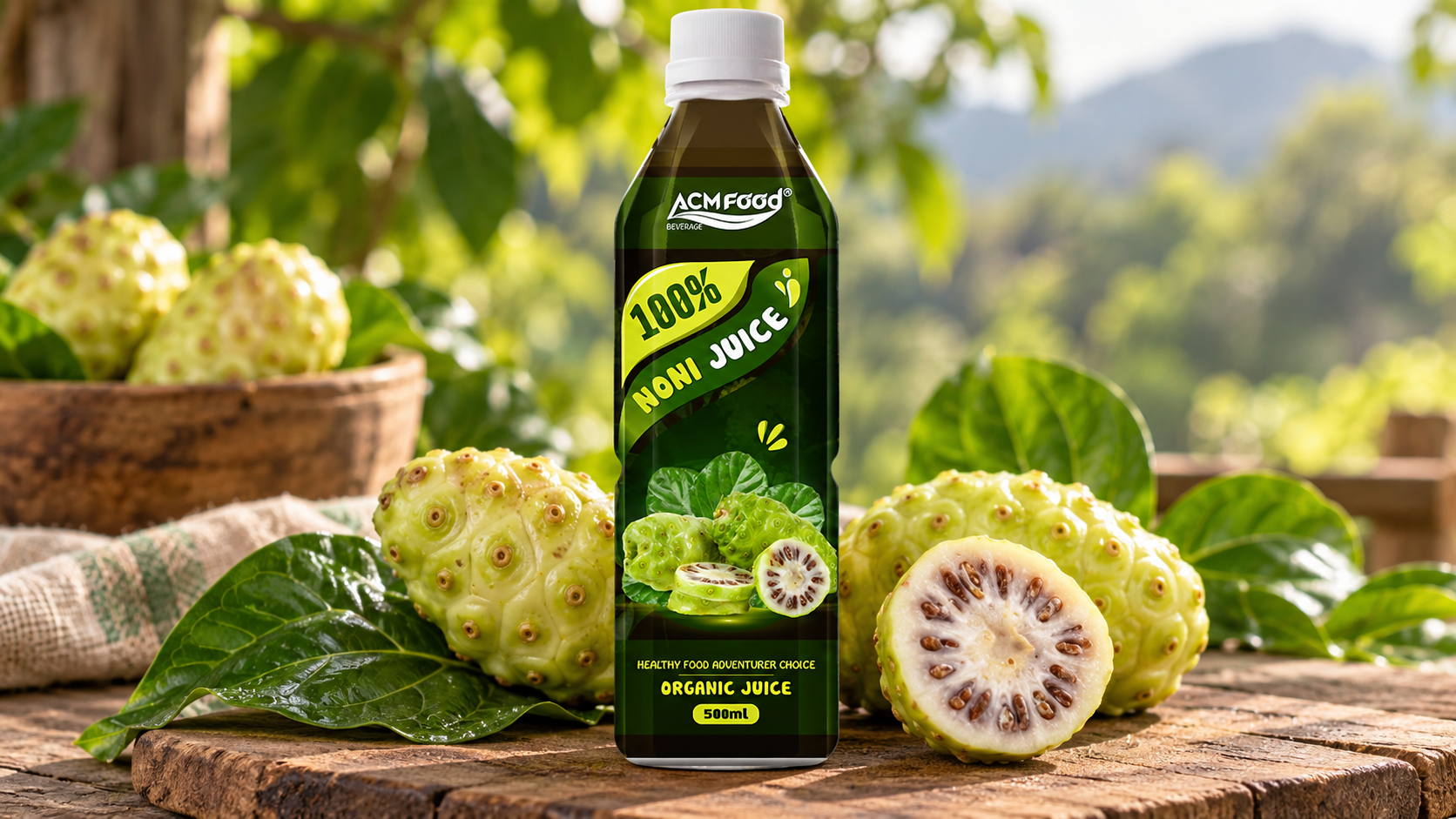
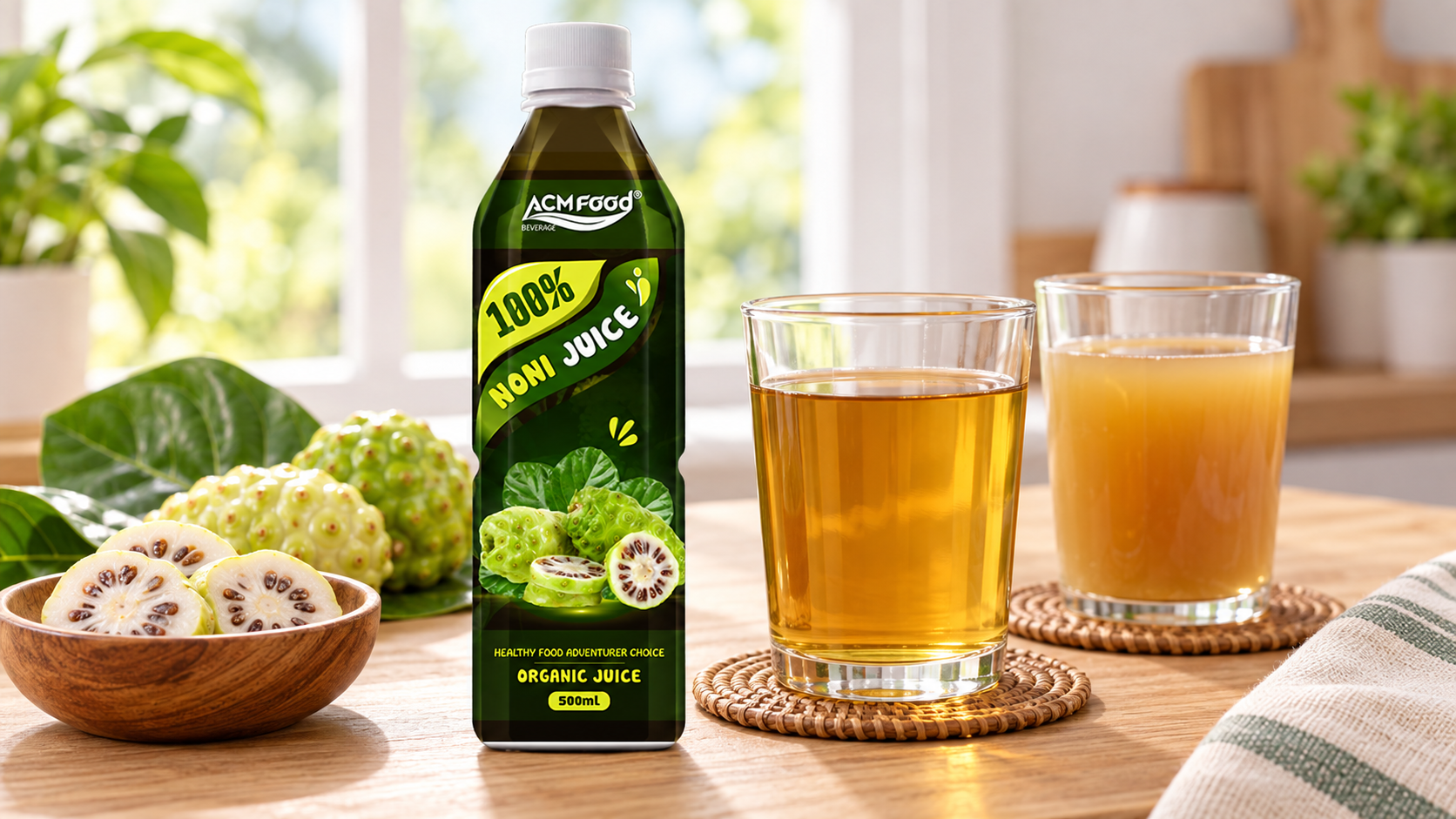
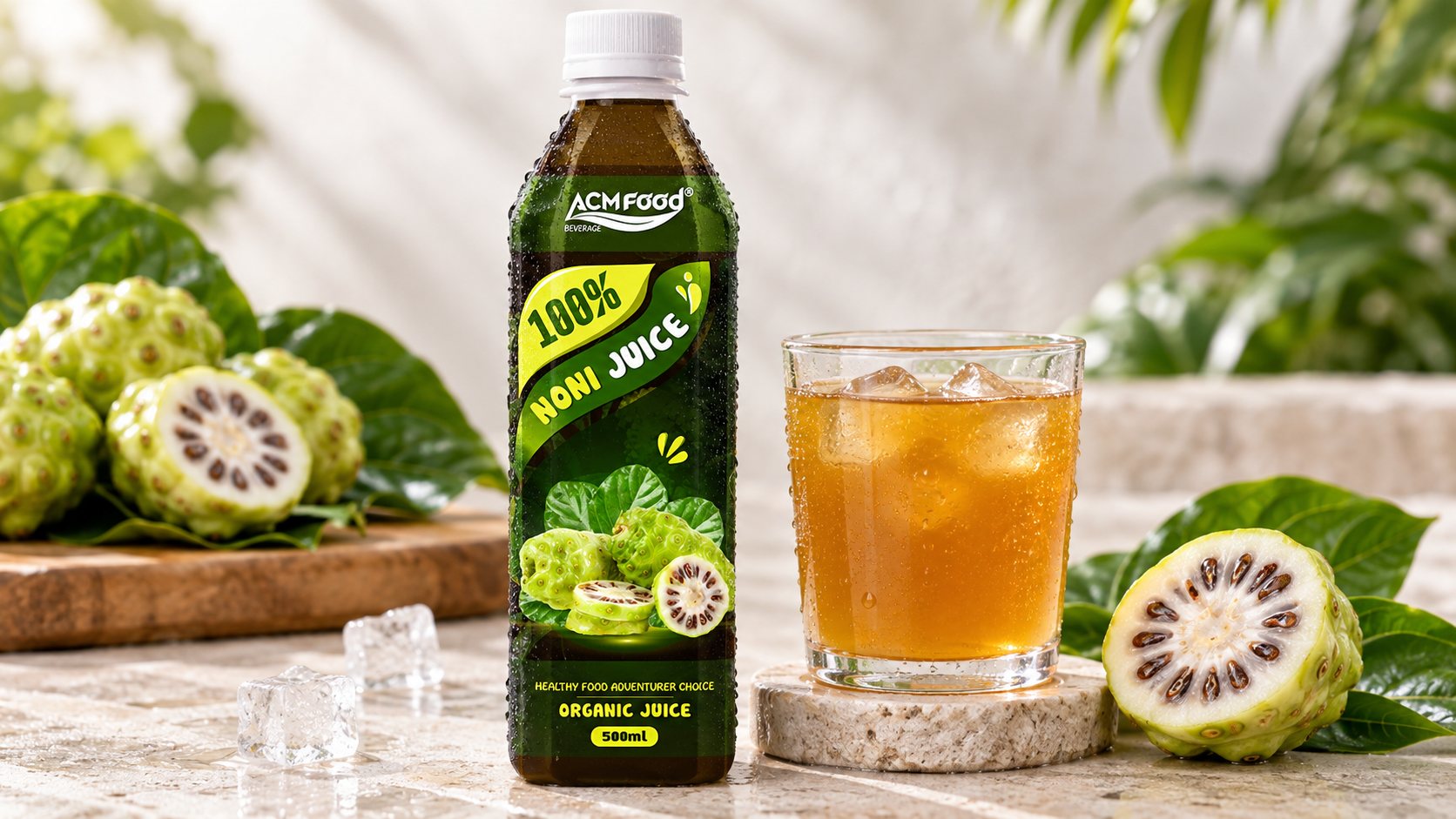
It is written for importers and brand owners selecting a category, not for consumers. The one noni product in the ACM Beverage range is a 500ml PET bottle, and the guide compares what is published about it with each decision. Where the product page does not state a value, the guide says so instead of guessing.
What do buyers actually mean by “noni drink”?
Buyers use “noni drink”, “noni juice drink” and “noni fruit juice” interchangeably, but they describe different products. A noni fruit juice sits at the high end of juice content, while a noni drink or noni juice drink is usually a blend in which noni is one ingredient among several.
The wording matters because it sets expectations on taste, price and labelling. Regulators in many markets treat “juice”, “nectar” and “drink” as different names for the food, each tied to a minimum juice content. A buyer who asks a supplier for a noni drink without naming the juice content may receive an offer that looks cheap but sits in a different category from the one the market expects. The guide on NFC versus from-concentrate juice explains the production routes behind these names.
Choice one: how much noni juice should the drink contain?
The juice content decides the product tier, the taste intensity and the label name. A drink with a high noni share tastes stronger and costs more per bottle, while a drink with a low noni share is milder, easier to sell to mainstream shoppers and may have to carry a different name on the pack.
Three tiers appear in most offers. The table compares them without assigning percentages, because the minimum figure for each name depends on the market and on the fruit.
| Tier | What it means | Taste | Typical positioning |
|---|---|---|---|
| 100% juice | Only juice, with no added water beyond reconstitution | Strong, bitter, pungent | Small-serving, specialist or wellness-adjacent retail |
| From concentrate | Juice that was concentrated and later diluted back | Strong, somewhat cooked | Standard bottled juice with an efficient supply chain |
| Juice drink | Noni juice blended with water, other juices or sweetener | Mild to moderate | Everyday retail, convenience and export bulk |
A related question on how to read the wording on the pack is covered in the noni juice article, which also explains what brands may and may not claim. For a finished drink, the safest approach is to state the juice content you want as a number in the brief and ask the supplier to confirm it in writing.
Choice two: how sweet should it be, and with what?
Sweetness is the lever that makes noni acceptable to a wider audience, so it needs its own line in the brief. The decision has two parts: the intensity of sweetness and the type of sweetener, and each affects cost, label wording and shelf appeal.
Common sweetener routes include sugar, fruit juice from another fruit used to soften the taste, and high-intensity sweeteners for reduced-sugar positioning. Each route has consequences:
- Sugar. Familiar taste and simple labelling, but it raises the sugar level that some markets tax or restrict in school and institutional channels.
- Blending with milder juices. Apple, grape or pineapple juice can soften noni’s bitterness while keeping a fruit-based ingredient list, though it changes the recipe’s identity and the name the product can carry.
- Reduced-sugar systems. These suit markets that favour lower-sugar drinks, but they alter mouthfeel and may need a separate taste approval.
Treat sweetness level as a calibration decision and write it down as a target that the supplier can match with a reference sample. Our guide on beverage sweetness levels explains how regional palate differences affect what “right” means, and it applies directly to a product as challenging as noni.
Choice three: with pulp or without?
Pulp changes appearance, texture and consumer perception. A clear noni drink looks like a conventional juice and is easier to dose consistently, while a drink with pulp or fibre looks more natural but can settle, vary between bottles and require a shake-before-use instruction.
For noni specifically, pulp can also carry more of the fruit’s strong flavour. A buyer should decide whether the target consumer expects a clear or a cloudy drink, and ask how the supplier controls sediment over the shelf life. Cloudy products need agreed limits on settling, because small differences in processing can lead to visible layers in the bottle that retailers may reject.
Choice four: still or carbonated?
Most noni drinks are still, because the fruit’s flavour is already strong and carbonation can sharpen its bitterness. A carbonated noni drink is possible but is a development project, not a catalogue choice, since gas pressure, packaging and flavour balance all change.
Ask the supplier whether it has an existing carbonated formula, or whether the product would be developed from scratch. Packaging also changes: carbonated drinks need containers rated for internal pressure, which affects the choice between PET, can and glass. The packaging guide on comparing 250ml, 320ml, 330ml and 500ml formats helps place the pack size in a channel before the carbonation question is settled.
How does the ACM noni product map to these four choices?
The published specification covers the format and the shelf life, not the four recipe choices. The product page lists a 500ml PET bottle, ready-to-drink, with a shelf life of 18 months and food safety certifications FSSC 22000, HACCP and ISO 22000. Juice content, sweetener, pulp and carbonation are not stated, so they should be confirmed from the specification sheet.
| Decision | Published on the product page | To confirm with the supplier |
|---|---|---|
| Juice content | Not stated | Percentage of noni juice and the name the product carries |
| Sweetness and sweetener | Not stated | Sweetener type, sugar level per 100ml and any other juices |
| Pulp | Not stated | Clear or cloudy, and sediment limits |
| Carbonation | Not stated | Still or carbonated |
| Format and shelf life | 500ml PET bottle, 18 months | Closure, label options and storage conditions |
Requesting these four answers in the first message saves a round of emails. A supplier who answers with documents rather than adjectives is easier to compare.
What should the product brief contain?
A good noni drink brief is short and specific. It names the target tier and the market, then gives measurable targets that a sample can be checked against.
- Market and channel. Country, retail or food service, and the price band you aim for.
- Juice content and name on the pack. The tier you want and the wording you plan to print.
- Sweetness target. A reference sample, a sugar level per 100ml and the sweetener type.
- Appearance. Clear or cloudy, and the maximum acceptable sediment.
- Pack format. Material, volume and closure, with the reason for each.
- Claims. Any statement you intend to make, to be checked against local rules before artwork is drawn.
The Beverage Builder on this site helps you select products by packaging and flavour, which suits buyers who prefer to configure rather than write a brief from scratch.
What regulatory points affect a noni drink?
Noni juice is regulated differently from market to market. Some markets list it under novel food rules with defined conditions of use, others treat it as a conventional ingredient, and labelling expectations vary. Check the position in your destination before you finalise recipe and label, because conditions of use can affect how much noni a serving may contain.
Claims are a separate matter. Wording about health on a noni drink depends on the final formula, tested content, serving size and local rules, so it should not be copied from another country. Our article on what the evidence supports and what brands may claim separates research from traditional use and describes how label claims are treated in several markets. Keep language on the pack factual, naming the product and its ingredients rather than describing effects on the body.
What does packaging mean for a noni drink?
PET suits a strong-flavoured product sold in single-serve and family sizes, because it is light, resealable and lets the consumer see the colour. Cans give a better light and oxygen barrier and suit smaller serving sizes, while glass signals a premium positioning at a higher shipping weight.
The 500ml PET bottle in the ACM range targets extended serving and shelf presence rather than impulse purchase. If you want a smaller serving, which many retailers prefer for a strong-tasting product, ask whether a can or a smaller bottle can be developed. Smaller servings also help with taste trial, which matters for a flavour many shoppers meet for the first time.
How do you compare samples from two suppliers?
Compare samples blind, in the same order and at the same temperature, using the targets from your brief. Noni’s strong taste can mask differences, so score each sample on a short list instead of giving a single overall impression.
Score at least four things: sweetness against the reference, bitterness, aroma and appearance. Record bottle-to-bottle differences by opening more than one unit. A supplier whose samples vary within the same batch is unlikely to be consistent at volume.
Frequently asked questions
Is a noni drink the same as noni juice?
Not always. Noni juice names the juice itself, while a noni drink is usually a finished beverage that may be blended, diluted or sweetened. The name on the label depends on juice content and local naming rules.
Why is noni usually blended?
Plain noni juice has a bitter, pungent taste that many shoppers find difficult. Blending with milder juices or sweetener makes the drink easier to accept, which is why most commercial products are blends.
Can a noni drink be made with less sugar?
Yes, through blending choices or reduced-sugar systems, but the taste and the label wording change. Ask for a reference sample and check how your market regulates reduced-sugar descriptions.
How do I request a custom noni drink?
Send a brief that covers juice content, sweetness, pulp, carbonation, pack format and target market. A supplier can then say whether an existing product fits or whether a custom formula is needed.
Summary and next step
A noni drink is defined by four choices: juice content, sweetness and sweetener, pulp, and still versus carbonated. Make each one explicit in the brief, ask the supplier to confirm the values the product page does not state, and check regulation and claims in your market early.
To start a noni drink project, use the Beverage Builder to set the format and flavour direction, then send the brief to ACM Beverage so the team can confirm what an existing product covers and what would need development.