
Beverage packaging size is a commercial decision as much as a physical one. 250ml, 320ml, 330ml and 500ml are the four sizes most private label ranges are built around, and each one carries its own default retail channel, its own price-per-serving expectation, and its own effect on freight and minimum order economics.
This guide compares the four against each other directly, rather than describing each one in isolation, so a brand choosing between them can see where the real trade-offs sit.
What actually differs between these four sizes?
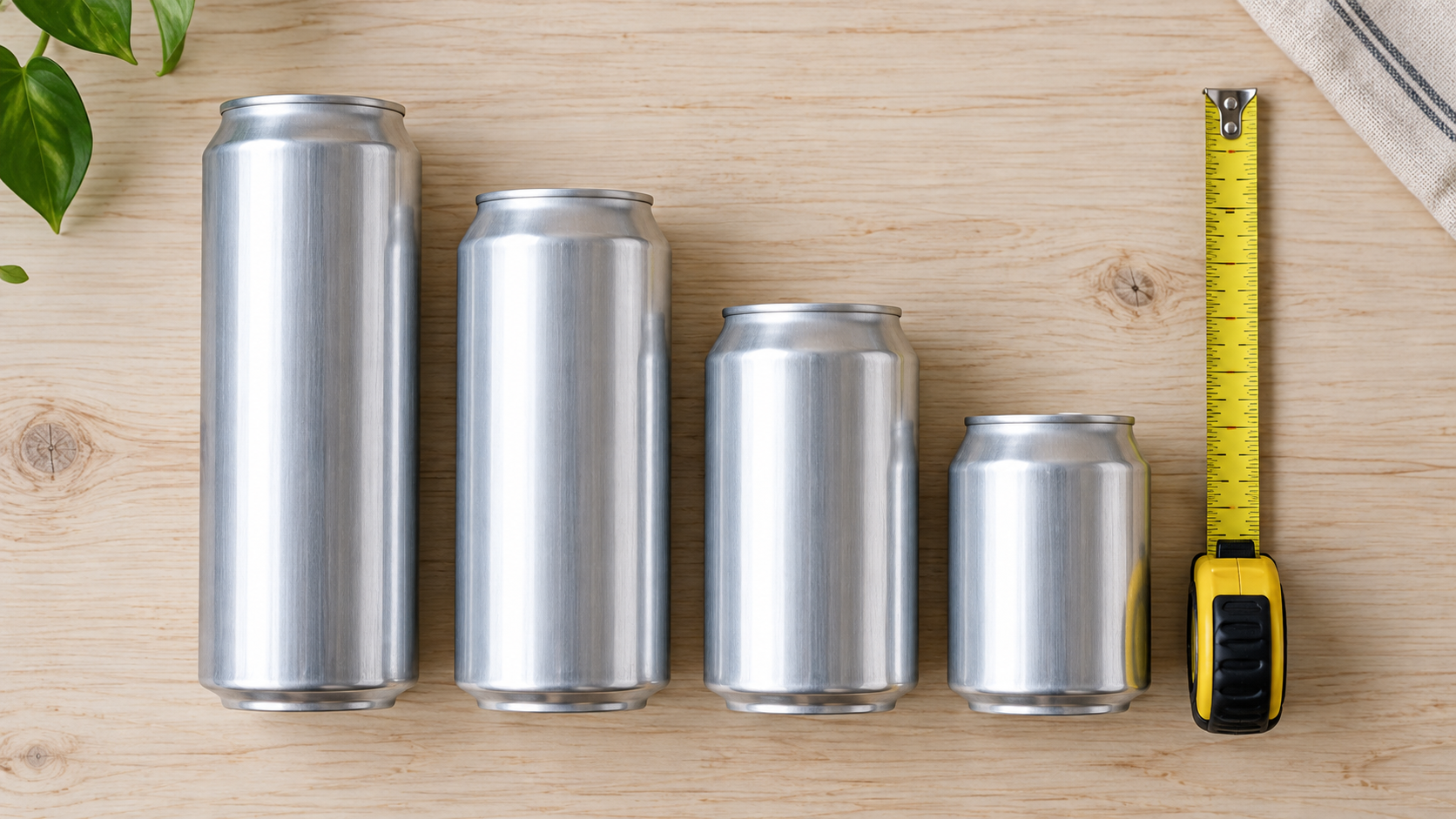
The four sizes differ in serving occasion, shelf presentation and unit economics, not primarily in the liquid inside the can. A juice formulated for a 250ml single-serve pack and the same juice at 500ml are usually the same recipe; what changes is how the format is positioned and priced.
| Size | Typical occasion | Common retail channel | Positioning note |
|---|---|---|---|
| 250ml | Single serve, on the go | Convenience, vending, food service | Lowest per-unit price point; smallest footprint on a crowded shelf |
| 320ml | Single serve with slightly more volume | Convenience, supermarket single units | Common for sleek-can premium presentations |
| 330ml | Standard single serve | Supermarket, convenience, export bulk | The global reference size; widest fixture and equipment compatibility |
| 500ml | Extended serving, sharing, multipack anchor | Supermarket, hydration and sports channels | Higher per-unit price but lower cost per millilitre |
250ml: the impulse and food service size
250ml sits at the small end of the range and is built for a single, quick serving rather than a session. It is a common choice for food service, hotel minibars and vending, where a compact footprint and a low absolute price matter more than value per millilitre. It also suits products where a smaller trial size lowers the barrier to a first purchase, which is relevant for a new flavour a distributor is testing in a market.
320ml: the presentation-led size
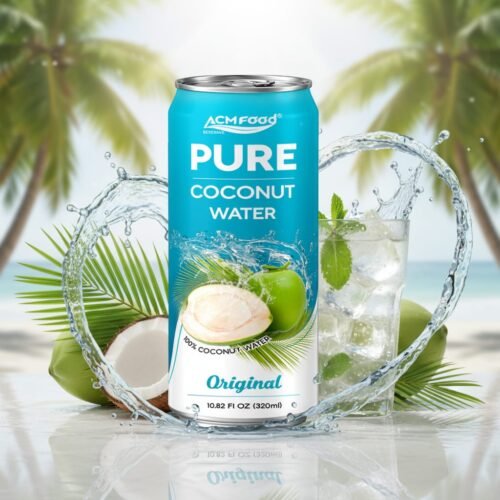
320ml is close in volume to 330ml but is used deliberately by brands wanting a visually distinct can, most often in a sleek format. The size difference from the 330ml standard is small enough that the liquid cost is almost identical, so the decision to use 320ml instead of 330ml is usually about shelf differentiation rather than about volume economics. A range built around botanical or premium tea positioning, such as a mango hibiscus RTD tea, commonly sits in this size band for exactly that reason.
330ml: the global reference size
330ml is the volume the beverage industry has standardised around worldwide. Filling lines, carton configurations, pallet patterns and retail chiller fixtures are all commonly built to this size, which keeps handling costs predictable and simplifies negotiations with a new retail buyer who already stocks other products at the same volume. For a brand entering export for the first time, 330ml is usually the size that removes the most friction, because nothing about the format itself needs explaining to a buyer.
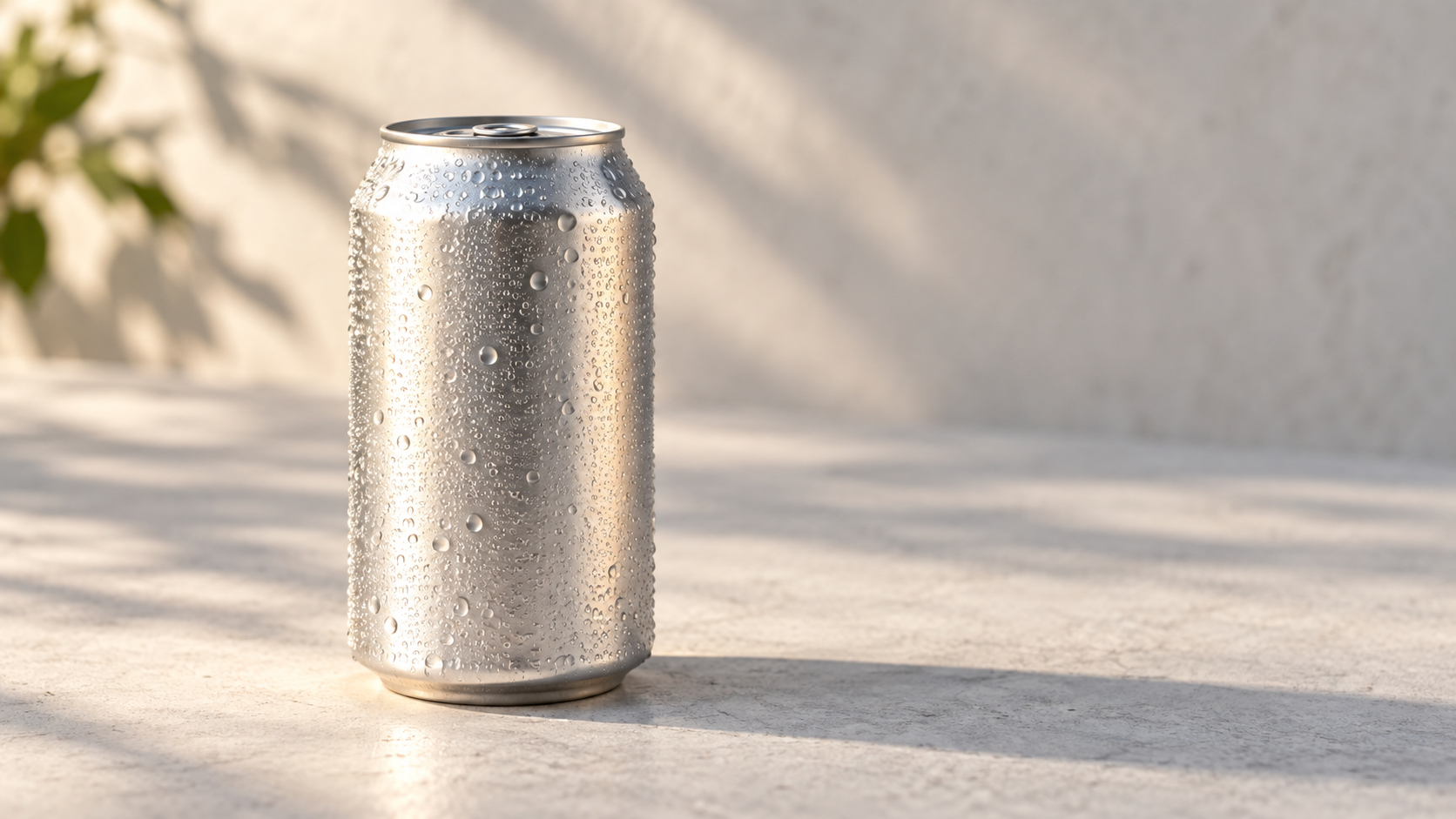
500ml: the value and sharing size
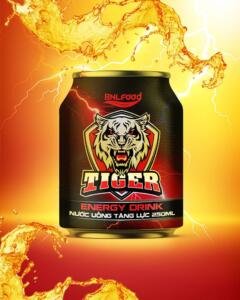
500ml delivers a lower cost per millilitre than the smaller formats, which makes it the standard choice for hydration, sports and multipack-anchor positioning. It reads as better value to a shopper comparing price per unit, but it also carries a higher absolute shelf price, which can work against it in impulse and convenience channels where the purchase decision happens quickly and the total price matters more than the per-millilitre calculation. Functional and energy-positioned products, including formats built around energy drink OEM development, frequently use 500ml because the category expects a fuller serving.
How size interacts with minimum order quantity
Size affects minimum order quantity indirectly, through the printed packaging rather than through the liquid. A common size such as 330ml is produced continuously by container suppliers, so a first order can draw on an existing production schedule. A less common size, or a size paired with an unusual decoration method, may only be produced in scheduled runs, which raises the quantity a brand needs to commit to for a first order.
The practical implication is that choosing a widely used size is one of the more effective ways to keep a first order accessible, independent of anything to do with the recipe itself. Three factors tend to move the minimum order for a given size:
- How common the container is. A globally standard can or bottle draws on continuous production; a less common shape or height often runs in scheduled batches only.
- The decoration method. A simple applied label carries a lower print minimum than a full-body sleeve or a directly printed can, regardless of the size chosen.
- The number of variants ordered together. Each flavour in a range needs its own printed components at the same size, so a four-flavour launch multiplies the packaging commitment even when the liquid volumes are modest.
How size interacts with freight and shelf life planning
Smaller formats carry a higher packaging-to-liquid ratio, which means more aluminium, glass or plastic per litre shipped compared with a larger format. That affects freight cost per litre delivered, though it is usually a secondary consideration behind channel fit and price positioning when a brand is choosing a size.
Shelf life interacts with size differently depending on the product. A functional or fruit-forward drink with delicate aromatic compounds, such as a passion fruit juice OEM product, can show flavour drift more noticeably in a smaller pack with a higher surface-area-to-volume ratio if oxygen ingress is not well controlled, which is a formulation and sealing question rather than a size limitation as such.
This is worth raising directly with a manufacturer rather than assuming it is settled, because the answer depends on the specific process and pack combination rather than on volume alone. A well-sealed small format can hold flavour as reliably as a larger one; the risk sits in the process control, not in the size on the spec sheet.
Choosing a size for a new launch
Three questions generally settle the size decision faster than comparing volumes in isolation.
- What channel is the primary target? Convenience and food service favour smaller formats; hydration, sports and value multipacks favour larger ones.
- Does the brand need shelf differentiation or fixture compatibility? A distinct size like 320ml stands out; the standard 330ml blends in but is easier to list.
- What does a first order need to look like? A widely produced size keeps the minimum order and lead time closer to standard, which matters most for a first export shipment.
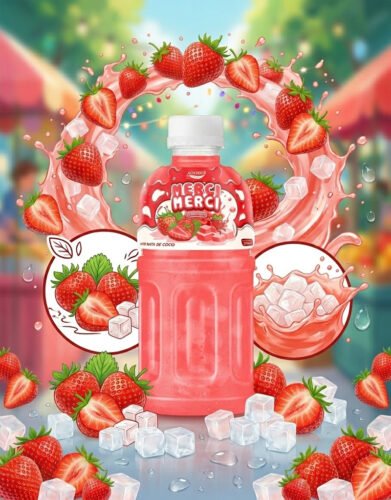
Products with texture or inclusions, such as those built around nata de coco inclusions or suspended chia seeds, sometimes favour a specific size range because the fill equipment and headspace requirements differ from a plain liquid, which is worth raising with a supplier before the format is finalised.
What buyers actually ask about size
A retail or distribution buyer evaluating a new listing rarely asks about volume in isolation. The questions that come up in a first conversation tend to cluster around three things: whether the size matches what already sits on their shelf or in their chiller, what the shelf price will be at that size against comparable products, and whether the format is available in a quantity that fits their opening order without them having to commit to a full container before the product has proven itself in store.
A size that answers all three cleanly moves a listing conversation forward faster than a size that requires the buyer to explain to their own category manager why a new format is being introduced. This is one of the quieter reasons 330ml performs well commercially even when a brand has no strong preference of its own: it removes a question the buyer would otherwise have to answer internally.
None of this means an unusual size is a poor choice. A brand deliberately positioning against the mainstream shelf, or targeting a channel where a distinct format is itself part of the appeal, can use size as a genuine differentiator. The point is to make that choice knowingly, weighing the shelf-standout benefit against the buyer-friction cost, rather than defaulting to an unusual size without having considered the trade-off.
Frequently asked questions
Can the same recipe be filled into multiple sizes?
Usually yes, with only minor adjustment. The formulation itself rarely needs to change between sizes; what changes is the packaging specification, the artwork dimensions and, in some cases, the thermal process if headspace or fill height differs enough to affect heat penetration.
Is a smaller size always cheaper to produce?
Not per unit of liquid. A smaller pack typically costs less in absolute terms but more per millilitre, because packaging cost does not scale down in proportion to volume. The right comparison for a business case is landed cost per serving at the intended retail price, not raw unit cost.
Does size affect which markets a product can enter?
Indirectly, through local shopper expectations and channel structure rather than through any regulatory restriction on volume itself. Some markets favour smaller single-serve formats due to convenience retail dominance, while others expect a larger standard serving; checking local category norms before fixing a size avoids a mismatch at launch.
What size should a first export order use if the brand is unsure?
330ml is the safest default for a first order specifically because of its universal fixture and equipment compatibility, which keeps both the minimum order quantity and the lead time closer to standard than a less common size would.
Do all four sizes come in the same pack materials?
Not necessarily. Aluminium cans are available across the full range from 250ml through 500ml, but glass and PET options are more format-specific, and some decoration methods are only cost-effective above or below a certain size. Confirming which materials are actually available at a given size, rather than assuming full interchangeability, avoids a late surprise once a format decision has already shaped the artwork.
Should a range launch with one size or several?
Most private label ranges launch with a single size across all flavours and add a second size only once the first has proven itself in the channel. Running two sizes from day one effectively doubles the packaging commitment, since each size needs its own printed components per flavour, which is a meaningful increase in first-order complexity for a launch that has not yet generated sales data to justify it.
Matching the format to the commercial goal
Packaging size is not primarily a technical decision; it is a channel and positioning decision that happens to be expressed in millilitres. 250ml and 320ml suit impulse and presentation-led launches, 330ml removes friction for a first export order, and 500ml suits value and hydration positioning where cost per serving matters most to the shopper.
ACM Beverage produces across all four sizes and can advise, before a first order is placed, on which format best matches a specific channel, market and minimum order target. Bringing a target retail channel and a rough price point to the first conversation is usually enough to narrow the choice to one or two sizes worth sampling, rather than starting from all four.