
Rage Energy Drink Drives Functional Beverage Demand Through OEM Innovation

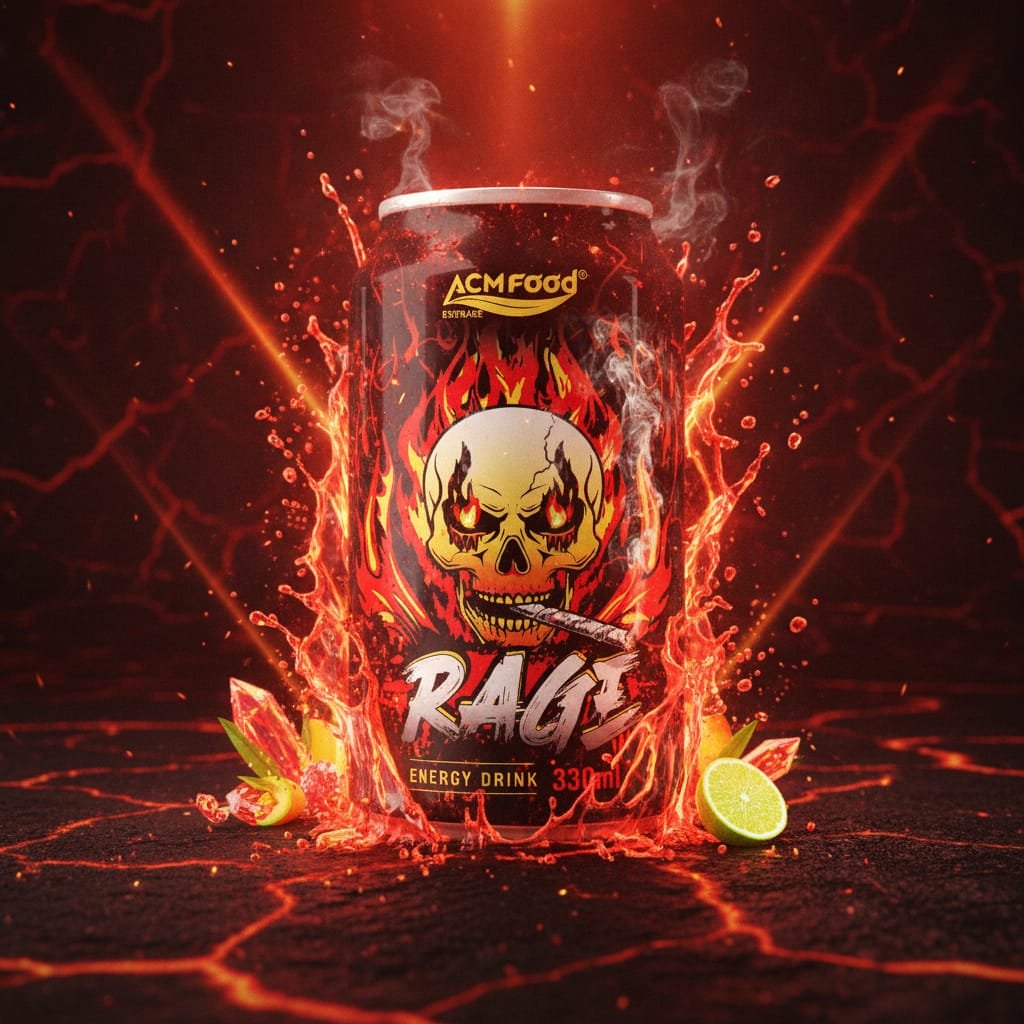
Rage Energy Drink red can with article title overlay in Forbes style

The global functional beverage market is experiencing unprecedented expansion, with energy drinks emerging as a dominant category. Consumers increasingly seek products that deliver tangible performance benefits, from mental alertness to physical endurance. This shift has opened substantial opportunities for manufacturers and distributors who can supply high-quality, customized formulations. Among the products gaining attention is the Rage Energy Drink 330ml Short Can Red, a premium export-grade beverage designed to meet rigorous international standards.

For businesses looking to enter or expand within this space, understanding how OEM partnerships enable rapid market adaptation is crucial. Vietnam-based manufacturers like ACM Food Co., Ltd. offer flexible production capabilities that allow brands to tailor caffeine levels, sweetness profiles, and packaging to specific regional preferences. This agility is reshaping how energy drinks reach consumers across North America, Europe, the Middle East, and Asia.

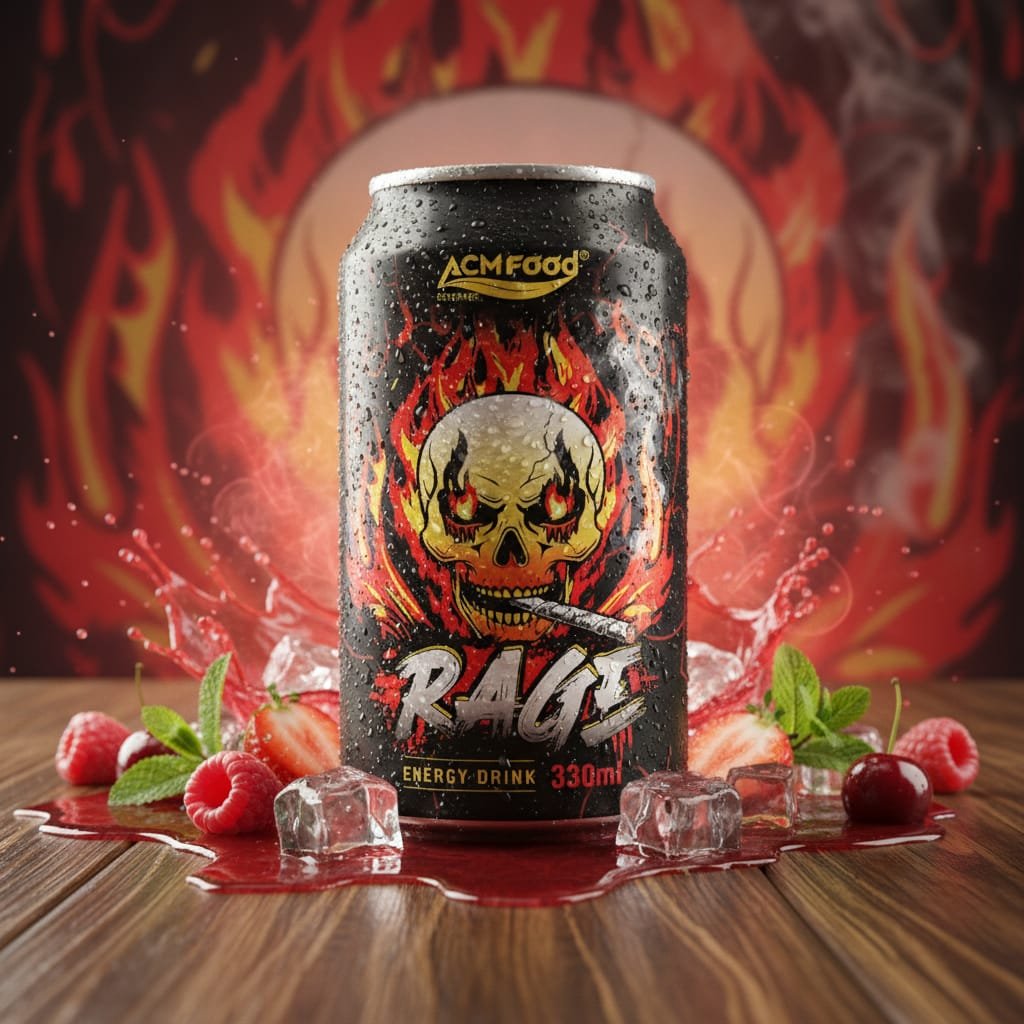
Rage Energy Drink red can placed on a blurred background of fresh fruits and ice cubes
Rage Energy Drink: functional boost in a portable can.

The Functional Beverage Revolution and Energy Drinks’ Role

Energy drinks have long been a staple in the functional beverage category, valued for their ability to boost energy and focus. According to recent industry reports, the global energy drink market is projected to grow at a compound annual growth rate of over 7% through 2030. This growth is fueled by expanding demand among young adults, athletes, and professionals seeking productivity aids. The Rage Energy Drink 330ml Short Can Red exemplifies this trend with its targeted formulation and portable packaging.

Drivers of this revolution include increasing health awareness, urbanization, and a growing preference for on-the-go consumption. Energy drinks are no longer seen as niche; they have become mainstream lifestyle products. This presents a strategic opening for suppliers who can deliver consistent quality and adapt to local tastes through OEM services.

Market Dynamics and Consumer Demand

Regional variations in flavor preferences and regulatory standards demand a flexible supply chain. For instance, European markets often impose strict caffeine limits, while Middle Eastern consumers prefer Halal-certified products. OEM manufacturers that hold certifications like HALAL, KOSHER, and FSSC 22000—such as those from ACM Food—provide a competitive edge. Distributors can leverage such credentials to gain faster market access.

The short can format (330ml) is particularly popular in convenience channels, offering a single-serve option that retailers favor. The red variant of Rage Energy Drink adds a visual differentiation that appeals to adventurous consumers. This combination of functional efficacy and packaging innovation makes it a strong candidate for private label expansion.

Process of customizing Rage Energy Drink formulation and packaging with sample bottles
Customizable energy drink solutions from ACM Food.
For illustrative purposes only

Rage Energy Drink: A Case Study in Functional Formulation

At the core of any energy drink is its ingredient stack. Typical formulations include caffeine, taurine, B vitamins, and natural flavors to enhance palatability. The energy drink short can from ACM Beverage is designed to deliver sustained energy without the crash associated with high-sugar alternatives. Its premium export quality ensures compliance with the strictest food safety norms.

Additionally, the inclusion of electrolyte-like ingredients can help differentiate a product in a crowded market. Rage Energy Drink’s recipe is optimized for both taste and functionality, making it suitable for distribution in fitness centers, retail chains, and vending machines. The can’s red color conveys energy and excitement, aligning with brand positioning aimed at active lifestyles.

For prospective buyers, the option to modify sweetness, carbonation level, and even add functional extras (such as amino acids or vitamins) through OEM partnerships allows for targeted market entry. This level of customization is a key value proposition in the competitive RTD space.

OEM/ODM Flexibility: Tailoring Energy Drinks for Global Markets

One of the most significant advantages for distributors working with ACM Food Co., Ltd. is the comprehensive OEM/ODM service framework. From concept to shelf, partners can customize every aspect of the beverage: formula, packaging, labeling, and artwork. The energy drink category offers multiple base formulations that can be tweaked to meet specific market demands.

Production capabilities include advanced automated lines and a monthly export capacity exceeding 300 containers. This scale allows for low minimum order quantities (MOQs) without sacrificing lead times. For a distributor testing a new energy drink brand, starting with a small batch of Rage Energy Drink under a private label is a low-risk strategy to gauge consumer response.

Furthermore, ACM Food’s certifications—FSSC 22000, ISO, BSCI, USDA Organic, EU Organic, HALAL, and KOSHER—open doors to markets that require rigorous documentation. This is particularly important for energy drinks, where regulatory oversight is high. ACM energy drink OEM solutions thus combine flexibility with compliance, a rare combination in global beverage sourcing.

For buyers, a critical evaluation of a manufacturer’s certification stack and production flexibility is more than due diligence—it is a strategic imperative to avoid costly reformulations later. Engaging with a partner that offers end-to-end support from R&D to logistics reduces time-to-market significantly.

Exporting Functional Energy: Logistics and Compliance

Exporting beverages requires meticulous planning around documentation, shipping, and cold chain management (if needed). Energy drinks, with their stable shelf life, are relatively easier to transport but still require adherence to labeling regulations in destination countries. The energy drink export category handled by BIDU, a brand of ACM Food, demonstrates a streamlined logistics network.

Key considerations include ingredient declarations, nutritional panels, and language requirements. ACM Food’s team provides support in preparing compliant labels and obtaining necessary approvals. For markets like the EU, compliance with novel food regulations and maximum caffeine limits is mandatory. Having an experienced manufacturing partner can preempt many of these hurdles.

Moreover, the integration of OEM production with export logistics means that partners don’t need to manage multiple parties. From formulation to container loading, ACM Food Co., Ltd. can coordinate the entire process, ensuring that each batch meets the exact specifications agreed upon. This turnkey approach is especially valuable for importers new to the energy drink segment.

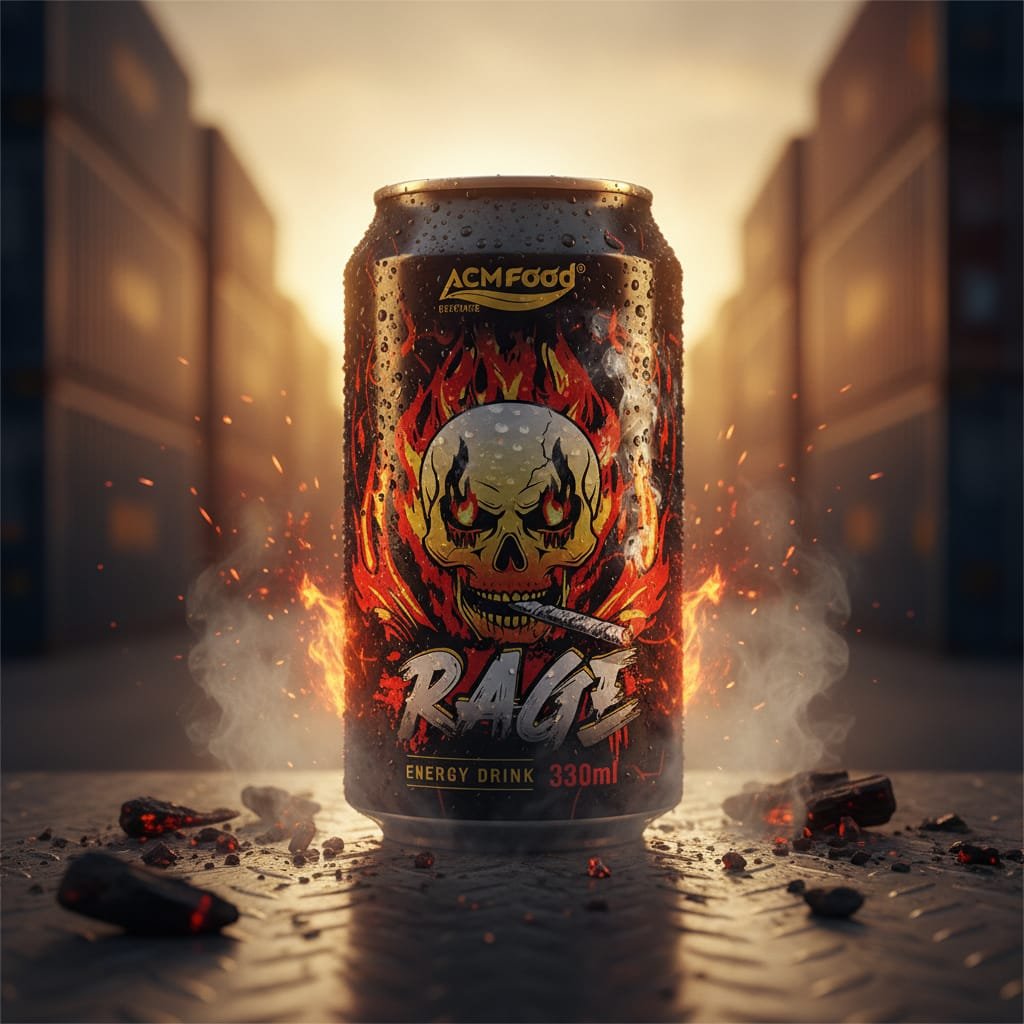
Rage Energy Drink containers being loaded for international shipping with port background
Global reach of premium energy drinks.

Future Trends: Low-Sugar, Natural Ingredients, and Custom Can Design

The energy drink market is evolving toward cleaner labels and reduced sugar content. Consumers are increasingly wary of artificial additives, pushing manufacturers to incorporate natural caffeine sources (like green tea extract) and functional botanicals. The Rage Energy Drink platform can be adapted to these trends through ODM innovation, such as swapping artificial sweeteners for stevia or adding vitamins from natural sources.

Can design also plays a crucial role in shelf appeal and brand recognition. The red short can is just one option; partners can choose from a wide range of formats including sleek cans, slim cans, and PET bottles. The ability to order custom graphics and metallic finishes allows brands to create a distinct identity quickly.

In conclusion, the convergence of functional beverage demand, OEM flexibility, and global logistics capabilities positions products like Rage Energy Drink as strategic assets for distributors targeting the next wave of consumer growth. By partnering with manufacturers that prioritize quality and customization, businesses can effectively compete in the dynamic energy drink arena.

Frequently Asked Questions

1. What makes Rage Energy Drink suitable for OEM partnerships?
Rage Energy Drink’s formula can be customized in terms of caffeine level, sweetness, and added nutrients. ACM Food offers flexible OEM/ODM services that allow brands to create a unique product while maintaining premium export quality.

2. How does the global energy drink market trend affect private label opportunities?
With the market growing at over 7% CAGR, retailers and distributors can capture value by launching private label energy drinks. OEM manufacturers provide the necessary scale and compliance to enter this space with minimal upfront investment.

3. What certifications are critical for exporting energy drinks?
Certifications such as FSSC 22000, HALAL, KOSHER, and organic certifications are essential for accessing markets in Europe, the Middle East, and North America. ACM Food holds these credentials, simplifying market entry for partners.

4. Can the can design and packaging be fully customized?
Yes, partners can choose from multiple can sizes (250ml, 330ml, 500ml) and finishes, and can add custom artwork, logos, and labeling. ACM Food supports graphic design and printing to ensure brand consistency.

5. What are the typical minimum order quantities (MOQs) for energy drink OEM runs?
ACM Food offers flexible MOQs to accommodate test launches as well as large-scale distribution. Specific quantities can be discussed during the inquiry phase, balancing cost efficiency with market testing needs.

Related blogs insights

What factors do consumers consider when choosing bottled fruit juice?

Contents1 Health and Nutritional Value2 Ingredients and Product Transparency3 Taste, Flavor, and Sensory Experience4 Brand [...]

1 Comment

Pure Coconut Water with Pulp Drives Functional Hydration Market Growth

Pure coconut water with pulp is driving functional hydration market growth. Discover health benefits, OEM [...]

The Strategic Rise of 100 Orange Juice in the Global RTD Beverage Market

Explore the strategic rise of 100% orange juice in the global RTD market. Analysis of [...]

The health benefits of Soya

Top 5 health benefits:  Source of protective antioxidants: Soya beans contain natural compounds called “isoflavones”. [...]

1 Comment

Coconut Milk Nata De Coco A Delicious and Nutritious Treat

Contents1 The History of Coconut Milk Nata De Coco2 How to Make Coconut Milk Nata [...]

1 Comment

Private Label Beverage Manufacturing – The Key to Standing Out

Contents1 Why Choose Private Label Beverage Manufacturing?2 Our Professional Private Label Manufacturing Process3 The Consultation [...]

1 Comment

Leave a Reply

Your email address will not be published. Required fields are marked *