
Pure noni juice is noni juice sold with no other juices, water or sweetener added to dilute it, while a noni juice drink contains some noni juice blended with other ingredients. The two can look alike on a shelf and cost very different amounts to make, so the wording on the pack is the fastest way to tell which one a supplier is offering. This guide explains the three tiers buyers meet, how label wording is usually read and which tier fits which retail position.
The guide describes common principles, not the law of any one country. Naming rules, minimum juice content and mandatory statements differ by market, and every statement about regulation here should be checked with a local adviser before artwork is printed.
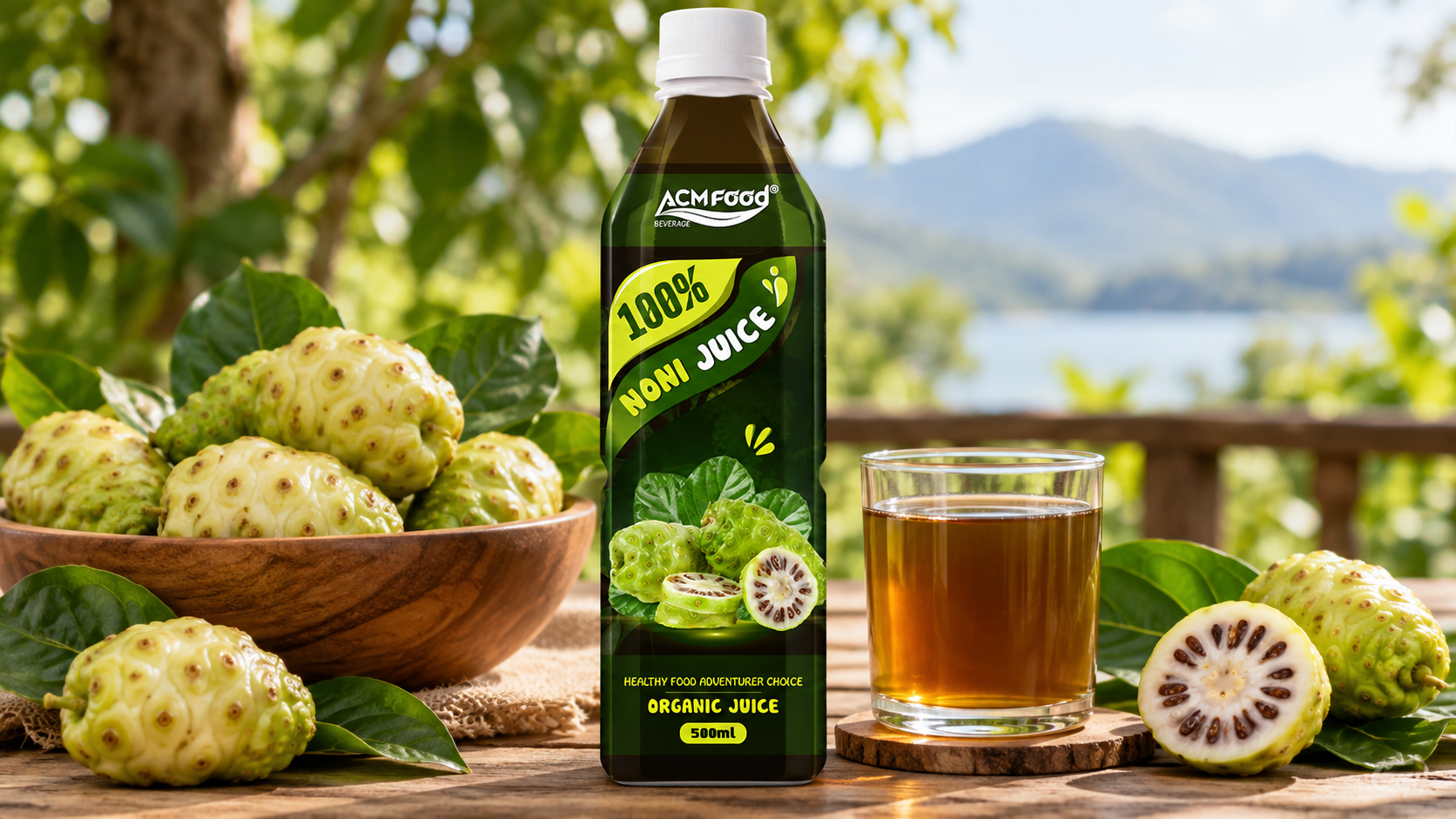
What are the three tiers of noni juice products?
Noni products are usually grouped as 100% juice, juice from concentrate and juice drink. The tiers differ in how much noni juice is present, how the juice was processed and what else is in the bottle. Each tier carries a different expectation on taste, price and label wording.
| Tier | Noni content | Other ingredients | What the label tends to say |
|---|---|---|---|
| 100% juice (not from concentrate) | All juice, pressed and packed without concentration | None beyond permitted processing aids | A statement that the product is 100% juice |
| 100% juice from concentrate | All juice, concentrated then diluted back | Water added back to reach juice strength | 100% juice plus a from-concentrate or reconstituted statement |
| Juice drink | Part juice | Water, other juices, sweeteners or flavour | A name that signals a drink or blend, often with a juice percentage |
The minimum juice content needed to use each name is set by law in each market and varies by fruit, so this guide does not assign percentages. The underlying production routes are explained in the article on NFC versus from-concentrate juice.
Why does 100% noni juice taste the way it does?
Pure noni juice tastes strong, sour, bitter and pungent, with an aroma that many drinkers describe as unusual. This comes from the fruit itself, and ripeness changes it: riper fruit tends to be milder, while unripe fruit is sharper. Processing method also affects the final character.
The intensity is the main reason most commercial noni products are not pure juice. Brands that sell 100% noni juice usually position it as a small-serving, specialist product, not as an everyday drink, and they accept that taste will limit repeat purchase among mainstream shoppers. Brands that want wider appeal blend the juice with milder fruit juices or adjust sweetness. Our guide to beverage sweetness levels explains how that calibration is approached.
How do you read a noni juice label?
Read the label in four places: the name of the food, the ingredient list, any percentage statement and any preparation wording such as from concentrate. The name tells you the category, the ingredient list tells you what is inside and the percentage tells you how much noni is present.
A short checklist helps a buyer compare two offers:
- Name of the food. Does it say juice, juice drink or blend, and does that match the tier you intended?
- Ingredient order. Ingredients are normally listed from largest to smallest, so water or sugar ahead of noni juice signals a low-juice product.
- Juice percentage. Is a percentage stated, and does it refer to noni juice alone or to total juice?
- Preparation wording. Is there a from-concentrate or reconstituted statement?
- Added sugar or sweetener. Is sweetener listed, and is it named clearly?
The difference between total juice and noni juice matters. A drink may state a high juice percentage that is mostly apple or grape juice with a small share of noni. Ask the supplier for the noni share in writing, since the front label may not show it.
What does the front of the pack need to say?
Front-of-pack requirements differ by market, so no single wording works everywhere. In general, regulators expect the name of the food to be accurate, the juice content to be stated where a name or claim depends on it and any special treatment such as concentration to be disclosed.
For the European Union, the United States and the Gulf states, the details of naming, percentage statements and any condition of use for noni juice should be verified with a local adviser or the relevant authority, because they change and because noni has had specific conditions of use in some jurisdictions. Our article on noni juice benefits and what brands may claim covers how several markets treat noni and its claims. Do not copy the wording of another brand’s pack without checking that it is lawful for your product and market.
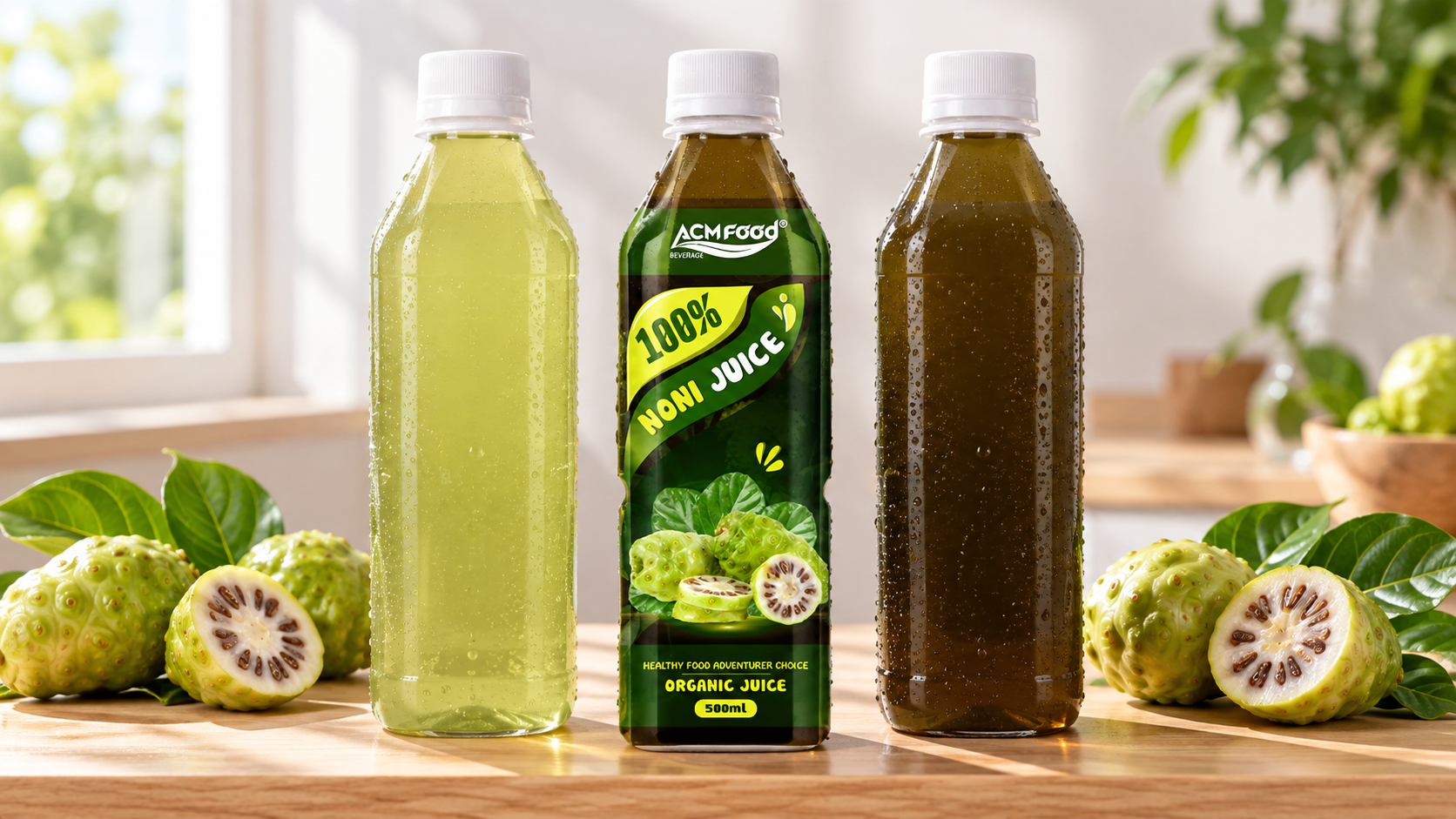
Which tier fits which retail position?
The tier should follow the price and the shopper you aim for. Pure juice fits premium or specialist shelves with small serving sizes. Juice from concentrate suits mid-priced bottled juice with efficient logistics. A juice drink fits everyday retail and convenience, where taste acceptance and price per serving matter most.
| Retail position | Tier that usually fits | Why |
|---|---|---|
| Specialist or premium shelf | 100% juice | Shoppers accept a strong taste and a smaller serving at a higher price |
| Mid-priced bottled juice | 100% juice from concentrate | Efficient freight and storage with a juice-led label |
| Everyday and convenience retail | Juice drink | Milder taste and lower cost per serving |
| Food service | Juice drink or blend | Easier to serve and dose consistently |
A mismatch between tier and position is a common cause of poor sell-through. A pure noni juice priced for convenience will disappoint on taste, and a heavily diluted juice drink on a premium shelf will disappoint on perceived value.
Where does the ACM noni product sit?
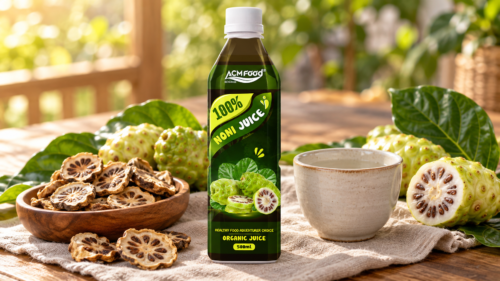
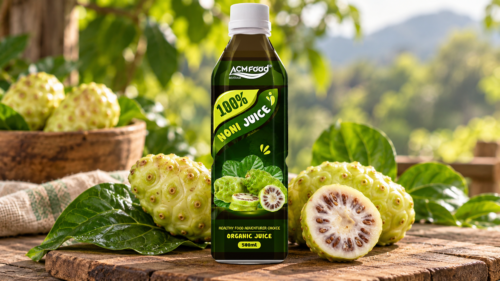
The published specification of the ACM noni product lists a 500ml PET bottle, ready-to-drink, with an 18-month shelf life and food safety certifications FSSC 22000, HACCP and ISO 22000. The product page does not state the juice percentage or whether it is from concentrate, so a buyer should request those details in writing.
Do not assume it belongs to any tier until the specification sheet confirms it. A short question to the supplier is enough: the noni juice share, the other ingredients and whether concentrate is used. The answer decides the name the product can carry in your market and where it fits on the table above.
What about organic or “pure” claims?
“Pure” is a marketing word, not a category, and “organic” is a regulated status. A product described as pure may still be a blend or from concentrate, and an organic claim needs certification that matches the market where the product is sold.
Ask for the certificate, its scope and its validity dates before using either word on a label. Use them only when the document supports the exact product and the exact market. If a supplier cannot show the paperwork, drop the claim instead of hoping that nobody checks.
How do you brief a supplier for the right tier?
State the tier by name, give a reference sample and write the labelling you plan to use. A supplier can then say whether it can match the tier or whether the product would fall into a different category.
- Tier and noni share. The category you want and the noni juice share you expect.
- Processing route. Not from concentrate or from concentrate.
- Sweetness and ingredients. Added sugar, other juices and any flavour.
- Pack and serving size. Smaller servings suit strong-tasting products.
- Target label wording. For checking before artwork is drawn.
- Destination market. The rules that apply to naming and claims.
What label mistakes do importers make with noni?
The most common mistakes come from copying wording without checking the product behind it. A label that says “pure” on a diluted drink, omits a required statement or implies an effect on the body can delay clearance or force relabelling.
- Using “100%” without proof. The claim must match the formula and any concentration step.
- Hiding a blend. A prominent noni image on a drink that is mostly other juice can be judged misleading.
- Missing preparation wording. A reconstituted juice may need a from-concentrate statement.
- Borrowing health wording. Statements from another brand or market may be unlawful in yours.
- Ignoring conditions of use. Some markets set limits on serving size for noni products.
Before artwork is drawn, send the planned front and back label text to a local adviser with the specification sheet attached. It is cheaper to correct a draft than a printed run.
What drives the cost of each tier?
Cost follows the amount of noni juice, the processing route and the pack. A higher noni share means more fruit per bottle, concentrate adds a processing step but lowers freight, and packaging and decoration add their own costs at each tier.
No figures are given here because they depend on the specification and the quantity. When you compare quotes, line them up on the same noni share, the same route and the same pack, otherwise a low price may simply reflect a lower juice content. Treat a quotation that does not state the noni share as incomplete.
What should you ask before approving a first order?
Before a first order, confirm the tier in writing, the noni share, the processing route, the sweetener and the shelf life, then approve a production-batch sample against that sheet. Keep the signed specification with the purchase order so that any later question about the name on the label can be answered from one document.
Also ask what happens if a batch falls outside the agreed targets, and who decides whether it can be sold under the same name. Clear answers at this stage prevent disputes about wording after the cartons have already shipped.
Frequently asked questions
Is 100% noni juice better than a noni juice drink?
Neither is better in general. Pure juice delivers the full flavour of the fruit and suits specialist positioning, while a drink is milder and easier to sell widely. The right choice follows the target shopper and price.
Does “from concentrate” mean lower quality?
No. It describes the production route. A well-made reconstituted juice can be consistent and economical, though some markets require the wording to appear on the label.
How can I verify the noni share in a drink?
Ask the supplier for the recipe summary or a specification sheet that states noni juice as a percentage, and check it against the ingredient list on the sample pack.
Summary and next step
Pure noni juice, juice from concentrate and a noni juice drink are three different products. Read the name, the ingredient order, the juice percentage and any preparation wording, then match the tier to the retail position and verify naming rules for your market before printing labels.
When you are ready to specify a noni product, use the Beverage Builder to set the format and flavour direction and send the brief to ACM Beverage, including the tier you want and the market you plan to sell in.