

A beet and carrot juice blend combines the earthy depth of beetroot with the rounded sweetness of carrot to make a drink that is easier to enjoy than pure beet juice. For a beverage developer, the interesting questions are the ratio between the two roots, how to keep the colour stable, and whether a third ingredient such as apple or orange is needed. This article answers those questions for ready-to-drink cans and bottles.
The ratios below are starting points for tasting trials, not fixed formulas. Variety, season and processing change the result, so every blend needs bench testing before you commit to a recipe.
Why do beet and carrot work together?
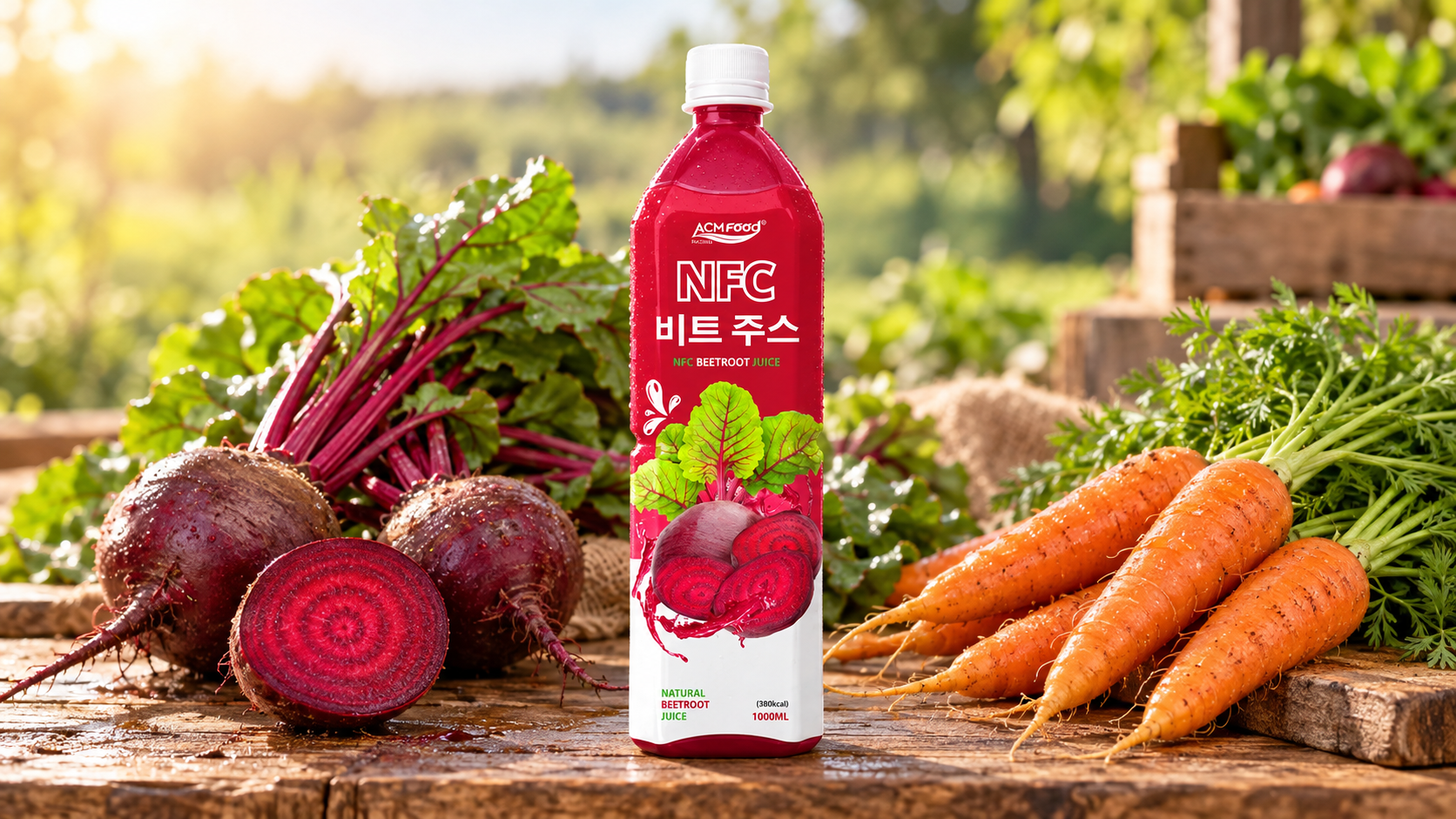
Beetroot brings colour, depth and an earthy edge. Carrot brings body, a mellow sweetness and a bright orange that blends into a rich red-orange. Together they cover each other’s weaknesses: carrot softens the earthiness, and beetroot gives the carrot juice a more interesting character.
The combination also gives you a story that is simple for buyers to understand. Both are familiar vegetables, the blend reads as vegetable-forward, and the colour is attractive on shelf without any added colouring.
What ratio of beet to carrot should you start with?
Start with a carrot-led blend and move toward beetroot in steps. Because beetroot is strong in both flavour and colour, small changes are noticeable.
| Starting direction | Character | Who it suits |
|---|---|---|
| Carrot-led, a little beet | Sweet, mild, orange-red | First-time vegetable juice drinkers |
| Balanced beet and carrot | Earthy and sweet in balance | Adults who like vegetable juices |
| Beet-led, a little carrot | Bold, deep red, earthy | Consumers who already like pure beet |
Run at least three trials on each side of your target and taste them chilled. Record sweetness, earthiness and aftertaste in plain words so that the next round of trials moves in a useful direction.
How do you balance earthy and sweet?
Earthiness is the main risk. If it dominates, the drink feels heavy. If carrot dominates, the beet turns into a colouring and the blend tastes like plain carrot juice.
Three levers help:
- Ratio: shift toward carrot for sweetness, toward beet for depth.
- Acidity: a little lemon or lime sharpens the taste and lifts the earthy notes.
- A third juice: apple or orange adds brightness, but also adds sugar and changes the label.
Test with and without the third juice. Many successful blends need only the two vegetables plus a touch of citrus.
Should you add apple, orange or ginger?
Add a third ingredient only if the taste goal needs it, because each one changes cost, sugar line and positioning.
- Apple: the easiest sweetener, neutral in flavour, widely accepted.
- Orange: brighter and more acidic, shifts the blend toward a fruit-forward drink.
- Ginger: adds warmth; use carefully because a little goes a long way.
A two-ingredient blend has a cleaner label and a more vegetable-forward story. A three-ingredient blend is easier to drink and easier to sell to hesitant consumers. Decide which story you are telling before you start, then evaluate samples against that story.
How do you keep the colour stable?
The beetroot pigment is sensitive to heat, light and oxygen, and colour can fade or turn brownish when the product is exposed to them. Carrot pigments are more robust but still change with heat and light.
Practical measures include controlling pH in a mildly acidic range, limiting oxygen during filling, choosing packaging that blocks light and testing the colour after the shelf-life period you intend to claim. Aluminium cans are naturally opaque. Glass or PET bottles need a label or storage plan that protects the juice from light.
Which format suits a beet and carrot blend: can or bottle?
| Format | Strengths | Points to check |
|---|---|---|
| Aluminium can | Opaque, light, easy to stack, good for single-serve | Filling process, internal lining, sleek or slim shape |
| Glass bottle | Shows colour, premium feel | Light exposure, weight, label design |
| PET bottle | Light, shatter-resistant, clear | Light exposure, barrier needs, recycling rules in your market |
Pick the pack that fits your channel, and ask for samples in that pack for colour and taste trials, not just in a lab bottle.
What should a beet and carrot product brief include?
Prepare these points before you request samples:
- Lead ingredient and target ratio direction.
- Taste target in plain words.
- Whether to add apple, orange, ginger or citrus.
- Sugar positioning and the ingredient list you hope to show.
- Pack format and size.
- Target markets and labelling rules.
- Any claim you hope to make, to be checked with a qualified adviser.
Related background is available in beetroot juice OEM and private label production and in the overview of vegetable and fruit juice benefits, which explains why juice should be seen as part of a varied diet and not a replacement for whole vegetables.
What claims are safe for a vegetable blend?
Describe what is true and checkable: the ingredients, the taste and the format. Avoid statements about treating or preventing disease. If you want a nutrition or health statement, base it on analysis of your final product and the rules of your destination market. Packaging copy can say that the drink is made from beetroot and carrot without any health promise.
For a broader view on label wording, the article on organic juice and what the term means shows how to treat terms carefully in marketing copy.
How do you run a blend development trial step by step?
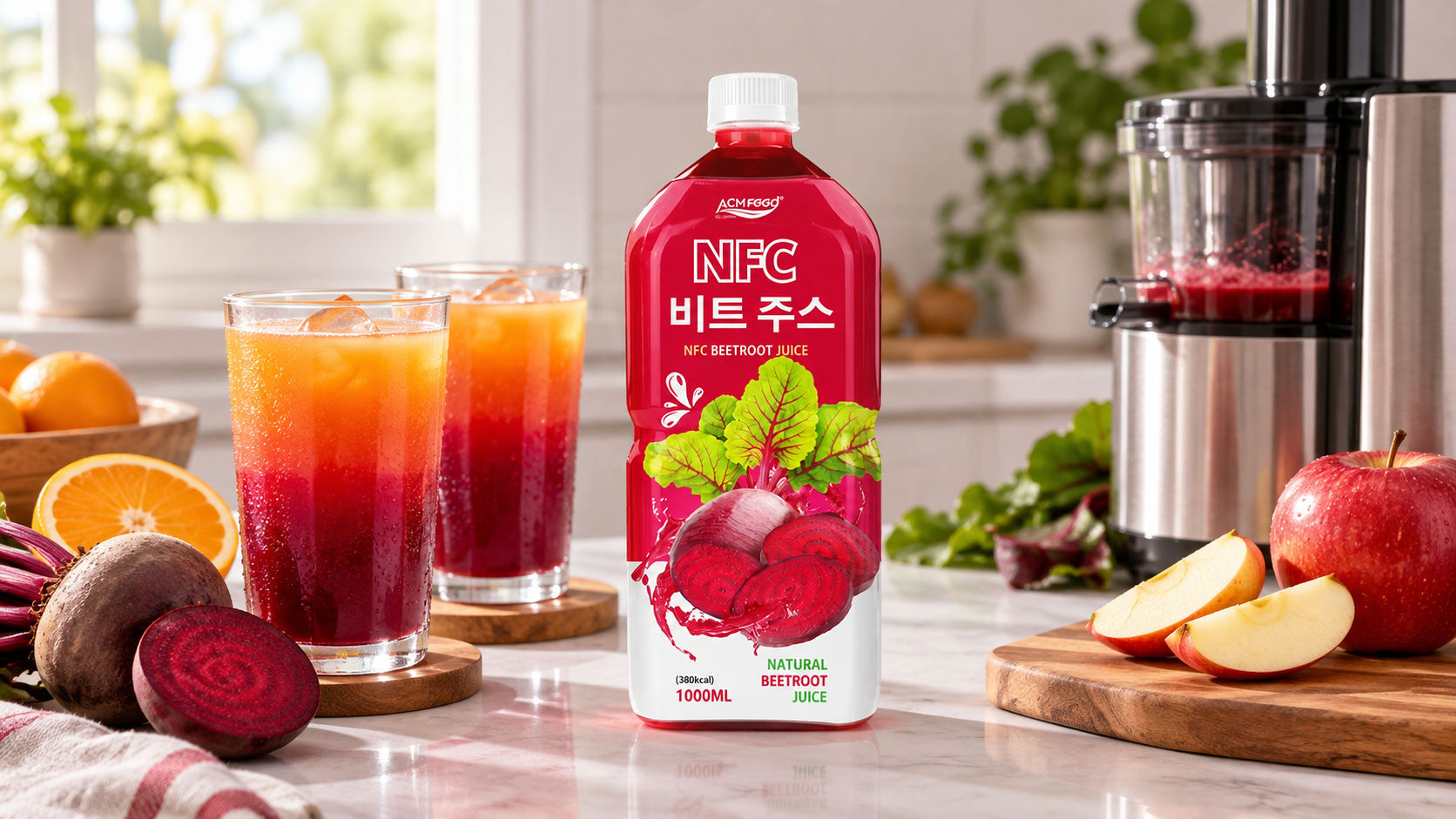
A structured trial saves time and gives you results that people on your team can interpret later. This sequence works for most vegetable blends.
- Define the lead flavour: carrot-led, balanced or beet-led.
- Prepare three versions that differ only in ratio, keeping everything else constant.
- Taste each version chilled, record sweetness, earthiness and finish.
- Add a small amount of citrus to the best version and taste again.
- Decide whether the blend needs a third juice, and test with and without it.
- Check the colour next to a light source and in a clear glass, then in the actual can or bottle.
- Repeat the best version after a storage period to see how colour and taste hold.
Keep a written log of what you tried. A common mistake is to remember trial three as the best, only to find later that nobody recorded what was in it.
How should you present the blend on the label?
The name and ingredient list should describe the drink honestly. If beetroot is the first ingredient, the label implies beetroot leads. If carrot leads, say so by naming it first. Avoid imagery or wording that suggests a larger vegetable share than the recipe contains.
Useful label decisions:
- Name: “Beet and Carrot” signals a balanced vegetable blend; adding “with apple” signals a sweeter style.
- Ingredient order: follows quantity in most markets, so check the rules that apply to your destination.
- Sugar statement: depends on the recipe and local rules; confirm it with analysis of the finished drink.
- Storage note: follows the pack and the process used.
The article on how juice colour and clarity influence buyers explains why colour deserves its own shelf test.
What are the pros and cons of adding apple?
| Choice | Advantage | Trade-off |
|---|---|---|
| No fruit juice | Clean vegetable story, simple label | Earthier, less sweet |
| Apple added | Easier to drink, broad appeal | More sugar, more fruit-forward |
| Orange added | Bright, lively | Stronger acidity can clash with beet |
| Citrus only | Lifts taste with minimal change | Needs dosing to avoid sharpness |
A good approach is to start without fruit juice and add only if tasters ask for more sweetness. It is easier to add a touch of apple to a balanced blend than to remove it later.
Which markets prefer which style?
Preferences vary by market and by channel, and generalisations should be treated with care. In general, mainstream retail often rewards easier, sweeter blends, while specialist and wellness channels are more open to bold vegetable-forward drinks. Rather than guessing, test your short-listed blends with a sample of the people you want to sell to, in the pack you plan to use.
Common mistakes with beet and carrot blends
- Letting beetroot dominate so strongly that the carrot becomes invisible.
- Adding too much fruit juice and ending up with a different product.
- Testing in a lab bottle but selling in a can, where taste and colour may differ.
- Forgetting that natural colour changes over time.
- Printing health claims that the recipe and the market do not support.
How do you scale a blend from bench to finished drink?
A recipe that works in a small bench trial needs to be confirmed at the next scale before it is approved. Ask for a pilot sample made under conditions close to the real process, taste it against the bench reference and check colour, sweetness and aroma. If the drink changes noticeably, find out which step caused the change, such as heat treatment or the time between pressing and filling, and agree what is acceptable. Approve a written reference description and a physical reference sample, so that later production can be compared to something concrete.
What should you ask a supplier about a vegetable blend?
- Which ingredients are used and in what declared order?
- How is the blend treated after mixing, and in which pack is it filled?
- What colour and taste checks are done on each batch?
- Which storage conditions and shelf life apply, and how were they confirmed?
- What sample and approval steps come before production?
Answers should come in writing, so that they can be attached to the product specification and checked later.
What happens to the blend over shelf life?
Vegetable blends age in a few predictable ways. The red-orange colour can shift toward brown if the pigment degrades. The taste can flatten as volatile aroma compounds are lost. Natural juices can separate, with pulp or fine solids settling at the bottom. None of this is unusual, but each of these changes should be checked against the shelf life you plan to state.
Practical steps are to store reference samples at the intended temperature, compare them against a freshly made sample at set intervals, and decide in advance what level of change is acceptable. Photograph the samples under the same light each time, because memory of colour is unreliable. If the drink drifts too far, adjust acidity, oxygen control or packaging and test again.
Frequently asked questions
Is beet and carrot juice sweeter than pure beet juice?
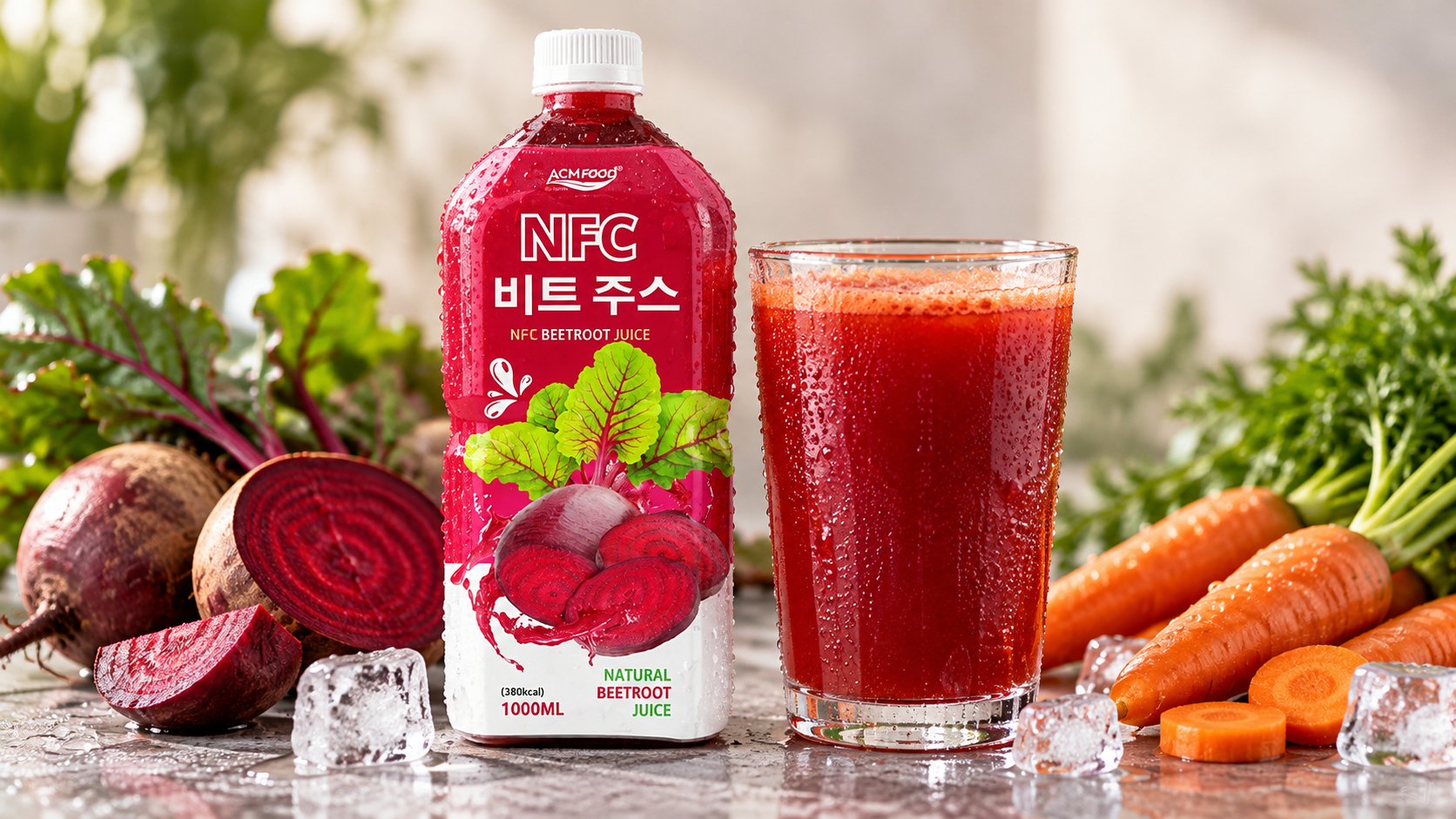
Usually yes. Carrot contributes natural sweetness and body, which softens the earthy taste. The exact sweetness depends on the ratio, the variety and whether a fruit juice is added.
Does the blend keep its colour in a can?
Cans block light, which helps. Colour also depends on pH, oxygen control during filling and storage conditions, so test colour over the shelf life you plan to use.
Can I skip apple or orange?
Yes. Many blends work with only beetroot, carrot and a little citrus. Adding fruit makes the drink easier to like, but it also raises sugar and changes the label.
Closing note
A good beet and carrot blend starts with a clear idea of who is drinking it. Choose a ratio direction, taste against it, protect the colour and pick a pack that fits your channel. If you are planning a finished drink for your own label, ACM Beverage can discuss can and bottle formats and recipe options once you share your brief.