







Yuzu is a small, aromatic citrus fruit from East Asia, widely used in Japanese and Korean cooking, with a flavour often described as a mix of lemon, mandarin and grapefruit. It is prized more for its intensely fragrant rind and tart juice than for eating fresh, and it has become a popular flavour in drinks, sauces and desserts around the world.
This guide explains what yuzu is, where it grows, what it tastes and smells like, how it compares with lemon and lime, how it is used in food and drinks and what to look for in yuzu juice drinks. It focuses on the fruit and its flavour rather than on health claims.
What is yuzu?
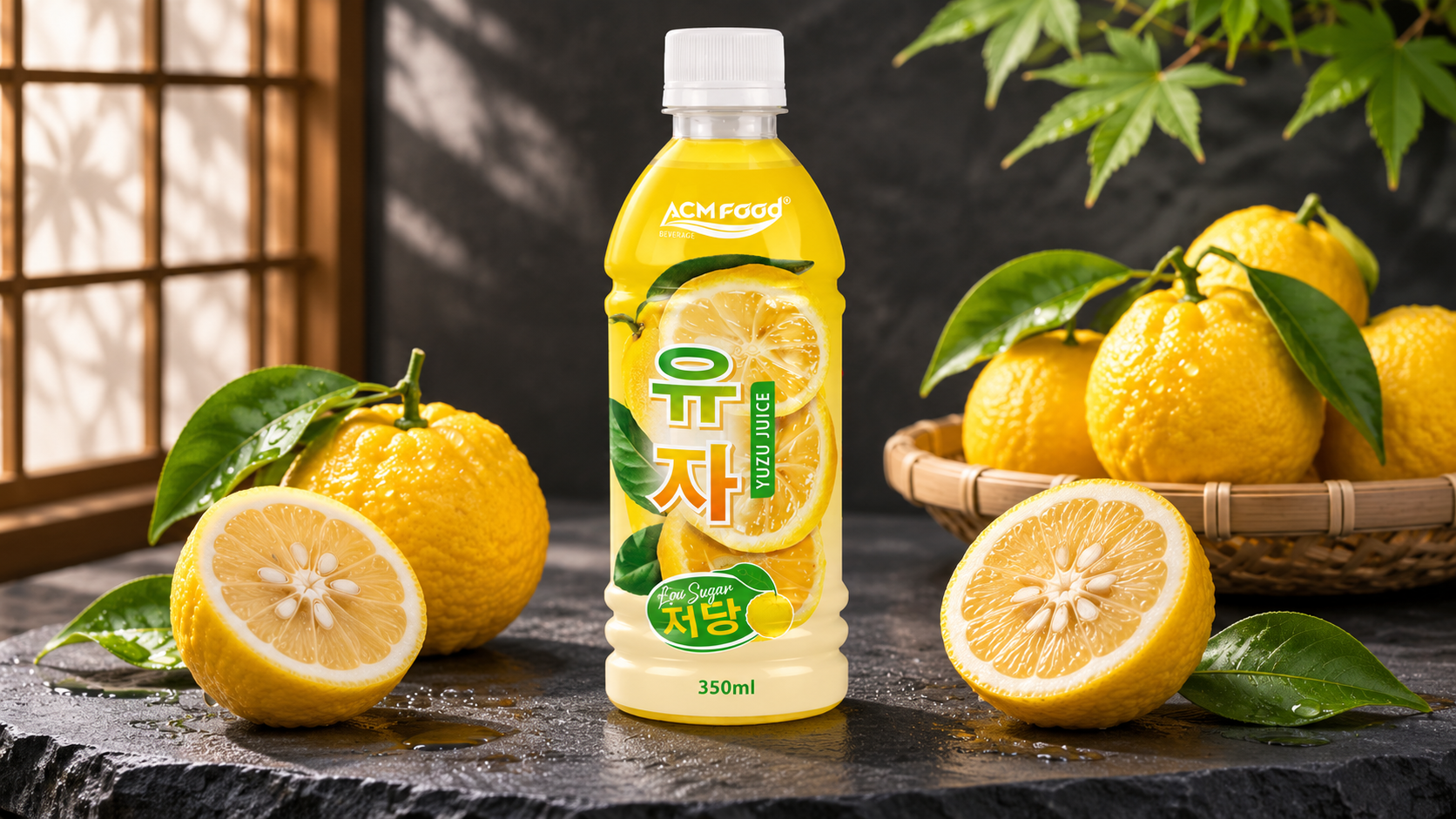
Yuzu, Citrus junos, is a citrus fruit native to East Asia, believed to have originated in China and now grown mainly in Japan and Korea, known for its highly aromatic rind and tart, fragrant juice. In Korea it is called yuja, and in Japan yuzu.
The fruit is roughly the size of a mandarin or small orange, with a bumpy, uneven rind that turns from green to bright yellow as it ripens. Inside, it contains relatively little juice and many large seeds. That is why yuzu is used more like a flavouring than a fruit to eat: a small amount of rind or juice adds strong aroma to a dish or drink.
Yuzu trees are hardier in cold weather than many citrus species, which allows cultivation in parts of Japan and Korea with cool winters. Both green, unripe yuzu and yellow, ripe yuzu are used, with slightly different flavour.
What does yuzu taste like?
Yuzu tastes tart and sour like a lemon, but with a more complex, floral and slightly sweet aroma that recalls mandarin, grapefruit and even a hint of pine or herbs. The fragrance of the rind is its signature: intense, bright and long-lasting.
Flavour notes often used to describe yuzu include:
- Tart citrus: sharp sourness similar to lemon.
- Floral aroma: a perfumed quality unlike most citrus.
- Mandarin sweetness: a softer, rounder fruit note in the background.
- Grapefruit bitterness: a gentle, pleasant bitterness from the rind.
- Herbal or resinous hints: subtle green notes, especially in unripe yuzu.
Because yuzu’s aroma is so concentrated in the rind, products that use only juice taste less fragrant than those that also include zest or peel.
Green yuzu vs yellow yuzu: what is the difference?
Green yuzu is harvested before it fully ripens, usually in late summer and early autumn, while yellow yuzu is picked ripe in late autumn and winter. Green yuzu tastes sharper and greener, with a more herbal, lime-like aroma, and is often used for yuzu kosho and fresh seasoning. Yellow yuzu is more floral and mandarin-like, with slightly more sweetness, and is the type most often used for juice, teas, preserves and desserts.
The rind of both is highly aromatic, but its character changes with ripeness. In drinks, yellow yuzu’s rounder fragrance usually works better, while green yuzu suits savoury dishes and cocktails that need a sharper edge.
Yuzu vs lemon vs lime: what is the difference?
Yuzu is as sour as lemon or lime but far more aromatic and floral, with less juice and more seeds. Lemon is bright and clean, lime is sharper and greener, and yuzu adds a perfumed, mandarin-like complexity that neither lemon nor lime can match.
| Feature | Yuzu | Lemon | Lime |
|---|---|---|---|
| Origin | East Asia | Likely South Asia, now global | Southeast Asia, now global |
| Rind | Bumpy, very aromatic | Smooth to slightly textured, aromatic | Thin, smooth, green |
| Juice yield | Low | High | Moderate to high |
| Seeds | Many, large | Some | Few or none in common varieties |
| Taste | Tart, floral, mandarin and grapefruit notes | Bright, clean, sour | Sharp, green, slightly bitter |
| Main culinary use | Aroma and seasoning | Juice and zest, all-purpose | Juice, cocktails, Asian and Latin cuisines |
In recipes, lemon and lime can stand in for yuzu’s sourness, but not for its aroma. Some cooks mix lemon with a little mandarin or grapefruit zest to approximate yuzu, though the result is rarely identical.
How is yuzu used in food?
Yuzu is used mainly as a seasoning and aroma in East Asian food. Its zest, juice and sometimes whole fruit appear in sauces, condiments, soups, desserts and preserves, often in small amounts to add brightness.
- Ponzu: a Japanese citrus-soy sauce, often made with yuzu juice.
- Yuzu kosho: a Japanese paste of yuzu zest, chilli and salt.
- Yuja-cha: Korean yuzu tea, made by mixing hot water with yuzu preserved in honey or sugar.
- Soups and hot pots: slivers of yuzu zest add fragrance to broths.
- Desserts: yuzu flavours cheesecakes, sorbets, curds and chocolates.
- Baths: in Japan, whole yuzu are floated in hot baths on the winter solstice, a seasonal custom.
Outside Asia, yuzu has become popular in restaurant cooking, cocktails and premium soft drinks, where its aroma signals something special and modern.
How is yuzu used in drinks?
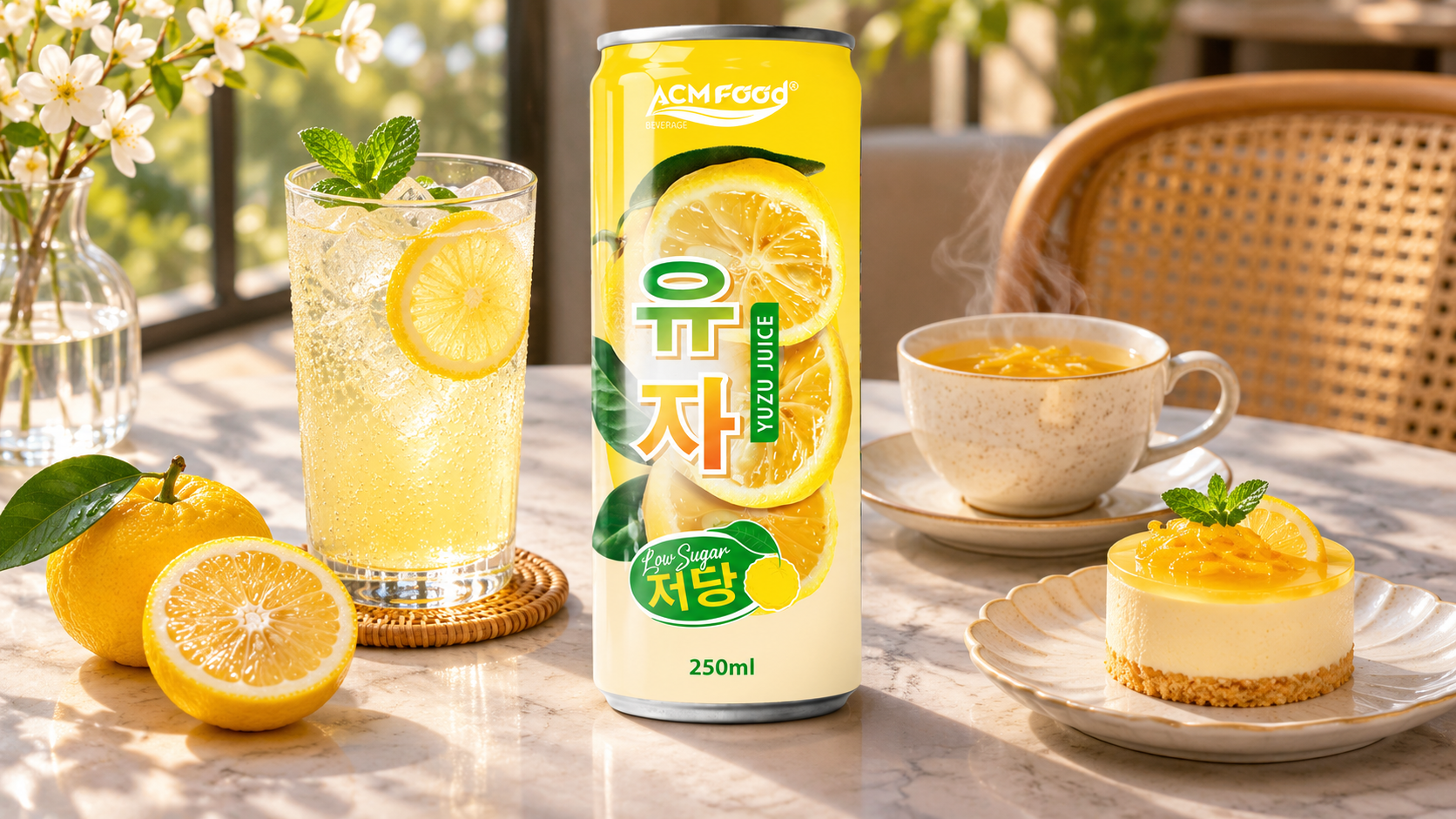
Yuzu is used in drinks for its bright sourness and intense aroma. It appears in juice drinks, sparkling waters, sodas, teas, cocktails, mocktails and Korean yuja-cha. Because pure yuzu juice is very sour, it is usually diluted and sweetened or blended with other ingredients.
Popular yuzu drink styles include:
- Yuzu juice drinks: diluted, lightly sweetened yuzu juice served cold.
- Yuzu sparkling water or soda: carbonation lifts the aroma.
- Yuja-cha: hot or iced yuzu tea made from honey-preserved peel.
- Yuzu lemonade: yuzu with lemon, water and sugar.
- Yuzu with green tea: citrus aroma paired with a fresh tea base.
- Cocktails and mocktails: yuzu adds complexity where lemon or lime would be used.
Low-sugar yuzu drinks are a natural fit for the fruit, because its strong aroma gives plenty of flavour without relying heavily on sweetness. The broader positioning of reduced-sugar drinks is discussed in our overview of low sugar beverages.
How is yuzu juice made and bottled?
Yuzu juice is made by pressing the fruit, often whole, so that some of the aromatic oils from the rind enter the juice. Because yuzu has little juice and many seeds, pressing must be done carefully to avoid crushing seeds, which can add bitterness. The juice is then filtered, sometimes blended with other citrus, and heat-treated for stability.
Pure yuzu juice is far too sour to drink on its own, so ready-to-drink yuzu beverages dilute it with water and balance it with sugar, honey or sweeteners. Producers often add yuzu peel extract or natural flavour to protect the aroma, which can fade with heat and storage. Packaging that blocks light, such as cans, helps keep the delicate citrus oils fresh, while clear bottles show off the pale yellow colour.
Where is yuzu popular today?
Yuzu remains most deeply rooted in Japan and Korea, where it is part of seasonal food traditions. In recent years, it has become fashionable in Europe, North America and Australia, appearing on restaurant menus, in craft sodas, cocktails, chocolates and ice creams. In Southeast Asia and the Middle East, Korean and Japanese food trends have also helped introduce yuzu drinks to younger consumers. For many shoppers outside East Asia, a yuzu drink is their first taste of the fruit, which makes clear flavour descriptions on packs especially helpful.
What should you look for in a yuzu juice drink?
Look for how much yuzu the drink actually contains, whether it uses juice, peel or flavouring, how it is sweetened and what the sugar level is. Because yuzu is expensive and low in juice, many products combine a smaller amount of yuzu with other citrus or flavourings.
- Ingredient list: yuzu juice, yuzu peel, yuzu extract or yuzu flavour.
- Juice percentage: shown in some markets for juice drinks.
- Other citrus: lemon or other juices may be added to support yuzu’s sourness.
- Sweetening: sugar, honey or sweeteners, and total sugars per serving.
- Format: still or sparkling, can or bottle.
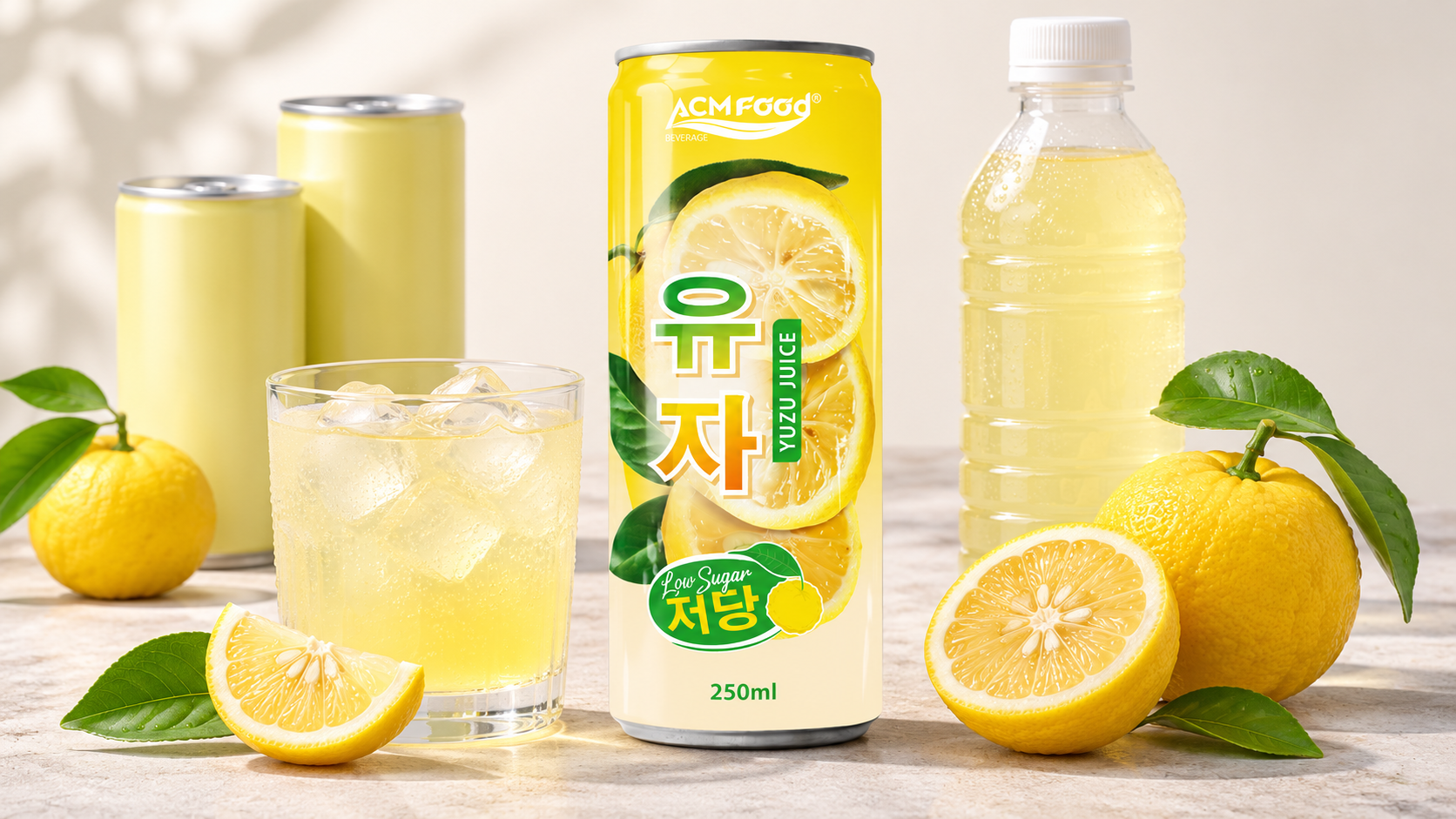
As an example, ACM Beverage offers an ACM FOOD low sugar yuzu juice drink in a 250ml slim can and a 350ml PET bottle, both in a Korean-inspired style, with shelf lives of 24 and 18 months respectively on their product pages. A closer look at that product’s flavour and positioning is in our article on low sugar yuzu juice drinks.
Does yuzu contain vitamin C?
Like other citrus fruits, yuzu contains vitamin C, and its rind also holds aromatic oils and other plant compounds. However, a yuzu drink is mostly water with a modest proportion of juice, so its vitamin C content depends on the recipe and processing, and can fall during heat treatment and storage. If vitamin C matters to you, check the nutrition panel of the specific product rather than assuming a yuzu drink delivers the same amount as fresh fruit. Yuzu drinks are best chosen for their distinctive flavour. You can see a range of yuzu formats in the yuzu juice range.
Why is yuzu so expensive?
Yuzu is expensive because the fruit yields little juice, contains many seeds, is grown mainly in a few regions, is harvested seasonally and is often picked by hand from thorny trees. Fresh yuzu is also difficult to export in some markets due to plant import rules, so many countries rely on bottled juice or processed products.
These factors mean yuzu is usually used sparingly. In drinks, a small proportion of yuzu juice or peel can carry a lot of aroma, which helps balance cost and flavour.
How should yuzu drinks be served?
Serve yuzu drinks well chilled, straight from the can or bottle, or over ice with a thin slice of citrus. Yuzu also pairs well with soda water, green tea, honey and mint.
- Pour over ice and garnish with a lemon or yuzu slice.
- Top with sparkling water for a lighter spritz.
- Mix with chilled green tea for a citrus tea.
- Add a sprig of mint or a slice of ginger for extra freshness.
FAQ: yuzu
Is yuzu a lemon?
No. Yuzu is a separate citrus species, Citrus junos. It is as sour as lemon but more aromatic, with floral and mandarin-like notes.
Can you eat yuzu raw?
You can, but it is very sour, seedy and has little flesh, so it is rarely eaten like an orange. Its rind and juice are used as flavourings instead.
What is yuja-cha?
Yuja-cha is Korean yuzu tea, made by stirring yuzu preserved in honey or sugar into hot or cold water. It is a popular winter drink in Korea.
What can I use instead of yuzu?
A mix of lemon juice with a little mandarin or grapefruit zest can approximate yuzu’s taste, though its unique aroma is hard to replicate exactly.
Yuzu in summary
Yuzu is an East Asian citrus fruit, grown mainly in Japan and Korea, prized for its intensely aromatic rind and tart juice. It tastes like lemon with floral, mandarin and grapefruit notes, and is used sparingly in sauces, desserts, teas and drinks. In juice drinks, its strong aroma suits low-sugar styles, and labels show how much real yuzu a product contains.
For product details on yuzu juice drinks in cans and bottles, contact the ACM Beverage team through the website enquiry page.