

Coconut water can turn pink naturally when compounds called polyphenols react with oxygen, a process helped by an enzyme in the coconut called polyphenol oxidase. The colour change is similar to the way a cut apple turns brown, and in coconut water it often appears as a soft pink or rosy tint. Pink coconut water caused by this natural reaction is generally not a sign of spoilage on its own.
This guide explains the chemistry behind pink coconut water, why some coconuts and products turn pink while others stay clear, how processing and light affect the colour, why many producers add vitamin C, and how to tell harmless pinkness from signs that coconut water has gone bad. It also explains why fruit-flavoured pink coconut waters are a different case.
Why does coconut water turn pink?
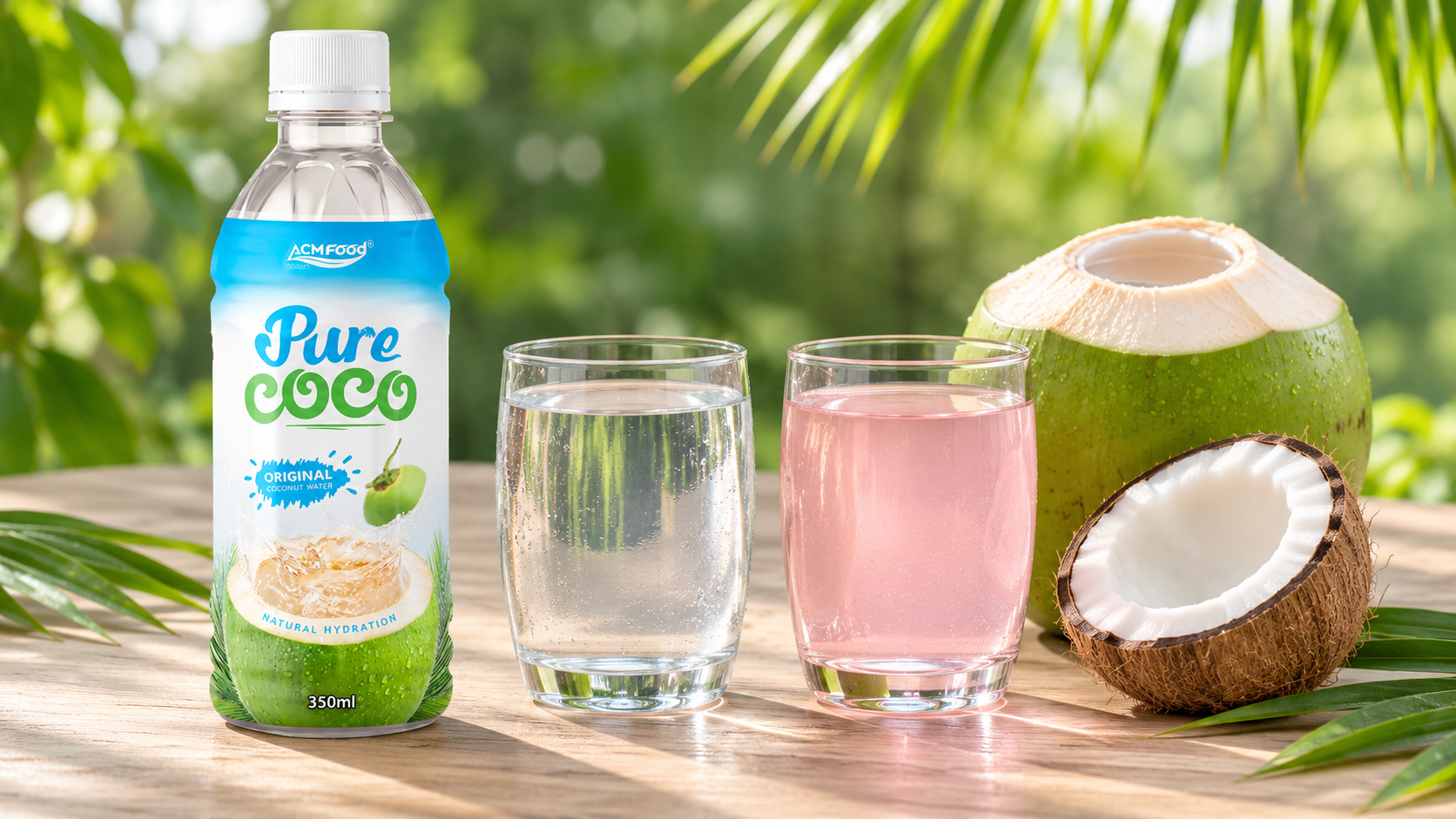
Coconut water turns pink when natural polyphenols in the water are oxidised, a reaction that the enzyme polyphenol oxidase speeds up when the water is exposed to oxygen and, in some cases, light. The oxidised compounds form pigments that give a pink or rosy colour.
All coconut water contains small amounts of polyphenols and enzymes. Whether it turns pink depends on how much of these compounds are present, how much oxygen the water meets, how it is processed and how long it is stored. The reaction can happen in fresh coconut water poured into a glass, in bottled coconut water over its shelf life or after opening.
This is a natural chemical change, not added colour. It is broadly similar to browning in cut fruit such as apples, pears and avocados, where the same family of enzymes is involved.
Why do some coconut waters turn pink and others do not?
Some coconut waters turn pink and others stay clear because the amount of polyphenols and enzyme activity varies with coconut variety, maturity, growing conditions and processing. Exposure to oxygen and light during and after processing also plays a part.
- Variety: certain coconut varieties are more prone to turning pink.
- Maturity: the age of the coconut at harvest affects polyphenol and sugar content.
- Growing conditions: soil, climate and season influence composition.
- Processing: heat treatment can inactivate the enzyme, while minimally processed products may retain more enzyme activity.
- Oxygen exposure: more air contact during extraction, filling or after opening increases the reaction.
- Light: clear packaging lets light reach the drink, which can contribute to colour changes over time.
Because these factors combine, two cartons of the same brand can look slightly different, and pinkness can develop gradually over a product’s shelf life.
Does processing affect pink colour?
Processing affects pink colour mainly through heat and oxygen control. Heat treatment can inactivate polyphenol oxidase, reducing the chance of pink colour forming, while cold-pressed or minimally processed coconut water may keep more enzyme activity and is more likely to turn pink. Producers also limit oxygen exposure during filling.
| Processing approach | Effect on enzyme | Likelihood of pink colour |
|---|---|---|
| Heat-treated (pasteurised) coconut water | Enzyme largely inactivated | Lower, though some colour change can still occur |
| Cold-pressed or minimally processed | More enzyme activity may remain | Higher, especially over time |
| Fresh from the coconut | Fully active | Can turn pink within hours after opening |
The trade-offs between processing methods are discussed in our articles on cold-pressed vs pasteurised coconut water and cold fill vs hot fill for canned coconut water.
Why do some brands add vitamin C?
Many coconut water producers add vitamin C, listed as ascorbic acid, because it acts as an antioxidant that slows the oxidation reactions behind pink colour and helps protect flavour. Ascorbic acid reacts with oxygen and with oxidised intermediates, helping to keep the water clearer for longer.
Seeing ascorbic acid on a coconut water label usually means it is there to protect colour and quality rather than to make a nutrition claim. Products without added vitamin C may be more likely to show pink tints, especially if they are minimally processed.
Does packaging affect pink colour?
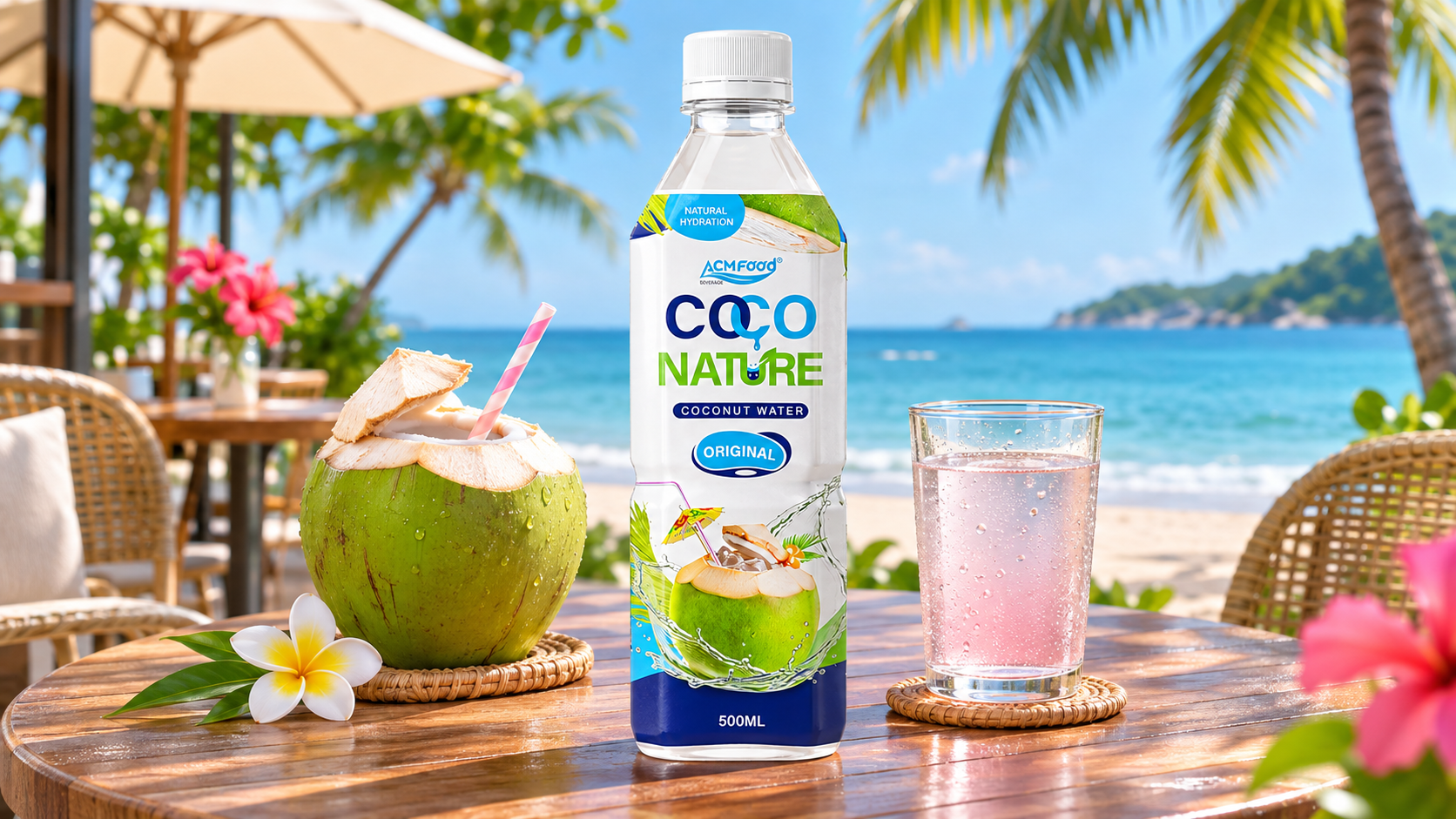
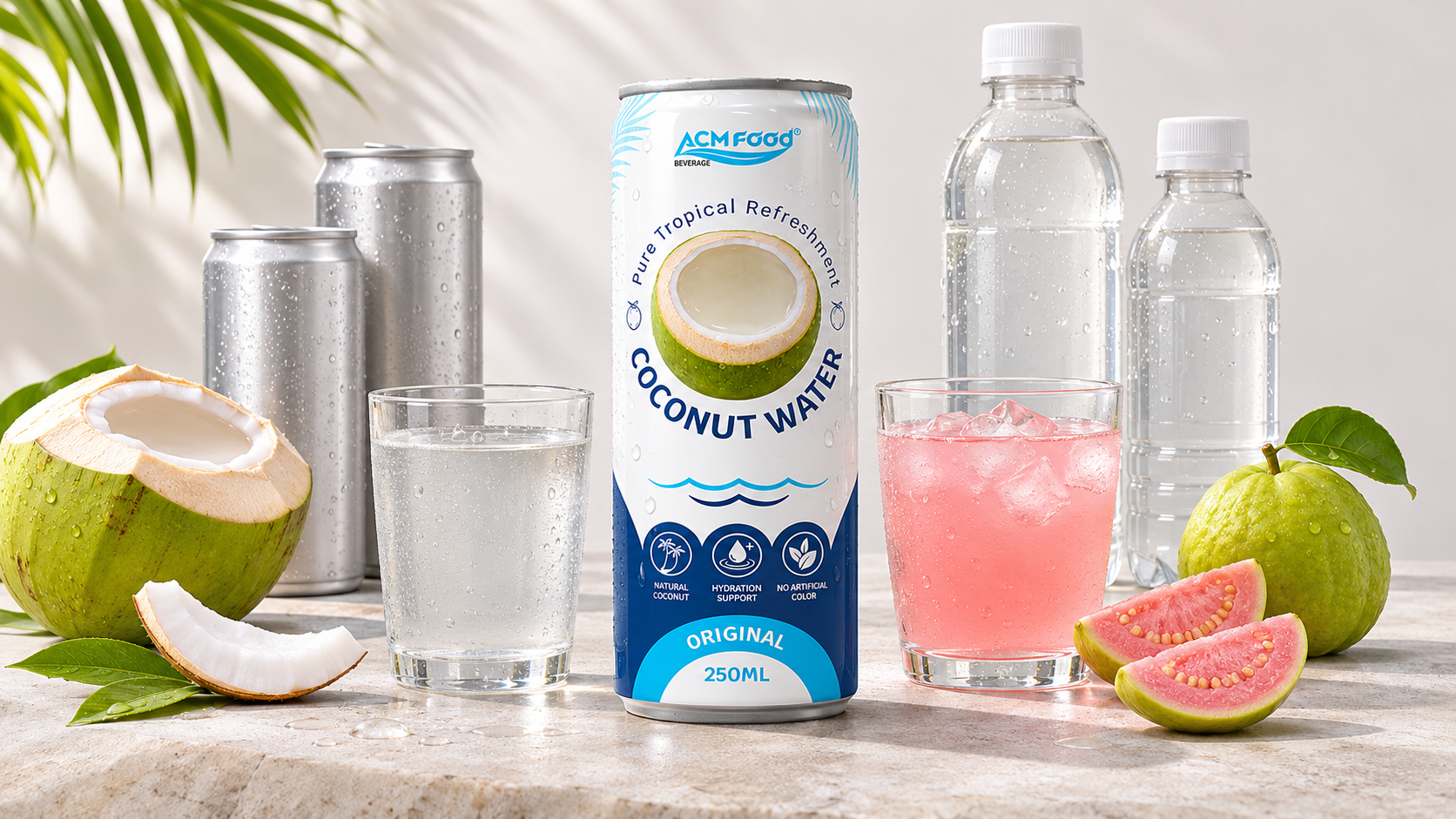
Packaging can influence colour change through light and oxygen. Aluminium cans block light completely and form a tight seal, which helps limit both factors. Clear PET or glass bottles show the drink but allow light through, so coconut water in clear packaging may be more likely to show colour changes over time if stored in bright places. Bottles that are opened and resealed several times also let fresh air in each time.
This does not mean one format is always better. Cans protect colour, while clear bottles let shoppers see the product. Producers choose packaging together with processing and antioxidants such as vitamin C to keep colour stable through shelf life. Packaging options and their trade-offs are compared in our guide to coconut water shelf life in cans and PET.
Does pink colour change the taste?
Natural pinkness from oxidation usually changes taste very little. Some people notice a slightly less fresh or more nutty note in coconut water that has oxidised strongly, similar to the way browning changes the flavour of cut fruit. If the taste is clearly sour, sharp or fermented, the cause is likely microbial spoilage rather than oxidation, and the drink should be discarded.
Is pink coconut water safe?
Pink coconut water caused by natural oxidation is generally considered safe to drink when the product is within its best-before date, has been stored correctly and shows no other signs of spoilage. The pink colour alone is not a reliable indicator of a problem; smell, taste and packaging condition matter more.
Check these signs before drinking:
- Smell: it should smell mild and slightly nutty, not sour, yeasty or alcoholic.
- Taste: it should taste lightly sweet, not sharp or vinegary.
- Fizz: still coconut water should not be fizzy.
- Packaging: cans and bottles should not be swollen, leaking or damaged.
- Storage: opened coconut water should have been refrigerated and used promptly.
If pink colour comes with sourness, fizz, a yeasty smell or a bulging container, the coconut water is likely spoiled and should be discarded.
Pink from oxidation vs pink from spoilage
Pink from oxidation is a gentle colour change with normal smell and taste, while spoilage brings sour flavour, off-odours and often fizz. Some microorganisms can also produce pinkish colours, which is why colour should always be judged together with smell, taste and packaging.
- Natural oxidation: soft pink, normal smell, mild sweet taste, still.
- Spoilage: may be pink or cloudy, sour or yeasty smell, sharp taste, sometimes fizzy, possibly swollen packaging.
When in doubt, it is safer to discard the drink.
Why did my coconut water turn pink after opening?
Coconut water often turns pink after opening because it is suddenly exposed to much more oxygen, which speeds up the oxidation of polyphenols. If it still smells and tastes normal and has been refrigerated, the colour change is usually harmless. Keep opened coconut water cold, tightly sealed and finish it within the time on the label.
Opened coconut water is also vulnerable to microbial growth, so colour change should not be used as a reason to keep it longer. General storage guidance for cans and bottles is covered in our guide to coconut water shelf life in cans vs PET.
How do producers monitor coconut water colour?
Producers monitor colour as part of quality control, alongside taste, smell, sugar content, acidity and microbiological checks. Samples from each batch are often inspected visually or with colour-measuring instruments, and some are stored and checked over time to see how colour develops during shelf life. Raw coconuts are graded by maturity and condition, because these factors influence colour stability.
If a product line tends to turn pink, producers can adjust harvest timing, processing temperature, oxygen control during filling or antioxidant levels. Clear communication on packs, such as noting that natural colour may vary, also helps set customer expectations.
Is pink coconut water better quality?
Some marketing suggests that pink coconut water is a sign of minimal processing or freshness, and it can indicate that less heat was used. However, pink colour does not by itself prove higher quality, better nutrition or greater freshness. Clear coconut water can be just as good, and some pinkness can also appear in older product.
What about pink fruit-flavoured coconut water?
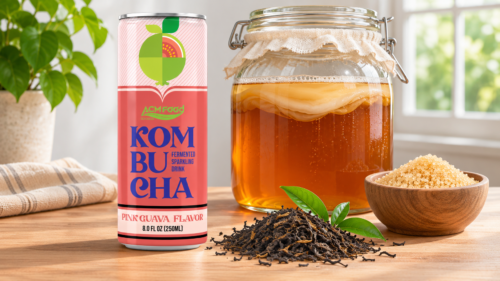
Pink fruit-flavoured coconut waters get their colour from fruit or fruit ingredients, not from polyphenol oxidation. For example, the ACM FOOD coconut water with pink guava in a 320ml can, offered by ACM Beverage, takes its rosy tone from guava. This is a different situation from plain coconut water turning pink, and the colour is expected for that product.
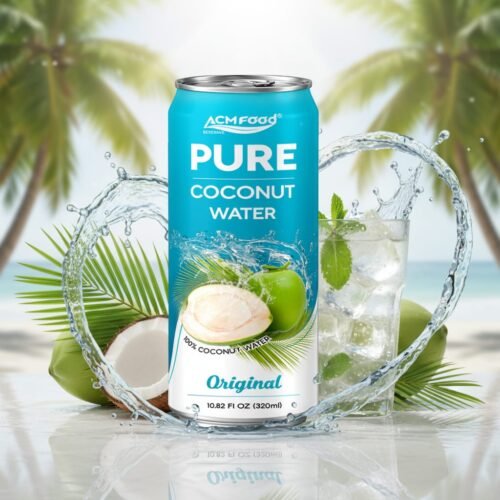
A broader selection of pure, flavoured and with-pulp coconut waters is available in the coconut water range.
Does fresh coconut water from the shell turn pink?
Yes, it can. Water poured from a freshly opened young coconut sometimes turns faintly pink after standing in a glass for a while, because it meets oxygen and its enzymes are fully active. This is more noticeable with some varieties than others. Fresh coconut water is best drunk soon after opening, both for flavour and because it has no processing to slow microbial growth. If you need to keep it, refrigerate it in a clean, covered container and use it the same day.
How do you keep coconut water from turning pink?
To slow pinkness at home, keep coconut water cold, minimise air exposure and finish it soon after opening. Unopened shelf-stable products should be stored away from heat and light.
- Store unopened coconut water in a cool, dark place.
- Refrigerate immediately after opening.
- Pour into a glass and reseal the container quickly.
- Choose smaller cans or bottles if you drink small amounts.
- Drink fresh coconut water right after opening the coconut.
FAQ: pink coconut water
Why is my coconut water pink?
Natural polyphenols in coconut water react with oxygen, aided by an enzyme, forming pink pigments. It is a natural process similar to browning in cut fruit.
Is pink coconut water bad?
Not necessarily. If it smells and tastes normal and has been stored properly, pink colour is usually harmless. Discard it if it is sour, fizzy or smells off.
Why do some coconut waters never turn pink?
Heat treatment, added vitamin C, coconut variety and reduced oxygen exposure can all prevent or slow pink colour.
Does pink coconut water have more nutrients?
There is no reliable evidence that pink coconut water is more nutritious. Colour mainly reflects oxidation of natural compounds.
Pink coconut water in summary
Coconut water turns pink when natural polyphenols oxidise with the help of polyphenol oxidase, especially after exposure to oxygen and light. Variety, maturity and processing determine how likely this is, and many brands add vitamin C to slow it. Pink colour alone is not a sign of spoilage, but sourness, fizz, off-smells or swollen packaging are. Fruit-flavoured pink coconut waters owe their colour to fruit, not oxidation.
For product details on coconut water in cans and bottles, contact the ACM Beverage team through the website enquiry page.