

Butterfly pea tea is a naturally blue drink made from the flowers of Clitoria ternatea, and it turns purple or pink when lemon or another acid is added. The colour change happens because the flower’s natural pigments, a type of anthocyanin, shift colour as the acidity of the drink changes.
This guide explains why butterfly pea tea is blue, why lemon turns it purple, what the tea actually tastes like, how lemon and green tea change the drink, and what happens to its colour in cans and bottles. It also gives simple serving tips for enjoying the colour-changing effect at home or in a café.
What is butterfly pea tea?
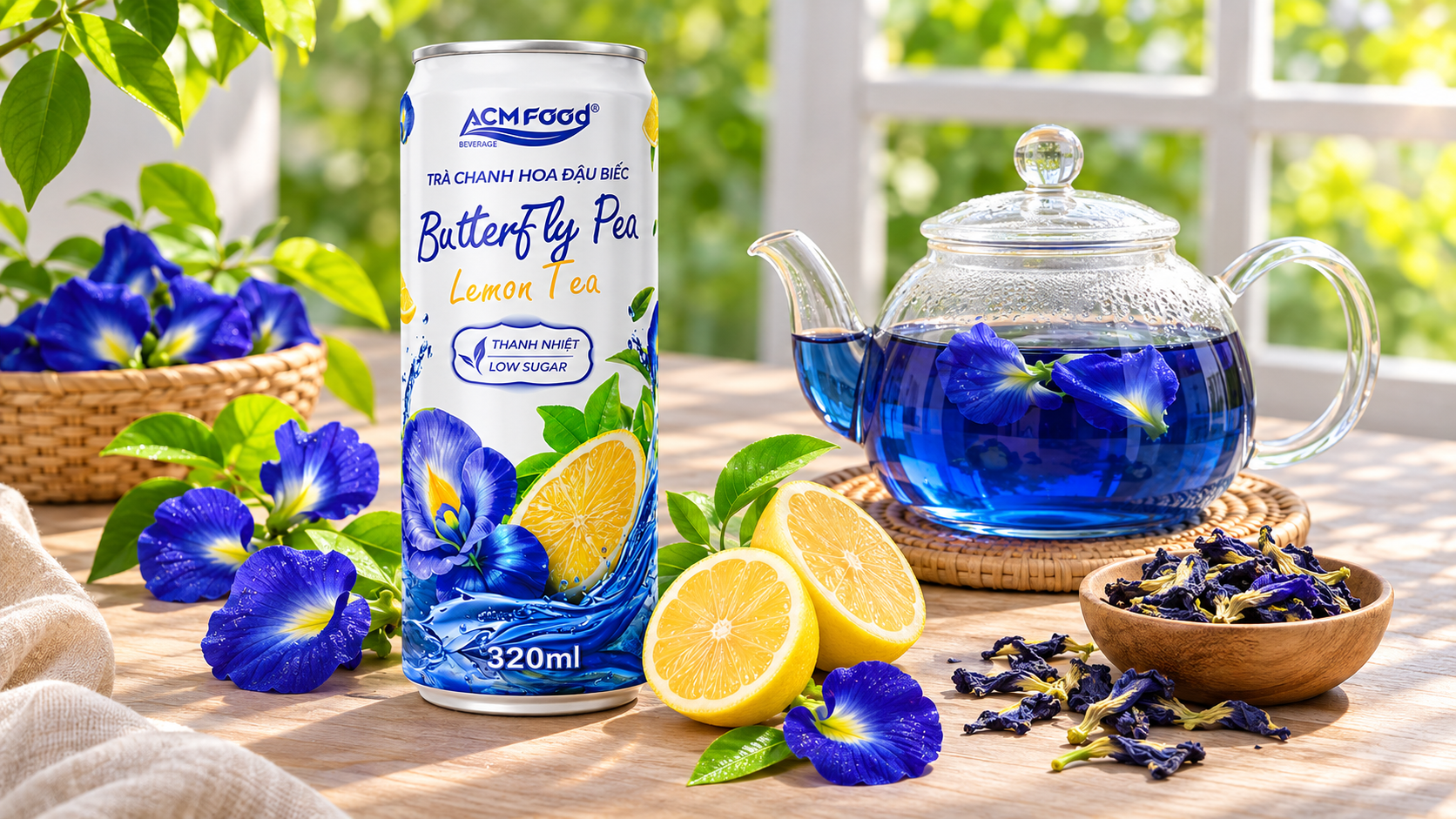
Butterfly pea tea is an infusion of dried butterfly pea flowers, which gives a vivid blue drink with a mild, earthy taste. The plant, Clitoria ternatea, is a climbing vine common across Southeast Asia, and its flowers have long been used as a natural colouring for food and drinks.
In Thailand, butterfly pea tea is known as nam dok anchan, and the flowers colour rice dishes and desserts. In Malaysia, the flower tints the blue rice of nasi kerabu and traditional cakes. It is also known as blue tea, blue pea flower tea or simply anchan tea in many markets.
Butterfly pea flowers do not contain tea leaves, so a pure butterfly pea infusion is a herbal tea. It is often blended with green tea, lemongrass, lemon or honey to add flavour, and these blends may contain caffeine if tea leaves are included.
Why is butterfly pea tea blue?
Butterfly pea tea is blue because its petals contain anthocyanin pigments, particularly a group called ternatins, which appear blue in neutral or slightly acidic conditions. When the flowers are steeped in water, these water-soluble pigments move into the liquid and give it a deep blue colour.
Anthocyanins are found in many plants, including blueberries, red cabbage, purple sweet potato and hibiscus. What makes butterfly pea unusual is the structure of its anthocyanins, which allows a stable, intense blue at the pH of ordinary water. Most other anthocyanin-rich foods look red or purple instead.
The colour intensity depends on how many flowers are used, how long they steep and the water temperature. A short, gentle steep gives a lighter sky-blue; a longer, stronger infusion gives a deep cobalt or indigo.
Why does butterfly pea tea turn purple with lemon?
Butterfly pea tea turns purple when lemon is added because lemon juice makes the drink more acidic, and the anthocyanin pigments change their structure and colour as pH drops. A small squeeze shifts the tea from blue to violet; more acid pushes it toward magenta or pink.
The colour responds to acidity in a predictable way:
| Condition | Typical colour | Example |
|---|---|---|
| Neutral or slightly acidic | Blue | Flowers steeped in plain water |
| Mildly more acidic | Violet or purple | A little lemon or lime juice added |
| Clearly acidic | Magenta to pink | Generous lemon, lime or other acidic juice |
| Alkaline | Shifts toward green tones | Rare in drinks; seen with baking soda |
This is the same principle that makes red cabbage juice work as a home pH indicator. With butterfly pea tea, the effect is especially dramatic because the starting blue is so vivid. Citrus juices such as lemon and lime are the most common triggers, but other acidic ingredients, including some fruit juices and tonic water, can also shift the colour.
What does butterfly pea tea taste like?
On its own, butterfly pea tea tastes mild, slightly earthy and woody, similar to a light green tea or a gentle herbal tea, with almost no bitterness. Its appeal is mostly visual, so it is usually paired with ingredients that add flavour, such as lemon, honey, lemongrass or green tea.
Flavour pairings that work well:
- Lemon or lime: adds tangy freshness and triggers the colour change.
- Honey or light syrup: rounds off the earthy taste and balances acidity.
- Lemongrass: gives a citrusy, herbal aroma popular in Southeast Asian drinks.
- Green tea: adds body, a fresh vegetal note and some caffeine.
- Mint or ginger: brings coolness or warmth to iced versions.
Because the flower’s flavour is subtle, butterfly pea tea is a versatile base. It does not compete with other ingredients, which is why it works well in mocktails, lemonades and layered drinks.
Does butterfly pea tea have caffeine?
Pure butterfly pea flower tea is naturally caffeine free, because the flowers come from a non-tea plant. Butterfly pea drinks blended with green or black tea do contain caffeine from the tea leaves, so the answer depends on the recipe and the ingredient list.
Many ready-to-drink butterfly pea products are built on a green tea base, which adds body and a familiar tea taste but also brings caffeine. If you need a caffeine-free option, look for a product that lists only butterfly pea flowers and other herbs, without tea leaves or tea extract. How green tea processing affects caffeine and flavour is covered in our comparison of hojicha and green tea.
How stable is butterfly pea colour in cans and bottles?
Butterfly pea colour is sensitive to light, heat, pH and time, so ready-to-drink versions must be formulated and packaged to protect it. Aluminium cans block light completely, which helps preserve colour, while clear bottles show the colour but can expose it to light that causes fading over time.
Factors that affect colour stability:
- pH: the drink’s acidity sets the colour. A recipe with lemon will usually be purple or pink rather than blue in the pack.
- Light exposure: anthocyanins can fade under prolonged light, which favours opaque packaging.
- Heat: high temperatures during processing or storage can dull or shift the colour.
- Time: colour gradually softens over shelf life, even when stored correctly.
- Other ingredients: some vitamins, metals or flavourings can interact with the pigment.
A practical consequence is that a canned butterfly pea and lemon drink already contains the acid, so its colour is set at the factory, typically in the purple-to-pink range. The live blue-to-purple moment is easiest to create when the tea and lemon are combined just before drinking.
What is a butterfly pea and lemon drink?
A butterfly pea and lemon drink combines butterfly pea flower infusion with lemon juice, usually with a sweetener and sometimes a tea base, to create a tangy, floral, colourful beverage. It is one of the most popular ways to enjoy butterfly pea, both in cafés and in ready-to-drink formats.
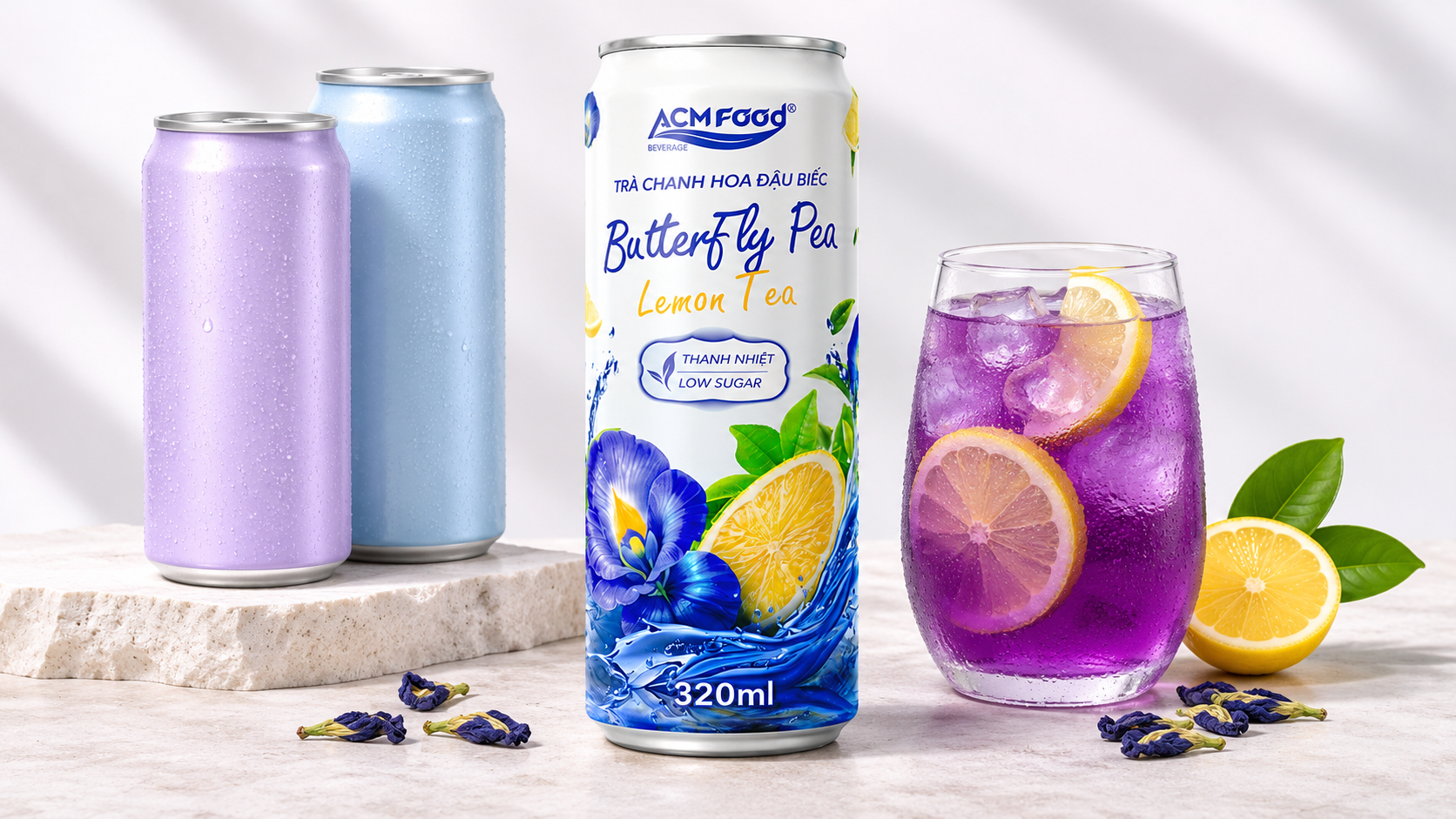
As an example, ACM Beverage offers a Green Tea Butterfly Pea & Lemon in a 320ml sleek can under the ACM FOOD label. Its product page lists butterfly pea flower and lemon juice as primary ingredients and an 18-month shelf life. The green tea base means the drink contains some caffeine. It sits within the green tea drink range, alongside Jasmine, Chrysanthemum & Honey, Artichoke and Hibiscus.
How do you serve butterfly pea tea for the colour change?
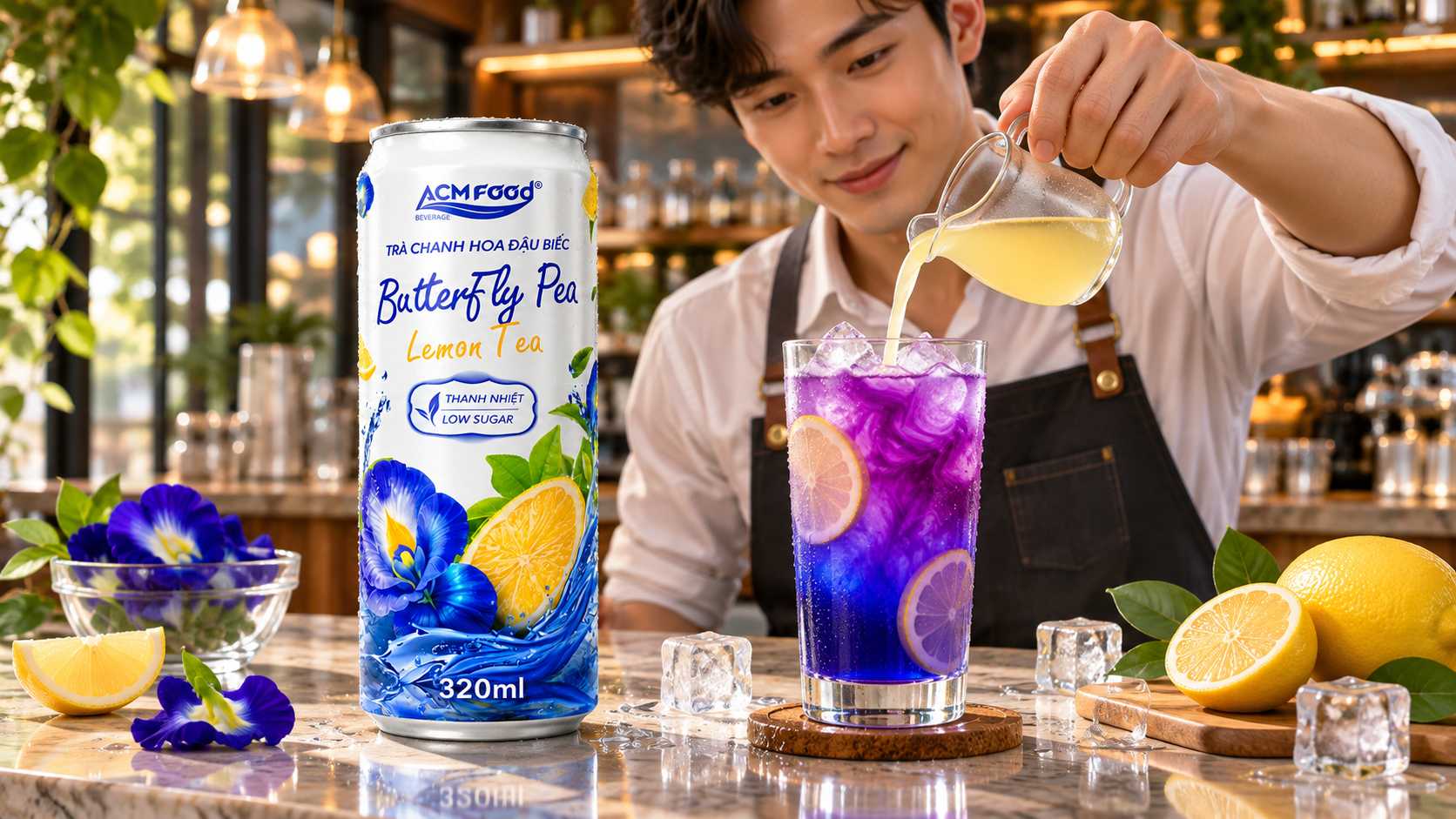
To show the colour change, serve blue butterfly pea tea over ice in a clear glass with lemon or lime on the side, then add the citrus at the table. The drink shifts from blue to purple as the juice mixes in, creating a striking moment for guests.
- Brew butterfly pea flowers in hot water, then cool the tea completely.
- Sweeten lightly with honey or syrup while warm, if desired.
- Fill a clear glass with ice and pour in the blue tea.
- Serve lemon or lime juice in a small jug or as a wedge.
- Pour or squeeze the citrus in and stir gently to watch the colour change.
Layered drinks are another option. Pour an acidic juice such as lemonade into the glass first, then slowly float blue tea on top over the back of a spoon. The layers mix gradually into a gradient of pink, purple and blue.
How is butterfly pea used beyond tea?
Butterfly pea flowers are used as a natural blue colouring in many foods and drinks, not only tea. In Southeast Asian kitchens they tint rice, glutinous rice cakes, puddings and noodles, and in modern cafés they colour lemonades, milk drinks, smoothies and mocktails.
Some common uses include:
- Blue or purple rice dishes, made by cooking rice in butterfly pea infusion.
- Layered desserts and jellies, where blue layers contrast with coconut or pandan layers.
- Colour-changing lemonades and sodas, which turn from blue to pink as citrus is added.
- Milk teas and lattes with a pale lavender colour from mixing the blue infusion with milk.
- Mocktails and cocktails where the colour shift becomes part of the presentation.
Because the pigment responds to acidity, chefs and drink makers use it deliberately to create gradients and reveal moments. The same sensitivity means recipes need testing: an acidic sauce or fruit can turn a planned blue dish purple. For packaged products, regulations on colouring foods and how they must be declared differ between markets, so producers check how butterfly pea is classified and labelled in each destination.
Where is butterfly pea tea popular?
Butterfly pea tea is most familiar in Thailand, Malaysia, Vietnam and other parts of Southeast Asia, where the flower is a traditional colouring. It has also become popular in cafés, mocktail bars and social media worldwide thanks to its colour-changing effect.
For retailers, butterfly pea drinks appeal to shoppers seeking natural colour, novelty and floral flavours. Clear labelling of the colour source, caffeine content where a tea base is used and expected colour in the pack helps set the right expectations.
FAQ: butterfly pea tea
Why is my butterfly pea tea purple instead of blue?
Your water or another ingredient is probably slightly acidic. Even a little lemon, some fruit juices or acidic water can shift the colour toward purple.
Is butterfly pea tea the same as blue tea?
Yes, blue tea is a common name for butterfly pea flower tea, referring to its natural blue colour. It is not made from tea leaves unless blended.
Can butterfly pea tea be served hot?
Yes. It can be enjoyed hot or iced. The colour change with lemon works in both, though iced versions in clear glasses show it most clearly.
Does butterfly pea tea stain?
The pigment can tint light fabrics, cups and surfaces, especially in strong infusions. Rinse spills promptly with water.
Butterfly pea tea in summary
Butterfly pea tea is a naturally blue infusion from Clitoria ternatea flowers, coloured by anthocyanin pigments that turn purple or pink when lemon or another acid is added. It tastes mild and earthy, pairs well with lemon, honey, lemongrass and green tea, and is caffeine free unless blended with tea. In cans, the colour is set by the recipe and protected from light, while the live colour change is best enjoyed fresh.
For details on canned butterfly pea and lemon green tea, contact the ACM Beverage team through the beverage enquiry contact page.