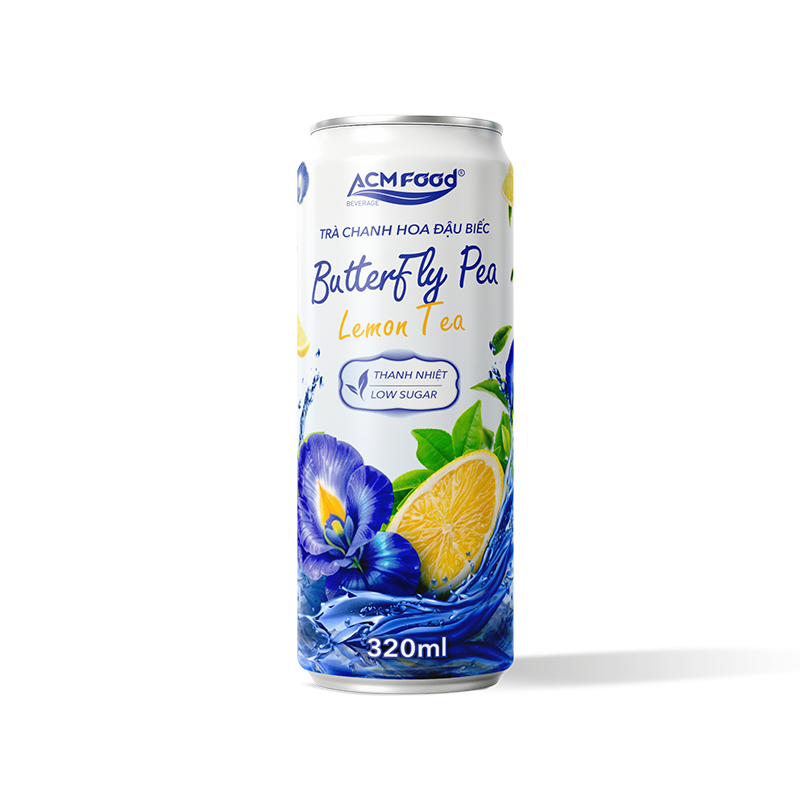
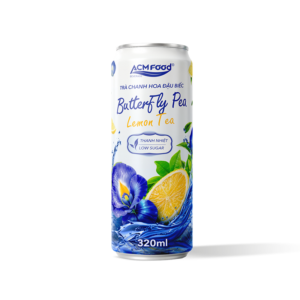
Butterfly pea flower gets attention for its colour, but the colour is not fixed. The anthocyanins that make the flower blue respond to pH, moving toward violet and then pink as acidity rises. Pairing the flower with lemon is therefore a formulation choice with a visible consequence, not simply a flavour pairing.
The Lemon Is Doing Chemistry
In this butterfly pea lemon green tea the citric level is set to land the liquid at a specific point on that colour curve and hold it there for the life of the batch, rather than letting it drift as the product ages. Get the acid wrong and the drink either stays flatly blue or tips fully pink within months. The colour comes entirely from the flower; no artificial colouring is used to correct it.
Holding the Colour to Month Eighteen
Anthocyanin is destroyed by light faster than almost any other natural pigment, which is why this variant would be a poor candidate for clear packaging. The opaque aluminium can blocks light completely, and the 18-month ambient shelf life is set on the basis of colour stability, not just microbiological safety. The pour is the product’s selling moment, and it has to survive shipping to be worth anything.
Where It Earns Its Listing
This is the SKU a buyer uses to reach a younger, visually driven shopper without leaving the familiar taste territory of lemon tea. Ranged beside a conventional jasmine or hibiscus line in the same green tea family, it widens the audience rather than splitting it. It also photographs well, which is worth more in this category than it sounds.
Format and Terms
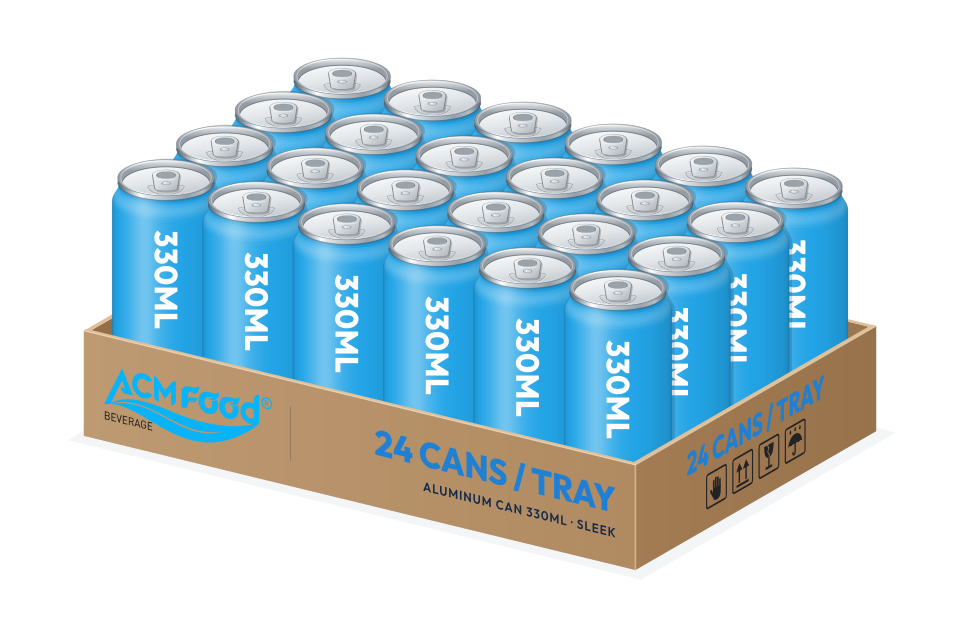
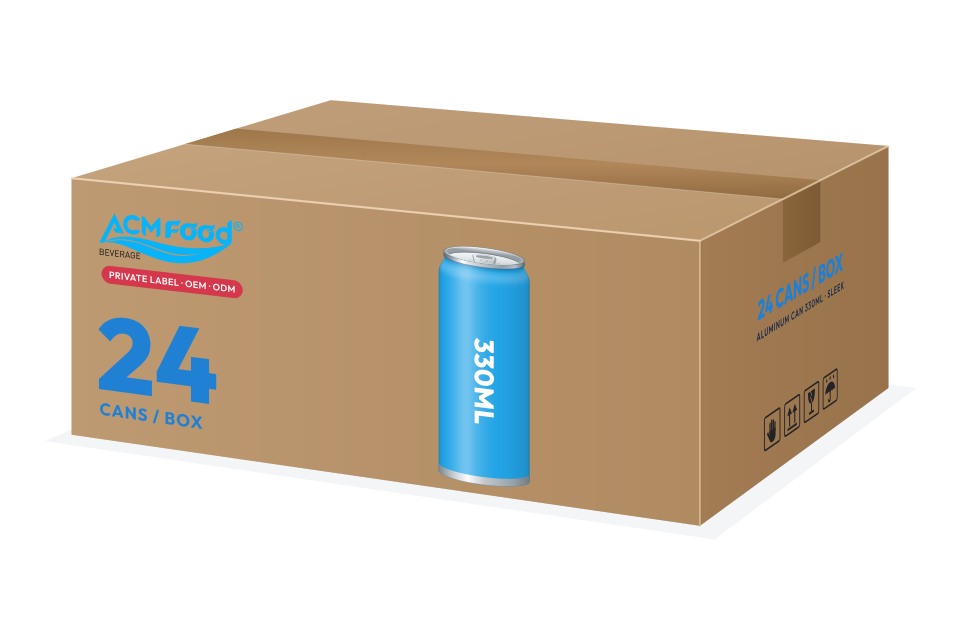
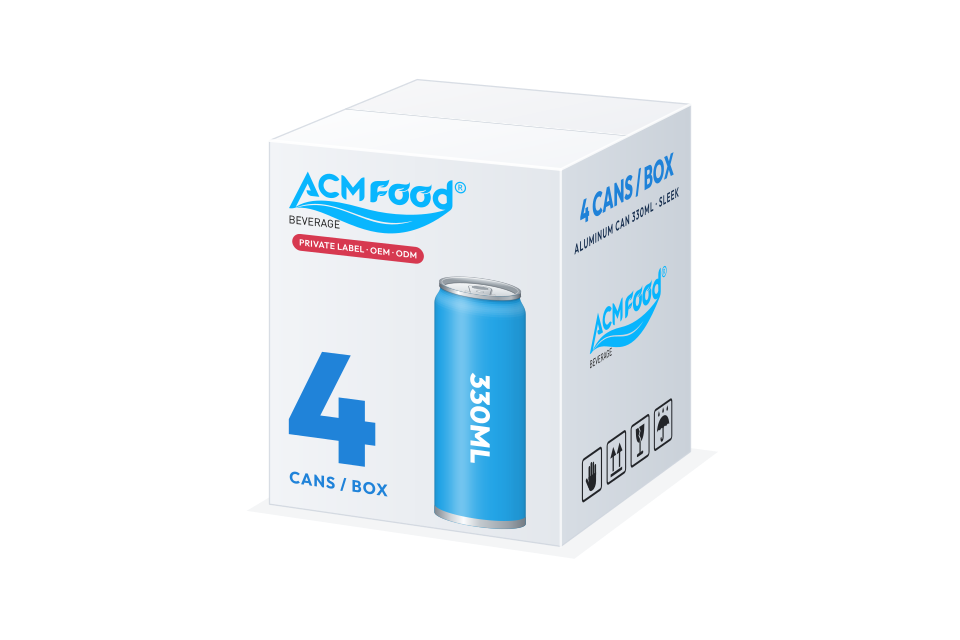
320ml sleek aluminium can, ambient distribution through standard tea drink channels with no cold chain. Batches are produced under FSSC 22000, ISO 22000 and HACCP with full traceability. Daily capacity is 20,000 cartons, the entry order is 500 cartons, lead time runs 15 to 30 days on T/T terms out of Ho Chi Minh City Port. Acidity, colour target and private label artwork are adjustable per order.