
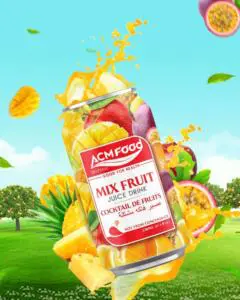






Passion fruit juice delivers about 30 mg of vitamin C and 278 mg of potassium per 100 ml at roughly 51 kcal (USDA FoodData Central, raw purple passion fruit juice). That supports immune function, blood pressure and skin health. What juicing does not carry over is fibre: the seeds hold almost all of it, so juice keeps the vitamins and loses the roughage.
Key facts at a glance
- Vitamin C: ~30 mg per 100 ml — about a third of an adult’s daily reference intake.
- Potassium: ~278 mg per 100 ml — comparable to orange juice.
- Calories: ~51 kcal per 100 ml, mostly from natural fruit sugars.
- Fibre: ~0.2 g per 100 ml in juice, versus ~10 g per 100 g in the whole fruit with seeds.
- Best for: vitamin C intake, potassium intake, hydration and flavour.
- Not a substitute for: whole fruit, if fibre is the goal.
What is passion fruit juice?
Passion fruit juice is the liquid pressed from the pulp of Passiflora edulis, a tropical vine fruit grown commercially in Vietnam, Brazil, Colombia, Ecuador, Kenya and Peru. Two varieties dominate: purple passion fruit, which is sweeter and more aromatic, and yellow passion fruit, which is larger, sharper and more acidic — the variety most often used for industrial juice because of its higher yield.
The juice reaches consumers in three forms, and they are not nutritionally equivalent:
- Fresh-pressed juice — highest vitamin C, shelf life measured in days.
- NFC (not from concentrate) — pasteurised but never reduced to concentrate and rehydrated; closest to fresh in aroma and nutrient profile.
- From concentrate — water removed for shipping, then added back. Cheaper and more stable, but heat processing costs aroma and some vitamin C.
If that distinction matters to your formulation, we cover it in detail in the difference between NFC and from-concentrate juice.
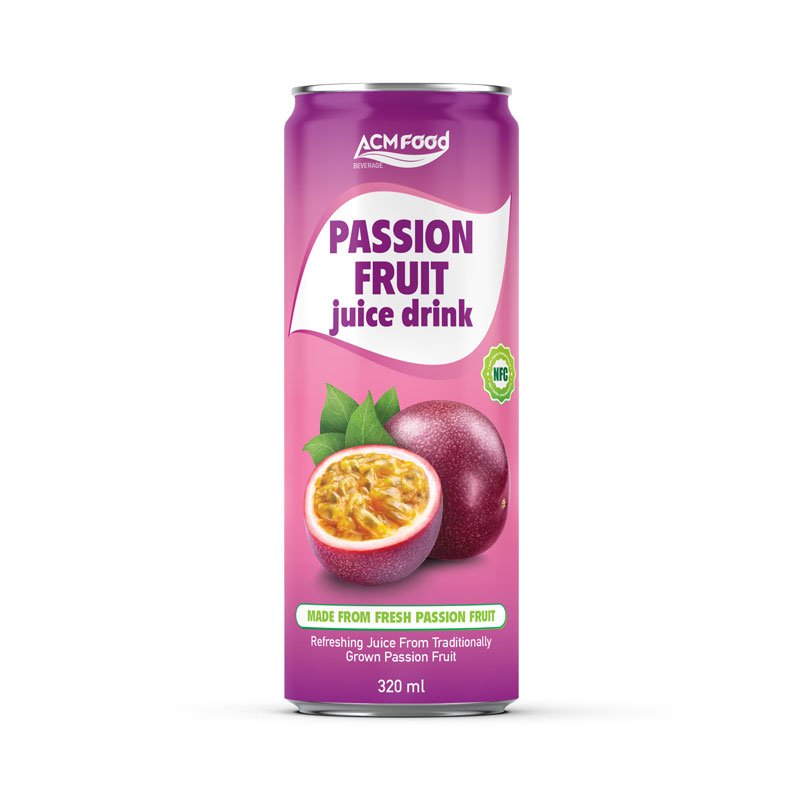
Passion fruit juice nutrition facts per 100 ml
| Nutrient | Per 100 ml (raw purple juice) | What it does |
|---|---|---|
| Energy | ~51 kcal | Light compared with most soft drinks |
| Carbohydrate | ~13.6 g | Almost entirely natural fruit sugars |
| Vitamin C | ~29.8 mg | Immune function, collagen synthesis, iron absorption |
| Potassium | ~278 mg | Blood pressure regulation, fluid balance |
| Magnesium | ~17 mg | Muscle and nerve function |
| Dietary fibre | ~0.2 g | Negligible — the fibre stays in the seeds |
Values are from USDA FoodData Central for raw purple passion fruit juice and vary with variety, ripeness and whether the product is NFC or reconstituted from concentrate.
What are the health benefits of drinking passion fruit juice?
1. It is a strong source of vitamin C
At roughly 30 mg per 100 ml, a standard 250 ml glass covers most of an adult’s daily vitamin C reference intake. Vitamin C is required for normal immune-system function and for collagen formation, and it improves absorption of non-haem iron from plant foods — which is why a glass of passion fruit juice alongside a vegetarian meal does more than just taste good.
2. The potassium supports healthy blood pressure
Potassium helps the body offset the blood-pressure effect of dietary sodium. Diets higher in potassium are consistently associated with lower blood pressure in population studies. Passion fruit juice sits in the same range as orange juice on this measure, which puts it well ahead of any flavoured soft drink.
3. It hydrates and replaces electrolytes
Passion fruit juice is around 85% water and carries potassium and magnesium, so it rehydrates while replacing minerals lost in sweat. Diluted with water it works as a post-exercise drink; undiluted, its natural sugar load puts it closer to a recovery drink than a hydration one.
4. It supplies antioxidants that support skin
The juice carries vitamin C and provitamin A carotenoids, both of which contribute to normal skin. Vitamin C in particular is a required cofactor for collagen synthesis. The evidence supports “contributes to” rather than “reverses ageing” — treat any stronger claim with scepticism.
5. Flavour intensity lets you use less
An underrated practical benefit: passion fruit is so aromatic that a small volume flavours a large one. Splashed into still water, sparkling water or plain yoghurt, it delivers taste at a fraction of the sugar of drinking it neat.
What passion fruit juice will not do
Three claims circulate widely and do not hold up:
- “It is high in fibre.” The whole fruit is — around 10 g per 100 g, because you eat the seeds. Strained juice has roughly 0.2 g. If fibre is the goal, eat the fruit.
- “It helps you sleep.” The sedative research concerns Passiflora incarnata (maypop) leaf and flower extracts, not the juice of Passiflora edulis. The harman alkaloids cited in this context are concentrated in the plant, not the pulp.
- “Its enzymes aid digestion.” Digestive enzymes in juice are denatured by stomach acid before they can act. Any digestive benefit comes from the fruit’s fibre — which, again, is in the seeds.
How much passion fruit juice should you drink a day?
Most national dietary guidelines cap 100% fruit juice at one 150–250 ml serving per day and count it as a single portion of fruit regardless of volume. One glass of passion fruit juice delivers most of a day’s vitamin C and meaningful potassium at around 75–125 kcal. Beyond that you are adding sugar without adding nutrients the first glass did not already supply.
Who should be careful with passion fruit juice?
- People on potassium-restricted diets, including those with reduced kidney function, should count the potassium.
- People managing blood glucose should treat juice as a source of free sugars and pair it with food.
- People with latex allergy may react to passion fruit through latex–fruit cross-reactivity.
- Anyone taking sedatives or anticoagulants should raise Passiflora supplements with a clinician — though that concerns concentrated extracts, not a glass of juice.
How to drink passion fruit juice
- Neat and chilled — intense and acidic; best in small volumes.
- Diluted 1:3 with still or sparkling water — the most common way to drink it outside the tropics.
- Blended with mango, orange or guava — the sweetness balances passion fruit’s acidity.
- Stirred into yoghurt or spooned over ice cream — the acidity cuts dairy fat.
- With lime and mint — a standard non-alcoholic serve in Southeast Asian cafés.
Choose products with no added sugar, and check whether the label says “juice” or “juice drink” — the latter may contain as little as 10% fruit.
Frequently asked questions
Is passion fruit juice good for you?
Yes, in moderation. One 250 ml glass supplies most of an adult’s daily vitamin C plus meaningful potassium and magnesium for around 125 kcal. It is not a fibre source and it carries natural sugars, so it belongs alongside whole fruit rather than instead of it.
Is passion fruit juice high in sugar?
It contains roughly 13.6 g of carbohydrate per 100 ml, almost all natural fruit sugars — similar to orange or apple juice. Products labelled “juice drink” or “nectar” often add sugar on top of that, so read the ingredient list.
Can you drink passion fruit juice every day?
One serving of 150–250 ml per day fits within standard dietary guidance on 100% fruit juice. Larger daily volumes add calories and free sugars without adding nutrients the first glass has not already provided.
Is fresh passion fruit better than the juice?
For fibre, yes — the whole fruit with seeds has around 10 g per 100 g against 0.2 g in strained juice. For vitamin C and potassium per serving the juice is comparable, and far easier to consume in quantity.
Does pasteurisation destroy the vitamin C?
It reduces it rather than destroying it. Heat treatment costs some vitamin C and volatile aroma compounds, which is why NFC juice — pasteurised but never concentrated and rebuilt — retains more of both than juice reconstituted from concentrate.
Which passion fruit variety makes better juice?
Yellow passion fruit dominates industrial juice production for its higher yield and acidity; purple passion fruit is sweeter and more aromatic and is more often sold as fresh fruit. Most commercial juice blends the two.
Sourcing passion fruit juice at commercial scale
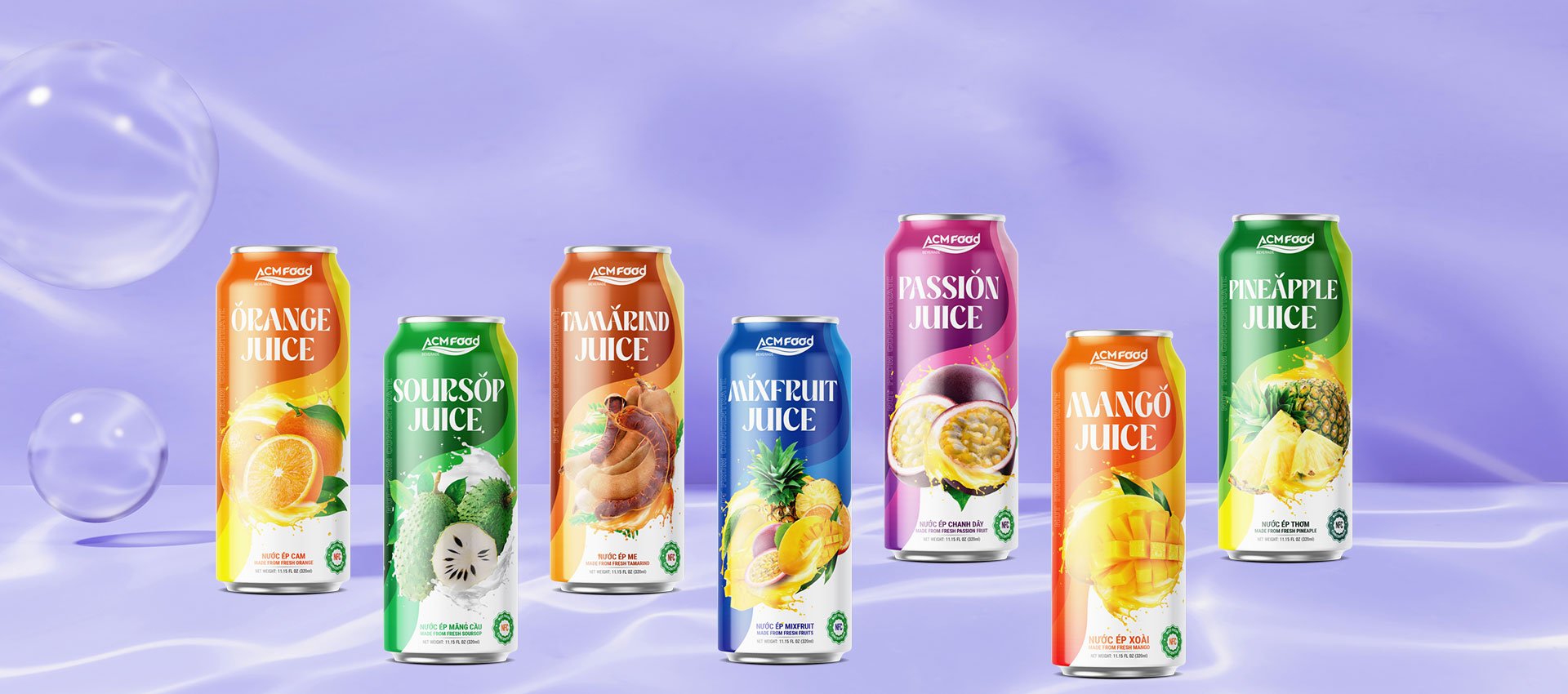
ACM Beverage manufactures ready-to-drink passion fruit beverages in Vietnam under OEM and private label terms, produced in facilities certified to ISO 22000, FSSC 22000 and HACCP and exported to more than 40 countries. The range runs to 11 passion fruit SKUs across juice, juice drink and sparkling formats — including the 330 ml sparkling passion fruit alu-can, and builds that pair passion fruit with nata de coco.
For category context, see the rise of pure passion fruit juice in the global RTD market and passion fruit as a whole-fruit ingredient. To discuss formulation, packaging or private label specifications, contact our export team or browse the full beverage product range.
This article is general nutrition information, not medical advice. Consult a qualified healthcare professional about your own diet.