

The global ready-to-drink beverage arena is witnessing a strategic pivot towards authenticity and inherent functionality. At the forefront of this shift are pure, single-ingredient fruit juices, moving beyond basic refreshment to embody wellness and premium taste. This analysis delves into the market dynamics propelling products like 100% pure passion fruit juice, examining the convergence of consumer demand for clean labels, the competitive pressures on manufacturers, and the evolving distribution channels that define success. For business stakeholders, understanding this segment reveals critical insights into private label opportunities, export potential, and the manufacturing agility required to thrive in a market where purity is the new currency.
Contents
- 1 Navigating the Competitive Landscape of Functional Beverages
- 2 Product Analysis and Innovation in Pure Fruit Juices
- 3 Market Trends and Evolving Consumer Demand
- 4 Business Strategy and Distribution Channels
- 5 Expert Perspectives and Industry Commentary
- 6 Future Outlook and Strategic Recommendations
- 7 FAQ
- 7.1 What are the primary health benefits associated with pure passion fruit juice?
- 7.2 What are the key production challenges in maintaining 100% pure juice quality?
- 7.3 What is a typical Minimum Order Quantity (MOQ) for OEM juice production?
- 7.4 Which international markets show the highest growth potential for exotic pure fruit juices?
- 7.5 How does a pure juice product fit into the broader functional beverage trend?
Global beverage manufacturers face intense pressure to innovate. The RTD beverage sector is saturated with me-too products, forcing brands to seek genuine differentiation. This relentless competition drives investment in unique formulations and premium ingredients. For a deeper look at innovative fruit-based offerings, explore our fresh fruit juice category.
Consumer preferences are shifting faster than ever before. Today’s shoppers demand authenticity and functional benefits from their drinks. This creates a significant opportunity for products with clear health positioning. The market is rewarding brands that can deliver on these evolving expectations with transparency.
The Allure of Exotic and Authentic Flavors
Exotic fruits are capturing significant market share. Passion fruit, with its distinct tart-sweet profile, offers a sophisticated alternative to common citrus flavors. This shift represents a move towards more adventurous and authentic taste experiences. It aligns with a broader consumer trend of seeking global culinary inspiration.
Authenticity in sourcing has become a non-negotiable for premium segments. Claims of ‘100% pure’ must be verifiable through supply chain transparency. This demand extends from ingredient origin to final private label beverage production. Manufacturers who master this transparency build stronger, more trusted brands.
Product Analysis and Innovation in Pure Fruit Juices
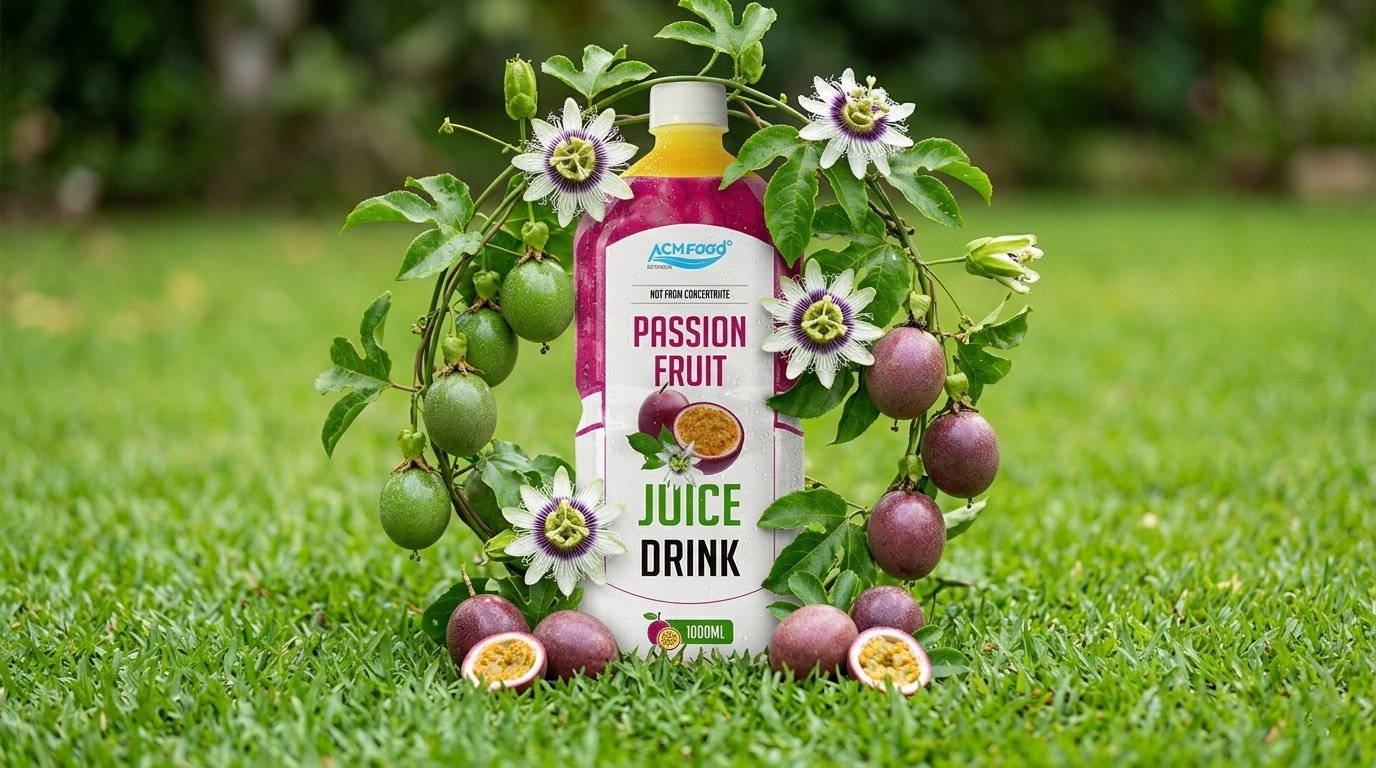
The 100 Pure Passion Fruit Juice 1L PET Bottle exemplifies a focused market entry. Its core proposition hinges on purity and a single, potent ingredient. This simplicity cuts through complex marketing claims, appealing to label-conscious consumers. The product’s clarity is its primary strategic asset in a crowded marketplace.

Packaging innovation plays a critical role in product preservation and appeal. The 1L PET bottle format balances convenience with household consumption needs. This size is optimal for family use and minimizes packaging waste per volume. It represents a practical choice for both retailers and end consumers seeking value.
Ingredient integrity is the cornerstone of this product’s value. A 100% juice formulation avoids diluents, sweeteners, and artificial preservatives. This commitment meets the highest standards for a functional drink in the natural segment. It directly addresses growing consumer skepticism towards processed ingredients.
Market Trends and Evolving Consumer Demand
Health-conscious consumption is no longer a niche trend but a mainstream driver. Beverages are increasingly viewed as vehicles for nutritional intake and wellness. Pure fruit juices like passion fruit are positioned at the intersection of taste and function. This dual benefit is crucial for capturing a broad consumer base.
The demand for clean-label products continues its upward trajectory. Shoppers are meticulously scanning ingredient lists, rejecting anything perceived as artificial. This scrutiny benefits straightforward products with minimal, recognizable components. A beverage manufacturer must now prioritize formulation clarity over cost-cutting additives.
Convenience remains a paramount factor in purchasing decisions. Ready-to-drink formats satisfy the need for immediate, on-the-go consumption without preparation. This trend supports the growth of shelf-stable, single-serve and family-size options alike. The success of sparkling variants can be seen in our sparkling water drink category.
The Premiumization of Everyday Consumption
Consumers are trading up within categories, seeking premium experiences. A pure passion fruit juice offers an elevated alternative to standard apple or orange juice. This premiumization is about perceived quality, ingredient origin, and production ethics. It allows brands to command higher price points and improve margin structures.
Business Strategy and Distribution Channels
Effective go-to-market strategy requires channel diversification. A product like this pure passion fruit variant can target health food stores, premium supermarkets, and online platforms. Each channel serves a distinct consumer segment with specific expectations. Strategic placement is key to building brand recognition and trial.
For distributors, portfolio differentiation is essential for growth. Incorporating unique, high-quality OEM beverage options can attract new retail partners. Evaluating a manufacturing partner’s flexibility in low-MOQ production is now a strategic imperative. This agility allows for testing market response without excessive inventory risk.
Export market potential is significant for differentiated fruit juice products. Regions like the EU and North America show strong demand for exotic, clean-label offerings. Success in these markets often depends on compliance with stringent food safety and labeling regulations. A reliable beverage manufacturer with export experience is a valuable partner for this expansion.
Expert Perspectives and Industry Commentary
Industry analysts note a consolidation towards value-driven brands. The market is bifurcating into low-cost commoditized products and premium, functionally-positioned ones. The middle ground is becoming increasingly challenging for brands to occupy successfully. This pure passion fruit juice clearly targets the premium, health-conscious segment of the market.
Supply chain experts emphasize the importance of sustainable sourcing. For a fruit like passion fruit, consistent quality and volume depend on stable grower relationships. Climate variability and logistical challenges can impact raw material availability and cost. Manufacturers with vertically integrated or tightly managed supply chains gain a competitive edge.
Flavor scientists highlight the complexity of capturing authentic taste. Processing 100% pure juice while maintaining its volatile aromatic compounds is a technical challenge. Advances in gentle pasteurization and aseptic filling are critical for quality preservation. This technical prowess separates leading beverage manufacturer operations from basic packers.
Future Outlook and Strategic Recommendations
The trajectory for the pure juice segment points towards continued premiumization and segmentation. Expect to see more single-origin, varietal-specific, and functionally-enhanced juice offerings. Innovation will focus on nutrient retention, novel packaging for freshness, and sustainable sourcing stories. The RTD beverage landscape will become more sophisticated and segmented.
For businesses considering private label development, ingredient transparency is paramount. Partnering with a manufacturer that offers full traceability from farm to bottle can be a powerful brand asset. This level of detail supports marketing claims and builds consumer trust in an era of skepticism.
Market expansion strategies should consider regional taste preferences and regulatory landscapes. A product successful in one market may require subtle reformulation for another. A skilled OEM beverage partner can provide crucial insights and adaptation services for cross-border success. Their experience in navigating different food standards is invaluable.
The integration of e-commerce and direct-to-consumer models will reshape distribution. Brands that can efficiently fulfill small orders while maintaining product quality will capture early adopters. This requires a manufacturing and logistics partnership built for flexibility, not just scale. Exploring our range of fruit juice products can reveal complementary offerings for a DTC portfolio.
FAQ
What are the primary health benefits associated with pure passion fruit juice?
Passion fruit juice is rich in antioxidants like vitamin C and vitamin A, which support immune function and skin health. It contains dietary fiber, beneficial for digestion, and plant compounds such as polyphenols that may reduce inflammation. Its natural profile makes it a preferable choice over sugary, artificially flavored drinks.
What are the key production challenges in maintaining 100% pure juice quality?
Key challenges include preserving volatile flavor compounds and nutrients during pasteurization, preventing oxidation that leads to browning and flavor loss, and ensuring consistent brix (sugar content) and acidity from batch to batch due to natural fruit variation. Sourcing high-quality, ripe fruit year-round is also a significant logistical hurdle.
What is a typical Minimum Order Quantity (MOQ) for OEM juice production?
MOQs vary widely based on complexity, packaging, and manufacturer capacity. For a standard 1L PET bottle, MOQs can range from 5,000 to 50,000 units for a new product run. Progressive manufacturers are now offering lower MOQ tiers, sometimes starting at 1,000-2,000 units, to accommodate brand startups and test markets, though unit costs are higher at these volumes.
Which international markets show the highest growth potential for exotic pure fruit juices?
North America and Western Europe remain strong markets due to high disposable income and health trends. East Asian markets like South Korea and Japan have growing demand for premium, functional beverages. The Middle East, particularly the GCC nations, presents opportunity for premium imported brands. Success depends on understanding local sweetener preferences, labeling laws, and distribution networks.
How does a pure juice product fit into the broader functional beverage trend?
Pure juices are foundational to the functional movement, offering inherent nutrients without fortification. They represent the ‘clean label’ extreme of functionality, where benefits come directly from the whole food ingredient. This contrasts with beverages that add isolated vitamins, minerals, or botanicals. For a segment exploring effervescent functionality, consider our sparkling water options as a potential base for enhancements.