



One passion fruit contains about 17 kcal and 1.9 g of fibre. Per 100 g, the whole fruit with seeds carries 10.4 g of fibre, 30 mg of vitamin C and 348 mg of potassium (USDA FoodData Central). The fibre is the standout figure — and it only counts if you eat the seeds.
Key facts at a glance
- Species: Passiflora edulis, a tropical vine fruit native to South America.
- Grown in: Vietnam, Brazil, Colombia, Ecuador, Kenya, Peru.
- Per fruit (~18 g edible): ~17 kcal, ~1.9 g fibre, ~5 mg vitamin C.
- Per 100 g: 97 kcal, 10.4 g fibre, 30 mg vitamin C, 348 mg potassium, 29 mg magnesium, 1.6 mg iron.
- The seeds carry the fibre. Strain them out and you lose almost all of it.
- Two varieties: purple (sweeter, aromatic) and yellow (larger, sharper, higher juice yield).
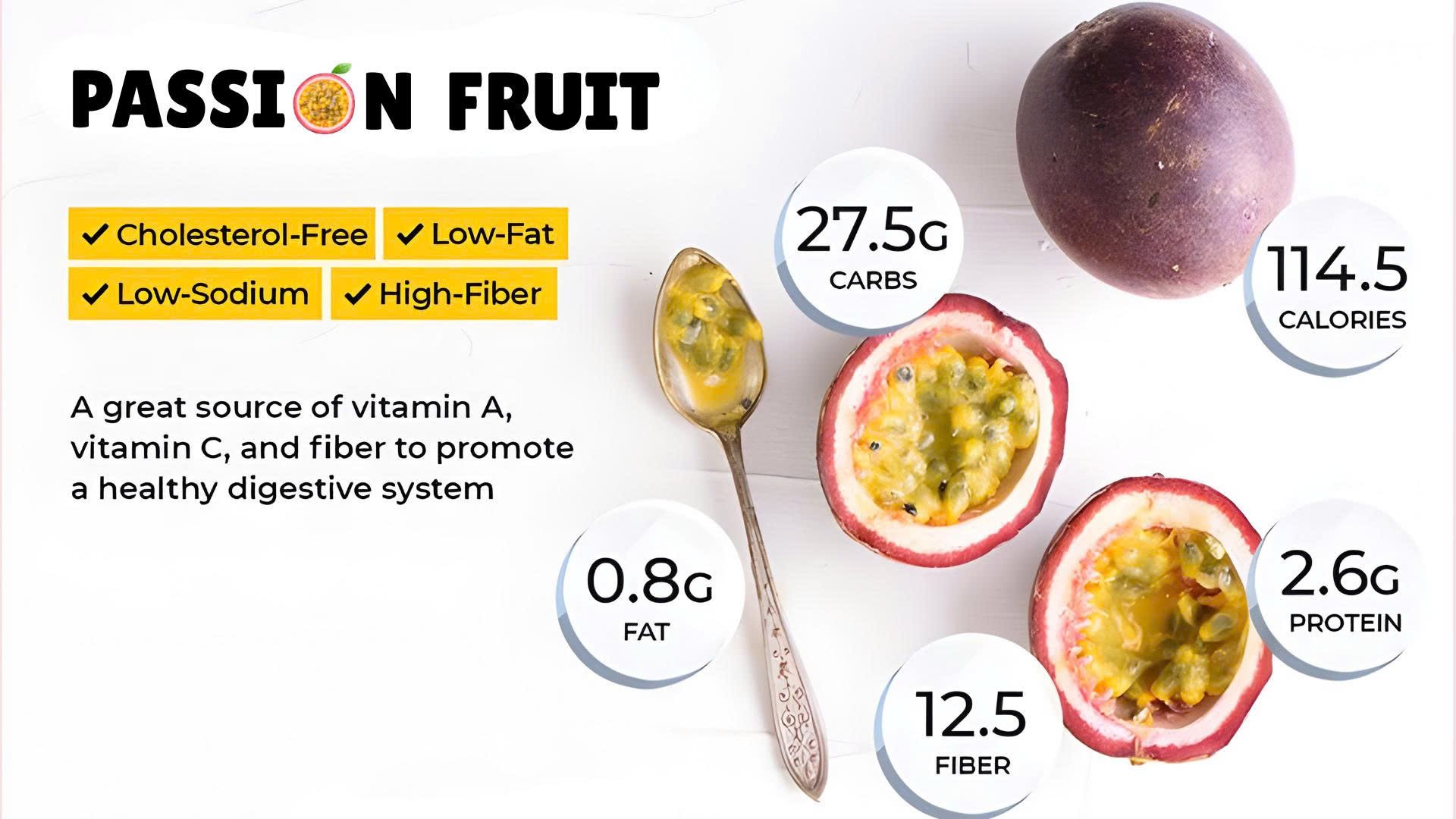
Passion fruit nutrition facts
| Nutrient | Per 100 g (raw, with seeds) | Per fruit (~18 g) |
|---|---|---|
| Energy | 97 kcal | ~17 kcal |
| Dietary fibre | 10.4 g | ~1.9 g |
| Vitamin C | 30 mg | ~5 mg |
| Potassium | 348 mg | ~63 mg |
| Magnesium | 29 mg | ~5 mg |
| Iron | 1.6 mg | ~0.3 mg |
| Vitamin A (RAE) | 64 µg | ~12 µg |
Values from USDA FoodData Central for raw purple passion fruit. They vary with variety, ripeness and growing conditions.
Reading the two columns matters. Per 100 g, passion fruit looks like one of the highest-fibre fruits available. But a single fruit yields only about 18 g of edible pulp, so you need five or six to reach 100 g. Both figures are true; they answer different questions.
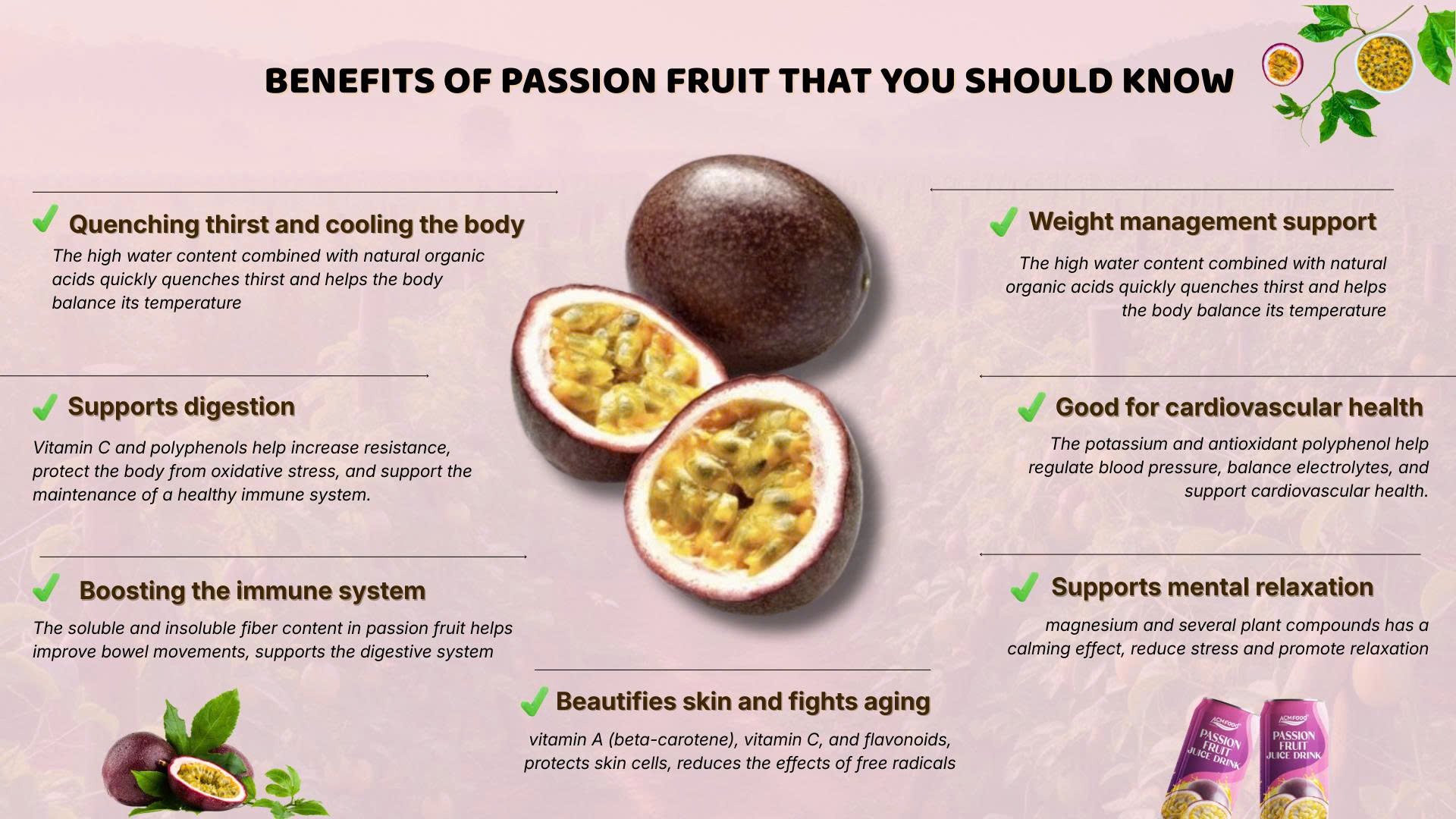
What are the health benefits of passion fruit?
1. It is among the highest-fibre fruits by weight
At 10.4 g per 100 g, passion fruit outranks most common fruit on fibre — roughly four times an apple. The fibre is a mix of soluble and insoluble, and almost all of it is in the crunchy black seeds. Swallowing the seeds is the point; straining them leaves you with juice at around 0.2 g of fibre per 100 ml.
2. Meaningful vitamin C in a small package
30 mg per 100 g supports normal immune function and collagen formation, and improves absorption of non-haem iron from plant foods eaten in the same meal. Passion fruit also supplies 1.6 mg of iron per 100 g itself, which is unusual for a fruit.
3. Potassium for blood pressure
348 mg per 100 g helps offset the blood-pressure effect of dietary sodium. Diets higher in potassium are consistently associated with lower blood pressure across population studies.
4. Low energy density
17 kcal per fruit with nearly 2 g of fibre is a good ratio for satiety per calorie. The fibre slows gastric emptying, which is the mechanism behind the fullness — not anything specific to passion fruit.
5. Carotenoids and polyphenols for skin
Vitamin C is a required cofactor in collagen synthesis, and the carotenoids give the pulp its colour. The honest framing is “contributes to normal skin,” not “reverses ageing.”
What passion fruit will not do
Two claims circulate widely and do not hold up:
- “It helps you relax and sleep.” The calming research concerns Passiflora incarnata (maypop) — a different species, and its leaf and flower rather than its fruit. There is no good evidence that eating Passiflora edulis pulp has a sedative effect.
- “The juice keeps the fibre.” It does not. Fibre lives in the seeds; strained juice retains almost none. For the juice side specifically, see passion fruit juice benefits, which covers what survives pressing.
How to eat passion fruit
- Halve and spoon it out. The simplest serve. Eat pulp and seeds together.
- Over yogurt or porridge. The acidity cuts dairy fat and the seeds add crunch.
- Diluted as a drink. One fruit to 200 ml of water. Neat pulp is too acidic for most people.
- Blended with sweeter fruit. Pineapple, orange, mango or apple balance the sharpness.
- Spooned over salad. Works as a dressing base with oil, replacing vinegar.
Choosing a ripe one: a wrinkled, dimpled skin means ripe, not old. Smooth-skinned passion fruit is underripe and will taste sharply sour. Heavy for its size indicates a good pulp yield.
Who should be careful
- Acid reflux or gastritis: the organic acid content can irritate. Avoid on an empty stomach.
- Potassium-restricted diets: 348 mg per 100 g is worth counting if you have reduced kidney function.
- Latex allergy: passion fruit is among the fruits associated with latex–fruit cross-reactivity.
- Added sugar: the fruit is sharp enough that people over-sweeten it. Honey is optional, not required.
Purple or yellow passion fruit?
| Purple (P. edulis) | Yellow (P. edulis f. flavicarpa) | |
|---|---|---|
| Size | Smaller | Larger |
| Flavour | Sweeter, more aromatic | Sharper, more acidic |
| Juice yield | Lower | Higher |
| Typical use | Eaten fresh | Industrial juice |
| Climate | Cooler subtropics | Lowland tropics |
Frequently asked questions
Can you eat passion fruit seeds?
Yes, and you should. The seeds are edible, contribute the crunch, and hold nearly all of the fruit’s 10.4 g of fibre per 100 g. Removing them turns a high-fibre fruit into a low-fibre one.
How many passion fruits can you eat a day?
Two to four is a reasonable range for most adults — around 35 to 70 kcal with 4 to 8 g of fibre. The limiting factor is acidity rather than calories; more than that on an empty stomach can irritate the stomach lining.
Is passion fruit good for weight management?
It fits well into one: high fibre, low energy density, and satiating per calorie. It is not a fat-burning food, and no fruit is. The benefit is displacement — eating it instead of a higher-calorie snack.
How do you know when passion fruit is ripe?
Wrinkled, dimpled skin is the sign of ripeness, not spoilage. A smooth, taut skin means it needs a few more days at room temperature. Discard it if the skin is mouldy or the fruit feels light and hollow.
Is passion fruit the same as maracuyá or granadilla?
Maracuyá is the Spanish and Portuguese name for the same fruit, usually the yellow variety. Sweet granadilla (Passiflora ligularis) is a related but different species — orange-skinned, much sweeter and far less acidic.
Is fresh passion fruit better than the juice?
For fibre, decisively yes: 10.4 g per 100 g against roughly 0.2 g in strained juice. For vitamin C and potassium per serving they are comparable, and the juice is far easier to consume in quantity.
Passion fruit beverages at commercial scale
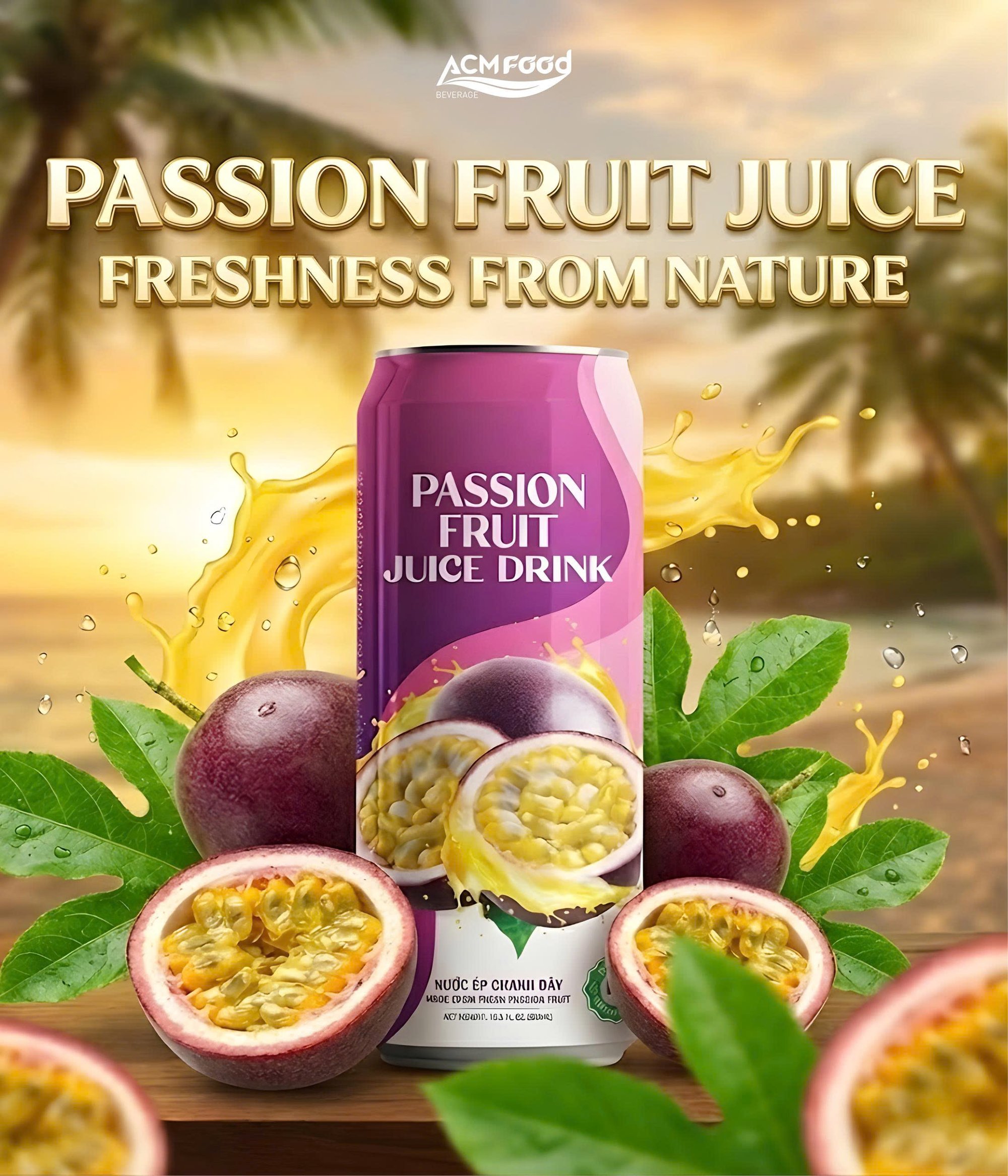
ACM Beverage manufactures ready-to-drink passion fruit beverages in Vietnam under OEM and private label terms, in facilities certified to ISO 22000, FSSC 22000 and HACCP, exporting to more than 40 countries. The range covers 11 passion fruit SKUs, including the 500 ml passion juice alu-can and a with-pulp version that retains some of the seed fraction rather than straining it out.
For market context see the rise of pure passion fruit juice in the global RTD market. To discuss formulation or private label specifications, contact our export team or browse the full beverage product range.
This article is general nutrition information, not medical advice. Consult a qualified healthcare professional about your own diet.