














Tomato juice for a Bloody Mary base is a savoury vegetable juice supplied to bars, hotels and beverage distributors as a mixer ingredient, where texture, saltiness and spice matter more than they do in a drink sold straight. A good base thickens the drink without clogging a shaker, carries seasoning without hiding the spirit and stays consistent from one can to the next. This guide looks at the buying decisions behind that supply: viscosity, salt, heat, can format and private label.
It is written for hospitality buyers and distributors. Specifications that depend on the project are marked as items to confirm.
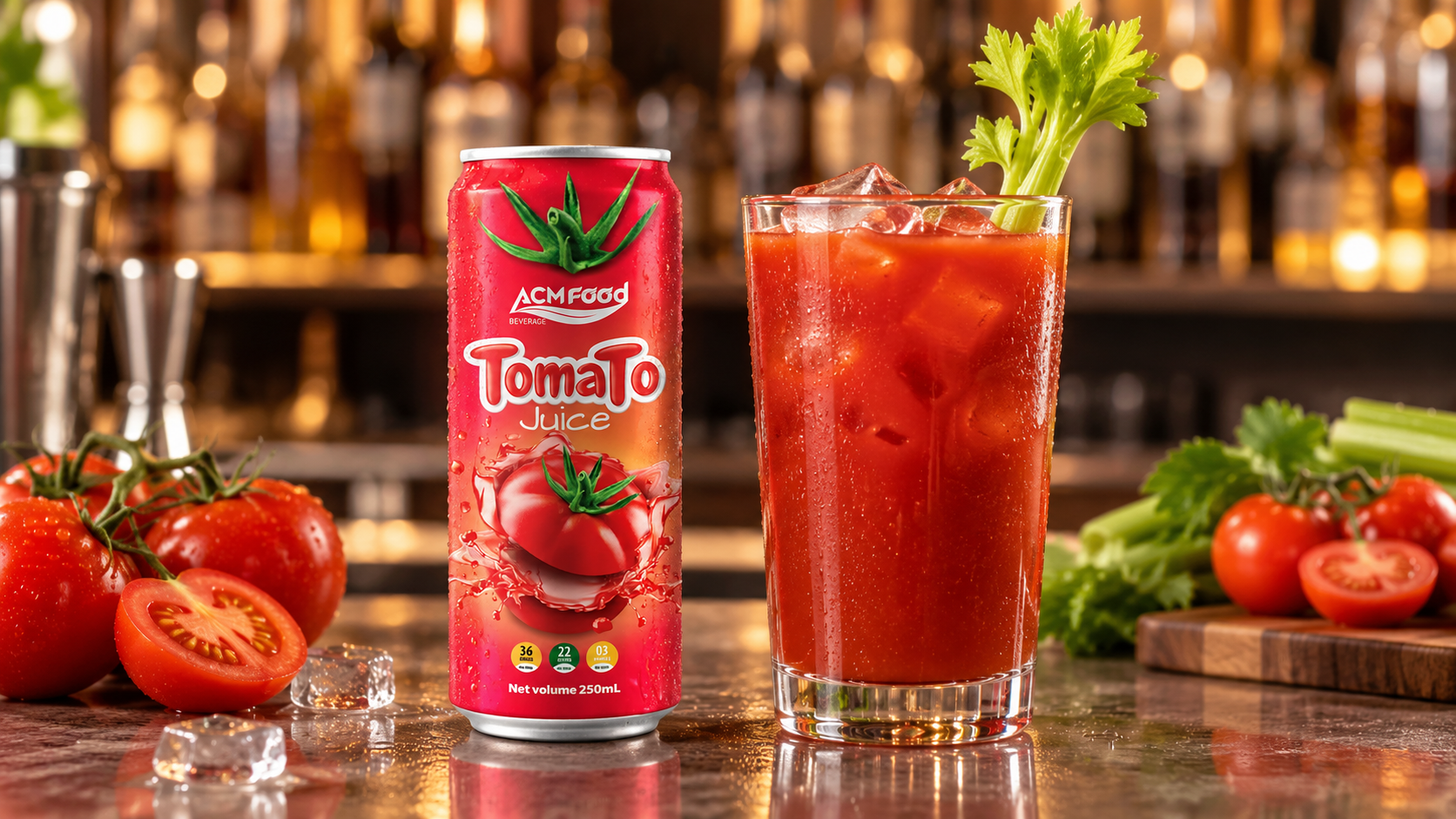
Why do bars buy tomato juice as a base instead of mixing their own?
Bars buy a ready tomato base because consistency and speed matter more than customisation at service time. A canned or bottled juice gives the same colour, thickness and salt level in every serve, which a house blend made from fresh ingredients struggles to match across shifts and venues.
For hotels and distributors, a standard base also simplifies purchasing and food safety. A sealed, shelf-stable pack stores without refrigeration until opened, and each unit carries a batch code for traceability. Venues that still want a signature drink can add their own seasoning to a neutral base, which is why many buyers ask for an unsalted or lightly seasoned product and finish it on site. The tomato juice guides on this site, including the one on tomato juice OEM production, explain how the juice is made and which options a brand can specify.
Which specifications matter most in a mixer-grade tomato juice?
Five specifications decide whether a tomato juice works as a mixer: viscosity, salt, heat, acidity and colour stability. Each one affects pouring, taste or appearance in the glass, and each should be written into the brief as a measurable target instead of an adjective.
| Specification | Why it matters in a bar | What to ask the supplier |
|---|---|---|
| Viscosity (thin or thick) | Body in the glass and how the drink holds ice and garnish | How is thickness measured and how much does it vary between batches? |
| Salt level | Controls how much seasoning the venue adds | Unsalted, low salt or regular, and sodium per 100ml on the specification |
| Heat and seasoning | Spicy bases suit savoury cocktails | What seasoning is used and is it declared on the label? |
| Acidity | Freshness and balance with spirits and citrus | What is the pH target and tolerance? |
| Colour stability | Appearance after pouring and over shelf life | How much colour change is acceptable by the end of shelf life? |
Ask for these as a signed specification sheet. If a supplier replies in general terms such as “rich and thick”, request numbers and a sample before comparing offers.
How thick should a Bloody Mary base be?
There is no single correct thickness, because it depends on the venue’s style. A thinner juice suits a lighter, long drink, while a thicker one suits a heavier house style. Choose by testing samples in the actual glass and with the actual ice, then write the target into the specification.
Two practical points help. First, tomato juice can settle or separate on standing, so ask how the supplier controls separation and whether the pack should be shaken before opening. Second, thick juice can behave differently when chilled, so test at the temperature the venue serves. The site’s article on NFC tomato juice and salt explains how pressing and heat treatment affect the final texture.
What salt and spice options can be specified?
Salt and spice are the two options that change a tomato juice most for cocktail use. Unsalted versions give the bar full control, low-salt versions suit venues that season lightly and regular versions are ready to pour. Spicy variants add heat but also add declared ingredients and a stronger taste profile.
The customisation options listed for ACM tomato juice include unsalted, low-salt and regular salt levels, thin or thick texture, plain, spicy or lemon seasoning and 250ml or 330ml can sizes. Whether a particular combination is available for an order should be confirmed with the team. Keep the recipe simple when you start: each additional seasoning raises the chance of variation between batches and adds a line to the allergen and ingredient review.
Which can format works for bars and hotels?
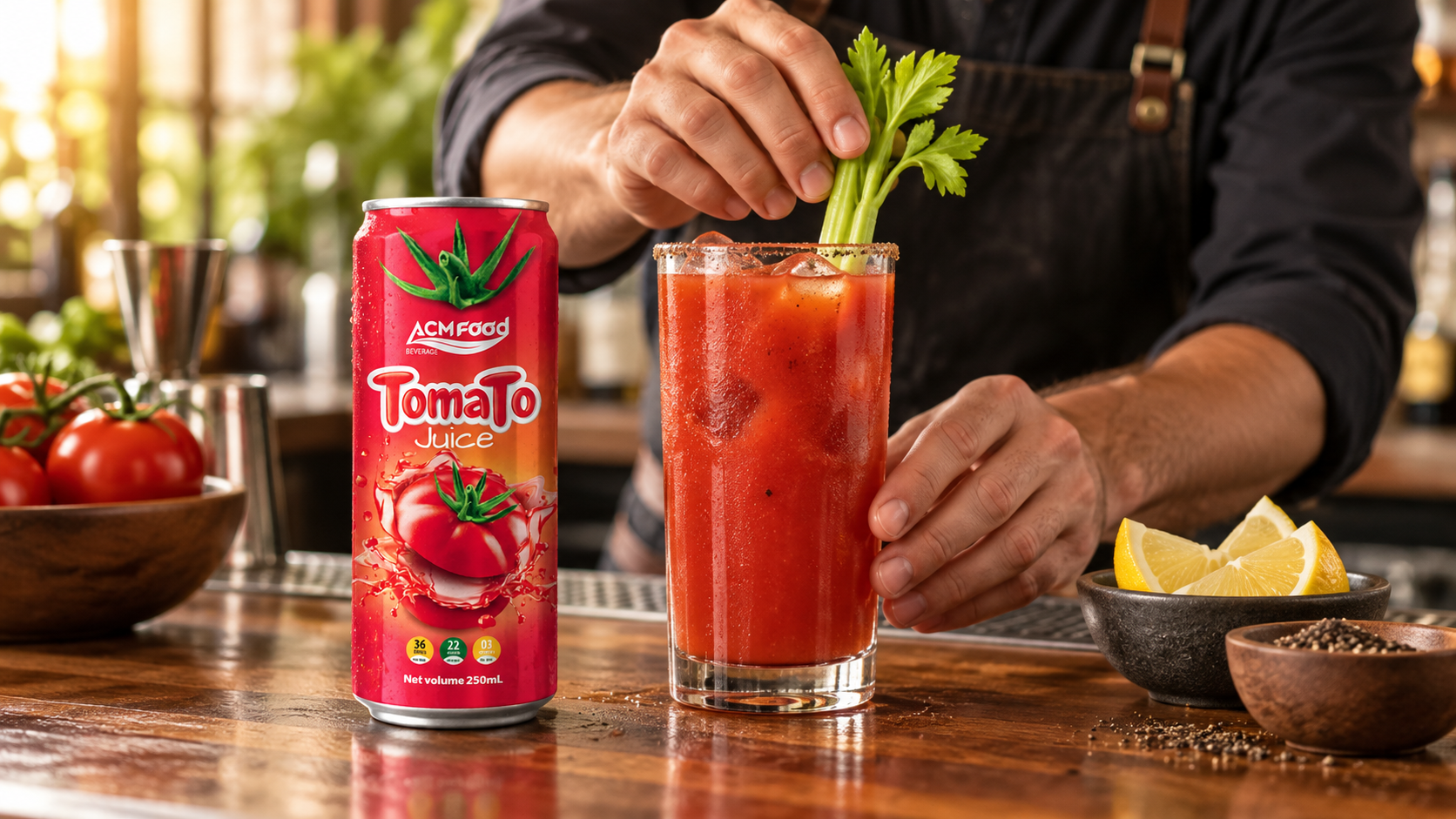
A 250ml can suits single serves, minibars and in-room service, while a 330ml can suits a standard bar serve and retail resale. Larger formats make sense for high-volume venues but change handling, opening and waste, since an opened large pack must be used or discarded within a defined time.
The published tomato juice products include 250ml aluminium cans, in standard and slim profiles, and a 330ml aluminium can in a not-from-concentrate version, each with a 24-month shelf life and the certifications FSSC 22000, HACCP and ISO 22000. For more on how can shapes affect shelf presence and handling, read the guide to sleek, slim and standard can formats.
Think about the whole serve. A single-serve can removes waste and portion variation, but a venue pouring many drinks an hour may prefer a larger pack. Write the expected opening rate into the brief so the supplier can suggest the right format.
What does private label add for hospitality and distribution?
Private label lets a hotel group, distributor or bar brand put its own name on a standard tomato juice without developing a formula. It is attractive when the venue wants a consistent house base across several sites or wants to sell a branded mixer at retail.
The choices that matter are the base recipe, the pack, the label design and the claims. Existing formulas shorten the timeline, while custom changes such as a different salt level or a spicy seasoning move the project towards custom development. The page on private label beverage products and existing formulas describes the route that starts from a product already in the range.
What should a distributor check before buying?
A distributor should check the specification sheet, the sample, the shelf life, the documents and the label before ordering. Together they show whether the product meets the market’s rules and whether it will hold up through storage and transport.
- Specification sheet. Targets and tolerances for viscosity, salt, acidity and colour.
- Sample approval. Taste and pour test with the actual glass, ice and garnish used.
- Shelf life. The stated period and the storage conditions it assumes.
- Certificates. Food safety certificates for the production site, with scope and validity.
- Label review. Name, ingredient list, allergen statement and any alcohol-adjacent wording against local rules.
- Batch records. A batch code on each can and a certificate of analysis on request.
Alcohol-related marketing rules differ widely. A tomato juice sold as a mixer should not carry wording that implies it contains alcohol, and some markets restrict how a non-alcoholic product may refer to cocktails on the pack. Check these rules with your adviser before finalising artwork.
How does the product mix with the rest of a hospitality range?
Tomato juice fits beside other savoury and soft drink lines in a hospitality order. Buyers often combine it with sparkling drinks, coconut water and juices to serve breakfast, minibar and bar menus from one supplier, which reduces the number of purchasing contracts and shipments.
When building a mixed order, think about the container plan, the shelf lives and the label languages for each item. The page on beverage packaging sizes compares 250ml, 320ml, 330ml and 500ml formats, which helps choose sizes that fit different parts of the menu.
How should a venue store and handle tomato juice?
Store unopened cans in a cool, dry place away from direct heat and light, and follow the supplier’s storage conditions. Once opened, treat the juice as a perishable food: chill it, cover it and use it within the time the supplier or local food safety rules specify.
Write a short handling note for staff. It should cover shaking before opening if the juice separates, chilling the can before service, discarding opened product after the stated period and rotating stock so older batches are used first. Hotels and bars with several outlets benefit from one standard note, since inconsistent handling is a common reason for complaints about a mixer’s taste.
How do you run a pour test before choosing a base?
A pour test checks how a juice behaves in your real service. Use your own glassware, ice and garnish, pour several samples from different cans, and compare them against the specification targets.
- Chill the cans to service temperature. Thickness and flavour change with temperature.
- Pour into the real glass over real ice. Note how the juice flows and how it holds the garnish.
- Taste with the seasoning your venue normally adds. Judge whether the base needs more or less salt.
- Check separation after standing. Leave a glass for a few minutes and look for layering.
- Repeat with a second batch. Consistency across batches matters more than a single good sample.
What should the brief say about volume and delivery?
State the expected monthly use, the number of venues and the delivery pattern, even if only as a rough range. These facts help a supplier recommend a can size and a carton configuration, and they let you compare offers on a realistic basis.
Include any restrictions on pallet height or carton weight at the receiving dock, and say whether deliveries go to one central store or to individual outlets. A product that is easy to ship to one warehouse may be awkward for ten small bars, so raise delivery realities early.
Frequently asked questions
Is unsalted tomato juice better for cocktail use?
For many venues, yes, because it lets the bar set the seasoning. A ready-seasoned juice is quicker to pour but gives less control, so choose by the venue’s service style.
Can the juice be made spicy?
A spicy seasoning is one of the options listed for custom tomato juice. Confirm availability, the seasoning ingredients and the label wording for your market.
Which can size is most common for bars?
Buyers typically choose 250ml for single serves and 330ml for standard bar and retail use. The right choice depends on the serve and the opening rate.
Does ACM Beverage publish a minimum order?
No minimum is published on this site, so it should be requested with your specification and market.
Summary and next step
Tomato juice for a Bloody Mary base is chosen on viscosity, salt, heat, acidity and colour stability, with can size and private label as the commercial choices. Write targets into a specification, test samples in the real glass and verify labelling for non-alcoholic mixers in your market.
To start a hospitality or distribution project, send your target salt level, texture, can size and market to ACM Beverage through the contact page, and the team will confirm which existing product fits and what would need development.






