














Fruit juice is one of the core categories of the non-alcoholic beverage industry, alongside water, carbonated soft drinks, ready-to-drink tea and coffee, and functional drinks. Its role is changing: plain 100% juice faces sugar concerns, so growth is shifting to smaller packs, lower-sugar blends, juice with added function, and juice as a base for sparkling and textured drinks.
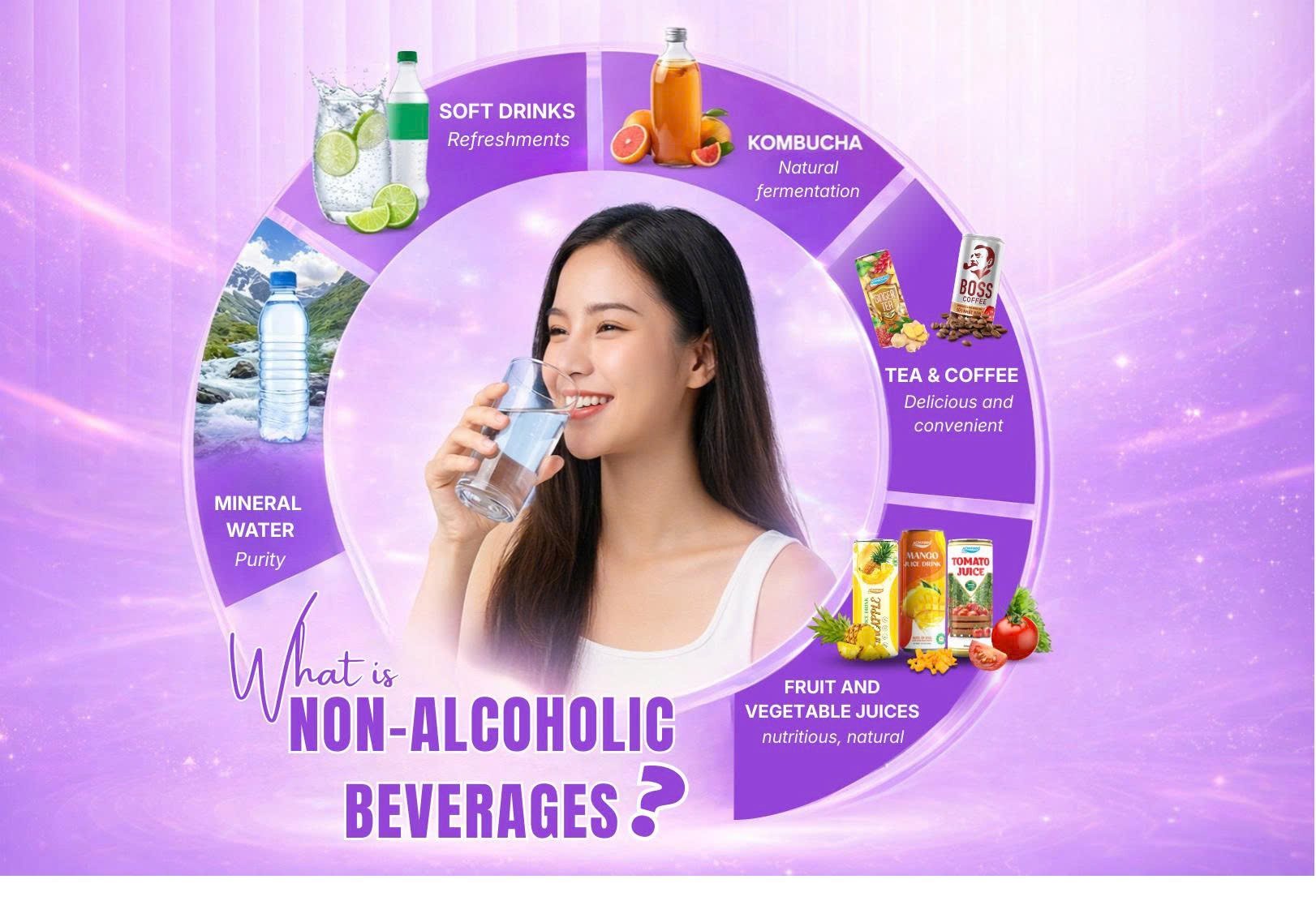
What counts as a non-alcoholic beverage?
Non-alcoholic beverages are drinks with no alcohol, or only trace amounts. The main categories are:
- Bottled water, plain and flavoured.
- Carbonated soft drinks.
- Fruit and vegetable juices, nectars and juice drinks.
- Ready-to-drink tea and coffee.
- Energy, sports and functional drinks.
- Plant-based milks and dairy drinks.
What role does fruit juice play?
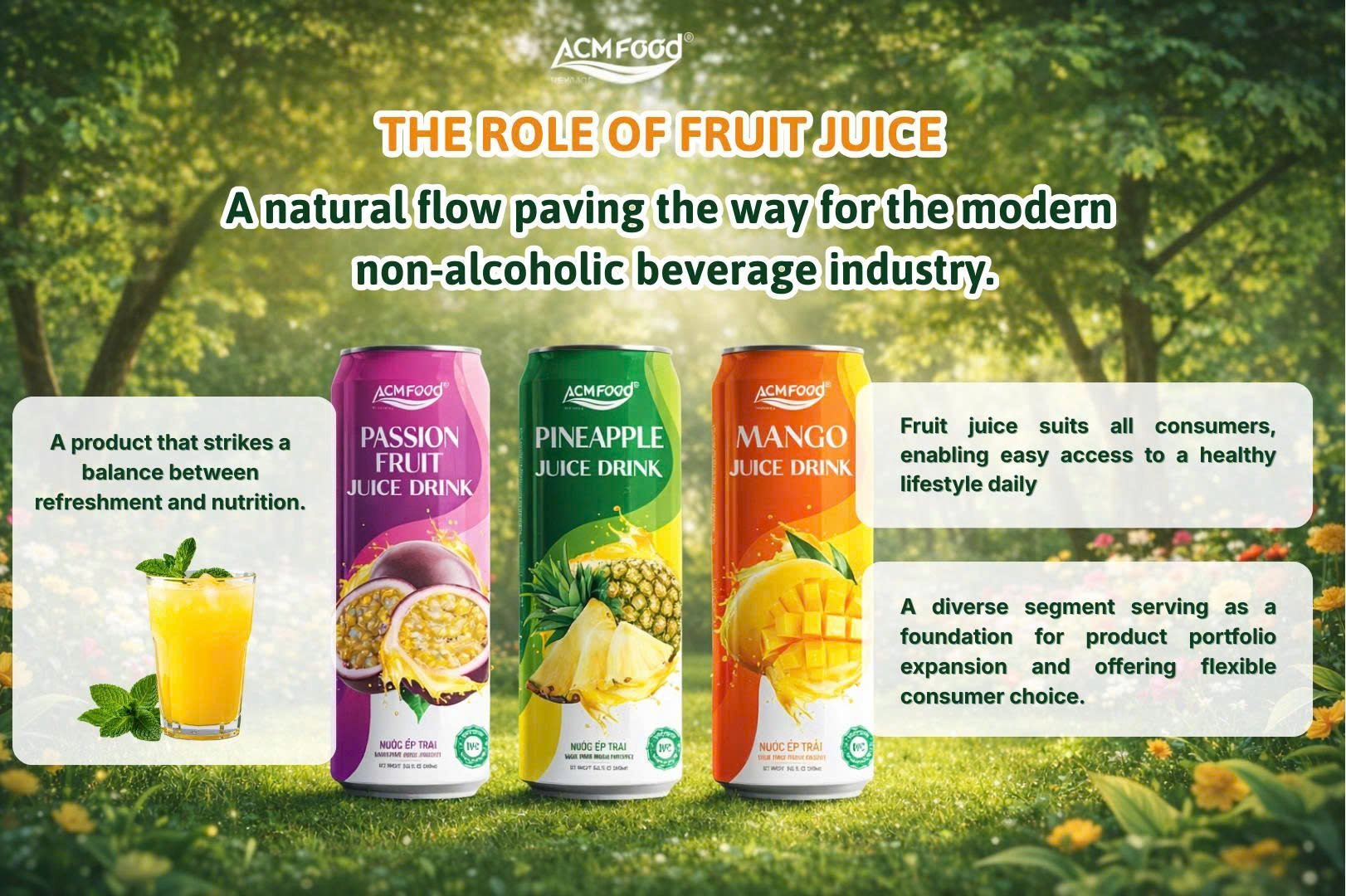
- A trusted, natural image: shoppers recognise the fruit on the label, which builds trust.
- Nutrition: 100% juice provides vitamins such as vitamin C and minerals such as potassium; a 150 ml glass counts as one of your five a day in UK guidance.
- Many occasions: breakfast, lunchboxes, snacks, food service and events.
- A base for innovation: juice is used in sparkling drinks, fruit teas, drinks with nata de coco, aloe or seeds, and low-sugar blends.
What challenges does fruit juice face?
- Sugar: even 100% juice has around 9–11 g of natural sugar per 100 ml, and health advice now limits juice to small portions.
- Sugar taxes: several countries tax sugary drinks, pushing brands to reformulate juice drinks and nectars.
- Competition: flavoured water, sparkling drinks and functional beverages compete for the same “healthy” shopper.
- Raw material costs: weather and crop disease can drive up fruit prices, as seen with orange juice in recent years.
What are the future trends for fruit juice?
| Trend | What it looks like |
|---|---|
| Less sugar | Reduced-sugar juice drinks, juice diluted with water or sparkling water |
| Smaller packs | 180–330 ml single-serve cans and bottles |
| Tropical and new flavours | Mango, passion fruit, guava, soursop, yuzu, lychee |
| Texture | Juice with nata de coco, aloe vera, chia or basil seeds |
| Functional add-ins | Added vitamins, electrolytes or fibre, where permitted |
| Sparkling juice | Juice-based sodas as an alternative to cola |
For flavour choices by region, see how to choose juice flavours for export markets; for label types, see 100% juice, NFC and concentrate explained.
How does ACM fit in?
ACM is a Vietnamese beverage manufacturer with 500+ products, including a wide fruit juice range, sparkling drinks and juices with toppings, available for OEM, ODM and private label and exported to more than 40 countries.
Frequently asked questions
Is fruit juice considered a healthy drink?
100% juice provides vitamins and minerals but little fibre and a fair amount of natural sugar, so it is healthy in small portions, not as a replacement for water or whole fruit.
What is the difference between juice, nectar and juice drink?
Juice is 100% fruit juice. Nectar usually contains 25–50% juice plus water and often sugar. Juice drinks contain less juice still.
Which juice flavours are growing fastest?
Tropical flavours such as mango, passion fruit and guava, and blends with added texture or function, are among the most active areas of new product launches.






