














To choose juice flavours for export, match each market’s taste profile, sugar rules and climate. In practice: apple, orange and berry for Europe and North America; mango, lychee and mild tropical blends for East Asia; sweeter pomegranate, mango and guava for the Middle East. Then validate with 2–3 samples tested on local buyers.
Why does juice flavour choice matter for export?
A juice that sells well at home can fail abroad if the sweetness, acidity or fruit is unfamiliar. Getting the flavour right early:
- raises trial and repeat purchase among local shoppers;
- makes it easier for distributors to list the product;
- reduces unsold stock and wasted marketing spend;
- avoids reformulating after the first container has shipped.
Which juice flavours sell in each export market?
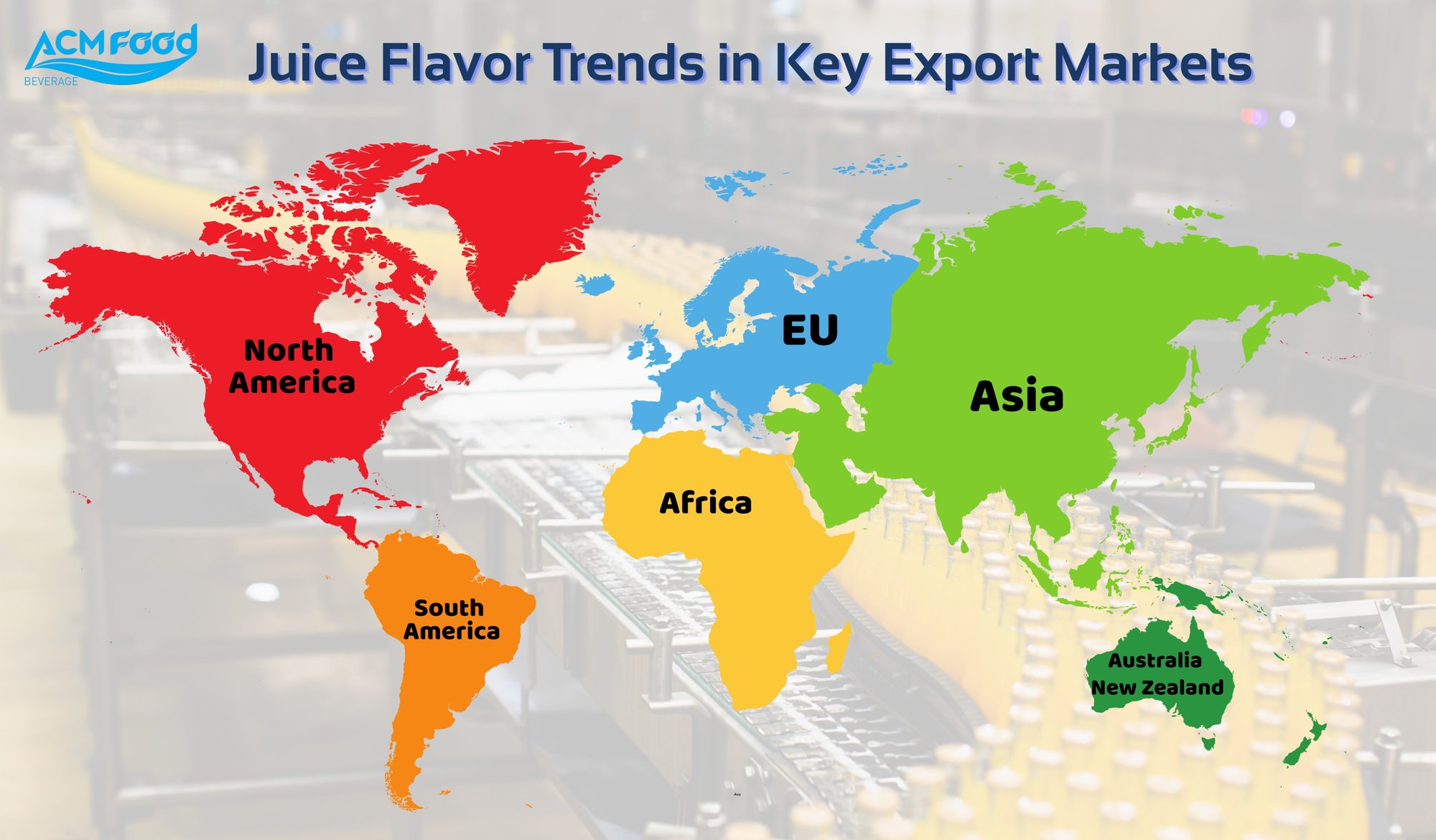
| Market | Popular flavours | What buyers look for |
|---|---|---|
| North America (USA, Canada) | Orange, apple, berry, tropical blends | Lower sugar, clear labels, functional add-ins such as vitamin C |
| Europe (EU, UK) | Apple, pear, grape, pomegranate, berry | Clean label, low or no added sugar, sugar-tax thresholds in some countries |
| East Asia (China, Japan, South Korea) | Mango, lychee, pineapple, grape, peach | Mild sweetness, smooth texture, small pack sizes, drinks with pulp or jelly |
| Australia and New Zealand | Apple, orange, mango, passion fruit, coconut water | Natural hydration, sparkling fruit drinks, cold-pressed styles |
| Middle East and Africa | Mango, guava, pomegranate, orange, lemon | Sweeter, aromatic profiles; Halal compliance; heat-stable packaging |
These are starting points, not rules. Migrant communities often want flavours from home – for example tropical Asian flavours in the US, Europe and Australia – so a niche flavour can still work in the right channel.
How do you research flavour preferences before exporting?
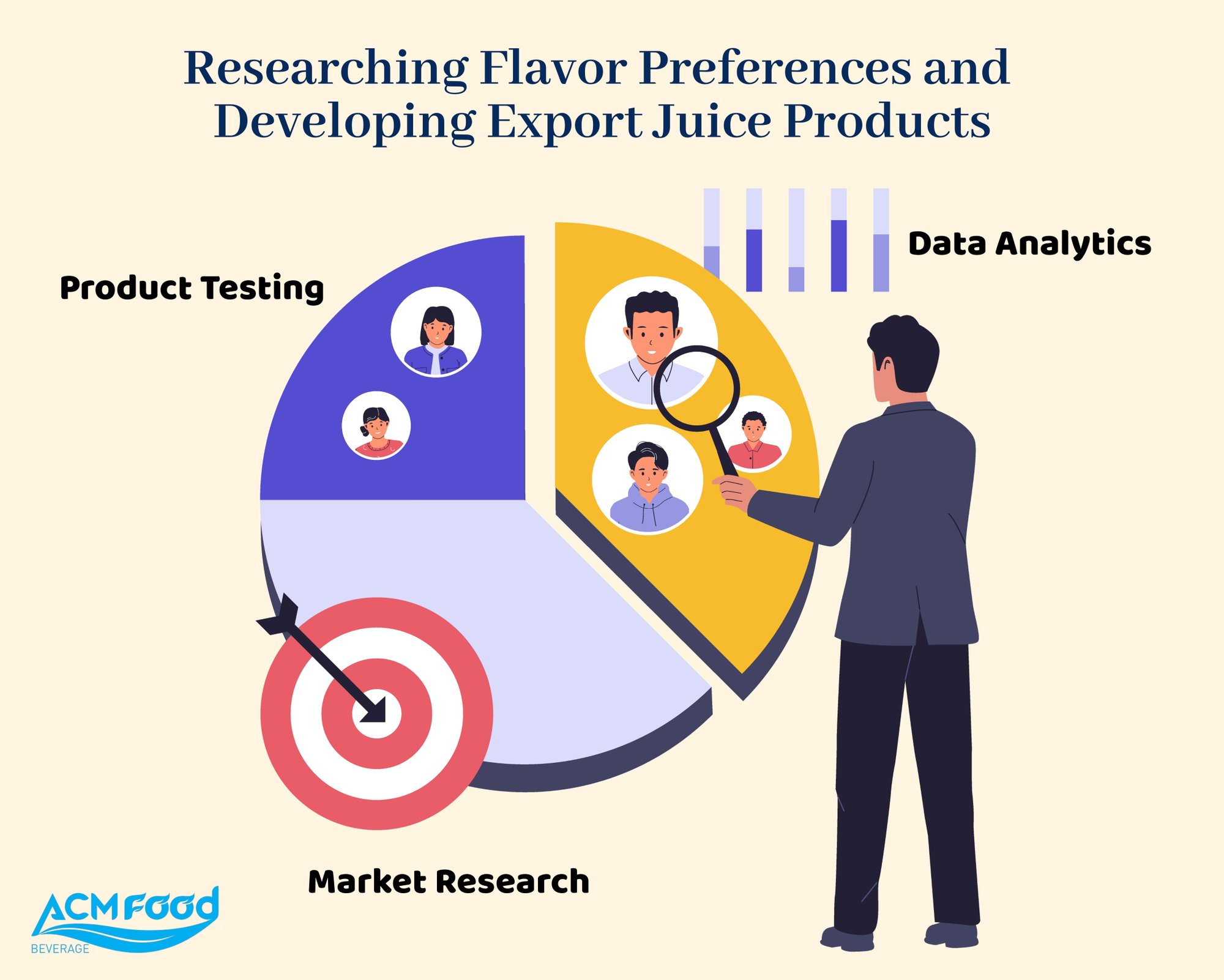
- Check the shelf: list the top-selling juices in local supermarkets and online stores, including price, pack size and sugar per 100 ml.
- Ask your distributor: importers know which flavours move and which sit in the warehouse.
- Check the rules: sugar taxes, labelling rules, permitted sweeteners and colours differ by country.
- Make samples: prepare 2–3 flavour or sweetness versions.
- Run a taste test: blind-test samples with target consumers or buyers and refine the formula.
How should the product be adapted for each market?
Adjust the formula
Change sugar level, acidity, juice percentage and fruit blend per market. A lower-sugar version often suits Europe and the UK, while a sweeter, more aromatic version often suits the Middle East. See custom beverage formulas for what can be changed.
Choose suitable packaging
Hot climates and long shipping routes favour shelf-stable cans, aseptic cartons or PET with heat treatment. Pack size also matters: 180–250 ml is common in Asia, while larger family packs are common in North America.
Localise the label
Use the local language, required nutrition format and imagery that shoppers recognise. Show the fruit clearly so the flavour is obvious at a glance.
Work with local partners
Distributors and importers help fine-tune flavour and price, and give feedback after launch.
How can ACM help?
ACM produces more than 500 beverage products and exports to over 40 countries. Buyers can start from the existing fruit juice range – such as mango, lychee or guava juice – or develop a private-label fruit juice for a specific market. You can also try combinations in the Beverage Builder.
Frequently asked questions
What is the most popular juice flavour worldwide?
Orange and apple are the most widely sold juice flavours globally. Mango leads in many Asian and Middle Eastern markets.
Which juice flavours sell best in the Middle East?
Mango, guava, pomegranate, orange and lemon-mint are common. Buyers usually expect Halal compliance and sweeter, aromatic profiles.
How many flavours should I launch in a new market?
Start with 2–4 flavours: one familiar best-seller and one or two distinctive options. Add more once sales data shows what works.
Do I need a low-sugar version for Europe?
Often yes. Several European countries tax sugary drinks, and shoppers increasingly check sugar per 100 ml.






