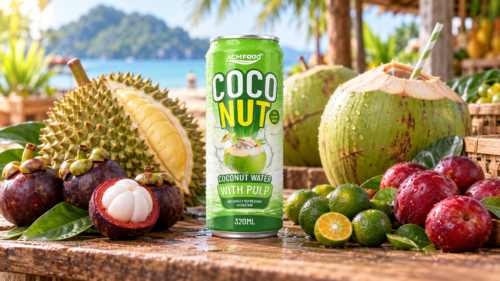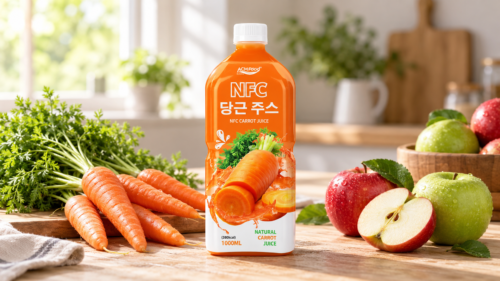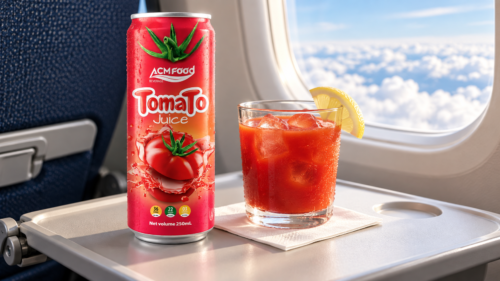

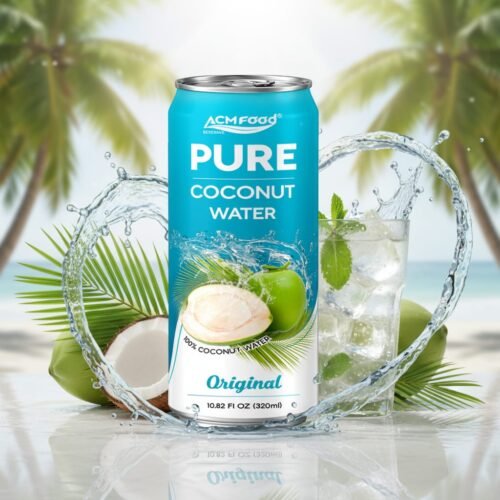
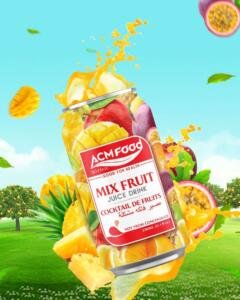
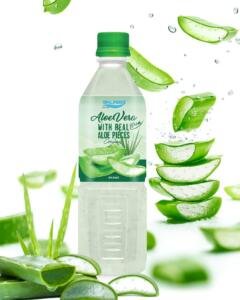
A custom beverage formula is a recipe developed or reworked to your specification rather than selected from a manufacturer’s existing range. In practice it is defined by about 7 interacting variables: juice or extract content, sweetness, acidity, aroma, colour, texture and any functional ingredients. Adjusting one almost always moves the others.
That interaction is the part most briefs underestimate. Asking for a drink that is less sweet, more intensely fruity and unchanged in texture describes three requests that pull against each other. Understanding which levers exist, and what each one costs elsewhere in the product, is what turns a wish list into a formulation brief a laboratory can act on.
Which variables can actually be adjusted?
Most beverage development works through six levers. Each is genuinely adjustable, but each has a range beyond which the product becomes unstable, unpalatable or impossible to produce on the intended line. The skill in formulation lies in finding the combination that satisfies the brief inside all of those limits at once.
- Fruit or extract content. Sets the base character and the largest part of the raw material cost. It also determines which label tier the product falls into.
- Sweetness. Adjustable through sugar level, sweetener choice or both, with direct consequences for mouthfeel and perceived fruit intensity.
- Acidity. Controls freshness and lift. It also interacts with perceived sweetness, so the two are usually tuned together rather than separately.
- Aroma. Can be adjusted through raw material selection, processing route and, where permitted and declared, added flavouring.
- Colour and clarity. Influenced by raw material, filtration and heat treatment. Natural colour is less stable than synthetic and must be assessed over shelf life, not at day one.
- Texture. Pulp content, fibre, and inclusions such as jelly pieces change how substantial the drink feels and can affect filling equipment requirements.
Why does reducing sugar change more than sweetness?
Sugar in a beverage does several jobs at once. It provides sweetness, but it also contributes body, carries aroma across the palate and balances acidity. Removing it therefore alters the drink in ways that have nothing to do with how sweet it tastes.
The usual result of a straightforward sugar reduction is a product that reads as thin and sharper than intended, because the acidity that was previously balanced is now exposed. Compensating for that is a formulation exercise in its own right: adjusting the acid level, changing the fruit proportion, or introducing a bulking or mouthfeel component. This is why reduced sugar versions are developed as separate formulas rather than produced by simply dosing less sugar into an existing one.
How sweeteners differ in practice
If a sweetener replaces sugar, the choice affects taste profile, labelling and market acceptance. Each option carries a different set of trade-offs, and market regulations differ on what may be used and how it must be declared.
| Approach | Effect on the drink | Points to check |
|---|---|---|
| Lower sugar, no replacement | Lighter body, more exposed acidity | May need acid and fruit rebalancing |
| Natural high-intensity sweetener | Sweetness restored, body not restored | Can carry a distinct aftertaste at higher doses |
| Sugar plus sweetener blend | Partial reduction with closer taste match | Both must appear in the declaration |
| Fruit-derived sweetness only | Sweetness tied to juice content | Limits how far sugar can fall without losing character |
Confirm which sweeteners are permitted in your destination market before development starts. A formula built around an ingredient that cannot be used in your target country has to be rebuilt, not adjusted.
Where formulation meets production reality
A formula that performs well in a laboratory has not yet proved it can be produced. Heat treatment, filling temperature, line speed and packaging format all act on the liquid, and some promising bench formulas do not survive that transition unchanged.
Texture inclusions illustrate this clearly. Pulp or jelly pieces that suspend attractively in a beaker may settle, block filling equipment or distribute unevenly across a production run. Natural colours that look correct on the day of mixing may shift over months in a clear bottle. Neither problem is visible at the recipe stage, which is why scale-up trials exist and why a formula is not finished when it first tastes right.
How to write a brief a laboratory can work from
The most common reason a development cycle stalls is a brief written in adjectives. Refreshing, premium and natural describe an impression, not a target. A useful brief translates those impressions into parameters a formulator can measure against.
- Name a reference product the team can taste, and state specifically what you want different about it.
- State your sweetness direction relative to that reference rather than in absolute terms.
- Define the juice or extract content tier you need for your intended label wording.
- Specify the destination market, since it governs permitted ingredients and declarations.
- Fix the packaging format and size, because it constrains process and texture options.
- State your target retail price band, which sets the realistic raw material budget.
- List any ingredient you require or must exclude, and say which are absolute rather than preferred.
A reference product is the single most useful item on that list. Tasting the same liquid removes most of the ambiguity that written descriptions carry, and it converts a subjective conversation into a comparative one.
How acidity shapes the finished drink
Acidity does more work in a beverage than its position on an ingredient list suggests. It provides the freshness and lift that stops a fruit drink reading as flat, it interacts directly with perceived sweetness, and in many products it contributes to microbiological stability.
Because acidity and sweetness are perceived in relation to each other, they are almost always tuned together. Raising acidity makes a drink taste less sweet without any change to its sugar content, which is one route to a lighter profile that does not require reformulating the sugar level at all. Lowering it has the opposite effect and can make a product read as heavy even at moderate sweetness.
The constraint is that acidity cannot be moved freely in either direction. Below a certain point some products lose the stability margin their process depends on, and above it the drink becomes sharp regardless of how much fruit character sits behind it. A formulator works within that window rather than treating acidity as a free variable.
Colour stability across shelf life
Colour is usually assessed on the day a sample is made, which is the least informative moment to assess it. What matters commercially is how the product looks after months in a warehouse and on a shelf, because that is the version a buyer actually sees.
Natural pigments are considerably less stable than synthetic alternatives. Anthocyanins, the compounds behind red and purple fruits such as strawberry, grape and cherry, are sensitive to both light and oxygen, and they shift toward brown as they degrade. Carotenoid colours behave differently but are also affected by light exposure over time.
- Packaging interacts with colour. The same formula holds colour far longer in an aluminium can than in a clear bottle, because the light exposure differs completely.
- Heat treatment affects the starting point. Processing conditions influence both initial colour and how quickly it moves afterwards.
- Assess over time, not at day one. Ask what the product looks like at the end of its stated shelf life, not only when freshly filled.
- Consider the shelf environment. A product displayed under bright retail lighting faces harsher conditions than one stored in a chiller.
Deciding the packaging format before finalising a natural colour approach avoids the situation where an attractive bench formula proves unsuitable for the container it was always intended for.
What drives the development timeline?
Development time is dominated by waiting rather than by work. The formulation itself may take days. Establishing that the resulting product remains stable across its intended shelf life takes considerably longer, and that elapsed time cannot be shortened by adding effort.
Three factors set the schedule. The first is how far your target sits from formulas the manufacturer already produces, since a small adjustment to an existing product requires far less validation than a new composition. The second is how many sampling rounds are needed, which depends almost entirely on how specific the original brief was. The third is ingredient availability, particularly where a required raw material is seasonal or must be sourced specifically.
The practical consequence is that a launch date should be tested against the schedule at the first conversation rather than assumed. A manufacturer can usually say quickly whether a target is compatible with a deadline, and discovering an incompatibility early leaves room to choose a different route.
Ingredient availability as a design constraint
A formula is only as achievable as its least available ingredient. Raw materials that are seasonal, sourced from a single region or subject to import restriction in the destination market can turn an otherwise straightforward formula into a supply problem that appears only at reorder.
Raising availability during formulation rather than after approval is the cheaper sequence. A formulator can usually substitute toward a more reliably sourced ingredient while the target profile is still being tuned, whereas the same substitution after approval means revisiting stability work and, in some cases, the label declaration as well.
Frequently asked questions
How many sampling rounds should I expect?
More than one. A first sample establishes direction rather than delivering a finished product, and refinement usually follows. The number of rounds depends on how precise the brief was and how far the target sits from formulas the manufacturer already produces.
Can a formula be adjusted after production starts?
Minor adjustments are sometimes possible, but any change that affects stability, shelf life or the ingredient declaration requires revalidation and new artwork. It is considerably cheaper to resolve these questions during development than after the first production run.
Who owns a custom formula?
This depends entirely on the agreement and should be settled in writing before development begins. Arrangements differ on whether the formula may be supplied to other customers, and assuming exclusivity without documenting it is a frequent source of dispute.
Does a custom formula always cost more per unit?
Not necessarily at scale, but it carries development cost and a longer timeline before the first order ships. The relevant comparison is total cost to launch rather than unit price alone, particularly for a brand ordering modest initial volumes.
Turning a formula concept into a development plan
A custom beverage formula is best understood as a set of deliberate trade-offs rather than a recipe waiting to be written. Sweetness, acidity, fruit content and texture move together, and every target you fix narrows what remains possible elsewhere. Briefs that acknowledge this produce usable samples faster than briefs that list desirable qualities in isolation.
The practical starting point is a reference product, a destination market and a price band. With those three fixed, a formulation team can tell you quickly whether your target is achievable, whether an existing formula already sits close enough, and what the remaining development actually involves. You can share a formulation brief with our team when those parameters are settled, or review our production background for context on the categories we develop across. Clean label positioning continues to shape what formulators are asked for, as the move toward not from concentrate vegetable juice shows.