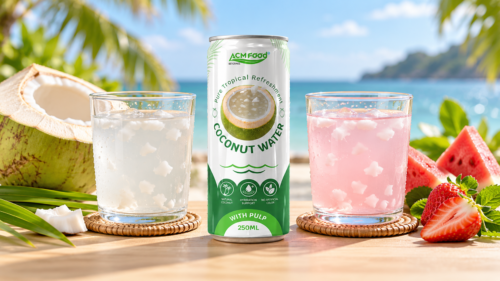
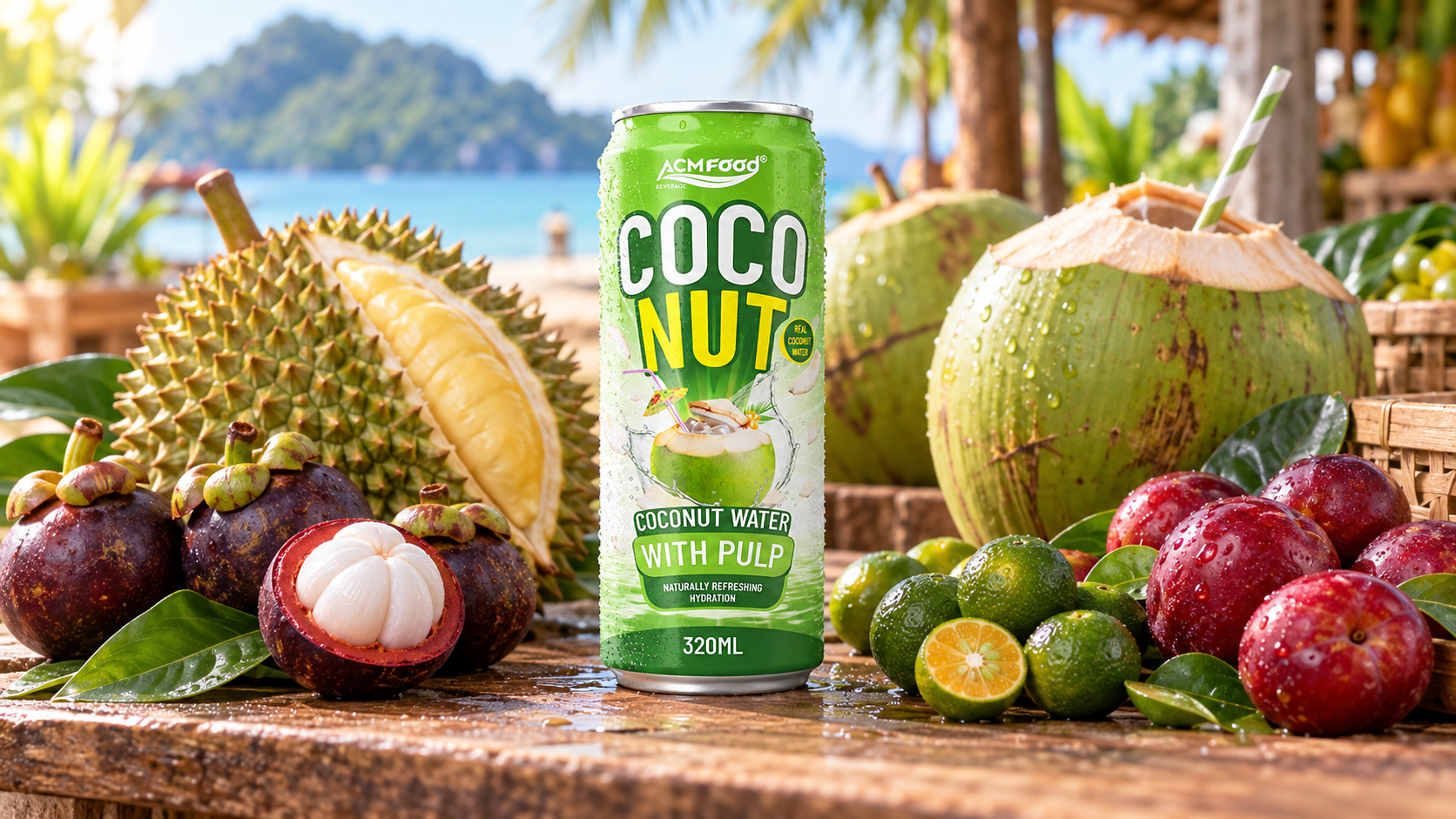
Southeast Asian coconut water flavors pair coconut water with fruits that are everyday favourites in the region but still unusual in many export markets, such as calamansi, durian, mangosteen and plum. Each brings a distinct profile: calamansi adds bright citrus sourness, durian adds a rich and polarising aroma, mangosteen adds a delicate sweet-tart note, and plum adds a fruity, slightly tangy depth. For brands, these flavours offer a way to stand apart from the pineapple, mango and lime options that fill most shelves.
This guide describes how each flavour tastes with coconut water, which consumers are likely to respond to it, and what brands should think about when introducing an unfamiliar fruit to a new market. It focuses on flavour and positioning rather than health effects, since the appeal of these drinks lies mainly in taste and origin.
Why use Southeast Asian fruits with coconut water?
Southeast Asian fruits give coconut water a story of origin and a taste profile that mainstream flavours do not offer, which helps a product stand out in crowded chilled and ambient beverage aisles. Coconut water’s light sweetness makes it a good carrier for these fruits, softening sharp or intense notes while keeping the drink refreshing.
There are three main reasons brands look at these flavours:
- Differentiation: most flavoured coconut water ranges overlap heavily, so a regional fruit can give a brand a distinctive hero product.
- Diaspora demand: consumers from Southeast Asian communities abroad often look for familiar flavours from home, creating a loyal core audience.
- Curiosity: adventurous shoppers and specialty retailers seek new tastes, especially in summer and in foodservice.
The trade-off is familiarity. Shoppers who do not know a fruit may hesitate to buy it, so these flavours usually need clearer descriptions and more sampling than familiar ones.
Calamansi coconut water: bright and citrusy
Calamansi coconut water combines coconut water with calamansi, a small, round citrus fruit widely used in the Philippines and across parts of Southeast Asia. The result tastes crisp and tangy, with a sour edge that cuts through the sweetness of the coconut and makes the drink feel especially refreshing.
Calamansi is sometimes compared to a cross between lime and mandarin, with floral citrus aroma and noticeable acidity. In coconut water, it works best at a level that keeps the sourness lively without overwhelming the base. It suits hot climates, pairs well with spicy or grilled food and appeals to shoppers who find plain coconut water too mild. Among the four flavours in this guide, it is usually the easiest to introduce to new markets because citrus is familiar everywhere.
Durian coconut water: rich and polarising
Durian coconut water pairs coconut water with durian, the large, spiky fruit famous in Southeast Asia for its creamy flesh and powerful aroma. The taste is rich, sweet and custard-like, with savoury, almost oniony aromatic notes that people tend to either love or dislike strongly.
In a coconut water drink, durian is usually used to give a recognisable aroma rather than a heavy, thick texture. It is a niche flavour with a dedicated following among people who already enjoy durian, especially in Southeast Asian communities. For mainstream retail outside the region, it is best treated as a specialty or limited edition rather than a core flavour, and brands should expect a strong reaction in either direction during tastings.
Mangosteen coconut water: delicate and sweet-tart
Mangosteen coconut water blends coconut water with mangosteen, a fruit with a thick purple rind and soft white segments, often called the “queen of fruits” in the region. Its flavour is gently sweet and slightly tart, with notes some people compare to peach, lychee and citrus.
Because mangosteen is delicate, it pairs naturally with the light taste of coconut water. The combination tends to appeal to consumers who like subtle, elegant flavours rather than bold fruit. Mangosteen also carries a premium image in many markets, which can support positioning in specialty and premium retail.
Plum coconut water: fruity and tangy
Plum coconut water combines coconut water with plum flavour, giving a fruity, slightly tangy taste with more depth than citrus. Depending on the recipe, it can lean towards sweet fresh plum or towards the tangy, slightly salty character found in some Asian preserved plum drinks.
Plum is familiar in many cuisines, so it sits between the exotic and the mainstream. It can work as a bridge flavour: recognisable enough for new shoppers, yet different enough from the usual tropical lineup to feel interesting.
How do these flavours compare?
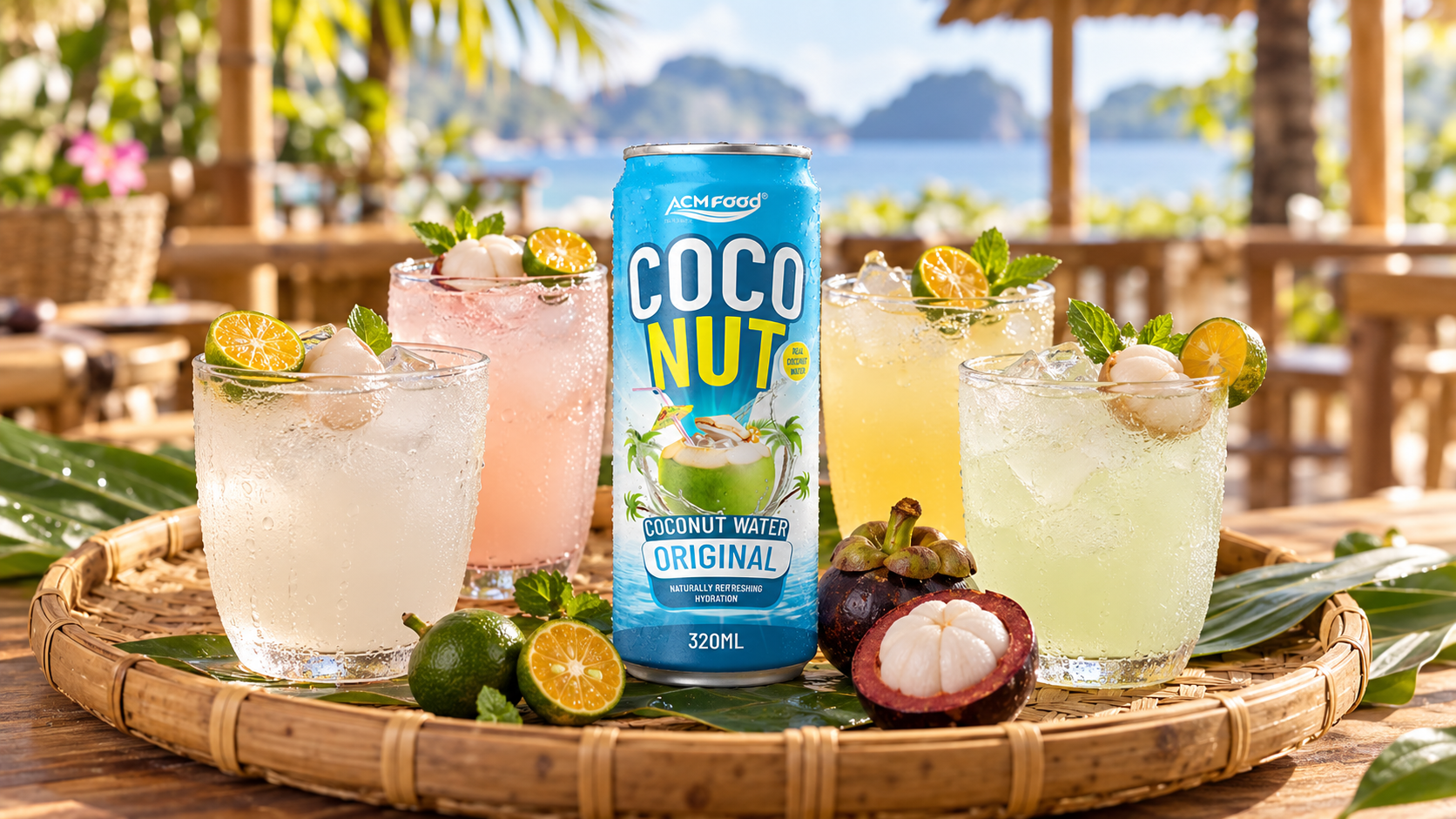
The table below compares the four flavours on taste and market fit. It is a qualitative guide; perception varies between consumers and recipes.
| Flavour | Taste with coconut water | Familiarity outside Southeast Asia | Typical positioning |
|---|---|---|---|
| Calamansi | Bright, sour, citrus-floral | Moderate; citrus is widely understood | Refreshing everyday flavour, hot-weather drink |
| Durian | Rich, sweet, strongly aromatic | Low; well known by reputation | Specialty or diaspora product, limited edition |
| Mangosteen | Delicate, sweet-tart, floral | Low to moderate | Premium, elegant flavour |
| Plum | Fruity, tangy, sometimes slightly salty | Moderate to high | Bridge between familiar and exotic |
Food pairings and drinking occasions
Matching each flavour to a moment helps shoppers understand why they might choose it, which matters when the fruit is unfamiliar.
- Calamansi: pairs with grilled seafood, noodle dishes, spicy salads and street food, and works well as a hot-afternoon refresher.
- Durian: suits dessert occasions and gatherings where people already enjoy the fruit, often served well chilled in small portions.
- Mangosteen: fits light lunches, fruit platters and premium hospitality settings such as hotel lounges and spas.
- Plum: complements savoury snacks and rice dishes, and its tangy profile works in alcohol-free mixed drinks.
Serving temperature matters for all four. Coconut water flavours taste brightest when well chilled; warm servings make sweet notes heavier and sour notes harsher.
Still or sparkling: which works better?
Most of these flavours are offered as still coconut water, which keeps the drink close to the traditional coconut experience. Carbonation can lift citrus flavours like calamansi, making them feel even crisper, but it can clash with rich aromas such as durian. For mangosteen and plum, both styles are possible and the choice depends on whether the brand wants a soft, natural feel or a livelier, soda-like serve.
If a brand plans a sparkling line, each flavour should be tested in its carbonated form, since bubbles change how sweetness, acidity and aroma come across.
Which markets suit Southeast Asian coconut water flavours?
These flavours usually perform best where consumers already know the fruits, such as markets with large Southeast Asian communities, Asian supermarkets and specialty stores, and in foodservice venues serving regional cuisine. Mainstream retail in markets new to the fruits often needs a gradual approach.
A practical way to introduce them:
- Start in channels that know the fruit, such as Asian grocery chains, specialty stores and restaurants.
- Lead with the most accessible flavour, often calamansi or plum, before adding durian or mangosteen.
- Use sampling at stores, events and cafés, because tasting removes hesitation faster than descriptions.
- Explain the fruit briefly on the pack, describing its taste in familiar terms.
- Track sell-through by flavour and keep only those that earn repeat purchases.
Seasonality can help as well. Launching a bright, citrusy flavour such as calamansi at the start of the warm season gives it the best chance of trial, while richer flavours like durian can be timed around cultural festivals and holidays when communities seek familiar tastes from home.
Coconut water drinks also feature increasingly in alcohol-free menus, where unusual flavours help bartenders create signature serves; our article on non-alcoholic drinks made with coconut water explores that trend.
What should brands check before launching these flavours?
Brands should confirm consumer acceptance, ingredient naming and labelling rules before committing to an unfamiliar fruit flavour. A flavour that sells well in Southeast Asia may need a different intensity, sweetness or description elsewhere.
- Fruit names: some fruits have several common names, and some markets require a specific name or a description for unfamiliar fruits. Confirm the wording for each destination.
- Flavour source: real fruit juice or purée, natural flavour or a combination each affect taste, colour, cost and how the product can be named.
- Intensity and sweetness: test several levels with target consumers, especially for strong flavours like durian.
- Aroma in storage: strong aromatic fruits need checking over shelf life to make sure the profile stays balanced.
- Pack format: small cans suit trial purchases of unfamiliar flavours, letting shoppers try without committing to a large pack.
- Claims: describe taste and origin, and avoid health claims linked to the fruits unless they are permitted and substantiated in the target market.
Ready-made options for testing the category
The ACM FOOD coconut water range from ACM Beverage currently includes calamansi, durian and plum flavours in 250ml slim cans, and mangosteen in a 500ml can, all listed with a 24-month shelf life on the product pages. These products give importers and retailers ready-made options to test the category before committing to a custom recipe, while brands seeking their own flavour can discuss development and private label options.
FAQ about Southeast Asian coconut water flavours
What does calamansi coconut water taste like?
It tastes bright and tangy, with citrus sourness balanced by the light sweetness of coconut water. Many people find it more refreshing than plain coconut water.
Does durian coconut water smell like durian?
It carries durian’s distinctive aroma, though usually in a lighter form than the fresh fruit. People who enjoy durian tend to appreciate it; others may find it strong.
Is mangosteen coconut water very sweet?
Mangosteen is gently sweet with a tart edge, so the drink usually tastes delicate rather than sugary. Check the label for added sugar.
Which Southeast Asian flavour is best for a first launch?
Calamansi or plum are usually the easiest to introduce outside the region, because citrus and plum are familiar tastes.
Is calamansi the same as lime?
No. Calamansi is a separate small citrus fruit. It is sour like lime but has a more floral, mandarin-like aroma, which gives coconut water a softer citrus character.
Can these flavours be made without added sugar?
It depends on the fruit and recipe. Tart flavours such as calamansi may need some balancing, while mangosteen and plum can rely more on natural sweetness. Check each product label, and confirm the approach during development for a private label product.
Conclusion
Southeast Asian coconut water flavours such as calamansi, durian, mangosteen and plum give brands a distinctive alternative to the usual tropical lineup. Calamansi and plum are the most accessible for new markets, mangosteen supports a premium image, and durian is best treated as a specialty flavour for fans. Success depends on choosing the right channels, explaining unfamiliar fruits clearly and testing intensity with real consumers.
If you want to evaluate these flavours, ACM Beverage can provide samples from the ACM FOOD range and discuss labelling, pack formats and custom flavour options for your market.