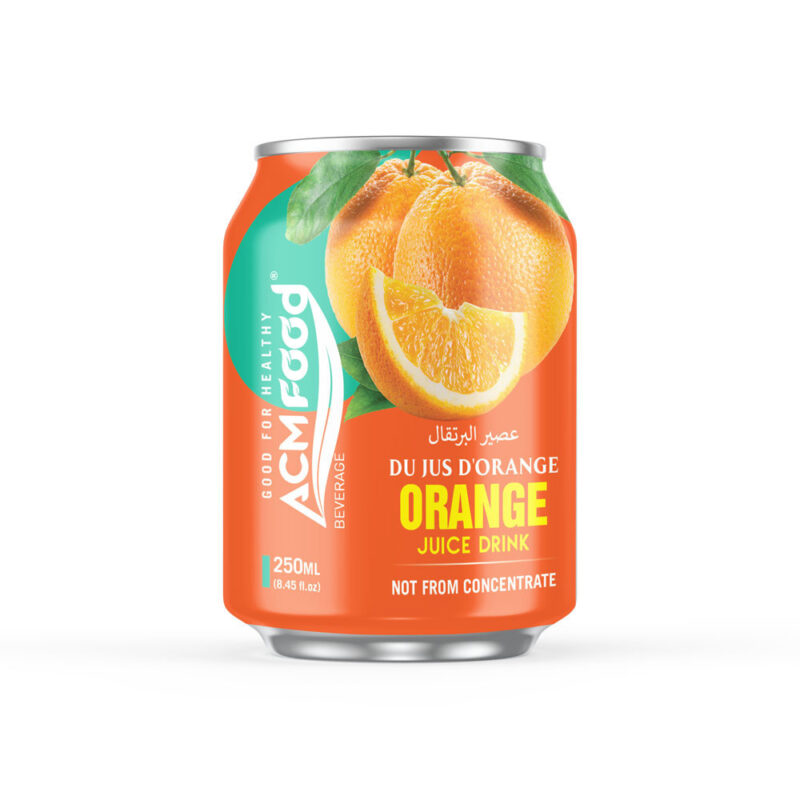











Orange is the flavour every juice range is measured against, and also the one most often treated as a commodity. Because buyers assume they already know what it tastes like, manufacturers tend to compete on price, and concentrate-based orange has become the default. That assumption is what makes a properly pressed orange line worth listing.
Orange Juice Without the Concentrate Shortcut
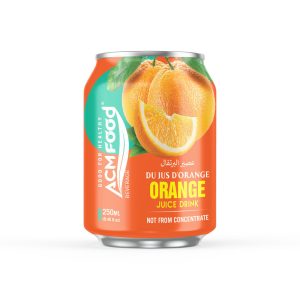
This product is filled as not-from-concentrate juice, so the volatile citrus aromatics that vanish during evaporation are still present when the can is opened. No sugar is added, which means the balance between sweetness and acidity is the fruit’s rather than the formulator’s, and no artificial colouring is used. For a flavour shoppers can evaluate instantly from memory, that difference is easy for them to detect and easy for a salesperson to demonstrate.
Format and Channel Fit
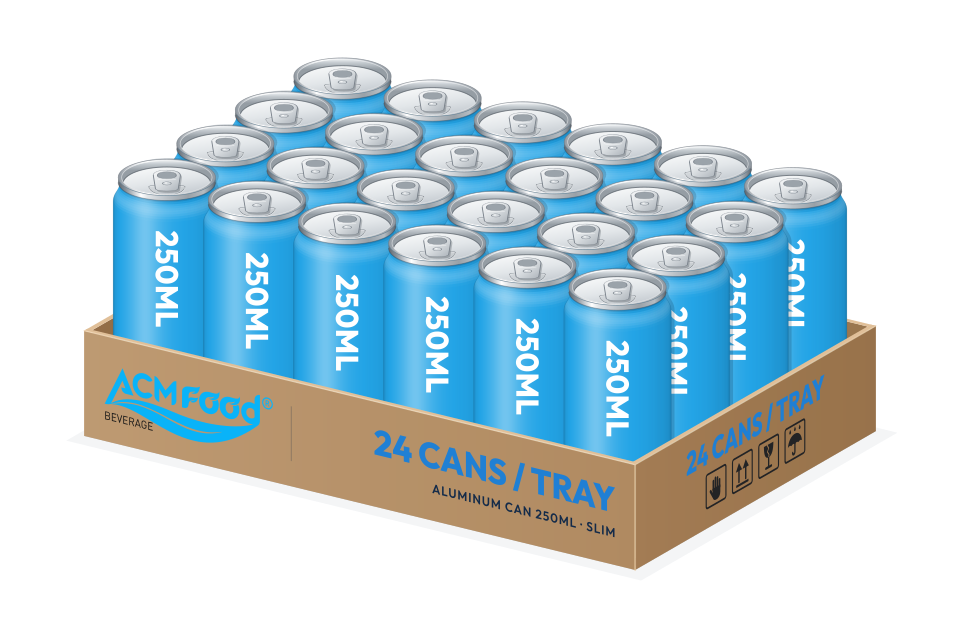
The 250ml short can serves breakfast trays, airline and rail catering, convenience coolers and school channels where portion control and packaging safety both matter. Aluminium protects the juice from light, chills fast and eliminates breakage risk in transit. Twenty-four months of ambient stability means the SKU can be handled as a dry good until it reaches the retail cooler.
Order and Logistics
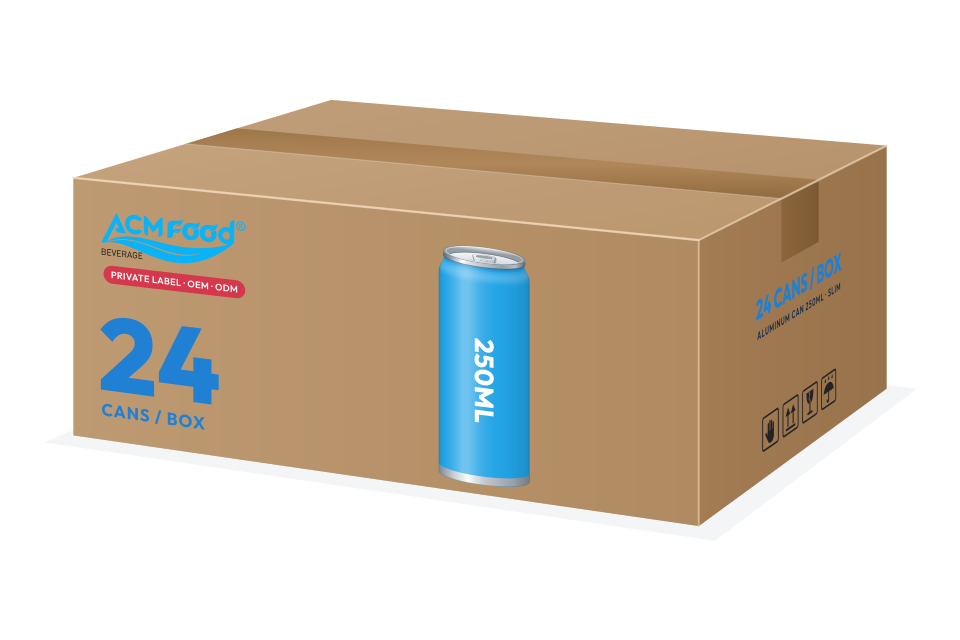
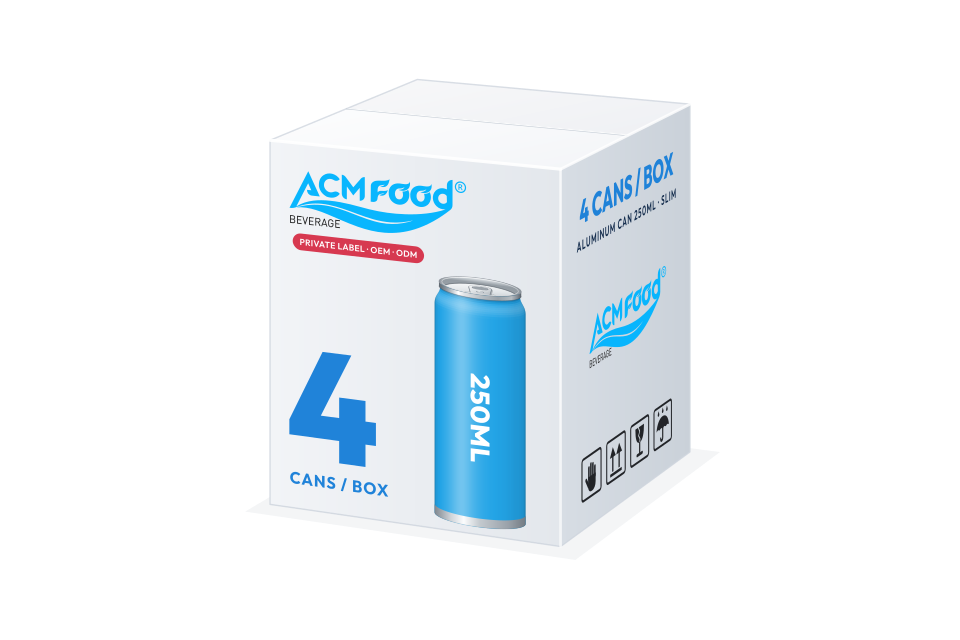
Manufacturing is in Vietnam under FSSC 22000, HACCP and ISO 22000 certification, with capacity of 20,000 cartons per day and a 500-carton minimum order. Private label buyers can take the line under their own brand with market-specific label text. Terms are T/T, loading at Ho Chi Minh City Port, with 15 to 30 days lead time. Orange typically anchors a multi-flavour launch – the rest of the fresh fruit juice range is built to ship alongside it.