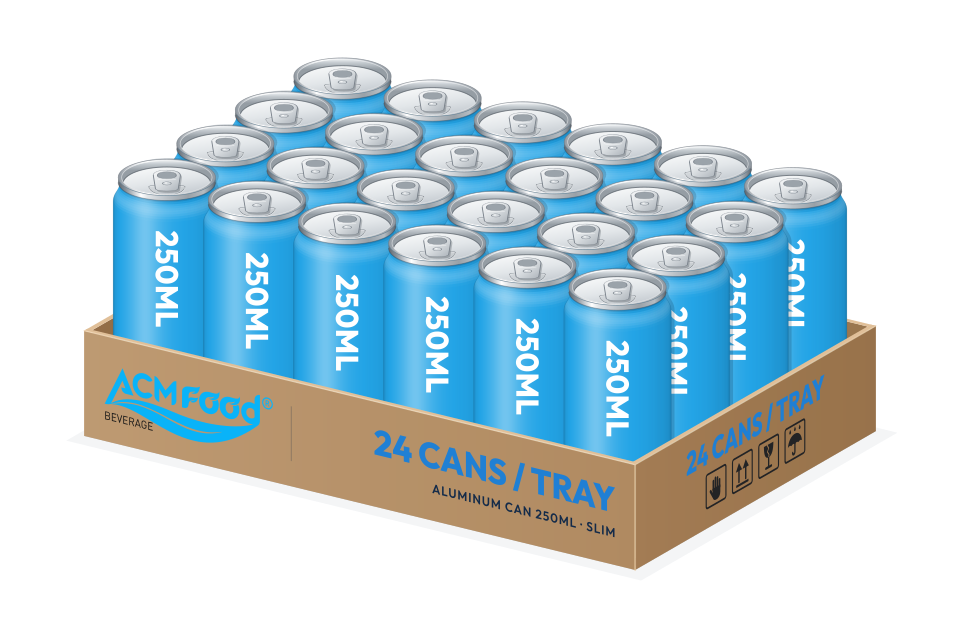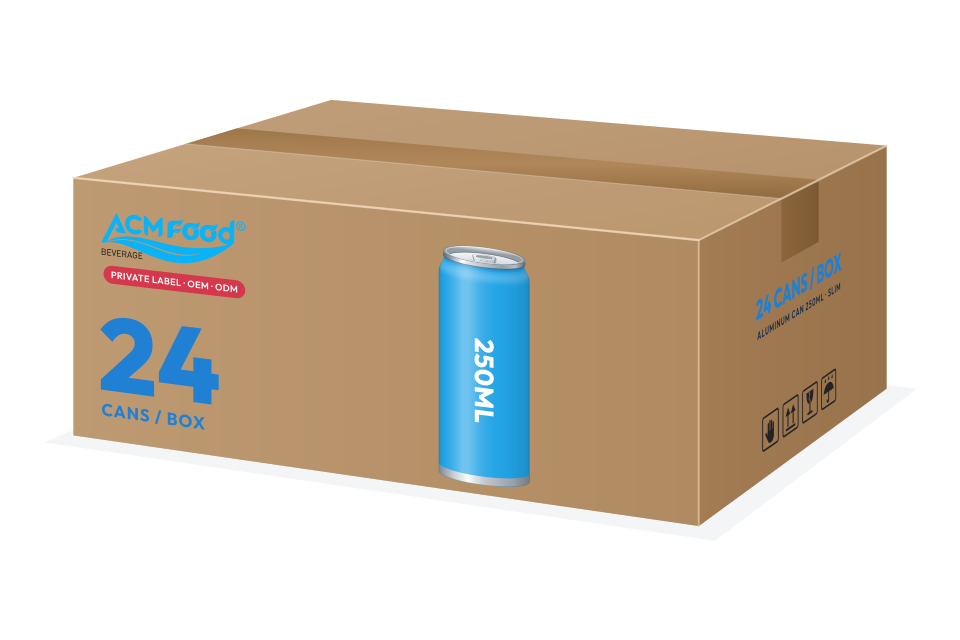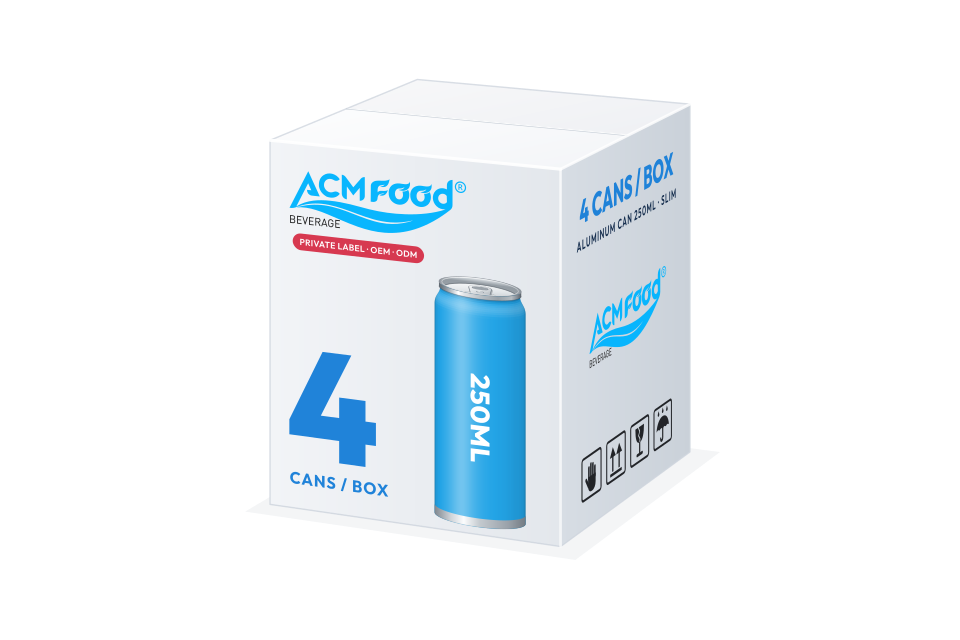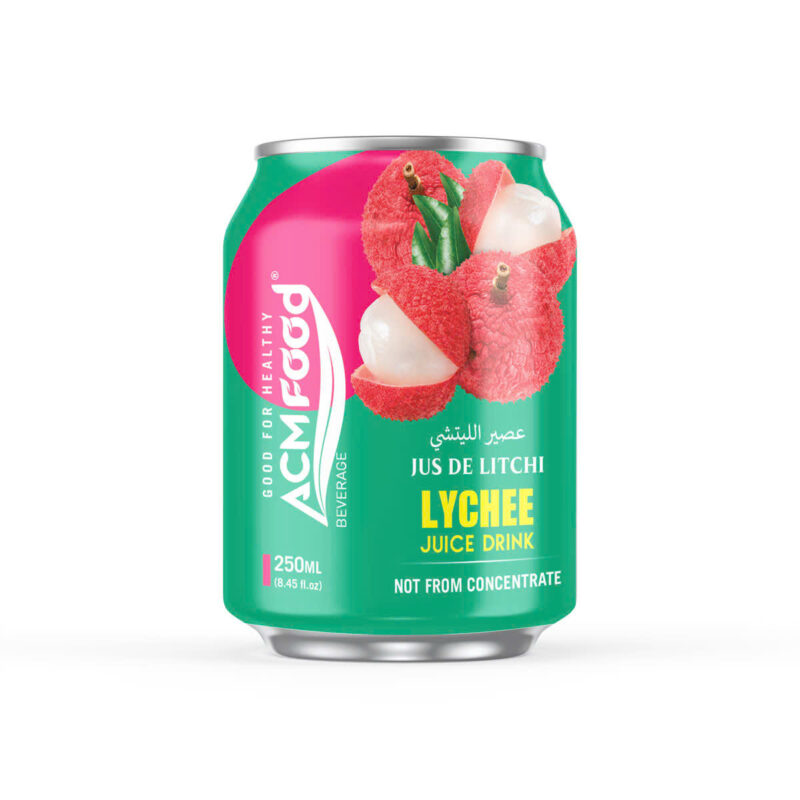











The obstacle to selling not-from-concentrate juice at retail is rarely the juice. It is the shelf price. NFC costs more per litre than reconstituted juice because nothing is removed and shipped as concentrate, and at 330ml or a litre that difference lands hard on the price tag.
What the Short Can Solves
A 250ml short can is the portion that closes that gap. It brings the unit price down into impulse territory while keeping the liquid uncompromised, which is why this size tends to be the entry point for a buyer introducing NFC lychee juice to a market used to concentrate. It also suits the occasions a larger can does not: lunchboxes, airline and hotel service, and multipack bundles.
Why Lychee Rewards the Format
Lychee is defined by aroma more than by sweetness, and aroma is exactly what concentration destroys — the heat used to drive off water takes the volatile compounds with it. Pressing and filling without that step is what keeps the fruit recognisable. No sugar and no artificial colour are added; the juice carries itself.
Aluminium then protects what the process preserved. The can is fully light-proof and sealed, holding 24 months at ambient with no refrigeration, and it ships lighter than glass while shrugging off the handling that generates damage claims on long ocean routes.
Sizing a Range
Buyers commonly list the short can as the retail and impulse line and a larger format for foodservice, where a fuller pour matters more than price point. The rest of the fresh fruit juice range and other formats of the same fruit under canned lychee juice fill out an order.
Production Terms
The full can surface prints for private label in any language or regulatory format. Certified to FSSC 22000, ISO 22000 and HACCP, the line runs to 20,000 cartons per day. A first order is 500 cartons, lead time is 15 to 30 days, terms are T/T and loading is at Ho Chi Minh City Port.