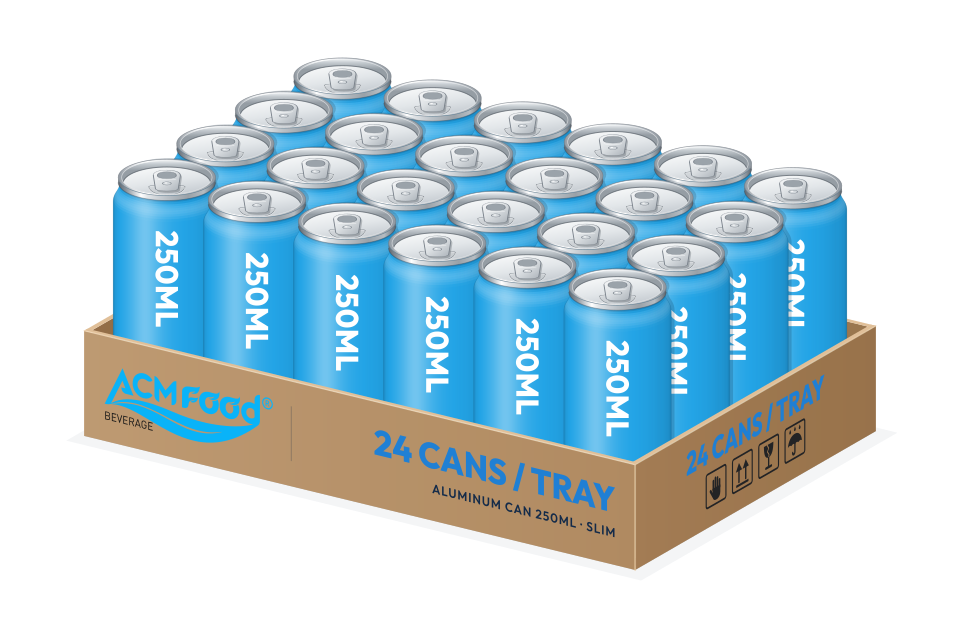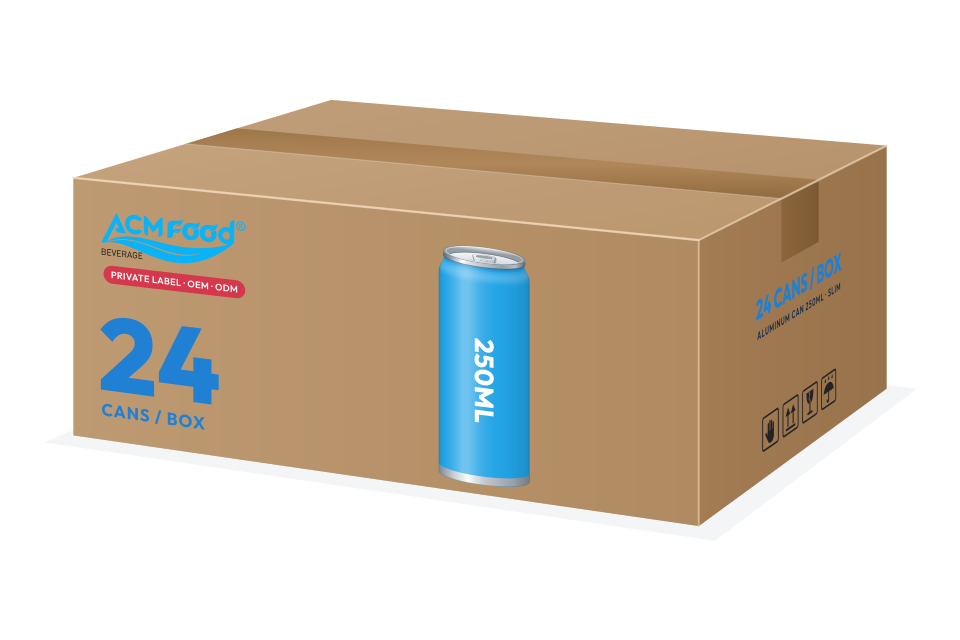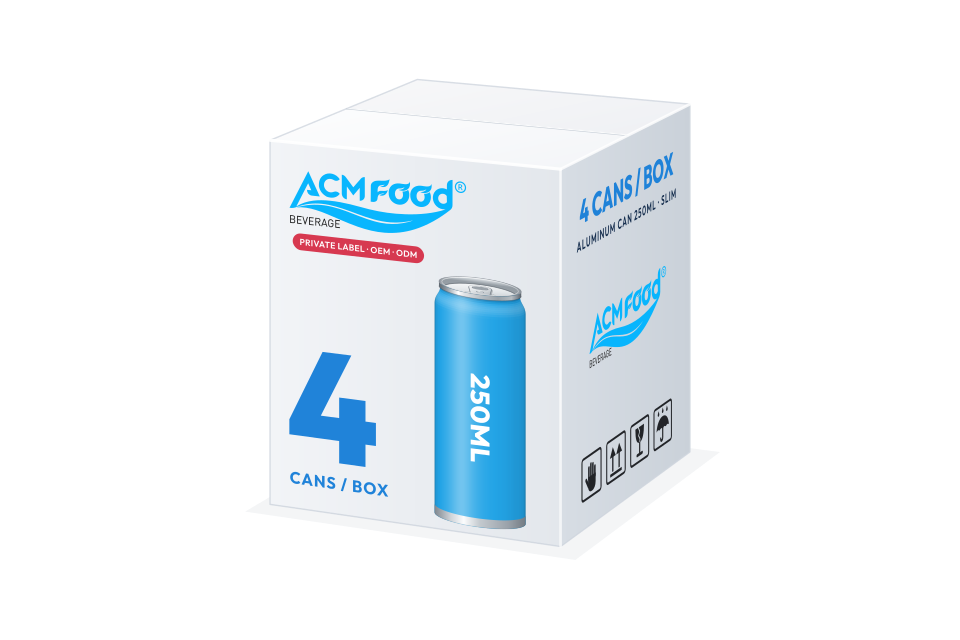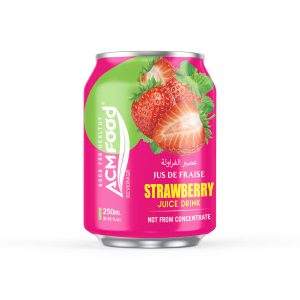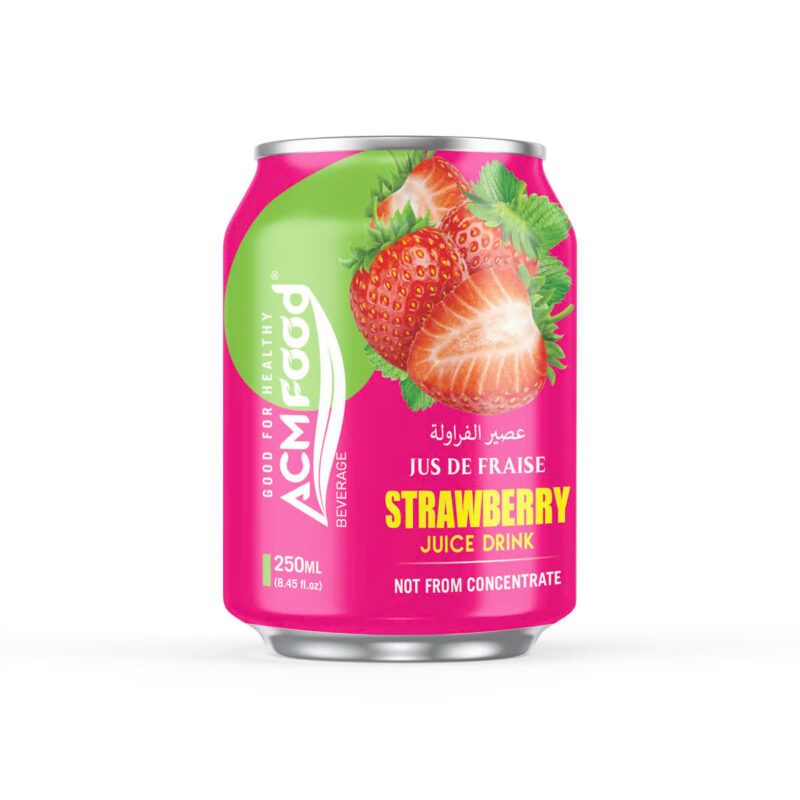











Juice is increasingly assessed by the portion rather than by the hundred millilitres. Sugar taxes, school and hospital supply rules and front-of-pack labelling schemes all read the container, so a fruit juice that is perfectly acceptable at 250ml can fall the wrong side of a threshold at 330ml or more — with no change to the liquid inside.
The Portion Is Part of the Specification
That makes the short can a compliance tool as much as a price point. For buyers supplying institutional channels or operating under a sugar levy, a 250ml serve of NFC strawberry juice keeps the per-container figures inside common limits while still being a real fruit juice rather than a diluted drink.
Nothing Added, Including Colour
The juice is pressed and filled without being reduced to concentrate and rebuilt. No sugar is added, and no colouring: strawberry’s own anthocyanins provide the red. That keeps the ingredient declaration to a single line, which is what clean-label retail criteria are usually checking for before anything else.
Those pigments are also light-sensitive, so the packaging has to do its share. The opaque aluminium can blocks light entirely, holding colour and flavour across 24 months at ambient with no cold chain required at any point in distribution.
Where It Sits in a Range
The short can covers retail, impulse and institutional supply; a larger can covers foodservice pours. Both draw on the same fresh fruit juice programme, with other formats of the fruit listed under canned strawberry juice.
Production Terms
Full-surface can printing for private label, artwork adaptable to any labelling regime. The facility operates under FSSC 22000, ISO 22000 and HACCP with batch traceability throughout. Capacity is 20,000 cartons daily, MOQ 500 cartons, 15 to 30 day lead time, T/T, shipped from Ho Chi Minh City Port.