














Most retail passion fruit juice drinks contain about 15–30% passion fruit juice, diluted and sweetened, because the straight juice is very acidic (pH around 2.8–3.3) and intensely aromatic. These products are sold as nectars or juice drinks rather than “juice”, which in most markets means 100%. Sugar typically lands at 8–12 g per 100 ml.
Key facts at a glance
- Neat juice is rarely sold for drinking; it is used as a base.
- Labelling: “passion fruit nectar” or “juice drink” with a declared percentage.
- Aroma is strong, so low juice shares still taste authentic.
- Yellow passion fruit is more acidic; purple is sweeter and more aromatic.
- For health benefits, see our passion fruit juice benefits guide.

Formulation parameters
| Parameter | Typical range | Why |
|---|---|---|
| Passion fruit juice | 15–30% | Flavour intensity vs acidity |
| Sugars | 8–12 g per 100 ml | Balances sourness |
| Final pH | 3.2–3.8 | Stability and taste |
| Seeds | Removed or partly retained | Visual authenticity |
| Shelf life | 12–18 months | Hot-fill or aseptic |
Formulation challenges
- Aroma loss during heating — short, controlled pasteurisation and aroma recovery help.
- Cloud separation — homogenisation or stabilisers keep the drink uniform.
- Seed specks — attractive to some consumers, a defect to others; specify clearly.
- Sugar reduction — high acidity makes low-sugar versions harder; sweetener blends are common.
What brands should specify
- Juice percentage and variety (purple or yellow).
- Sugar target and sweetener policy.
- With or without seeds.
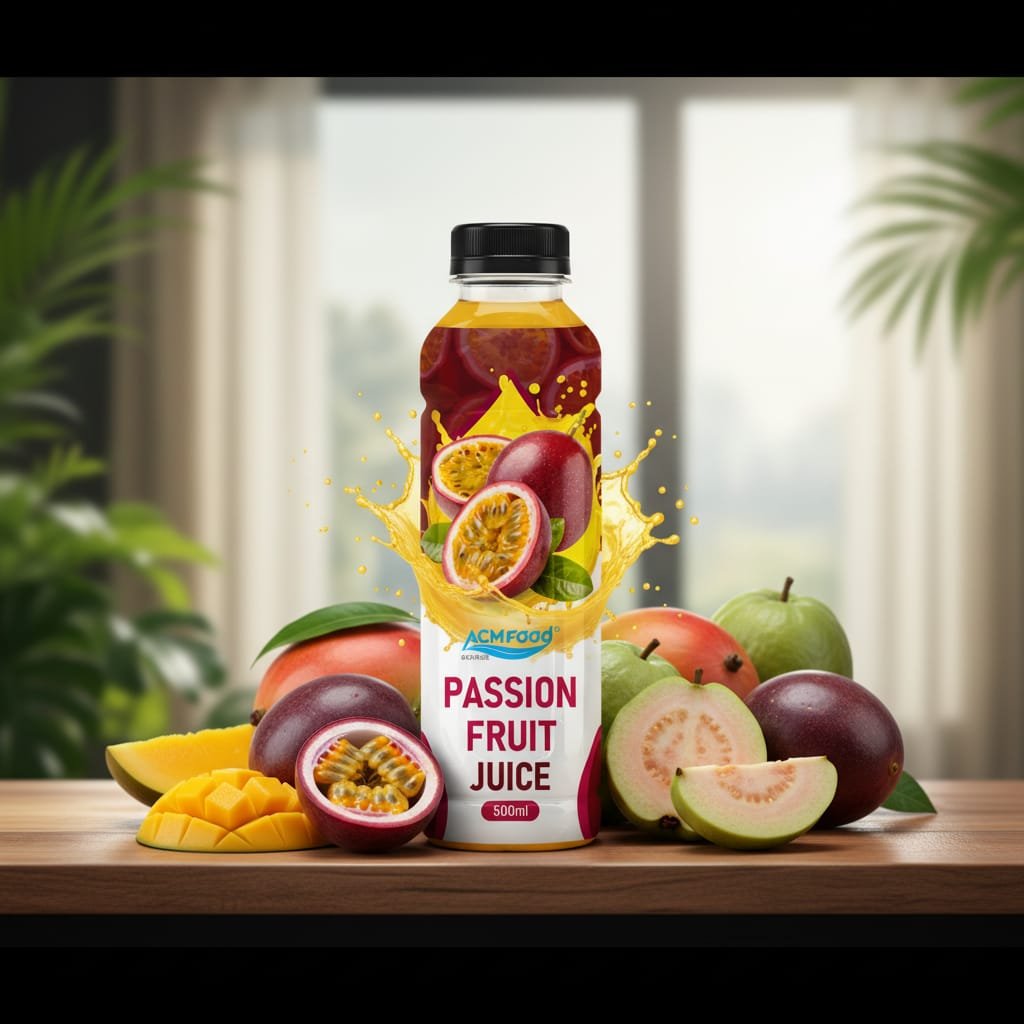
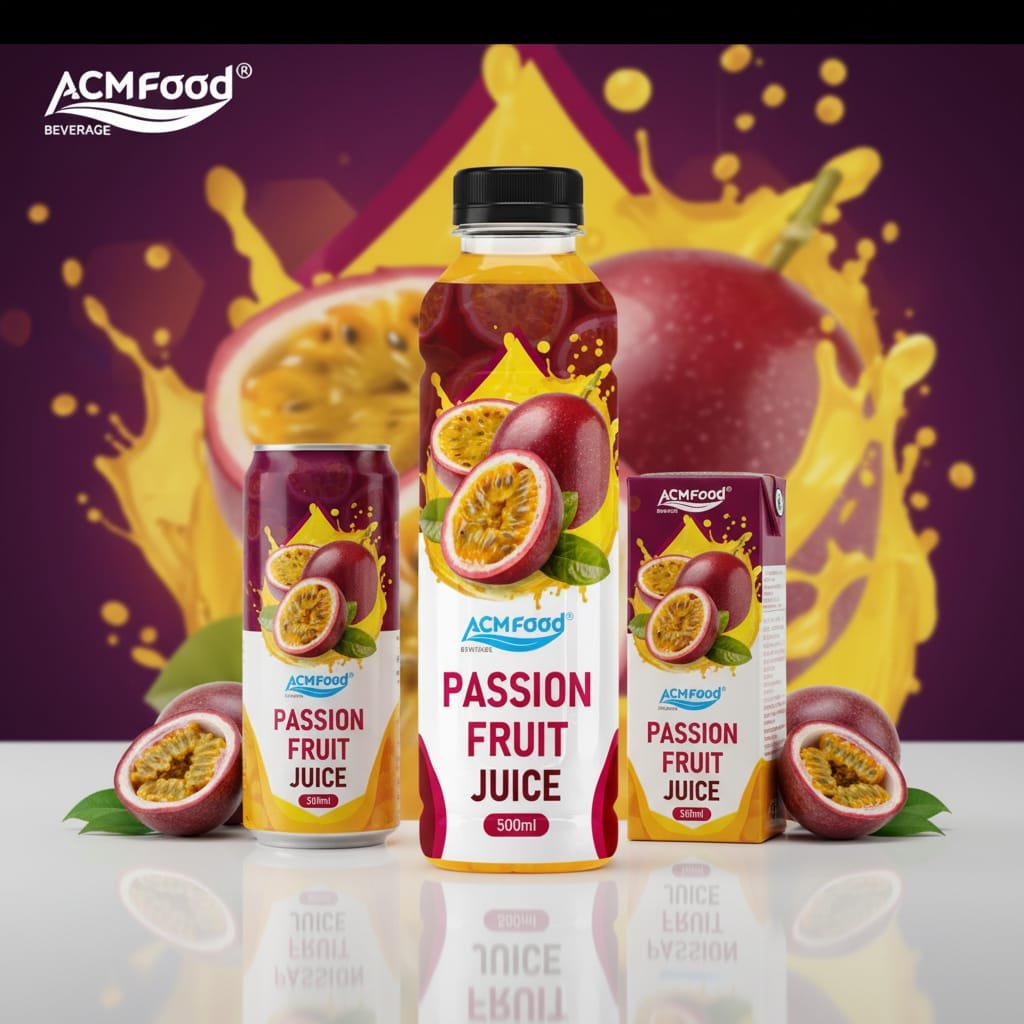
- Pack: 500 ml PET for retail; cans for longer export routes.
Frequently asked questions
Why is passion fruit juice diluted?
Neat juice is very sour and strongly aromatic. Dilution and sweetening make it drinkable.
Can a passion fruit drink be called “juice”?
In most markets only 100% juice can be called juice. Diluted products are nectars or juice drinks.
Which passion fruit variety is better for drinks?
Purple passion fruit is sweeter and more aromatic; yellow is more acidic and often used for processing.
How long does bottled passion fruit juice last?
Typically 12–18 months unopened; refrigerate after opening.
Passion fruit drinks from ACM Beverage
ACM Beverage produces passion fruit drinks in Vietnam for OEM and private label customers. See the 500 ml passion fruit juice or the fruit juice range. Related reading: passion fruit nutrition.






