
Contents
- 1 The Shift Towards Low-Sugar Beverages
- 2 Mango as a Tropical Superfruit in Functional Drinks
- 3 OEM Solutions for Low-Sugar Juice Manufacturing
- 4 Global Expansion Opportunities for Low-Sugar Mango Juice
- 5 Frequently Asked Questions (FAQ)
- 5.1 What makes low-sugar mango juice different from regular mango juice?
- 5.2 Can OEM manufacturers customize the sweetness level of mango juice?
- 5.3 What packaging options are available for low-sugar juice exports?
- 5.4 How do international certifications impact market access for low-sugar juice?
- 5.5 What is the typical lead time for an OEM order of low-sugar mango juice?
The global beverage industry is undergoing a profound transformation as consumers increasingly prioritize health and wellness in their daily choices. This shift is particularly evident in the explosive growth of low-sugar and naturally functional drinks, where traditional fruit juices are being reimagined to meet modern nutritional standards. Among these innovations, low-sugar mango juice has emerged as a standout category, combining the tropical appeal of mango with reduced sugar formulations that appeal to diabetic, keto, and fitness-oriented consumers.
For distributors and retailers seeking to capitalize on this trend, understanding the product dynamics and supply chain capabilities is essential. Low-sugar mango juice represents more than a simple recipe change — it reflects a strategic response to regulatory pressures and consumer demand for cleaner label beverages. Manufacturers like ACM Food Co., Ltd. are leveraging advanced OEM capabilities to deliver products that align with these global shifts, offering a compelling opportunity for brand differentiation.
The Shift Towards Low-Sugar Beverages
The low-sugar beverage segment has seen double-digit growth annually, driven by mounting evidence linking excessive sugar intake to obesity and metabolic diseases. Market analysts project that the global low-sugar juice market will reach $22 billion by 2028, with tropical flavors like mango accounting for a significant share. This growth is fueled by changing consumer behavior — shoppers now scrutinize nutrition labels and seek products that deliver taste without compromise.
In response, beverage manufacturers are reformulating classic drinks using natural sweeteners such as stevia and monk fruit, or simply reducing added sugar while preserving fruit content. Fresh fruit juice categories are especially affected, as pure fruit juices naturally contain high sugar levels. The innovation lies in blending fruit purees with water and low-calorie sweeteners to create a satisfying, guilt-free experience.
For OEM partners, this trend presents a clear mandate: agility in recipe development is critical. The ability to adjust sweetness levels, incorporate functional ingredients, and maintain shelf stability sets leading manufacturers apart. ACM Food’s R&D team, for instance, has developed a specialized low-sugar mango juice that retains the fruit’s natural flavor profile while cutting sugar content by up to 50% compared to standard mango juice drinks.

Mango as a Tropical Superfruit in Functional Drinks
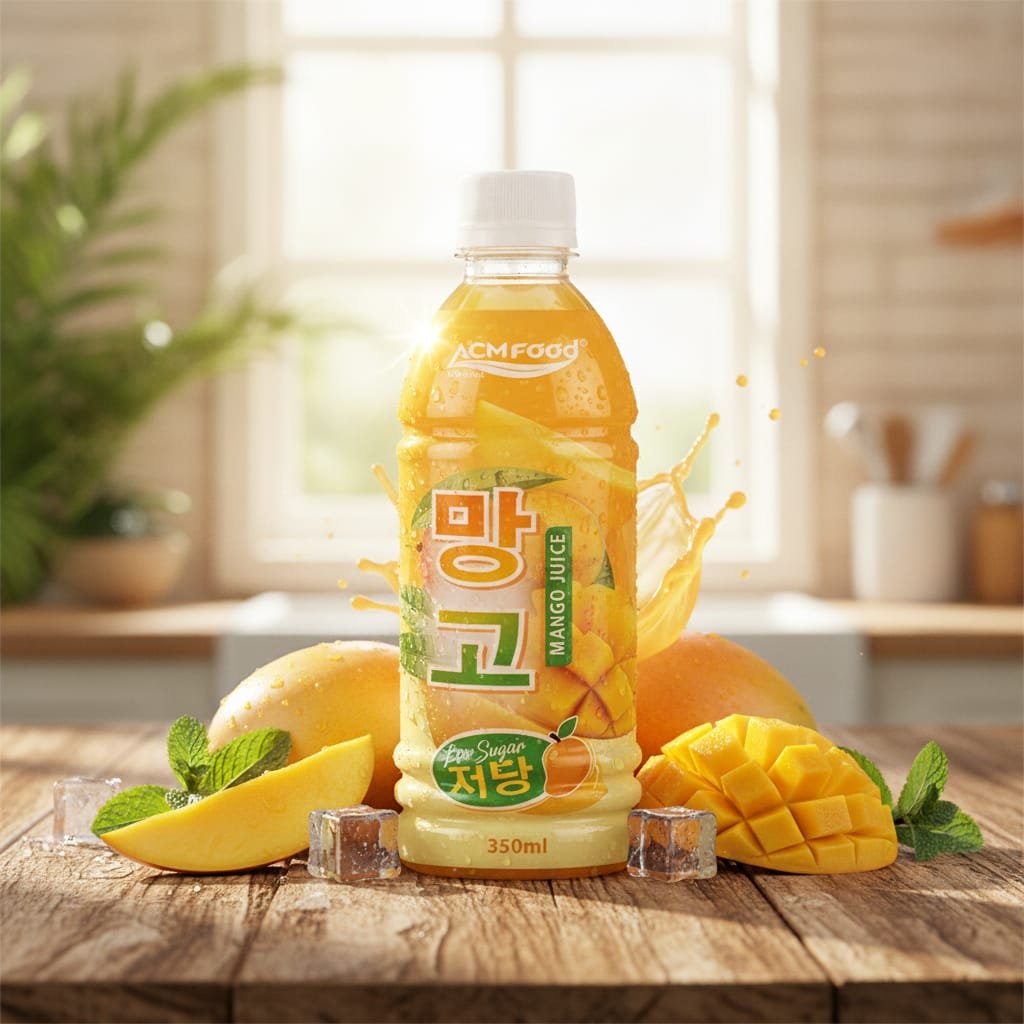
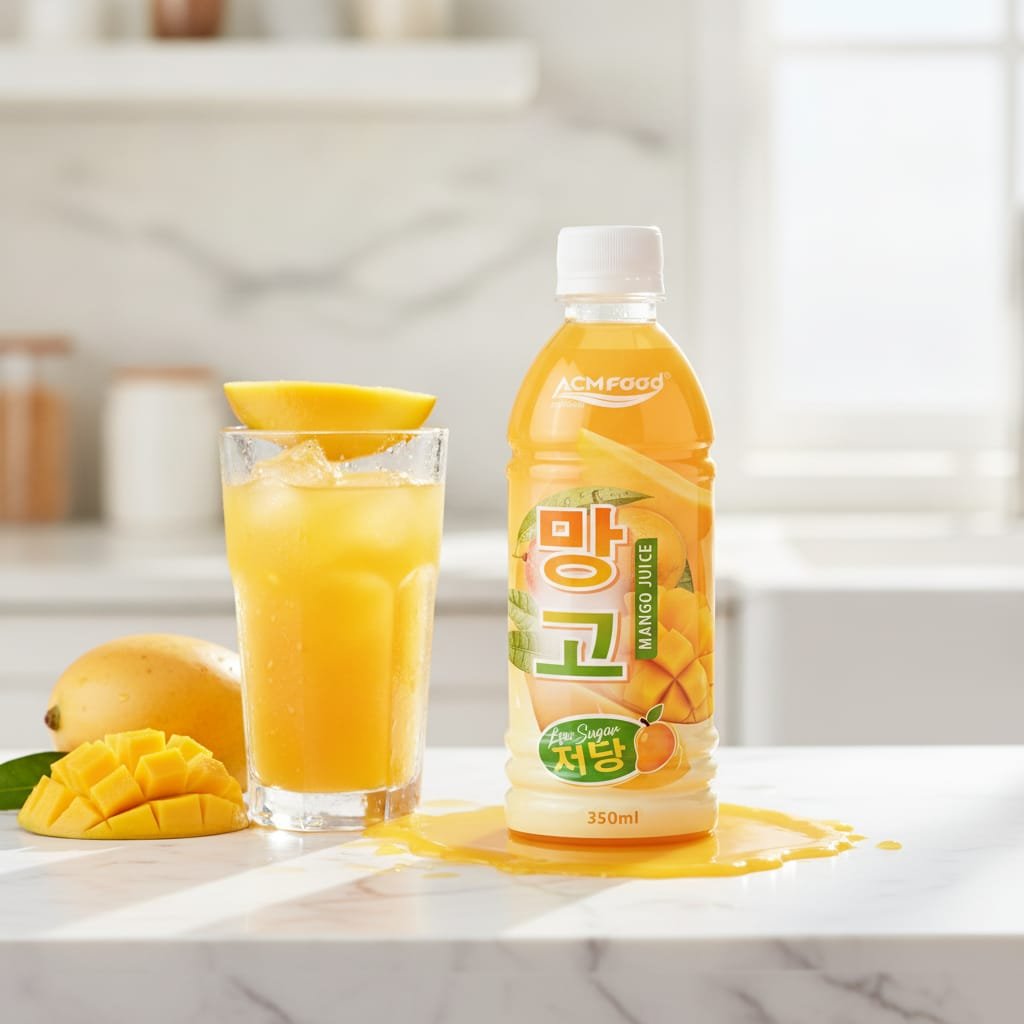
Mango is not only beloved for its rich taste but also boasts an impressive nutritional profile. Rich in vitamin C, vitamin A, and antioxidants like mangiferin, mango supports immune health and skin vitality. When processed into 350ml PET juice Korean low sugar mango juice drink, these benefits are preserved through gentle pasteurization and aseptic filling technologies.
Low-sugar mango juice fits seamlessly into the functional beverage space. While not a conventional energy drink or probiotic shot, its inherent nutrients offer a “clean” functional edge — hydration plus vitamins without artificial additives. This aligns with the clean label movement, which demands minimal ingredients and transparent sourcing. The product’s Korean-inspired formulation adds an element of exotic appeal, tapping into the premiumization trend where unique origins justify higher price points.
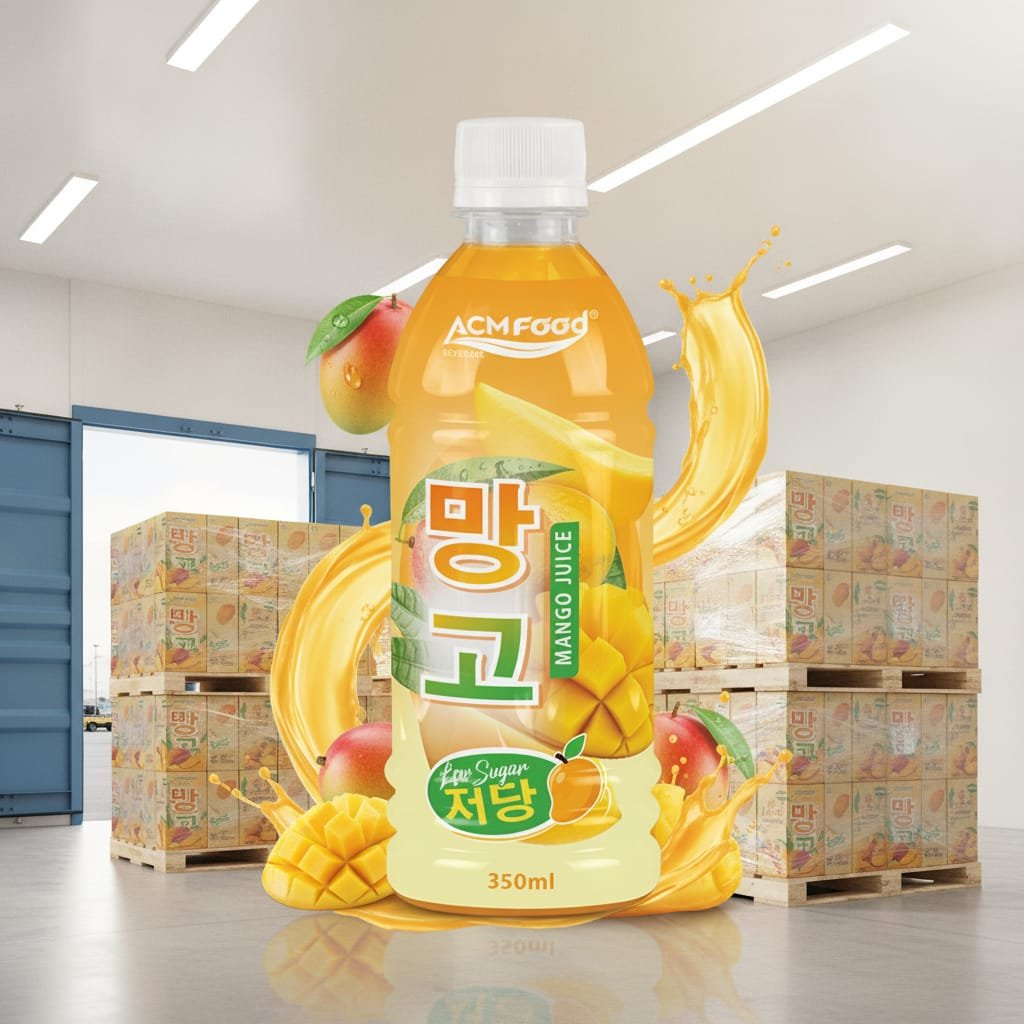
Moreover, the 350ml PET bottle format is designed for on-the-go consumption — a key requirement for urban millennials and Gen Z. Lightweight, shatterproof, and resealable, PET packaging enhances convenience while maintaining product integrity. For importers in markets like the US and EU, such packaging reduces shipping weight and breakage risks, lowering total landed costs.
Health Benefits That Drive Purchase Decisions
Consumers are increasingly educated about ingredients. Low-sugar mango juice offers a clear value proposition: it delivers the indulgence of a tropical fruit drink without the sugar crash. This positions it as an ideal mid-day refreshment for office workers, a post-workout replenisher, and a kids’ school lunch alternative. For private label buyers, this multipurpose appeal expands potential retail placement — from convenience stores to health food chains and online grocery platforms.
Certifications such as USDA Organic, Halal, and Kosher further enhance marketability. ACM Food’s facilities hold multiple international certifications, enabling seamless entry into regulated markets. Distributors can leverage these credentials to accelerate shelf placement and build consumer trust. As one industry insider noted, “A mango juice with low sugar and organic certification is essentially a license to print money in today’s health-obsessed climate.”

OEM Solutions for Low-Sugar Juice Manufacturing
Behind every successful private label juice brand is a manufacturing partner capable of translating concept into reality. Sparkling water drink OEM has different parameters, but juice production demands attention to raw material quality, sugar reduction techniques, and packaging sterility. ACM Food’s integrated ecosystem, with over 10 automated lines and a monthly export capacity of 300+ containers, exemplifies the scale required to serve global brands.
The OEM process begins with a thorough formulation briefing. For low-sugar mango juice, clients can specify sweetness level (e.g., 5g sugar per 100ml vs. 10g), additional flavors (lime, ginger), and nutrient fortification (vitamin D, zinc). Flexible MOQs allow startups and medium-sized enterprises to test the market without committing to massive production runs. Once the recipe is approved, ACM’s team manages raw material sourcing — from Vietnamese mango puree to PET preforms — ensuring traceability and consistency.
Packaging customization is another decisive factor. The 350ml PET bottle can be supplied with custom labels, shrink sleeves, or even embossed molds. Private label clients can choose colors, caps, and secondary packaging (trays, cartons) to align with brand identity. This end-to-end service reduces go-to-market timelines significantly. As one export manager noted, “Our low-sugar mango juice OEM program has helped three European retailers launch exclusive store brands within five months of initial contact.”
Quality Control and Regulatory Compliance
For B2B buyers, quality assurance is non-negotiable. ACM Food’s FSSC 22000, ISO, BSCI, and Organic certifications provide a safety net that simplifies import procedures. Each batch undergoes microbiological and chemical testing, with shelf-life studies to guarantee stability under various logistics conditions. Documentation (COA, phytosanitary certificates, Halal certificates) is prepared in advance, allowing smooth customs clearance in destinations from New York to Dubai.
Labeling compliance is equally important. Many countries have strict rules for claims like “low sugar”. ACM’s regulatory team helps formulate claims that adhere to local thresholds (e.g., FDA defines “low sugar” as less than 5g per 100g). By partnering with an experienced OEM manufacturer, importers avoid costly relabeling and legal disputes. This collaborative approach transforms a potential hurdle into a competitive advantage.
Global Expansion Opportunities for Low-Sugar Mango Juice
The international appetite for Vietnamese tropical beverages is growing. In 2023, Vietnam exported over $1.5 billion worth of fruit juices and concentrates, with mango juice being the second-largest category after coconut water. Low-sugar variants are particularly sought after in developed markets where sugar taxes are in effect — UK, Mexico, France, and several US states. The Middle East is another hotspot, driven by a young population and premium import culture.
For OEM buyers, sourcing directly from Vietnam offers cost advantages without quality sacrifice. Vietnam’s proximity to tropical fruit farms ensures fresher raw materials and shorter supply chains. ACM Food’s factory in Cu Chi District operates under strict temperature control, preserving flavor until bottling. The company’s ability to ship via sea or air ensures flexibility for urgent orders. A recent success story involved a Scandinavian juice brand that switched from Thai to Vietnamese supply, reducing landed costs by 12% while maintaining organic certification.
Distributors should also consider seasonal campaigns. Mango juice sells year-round, but peak demand aligns with summer months and holiday seasons like Lunar New Year in Asian diaspora communities. By planning orders 60–90 days in advance, buyers can secure favorable pricing and avoid container shortages. ACM’s sales team provides quarterly demand forecasts based on market intelligence, helping partners optimize inventory.

For illustrative purposes only
Frequently Asked Questions (FAQ)
What makes low-sugar mango juice different from regular mango juice?
Low-sugar mango juice typically contains 30–50% less sugar than traditional mango juice drinks. It uses natural sweeteners or simply less added sugar, while retaining the fruit’s authentic flavor. This appeals to health-conscious consumers and those managing blood sugar levels.
Can OEM manufacturers customize the sweetness level of mango juice?
Yes, most OEM providers, including ACM Food, offer adjustable Brix levels to meet specific market requirements. Clients can select from a range of sugar content, from no added sugar to moderate sweetness, using stevia, erythritol, or monk fruit blends.
What packaging options are available for low-sugar juice exports?
Common formats for export include 350ml PET bottles, 250ml and 330ml aluminum cans, and 1L paper boxes. For private label clients, custom bottle shapes, colors, and label designs are available. PET bottles are lightweight and shatterproof, ideal for long-distance shipping.
How do international certifications impact market access for low-sugar juice?
Certifications like USDA Organic, Halal, and Kosher are essential for entering markets with strict import regulations. They signal compliance with local food safety standards and build consumer trust. OEM manufacturers with multiple certifications can streamline the approval process for distributors.
What is the typical lead time for an OEM order of low-sugar mango juice?
Lead times vary based on order volume and customization complexity. Standard MOQ orders (around 1,000–2,000 cartons) typically ship within 30–45 days after sample approval. Rush orders with existing formulations can be expedited to 20 days. It’s advisable to discuss timelines during initial consultation.


Related blogs insights
Pure Mango Juice Innovation Drives Global RTD Beverage Market Growth
Explore how pure mango juice innovation is reshaping the global RTD beverage market. Analysis of [...]
May
Pineapple Juice A Tropical Beverage with Health Benefits
Contents1 Vietnam’s Pineapple Industry and the Rise of Pineapple Juice1.1 The Evolution of Pineapple Juice [...]
1 Comment
Apr
The Benefits of Coconut Water and Juice
Contents1 What is Coconut Water and Juice?1.1 Nutritional Value of Coconut Water1.2 Nutritional Value of [...]
1 Comment
May
Apple Sparkling Water The Perfect Refreshment for Any Occasion
Contents1 Apple Sparkling Water Pet Bottle Wholesale: A Convenient Option for Bulk Purchases1.1 Benefits of [...]
1 Comment
Mar
ACM Premium Energy Drink Drives Premiumization Growth in Functional Beverages
Explore how premiumization is transforming the global energy drink market, with insights from ACM Beverage's [...]
May
The Rise of Non-Alcoholic Drinks with Coconut Water: A Refreshing Trend
Contents1 A Healthier Choice2 Innovative Recipes3 Market Growth4 Celebrity Endorsements5 Sustainability Factor6 Conclusion In recent [...]
1 Comment
Sep