
Cucumber ginger lemon water adds a warm, spicy edge to the familiar cucumber lemon profile, and the ginger changes everything: the drink becomes more distinctive, more serious and more difficult to balance. For beverage developers the questions are about dosing, clarity, still or sparkling formats and how to describe a subtle product honestly. This article covers the flavour logic, the process points and the packaging decisions for a finished can or bottle.
Directions here are starting points for tasting trials. Ginger strength varies by form and source, so every concept needs bench testing.
What is cucumber ginger lemon water?
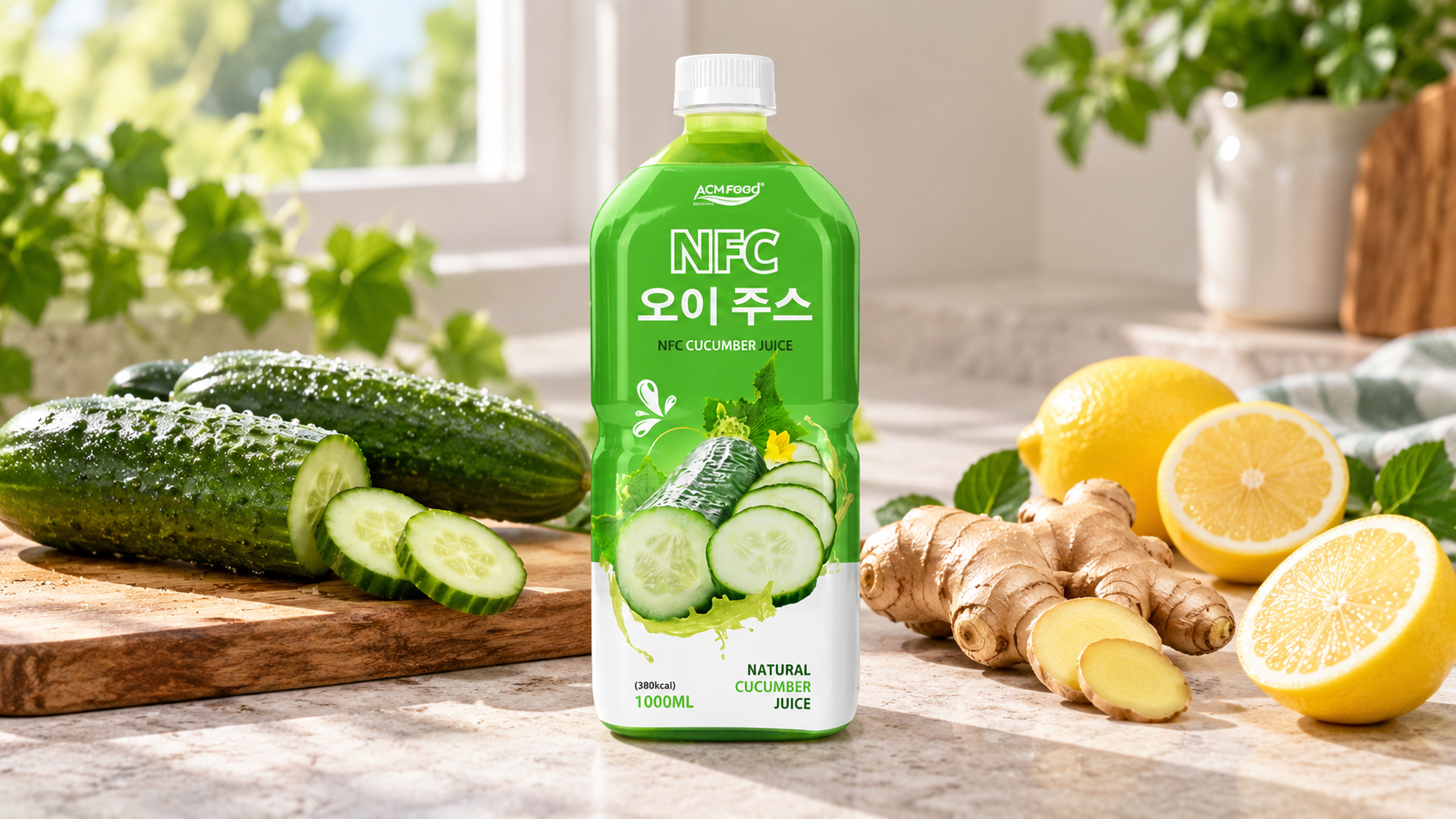
It is a light, flavoured drink in which cucumber, ginger and lemon are carried by water, either still or lightly sparkling. Cucumber supplies freshness, lemon supplies acidity and aroma, and ginger supplies warmth. The drink is usually clear or only faintly coloured, and it is meant to be refreshing rather than filling.
There is no single standard definition and labelling rules differ by market, so the product name and ingredient list must describe the real composition and avoid suggesting a higher juice content than the drink contains.
Why add ginger to cucumber and lemon?
Cucumber lemon is crisp and clean but can feel plain and familiar. Ginger adds a gentle heat and aromatic depth that make the drink feel more adult and more intentional. It also lengthens the finish, so the flavour does not disappear after the first sip. For a brand, ginger is a way to stand out from the many plain cucumber lemon products on shelf.
The trade-off is risk. Ginger is strong, and a small excess turns a refreshing drink into a harsh one.
How do you dose ginger in a water drink?
In a light drink, ginger is highly visible, so doses are small. Heat builds after swallowing, so taste both the first sip and the finish.
| Ginger level | Taste effect | Best for |
|---|---|---|
| Very light | A hint of warmth, almost subliminal | Everyday refreshment |
| Light | Clear warmth, still gentle | Adults who like a little spice |
| Medium | Noticeable bite, ginger forward | Niche or tonic-style concepts |
Taste at serving temperature and at a slightly warmer one. Chilling reduces perceived heat, and consumers may drink the product at different temperatures.
How much lemon should you use with ginger?
Lemon and ginger reinforce each other: acidity makes ginger taste sharper, and ginger makes lemon taste fresher. Too much lemon makes ginger seem aggressive, while too little leaves the drink flat. Test a small matrix of lemon and ginger levels in one session and mark combinations that feel balanced.
Remember that acidity also affects processing, so the best taste point must be checked against technical requirements.
What is the role of cucumber?
In this drink cucumber is mostly texture and aroma: a cooling, green background that makes the drink feel lighter. Too much cucumber dilutes the other flavours, and too little makes the drink read as ginger lemonade. Aim for cucumber to be noticed as a freshness cue, not as the dominant flavour.
If you want a cucumber-led drink without ginger, that is a different concept with its own considerations.
Still or sparkling?
A lightly sparkling version suits ginger and lemon naturally, since carbonation sharpens the flavour and adds refreshment. It also changes perception: carbonation intensifies acidity and can increase the impression of ginger heat. Retest the recipe after carbonating, and confirm that the pack is designed for pressure. For related ideas on carbonated citrus formats, see the article on lime sparkling juice formulation.
How do you manage clarity and appearance?
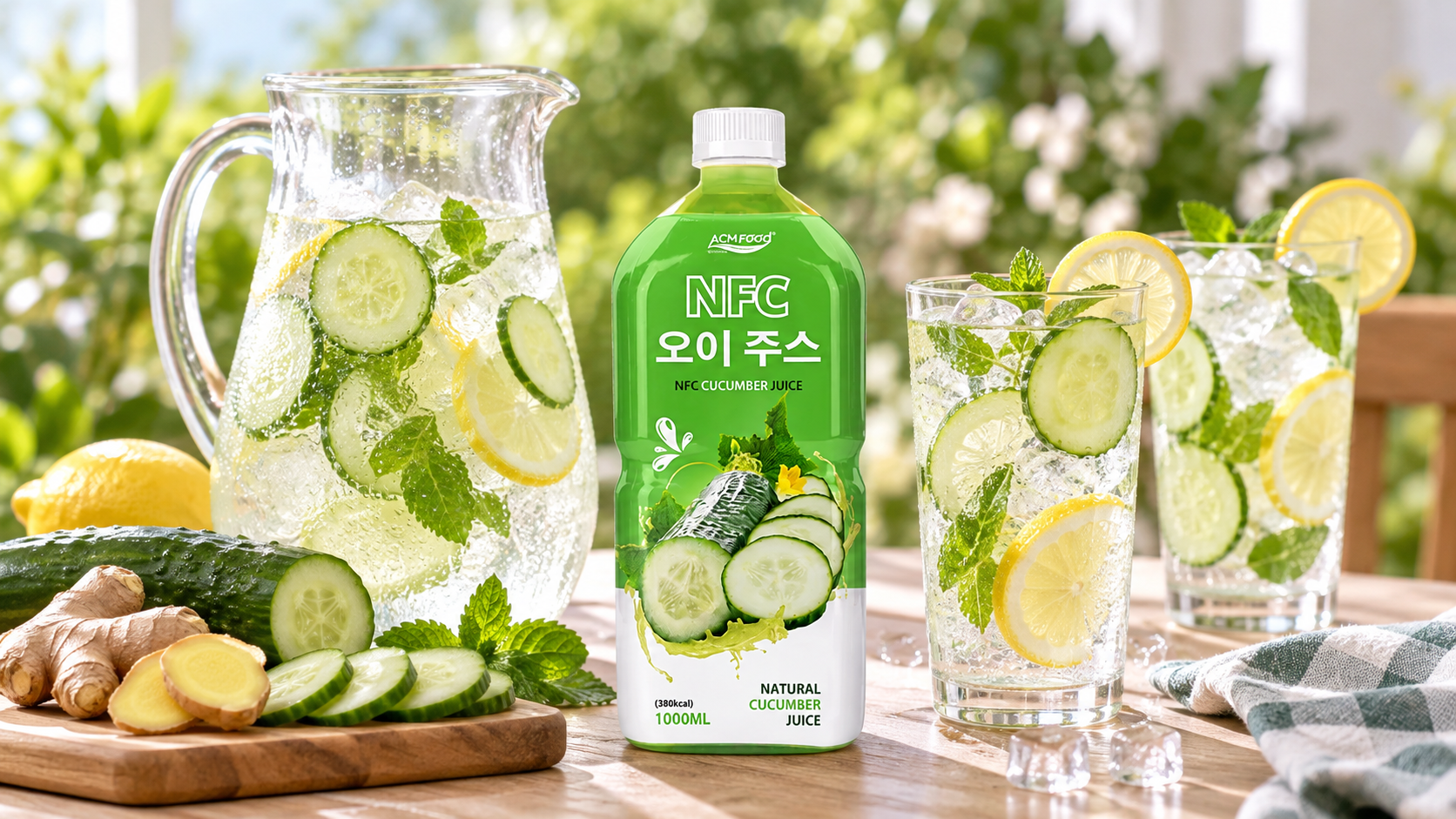
A clear or pale drink shows every defect: cloud, sediment or colour shift. Ginger can add a faint cloudiness or sediment depending on the form used, and cucumber contributes fine particles. Decide what appearance you want and ask how it will be achieved and maintained through shelf life. If clarity is part of the story, test samples at the end of shelf life.
What does the process need to account for?
Cucumber is low-acid, and lemon lowers the pH of the blend. The final pH depends on the lemon level and the dilution, and it influences which heat treatment and storage conditions are appropriate. The process must be confirmed by the producer and verified by testing, not assumed from the name.
Ask for the final pH, the treatment and the storage conditions of any sample, and record them in the specification.
Which pack suits cucumber ginger lemon water?
| Format | Strengths | Points to check |
|---|---|---|
| Slim or sleek aluminium can | Opaque, ideal for sparkling, single-serve | Lining suitability for acidic drinks, pressure |
| Glass bottle | Shows clear colour, premium | Light exposure, weight, pressure rating if sparkling |
| PET bottle | Light, practical | Barrier needs, carbonation suitability |
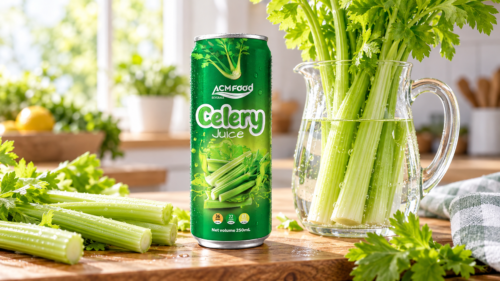
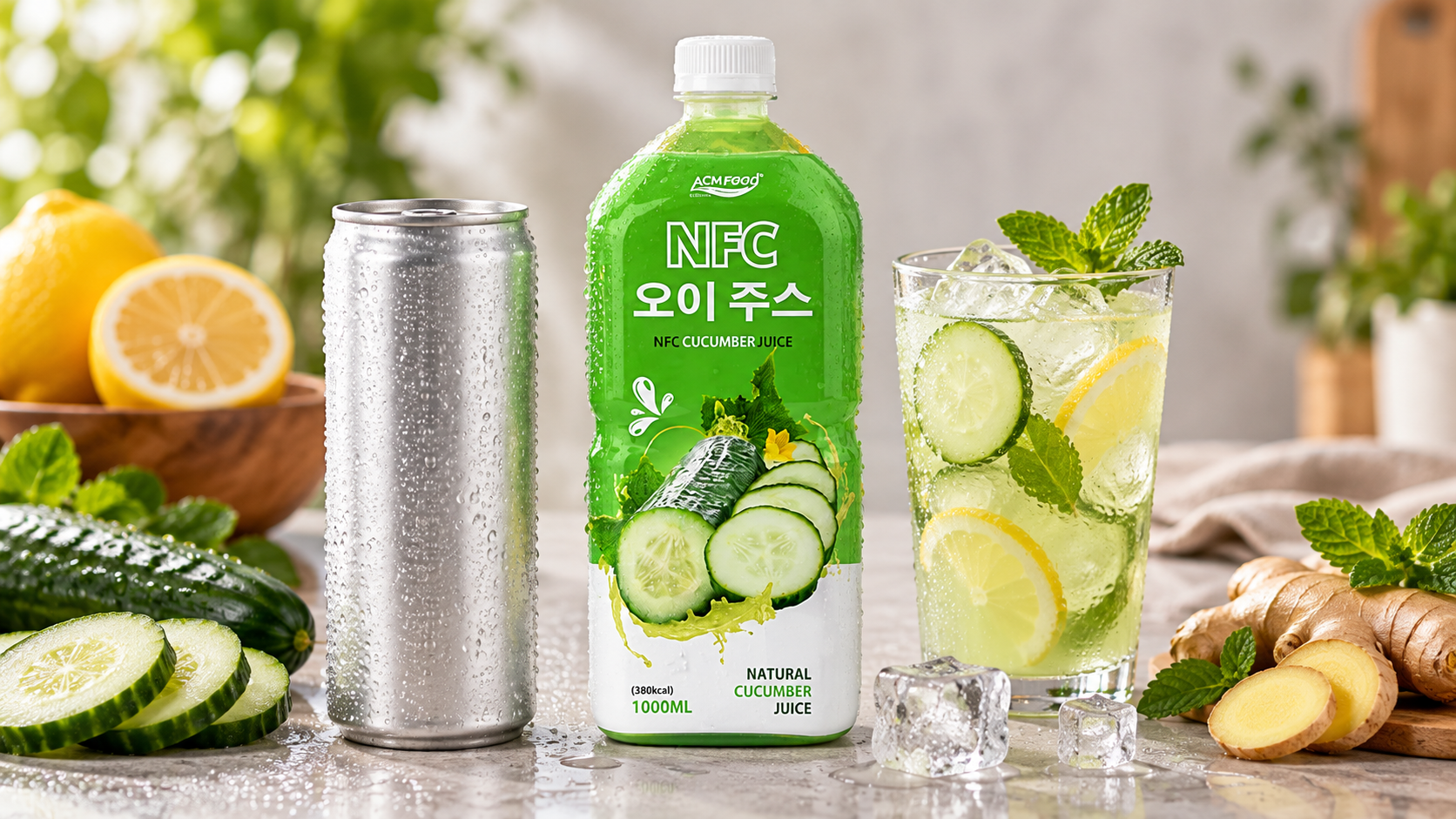
ACM Beverage supplies finished drinks in cans and bottles. A clear bottle shows the pale drink well, while a can suits sparkling concepts and protects colour.
How do you position a flavoured water responsibly?
Describe taste, ingredients and the occasion, such as an afternoon refresher. Avoid statements about detox, digestion, weight or hydration performance. Claims depend on tested values, the recipe and local rules, and they are best avoided unless you hold evidence and approval. For background on label wording, see what organic juice means.
What should a product brief include?
- Concept: still or sparkling.
- Ginger level in plain words and form: fresh, extract or flavour.
- Lemon level and cucumber role.
- Sweetness: none, minimal or moderate.
- Clarity and colour target at the end of shelf life.
- Pack type and size.
- Target markets and labelling rules.
How do you run a development trial?
- Prepare a base of cucumber and lemon and taste chilled.
- Add ginger in tiny steps and record where heat becomes noticeable.
- Test a small lemon and ginger matrix.
- If sparkling, carbonate small samples and retaste.
- Check clarity and colour in clear glass and in the real pack.
- Store samples and re-evaluate over time.
- Approve a written reference and a physical reference sample.
Common mistakes with cucumber ginger lemon water
- Overdosing ginger because a small sample tasted mild.
- Forgetting that carbonation intensifies heat.
- Ignoring sediment in a clear drink.
- Choosing a process without checking the final pH.
- Printing digestive or detox claims.
Frequently asked questions
Is cucumber ginger lemon water spicy?
It can be. The heat depends on the ginger level, from a hint to a clear bite. Chilling reduces the sensation.
Can ginger cause cloudiness?
Depending on the form used, ginger can add faint cloud or sediment. Ask about the form and how clarity is maintained.
Can the drink be sold in cans?
Yes. Cans suit sparkling concepts and protect colour. The lining must suit an acidic drink, and the process must be confirmed for the formula.
Summary
Cucumber ginger lemon water is a subtle, distinctive drink that rewards careful dosing and honest description. Decide the ginger level, balance lemon, choose still or sparkling and match the process to the final pH. If you are exploring a flavoured water for your own label, ACM Beverage can discuss can and bottle formats and recipe options once you share your brief.