Cold-pressed celery juice is juice pressed from celery stalks without a heating step during extraction, typically sold chilled and sometimes treated with high pressure processing, or HPP. Celery is a low-acid vegetable with a delicate green colour, so a retail product has to manage three things at once: safety, colour and shelf life. This article explains what cold-pressed means, how HPP and heat treatment compare, what the cold chain requires and which pack suits a bottled product.
ACM Beverage supplies finished drinks in cans and bottles, and this article is written from that perspective.
What does cold-pressed celery juice mean?
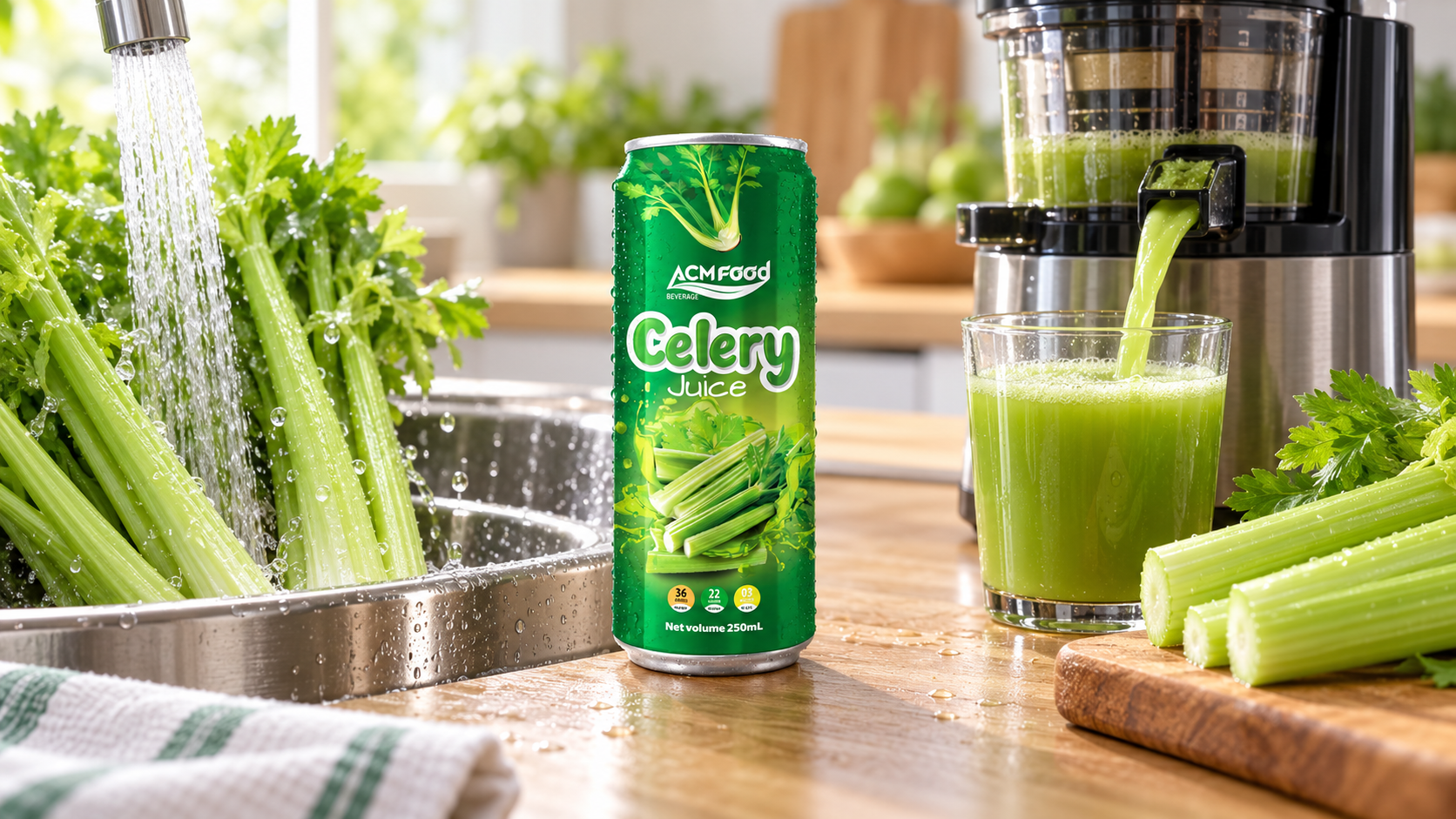
Cold-pressed refers to extraction: celery is crushed and pressed, and the juice is collected without a heating step. It does not say what happens afterwards. A product may be bottled and kept chilled, treated with HPP, or heat-treated.
Two products labelled cold-pressed can therefore have very different shelf lives and safety profiles. The treatment after pressing, the storage temperature and the tested shelf life are the details that matter most.
Why is low acidity important for celery juice?
Celery is a low-acid vegetable. Low-acid, high-moisture products can support the growth of unwanted microorganisms if they are not processed and stored correctly, so the process must be designed for them and followed carefully. Chilled storage and a verified treatment are central to a cold-pressed celery product.
Practical consequences for brands:
- Do not treat celery juice like an acidic fruit juice when choosing a process.
- Ask the producer how the product is made safe and how this is verified.
- Print storage instructions clearly and make sure the supply chain follows them.
- Do not promise ambient storage unless the process and testing support it.
Food safety rules differ by country. Confirm the requirements of the destination market with the producer and, where needed, with a qualified adviser.
What is HPP and does it suit celery juice?
High pressure processing applies very high pressure to a sealed, packaged product in a water-filled vessel. It reduces microbial load without a conventional heating step, so juice can keep a fresher taste and brighter colour.
HPP is not a guarantee. The pack must tolerate the process, shelf life still depends on formulation, hygiene and temperature, and chilled storage is normally still needed. Whether HPP is sufficient for a low-acid product depends on how the process is designed and on market rules, so ask the producer to describe it in writing for the specific product.
Cold-pressed, HPP or heat-treated: how do they compare?
| Approach | After extraction | Typical storage | Points to consider |
|---|---|---|---|
| Cold-pressed, untreated | None | Chilled, short life | Fresh impression; highest handling risk for a low-acid product |
| Cold-pressed with HPP | Pressure treatment in final pack | Chilled | Fresher taste than heat; needs suitable pack and verified process |
| Heat-treated | Pasteurisation or similar | Depends on process | Predictable stability; colour and taste can change |
The right approach depends on your channel, your cold chain and your shelf-life target, not on a slogan.
How does cold pressing affect taste and colour?
Cold-pressed celery juice tastes fresh, green and savoury, with the aroma typical of celery. It is also naturally slightly salty. The colour is a pale to medium green from chlorophyll, which is sensitive to heat, acid and oxygen. Cold pressing avoids heat during extraction, but oxygen exposure and time can still shift the colour toward olive.
Because the flavour is strong and polarising, some brands blend celery with apple, cucumber or lemon. Those are separate products; the point here is that the extraction method does not decide the final taste on its own.
What does the cold chain require?
A chilled product relies on temperature control from the filling room to the consumer’s fridge.
- Chilled storage and transport from the producer.
- Refrigerated delivery to the retailer with records where possible.
- A chilled shelf kept at the stated temperature.
- A clear storage instruction on the label.
For export, the cold chain is harder to guarantee because transit times and conditions are less predictable. That is why many brands choose heat-treated cans or bottles for distant markets and keep chilled products for nearby channels.
Which bottle suits cold-pressed celery juice?
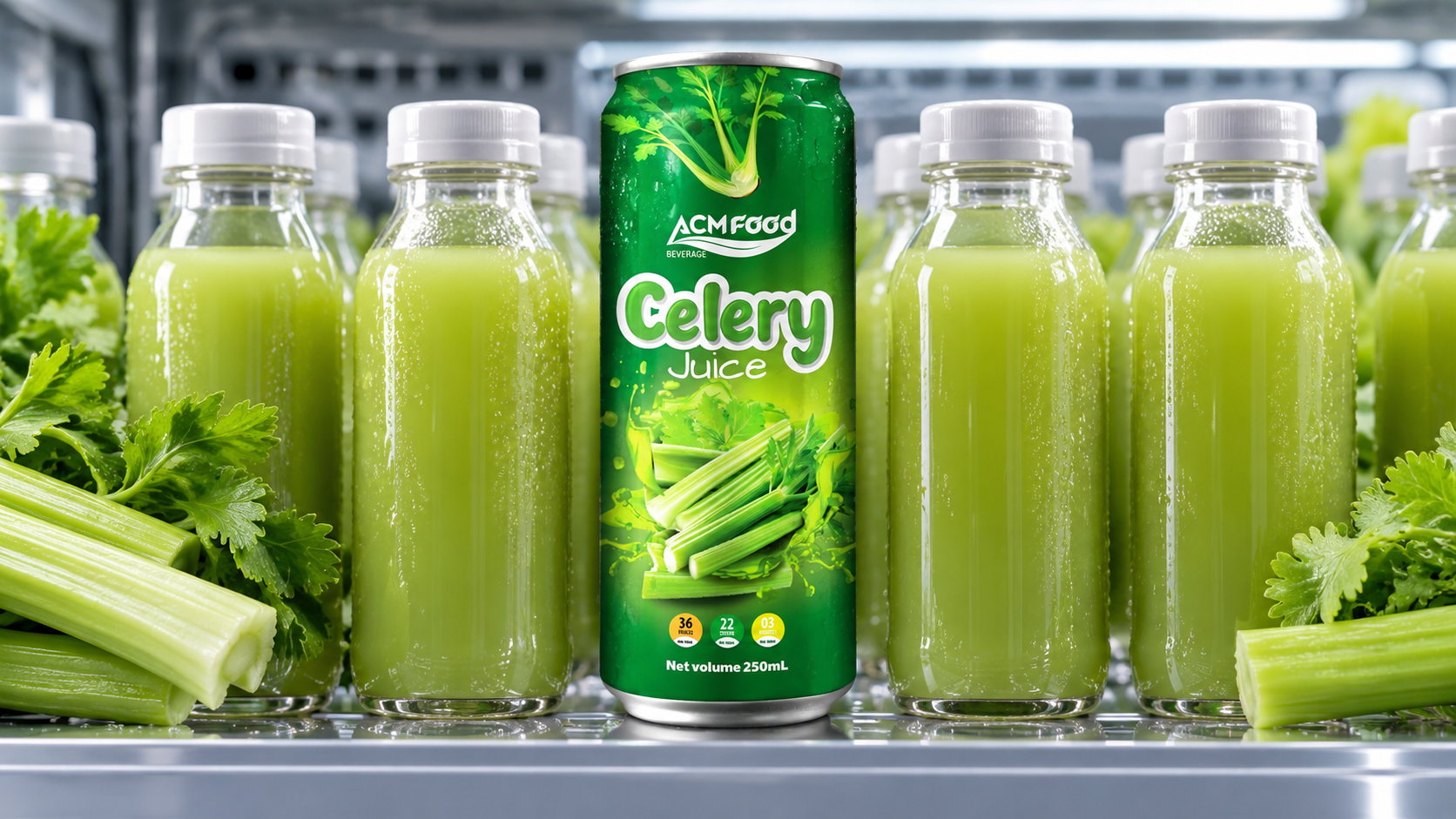
- PET bottles: common for HPP, light, shatter-resistant and available clear so that the green shows.
- Glass bottles: premium and heavier, suitable if the design tolerates the process.
- Cans: more usual for heat-treated celery drinks, and they block light which helps colour.
Confirm that the bottle, closure and label are suitable for the treatment and for chilled storage. Clear bottles show colour but expose the juice to light, so storage conditions matter. The celery juice category shows how celery appears across finished products.
What shelf life can you state?
Shelf life must come from testing your own formulation in your own pack at the specified storage temperature. A shelf-life study checks taste, colour, microbiology and pack integrity over time. Do not borrow a figure from another product.
Ask the producer how shelf life is established and which temperature is assumed, and plan distribution against it. A product that spends time warm during transport is at risk, so agree cold-chain expectations before launch.
How should the label describe it?
Accurate wording protects trust. Describe the extraction and the post-pressing treatment honestly, state the storage condition clearly and avoid words such as “fresh” or “raw” unless they are correct under your market’s rules. Avoid statements about detox, weight or disease. For home preparation, the guide to making celery juice taste good covers a different purpose from product development, and what organic juice means explains why label terms need care.
What should a cold-pressed brief include?
- The process you want: untreated, HPP or heat-treated, and why.
- Bottle type, size and closure.
- Taste direction: pure celery or a blend.
- Target shelf life and storage temperature.
- Target markets and labelling rules.
- Claims you plan to make, checked by a qualified adviser.
What questions should you ask a producer?
- How is the product made safe, and how is that verified?
- What is the tested shelf life and at which temperature?
- How are batches released and what is checked?
- What happens to a batch that fails?
- How are complaints handled?
Request answers in writing and attach them to the specification.
When is cold-pressed celery juice not the right choice?
If your channel lacks reliable refrigeration, if you export over long distances or if you need a long ambient shelf life, a heat-treated can or bottle is usually a better fit. Imagine the worst realistic day in your supply chain, such as a delayed truck or a warm warehouse, and ask whether the product would still be safe and acceptable. If the answer is uncertain, choose a more robust format.
Common mistakes with cold-pressed celery juice
- Treating celery like an acidic fruit juice.
- Choosing HPP without confirming the pack suits it.
- Promising a shelf life that testing has not confirmed.
- Selling into a channel without a reliable cold chain.
- Calling a heat-treated product raw.
Frequently asked questions
Is cold-pressed celery juice raw?
Not necessarily. Extraction involves no heat, but the juice may then be treated with HPP or heat. Check the label and ask for the process description.
Why does celery juice change colour?
Chlorophyll is sensitive to heat, acid, light and oxygen, so bright green can shift toward olive over time. Packaging and process choices reduce the change.
Can it be stored at room temperature?
Products sold as cold-pressed are normally chilled. Ambient storage needs a process and testing that support it.
Summary
Cold-pressed celery juice describes how the juice is extracted, not how long it lasts or how safe it is. Choose the post-pressing treatment with celery’s low acidity in mind, pick a pack that suits it and confirm shelf life by testing. If you are developing a bottled celery drink for your own label, ACM Beverage can discuss format options and sampling once you share your market and storage plans.