
Contents
- 1 Clean Label Imperatives Reshape Global Beverage Markets
- 2 Health and Wellness Drivers Accelerate Coconut Water Adoption
- 3 OEM Flexibility Unlocks Private Label Success in Hydration Category
- 4 Sustainability and Ethical Sourcing in Coconut Water Supply Chains
- 5 Market Outlook and Strategic Recommendations for B2B Players
- 6 Frequently Asked Questions (FAQ)
- 6.1 What drives the clean label trend in the beverage industry?
- 6.2 How does coconut water meet clean label requirements?
- 6.3 What OEM services are available for coconut water products?
- 6.4 What certifications should B2B buyers look for in coconut water suppliers?
- 6.5 How can importers assess the quality of OEM coconut water samples?
The global beverage industry is witnessing a seismic shift toward transparency and natural ingredients, with clean label products moving from niche to mainstream. At the forefront of this revolution is coconut water, a naturally isotonic drink that offers electrolytes without artificial additives.
For B2B buyers—distributors, importers, and private label seekers—understanding this trend is crucial to capturing value in the expanding functional hydration market. This analysis explores the intersection of clean label demand and coconut water as a strategic product category.

Clean Label Imperatives Reshape Global Beverage Markets
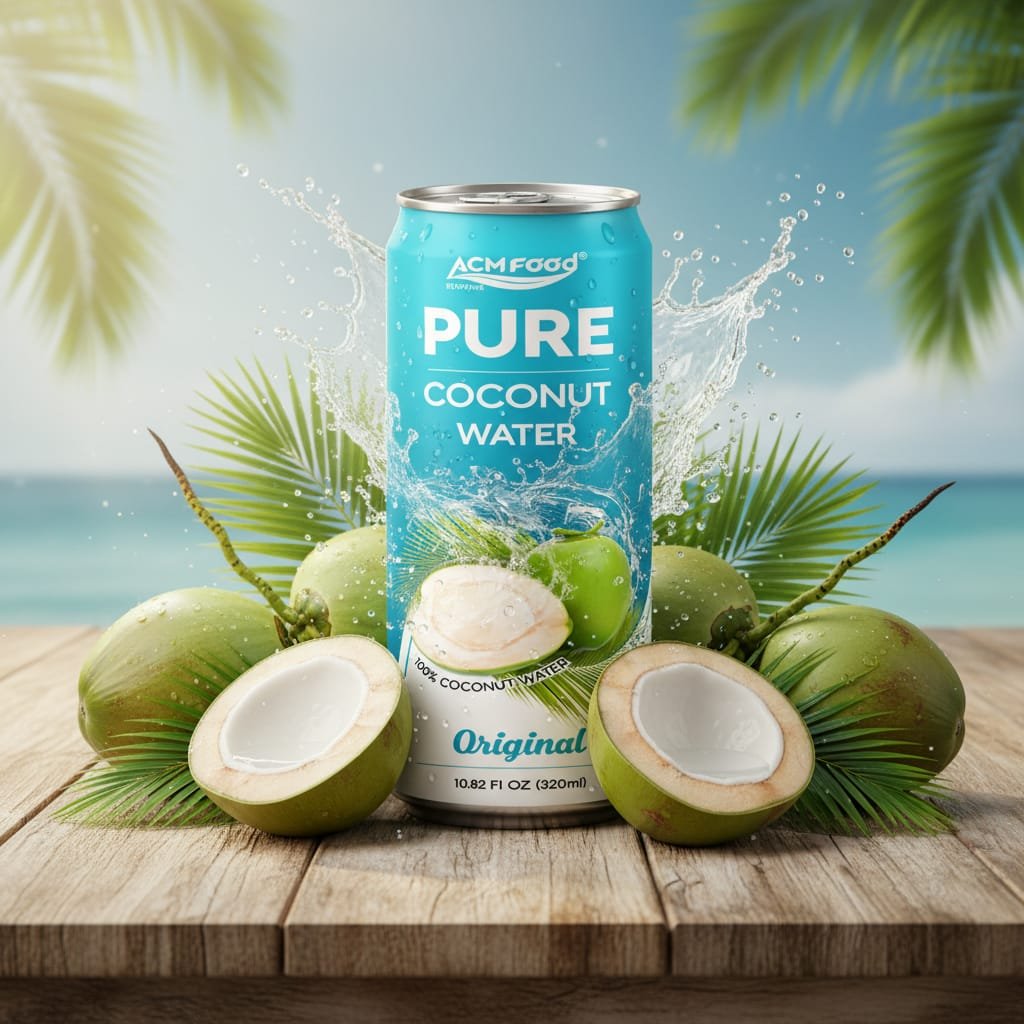
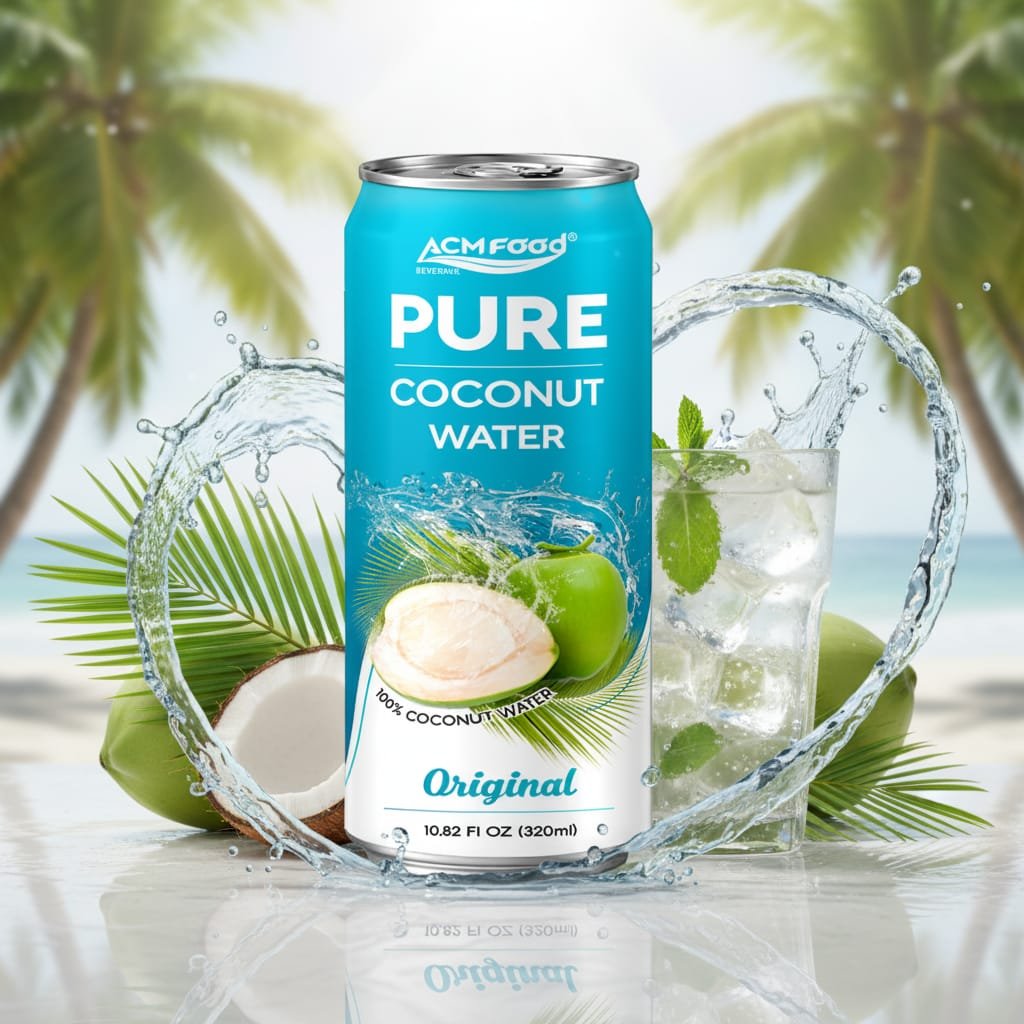
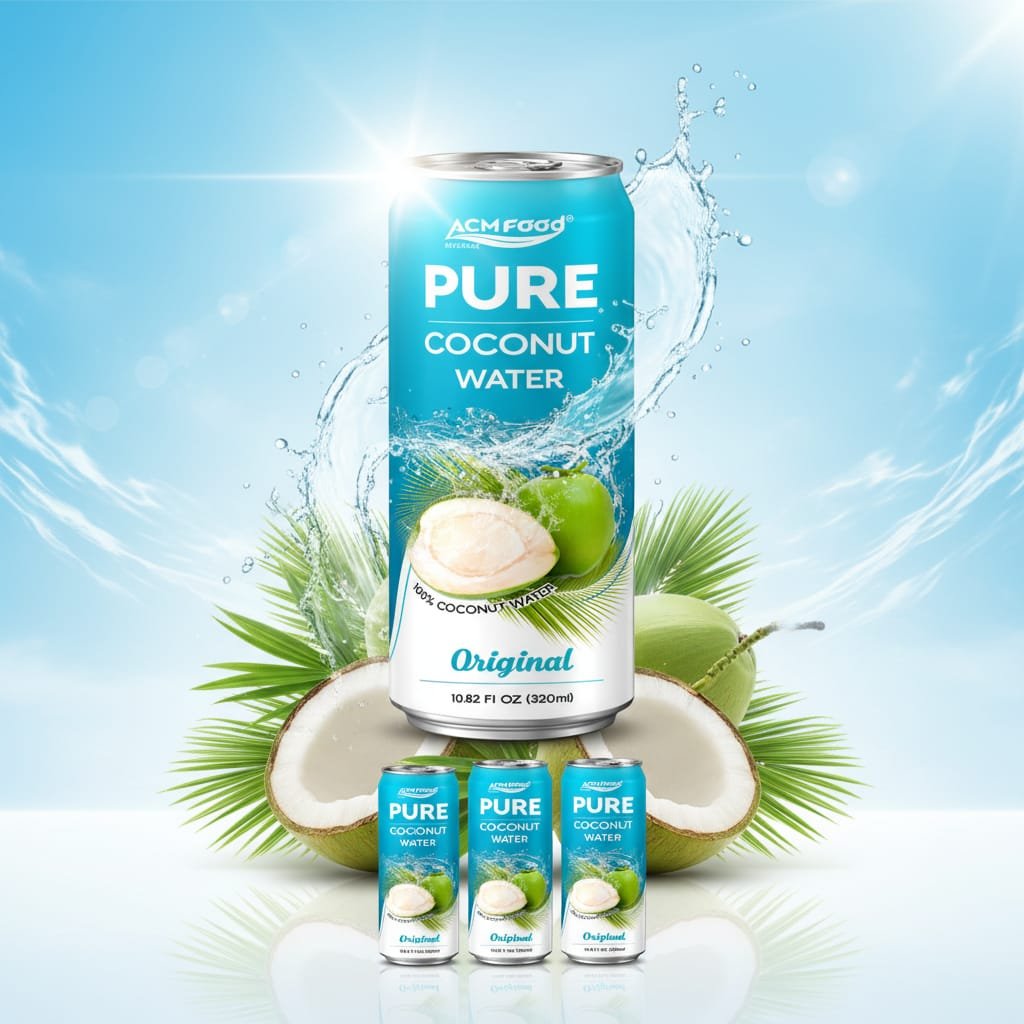
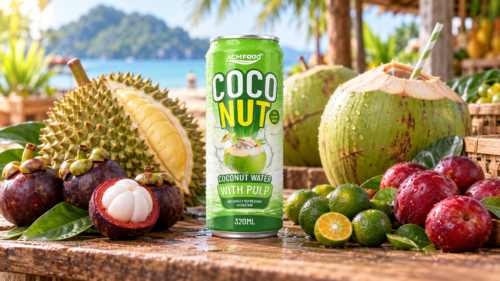
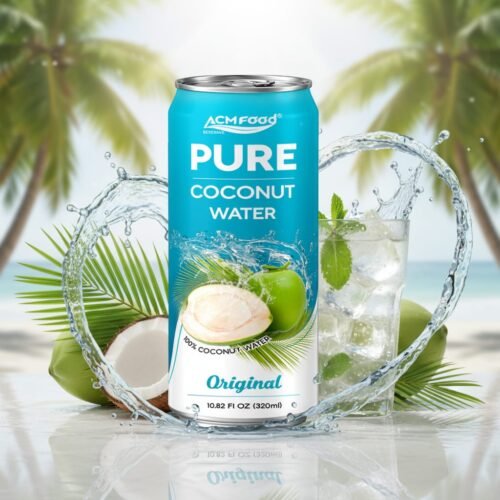
Clean label has become a non-negotiable priority for consumers and retailers alike. Products like 320ml ACM Original Coconut Water exemplify how simplicity in ingredients drives trust. Modern buyers scan labels for preservatives, added sugars, and artificial flavors, rejecting anything unrecognizable. This shift directly benefits coconut water, which naturally contains electrolytes and zero additives.
From Functional to Fundamental: Coconut Water’s Edge
The functional beverage segment is projected to exceed $200 billion by 2028, with clean label products capturing a growing share. Fresh coconut water from young coconuts provides potassium, magnesium, and hydration without processing. This positioning appeals to athletes, health enthusiasts, and everyday consumers seeking natural energy. ACM FOOD’s factory in Vietnam meets strict international standards such as FSSC 22000 and USDA Organic, ensuring product integrity from source to shelf.
Many global brands are now reformulating to remove synthetic ingredients. Coconut water offers a ready-made solution: a single-ingredient beverage that requires no additives to deliver taste and function. This inherent simplicity makes it a cornerstone of clean label innovation.
Health and Wellness Drivers Accelerate Coconut Water Adoption
Coconut water’s hydrating properties are backed by decades of research. Its electrolyte profile mirrors human plasma, making it superior to many sports drinks. The clean label movement amplifies this advantage because consumers trust nature-derived solutions over chemically engineered alternatives.
Scientific Support for Natural Hydration
Studies show that coconut water can rehydrate as effectively as commercial sports drinks but with fewer calories and no artificial colors. This clinical evidence fuels demand among fitness-conscious demographics. For OEM partners, formulating a coconut water product is straightforward: the raw ingredient itself provides the functional benefit, reducing R&D costs and time-to-market.
Geographic expansion remains a key opportunity. Markets in the Middle East and Europe increasingly seek tropical functional beverages. ACM FOOD’s export infrastructure, handling over 300 containers monthly, allows rapid scaling for international distributors.

OEM Flexibility Unlocks Private Label Success in Hydration Category
Private label coconut water is a growing segment, with retailers wanting exclusive products that compete with national brands. OEM partners offer customization in volume, packaging, and branding. The original coconut water from ACM FOOD is available in multiple can sizes and can be tailored for specific markets.
Custom Formulation and Packaging Agility
OEM manufacturers provide more than just production. They offer flavor variations (like added citrus or tropical fruits), non-carbonated or lightly sparkling formats, and packaging options from 250ml cans to 1L paper boxes. ACM FOOD’s line includes sleek cans and PET bottles, allowing brands to differentiate visually on crowded shelves.
Low minimum order quantities (MOQs) enable startups to test markets without large capital commitments. This flexibility is essential for B2B buyers entering the coconut water segment, whether for hotel chains, fitness brands, or regional grocery chains.
ACM also produces milk drink lines, but its core competency in tropical beverages ensures expertise in coconut water processing. Partners benefit from a single source for multiple product types, simplifying supply chain management.
Sustainability and Ethical Sourcing in Coconut Water Supply Chains
Sustainability is no longer optional in B2B procurement. Coconut water production can be resource-intensive, but responsible sourcing reduces environmental impact. ACM FOOD’s factory in Tan Phu Trung Industrial Park employs water recycling and energy-efficient technologies.
Waste Reduction and Circular Economy Practices
Coconut water processing generates organic waste, which can be converted into animal feed or biofuel. Ethical sourcing of coconuts from smallholder farms also supports rural economies in Vietnam. For importers targeting ESG-conscious consumers, these practices add value to the product story.
Certifications like BSCI and Organic (USDA, EU) verify compliance with social and environmental standards. ACM FOOD holds these certifications, facilitating entry into regulated markets like the EU and USA.

For illustrative purposes only
Market Outlook and Strategic Recommendations for B2B Players
The coconut water market is expected to grow at 7% CAGR through 2030, driven by health trends and clean label preferences. Distributors should prioritize partners with strong quality systems and flexible packaging capabilities.
Actionable Steps for Importers and Retail Buyers
First, audit potential suppliers for certifications and factory audits. Second, request samples of existing products like the 320ml coconut water can to assess taste and shelf stability. Third, discuss MOQ and lead times early. ACM FOOD offers transparent collaboration from concept to container loading.
Investing in private label coconut water now positions brands to capture a segment that is still under-penetrated in many regions. The clean label trend favors early movers who can tell authentic stories about natural hydration.
Frequently Asked Questions (FAQ)
What drives the clean label trend in the beverage industry?
The clean label trend is fueled by consumer demand for transparency, fewer artificial ingredients, and health consciousness. Shoppers now read labels and reject products with long chemical lists. Regulatory changes in the EU and USA also encourage simpler formulations.
How does coconut water meet clean label requirements?
Coconut water is a single-ingredient product that naturally contains electrolytes, vitamins, and minerals. It requires no artificial preservatives, flavors, or colors, making it inherently clean label. This aligns with wellness trends and functional hydration.
What OEM services are available for coconut water products?
OEM services include recipe customization (e.g., flavor infusions, sweetness levels), packaging design (can, pet, paper box), labeling, and logistics. Many manufacturers now offer turnkey solutions from concept to export, allowing brands to focus on marketing and distribution.
What certifications should B2B buyers look for in coconut water suppliers?
Essential certifications include FSSC 22000 or ISO 22000 for food safety, USDA Organic or EU Organic for organic claims, and BSCI for ethical manufacturing. For Middle East markets, Halal certification is critical. These ensure market access and consumer trust.
How can importers assess the quality of OEM coconut water samples?
Importers should test samples for taste consistency, electrolyte levels (potassium, magnesium), shelf stability (no sedimentation after 6 months), and packaging integrity. A factory visit or third-party audit adds confidence in production standards.


Related blogs insights
Tomato Juice A Refreshing and Nutritious Beverage
Contents1 Sourcing the Best Tomato Juice Suppliers for Your Business1.1 Quality of the Product1.2 Reliability [...]
1 Comment
Apr
ACM Yuzu Juices Drive Flavor Innovation in Low Sugar Beverage Market
Explore how ACM Yuzu Juices lead flavor innovation in the low-sugar beverage market. Discover OEM [...]
Jun
The Benefits of Drinking Aloe Vera Juice
Aloe vera juice benefits: Aloe vera juice first and foremost contains antioxidants, or substances that [...]
1 Comment
Sep
Pure Red Grape Juice Drives Innovation in the Global RTD Beverage Market
Explore how pure red grape juice is innovating the RTD beverage market. Analysis covers health [...]
1 Comment
Apr
Beverage Market Trends 2026 Transforming APAC’s Dynamic Industry
Contents1 1. The Power of Localisation in the APAC Beverage Market1.1 1.1 Why Localisation Drives [...]
1 Comment
Feb
Tropical Superfruit Innovation Reshapes Functional Beverage Market Growth
Explore how tropical superfruit innovation reshapes the functional beverage market, with a case study on [...]
2 Comments
May