














Coconut jelly fruit juice is a fruit juice drink containing cubes of nata de coco, a chewy gel made by fermenting coconut water. It is enjoyable for its texture, but it is not a “super nutrient” drink: most versions contain 10–30% juice and 8–12 g of sugar per 100 ml.
Key facts at a glance
- “Coconut jelly” in these drinks usually means nata de coco.
- Texture drink first, nutrition second.
- Vitamins come from the fruit juice share.
- Sugar is similar to other sweetened juice drinks.
- Popular flavours: lychee, mango, orange, grape, passion fruit.
What the drink provides
| Component | Contribution |
|---|---|
| Fruit juice (10–30%) | Flavour, some vitamins |
| Nata de coco (15–25%) | Chewy texture, a little insoluble fibre |
| Sugar syrup | Most of the 35–50 kcal per 100 ml |
How to choose
- Check the juice percentage.
- Compare sugars per 100 ml.
- Look for natural colours.
- Supervise young children with drinks containing pieces.
Frequently asked questions
What is coconut jelly in drinks?
Nata de coco: cellulose produced by bacteria fermenting coconut water, cut into small, chewy cubes.
Is coconut jelly juice healthy?
It is a sweet treat with some vitamins from the juice. It is not a significant source of nutrients.
Does coconut jelly taste of coconut?
Barely. It takes on the flavour of the juice around it.
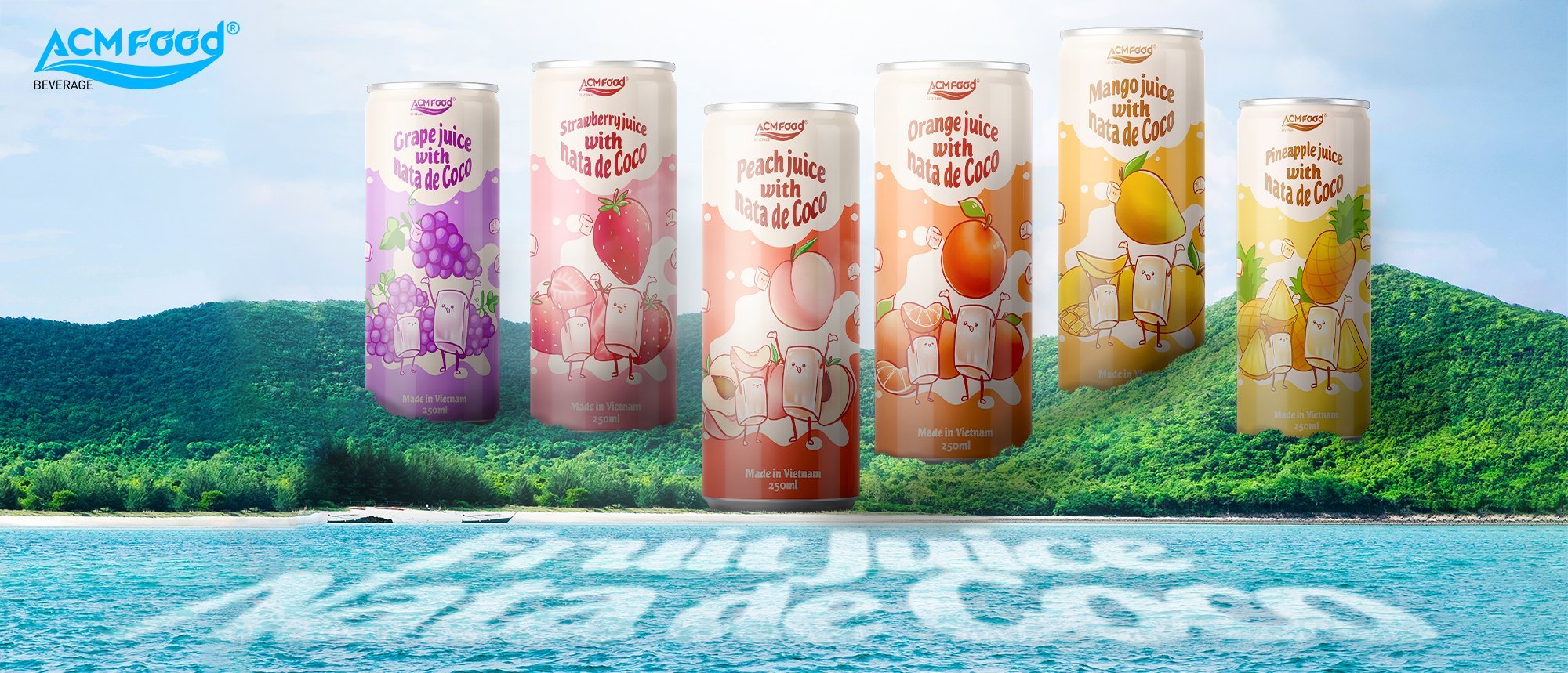
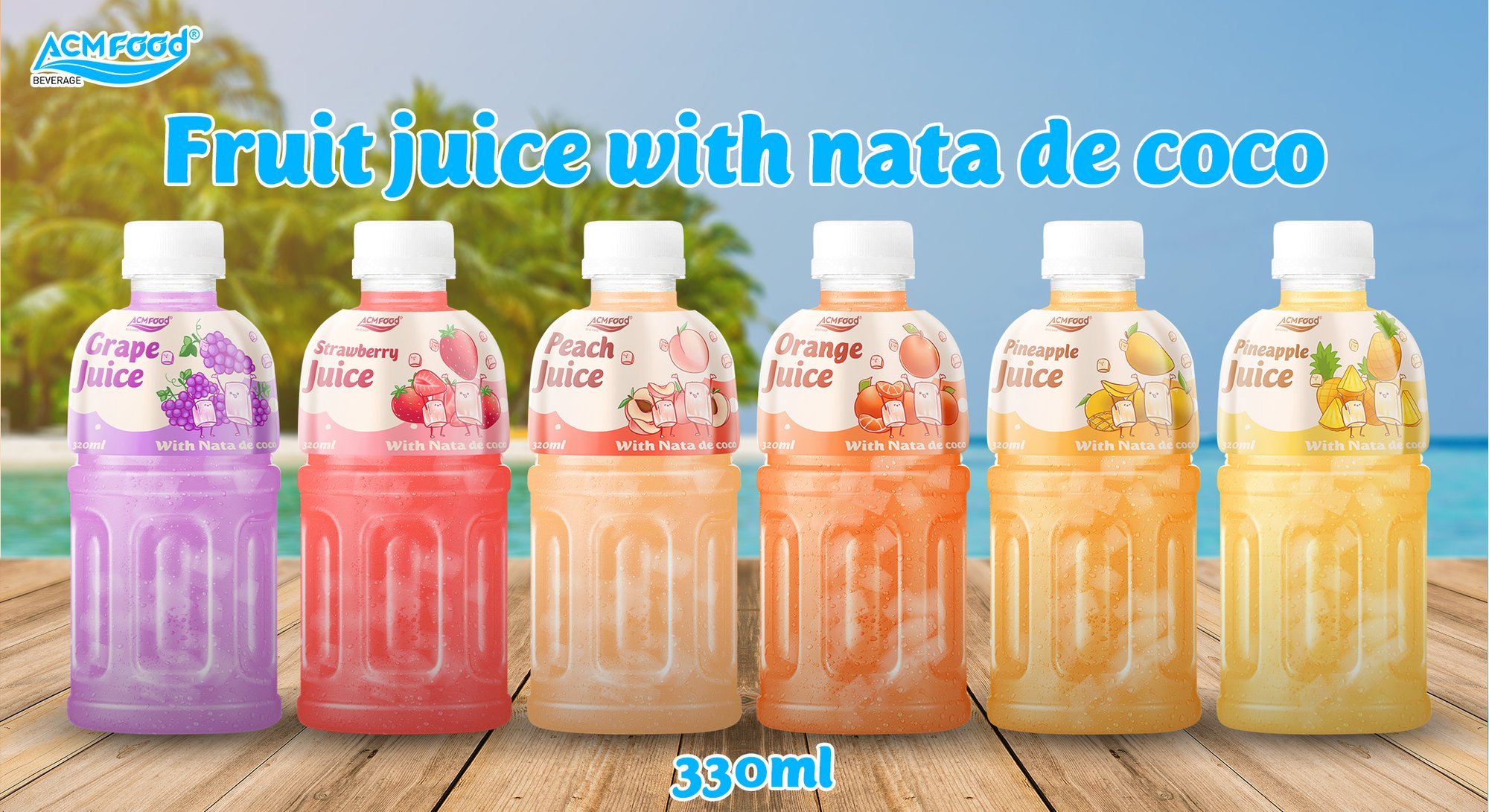
Coconut jelly drinks from ACM Beverage
ACM Beverage produces fruit juice drinks with nata de coco in Vietnam for OEM and private label customers. See the fruit juice range. Related reading: how nata de coco is made, mixed fruit juice with nata de coco and orange juice with nata de coco.






