














Carrot orange juice is a blend of carrot juice and orange juice, and its appeal is easy to explain: carrot gives body and sweetness, orange adds brightness and acidity, and together they make a vivid, familiar-looking drink. For a beverage developer the questions are practical. How much of each juice should you start with, how do you keep the sweetness and acidity in balance, what happens to the colour, and which pack suits a ready-to-drink version?
The figures and ratios in this guide are starting directions for tasting trials, not a formula. Variety, season and processing change the result, so every blend needs bench testing.
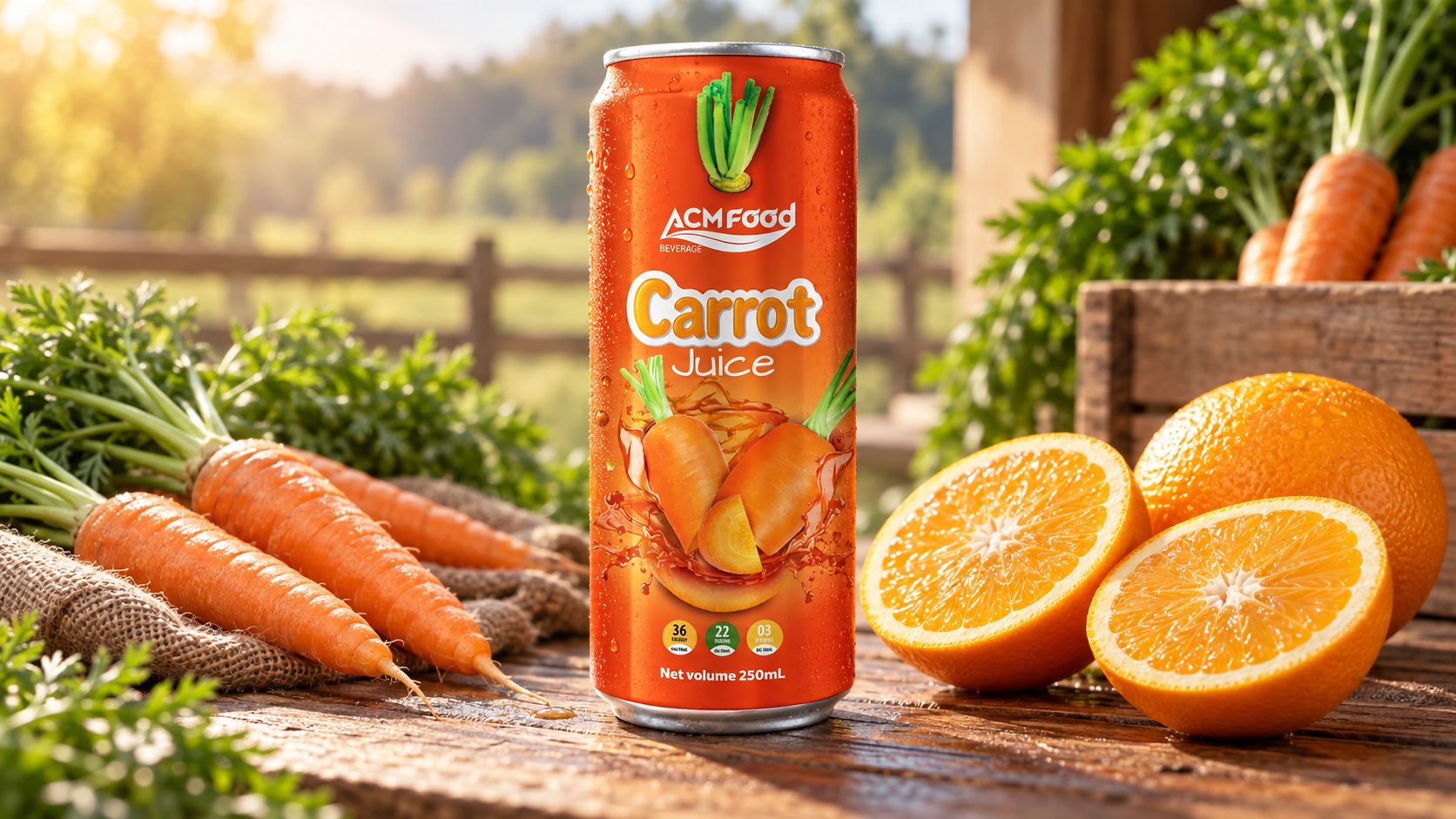
Why do carrot and orange work well together?
Carrot juice is mellow, slightly earthy and naturally sweet, but on its own it can taste flat or heavy. Orange juice is bright and acidic, but on its own it can feel sharp. When blended, the acidity lifts the carrot and the carrot rounds off the orange, producing a drink that tastes fresh without being harsh.
The colours also support each other. Both are orange, so the blend looks natural and appetising, with no need for added colour. For a brand, that gives a simple, honest story that is easy to communicate in a few words on a can.
What carrot-to-orange ratio should you start with?
Start with a carrot-led version and move toward orange in small steps, because orange has a strong flavour and a little goes a long way.
| Starting direction | Character | Who it suits |
|---|---|---|
| Carrot-led, a little orange | Mellow, rounded, lightly bright | Consumers who like vegetable juices but want a lift |
| Balanced carrot and orange | Fresh, sweet, citrus-forward | Mainstream retail, broad appeal |
| Orange-led, a little carrot | Fruit-forward, carrot as body and colour | Consumers who prefer fruit juice and want a gentler taste |
Prepare at least three versions on each side of your target, taste them chilled, and write down sweetness, acidity and aftertaste in plain words. Resist the temptation to adjust several things at once.
How do you balance sweetness and acidity?
Carrot juice has natural sugars and is low in acid. Orange juice brings both sugar and acid. The balance of the blend depends on the ratio, and perception is strongly affected by the temperature at which you taste it.
- If the drink tastes flat, increase acidity with more orange or a small amount of lemon.
- If it tastes sharp, increase the carrot share or reduce citrus.
- If it tastes too sweet, check whether the oranges you are using are very sweet and consider a more acidic variety or a touch of lemon.
- If the finish is heavy, a small amount of ginger can lighten it, though that changes the concept.
Always taste with a neutral palate and compare against a reference sample made with the same ingredients, so you notice real differences and not the effects of tasting fatigue.
Why does acidity matter for safety and processing?
Carrot is a low-acid vegetable, and low-acid products need processing that is designed for them. Blending with orange raises the acidity of the drink, which can affect how it should be heat-treated and stored. The right process depends on the final pH and the pack, so it must be confirmed by the producer and verified by testing, not assumed from the recipe name.
For you as a buyer or developer, the practical step is to ask for the final pH, the heat treatment and the storage conditions of any sample you receive, and to keep those in the product specification. Do not copy a process from another product just because the ingredients look similar.
How do you keep the colour bright?
Carrot carries carotenoid pigments, which are more stable than the red-violet pigment of beetroot but still change with heat, light and oxygen. Orange juice adds its own colour and also its own sensitivity. A well-made blend has a bright, even orange; a poorly protected blend dulls or turns brownish.
Protect the colour by limiting oxygen during filling, choosing a pack that blocks light or planning a storage condition that does, and testing colour at the end of shelf life. The article on how juice colour and clarity influence buyers explains why colour deserves as much attention as flavour.
What about cloud and pulp?
Both carrot and orange contribute fine particles that give a drink its cloud. A uniform cloud looks fresh and appetising; separation looks like a defect even when the product is fine. Decide early whether you want a cloudy, a lightly cloudy or a clearer drink, and ask how the cloud will be kept stable. Pulp, if used, adds texture but needs a suitable pack and filling process.
Shake-before-use notes are acceptable for natural drinks, but good formulation reduces how often consumers need them.
Which format suits a carrot and orange blend?
| Format | Strengths | Points to check |
|---|---|---|
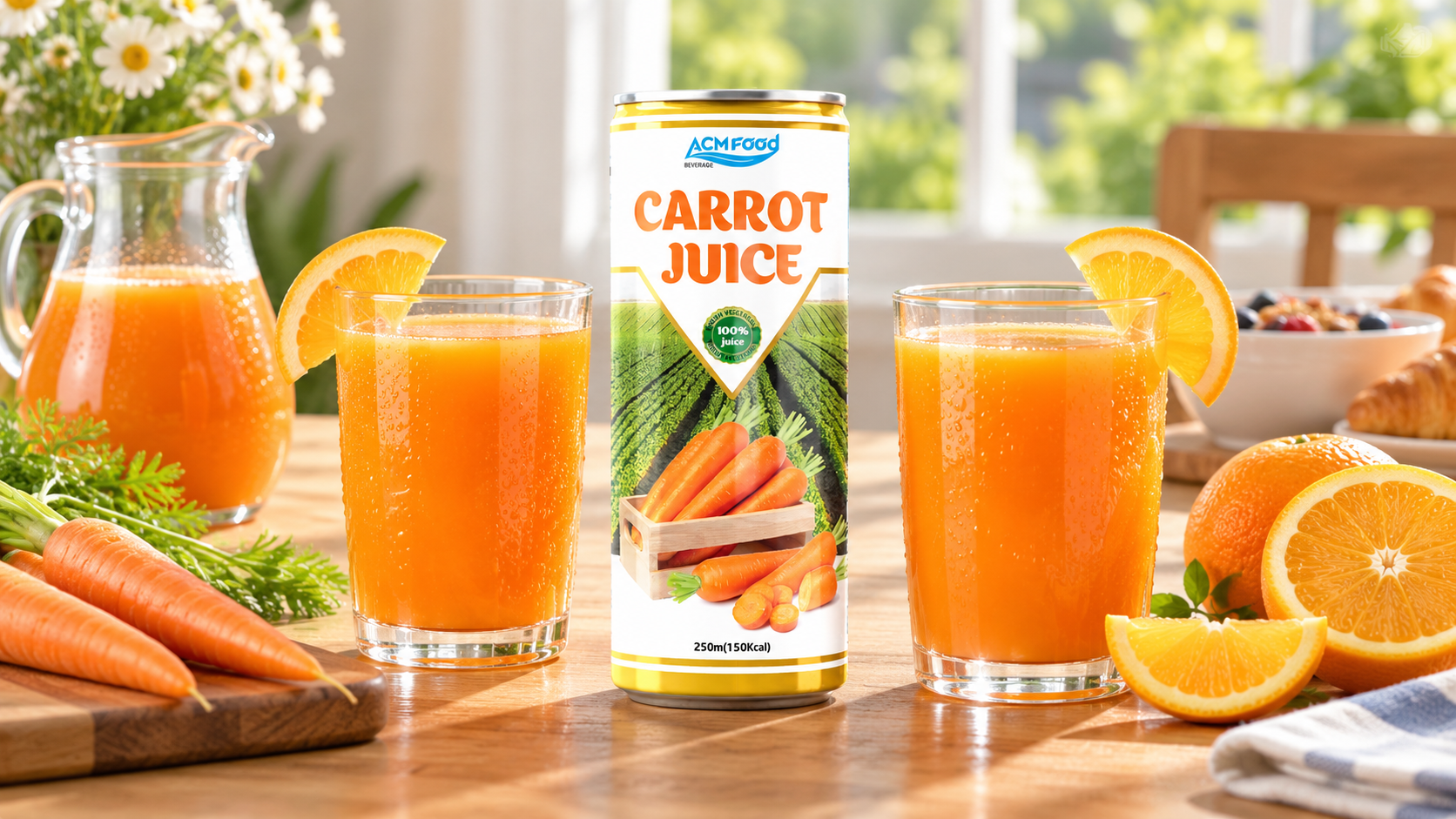
| Slim or sleek aluminium can | Opaque, light, easy to chill, good single-serve | Line compatibility, internal lining, shape |
| Glass bottle | Shows bright colour, premium feel | Light exposure, weight, closure |
| PET bottle | Light, shatter-resistant, family sizes | Barrier needs, local recycling rules |
ACM Beverage supplies finished drinks in cans and bottles. Pick the format that fits your channel and ask for samples in that pack, because a recipe can taste and look different in a can than in a lab bottle.
Should you add ginger, turmeric or apple?
A third ingredient changes the concept, so add it only if the taste goal needs it.
- Ginger: adds warmth and lifts the finish, useful if the blend feels heavy.
- Turmeric: adds earthiness and shifts the colour toward deeper yellow-orange; use sparingly.
- Apple: adds sweetness and smooths acidity; it raises the sugar line.
If you plan a ginger-led or turmeric version, treat it as its own product with its own trials. For the carrot context, the carrot juice recipe and nutrition guide covers home preparation, while this article focuses on product formulation.
How do you run a development trial?
- Choose the lead: carrot-led, balanced or orange-led.
- Prepare three ratio versions and taste them chilled.
- Adjust acidity with a small amount of lemon if needed.
- Decide whether to add a third juice or spice and test with and without.
- Check colour in the real can or bottle under shop lighting.
- Store samples at the intended temperature and re-evaluate over time.
- Approve a written reference description and a physical reference sample.
Keep a log with sample codes. Memory is unreliable, and a good result is useless if nobody can reproduce it.
What should a carrot orange product brief include?
- Lead ingredient and target ratio direction.
- Taste target in plain words, such as “sweet, bright and mellow”.
- Whether the label should say 100% juice, a blend or a drink.
- Cloud and pulp preference.
- Pack type and size.
- Sugar positioning and the ingredient list you hope to show.
- Target markets and labelling rules.
Claims and labelling depend on the final recipe, tested values, serving size and the rules of the destination market. For background on how label terms such as organic are used responsibly, see what organic juice means.
Common mistakes with carrot orange juice
- Starting from an orange-led recipe and losing the carrot character.
- Ignoring the low acidity of carrot when planning heat treatment.
- Testing only at room temperature when the drink will be sold chilled.
- Skipping a colour check after storage.
- Printing claims that the recipe and the market do not support.
Which type of orange juice should the blend use?
The orange component can come in different forms, and the choice affects taste, cost and labelling. Not-from-concentrate orange juice tends to taste fresher and more aromatic. Juice made from concentrate and reconstituted is more consistent through the year and easier to source at scale, but the label wording in many markets must reflect that. Ask which form is used in any sample, and make sure the product name, ingredient list and marketing copy describe it accurately.
Orange varieties and seasons also change sweetness and acidity. A recipe tuned in winter can taste different in summer, so agree on an acceptable range and a way to adjust, rather than a single fixed figure. Keeping a reference sample from the approved batch helps production teams match later batches by taste.
How do you describe the taste so everyone understands?
Teams often disagree because they use different words for the same impression. A short shared vocabulary avoids that.
| Word | What it usually means in this blend |
|---|---|
| Mellow | Rounded, low in sharpness, carrot-forward |
| Bright | Noticeable citrus acidity, fresh finish |
| Heavy | Lingering sweetness or earthiness, little lift |
| Thin | Watery body, weak carrot presence |
| Flat | Lacks acidity or aroma |
Write the target as two or three of these words, such as “mellow but bright, not heavy”, and judge each trial against that line. It keeps meetings short and decisions consistent.
How does the blend perform in different serving situations?
A carrot orange juice is usually served chilled, but how it is consumed changes what matters. A breakfast bottle should taste balanced and not too sharp first thing in the day. A lunchbox can or bottle needs a pack that travels well. A cafe or foodservice serving benefits from a drink that tastes good over ice, because melting ice dilutes flavour. Think about the main occasion, taste at the right temperature and adjust acidity and sweetness accordingly.
Frequently asked questions
Is carrot orange juice sweeter than carrot juice?
Usually it tastes brighter, not necessarily sweeter. Orange adds sugar but also acidity, which balances the sweetness and makes the drink taste fresher.
Can carrot orange juice be sold in cans?
Yes, cans suit the blend well because they block light, which helps the colour. The process and pH must be confirmed for the specific formula.
Does the blend need added sugar?
Not necessarily. Both juices contain natural sugar, and many blends work without any added sweetener. Whether a “no added sugar” statement is possible depends on the formulation and the rules of your market.
Summary
A good carrot orange blend balances mellow sweetness with bright acidity, protects its colour and respects the low-acid nature of carrot. Pick a lead ingredient, taste against it, test in the pack you will sell and keep a record of every version. If you are planning a finished carrot orange drink for your own label, ACM Beverage can discuss can and bottle formats and recipe options once you share your brief.






