

Contents
- 1 Bubble Tea Global Market Dynamics and RTD Innovation
- 2 Popping Boba Technology as a Market Differentiator
- 3 OEM Flexibility Enables Rapid Market Entry
- 4 Export Market Opportunities for ACM Bubble Tea
- 5 Strategic Considerations for B2B Buyers
- 6 Future Outlook and Innovation Pipeline
- 7 Frequently Asked Questions
- 7.1 What is the global market size for RTD bubble tea?
- 7.2 How does popping boba technology improve distribution?
- 7.3 What are the minimum order quantities for ACM bubble tea OEM?
- 7.4 Can I create a private label grape bubble tea with custom flavor intensity?
- 7.5 Which regions are most promising for importing RTD bubble tea?
- 7.6 How do I ensure the popping boba maintains quality during shipping?
- 7.7 What marketing support does ACM provide for private label partners?
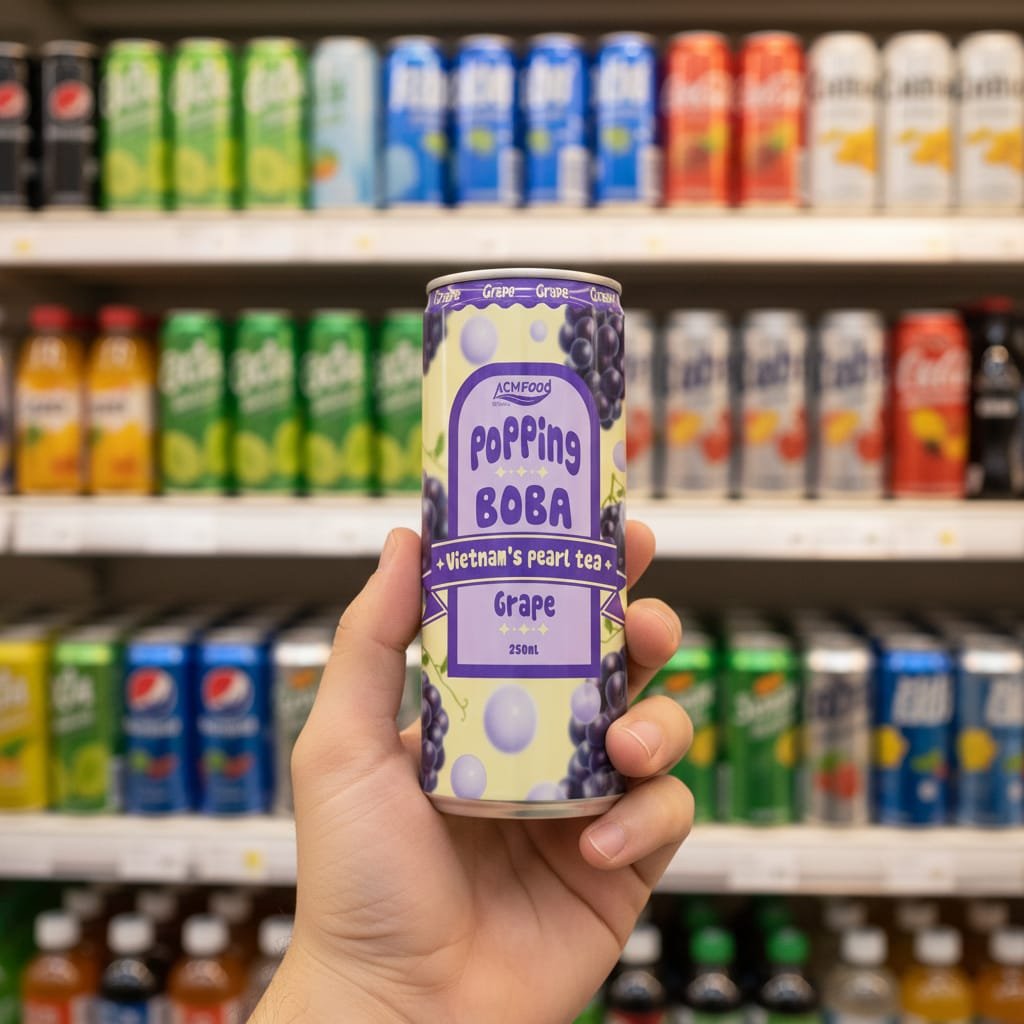
The global bubble tea market is experiencing a paradigm shift as ready-to-drink (RTD) formats gain unprecedented traction across North America, Europe, and the Middle East. ACM Grape Bubble Tea with Popping Boba exemplifies how manufacturers can leverage innovative ingredients to capture this $4.2 billion opportunity.

For distributors and importers, understanding the strategic value of OEM partnerships in the RTD bubble tea segment has become essential for portfolio differentiation. This article analyzes the drivers behind global expansion, the role of popping boba technology, and actionable insights for B2B buyers.
The global bubble tea market is experiencing a paradigm shift as ready-to-drink (RTD) formats gain unprecedented traction across North America, Europe, and the Middle East. ACM Grape Bubble Tea with Popping Boba exemplifies how manufacturers can leverage innovative ingredients to capture this $4.2 billion opportunity.
For distributors and importers, understanding the strategic value of OEM partnerships in the RTD bubble tea segment has become essential for portfolio differentiation. This article analyzes the drivers behind global expansion, the role of popping boba technology, and actionable insights for B2B buyers.
Bubble Tea Global Market Dynamics and RTD Innovation
The global bubble tea market is projected to surpass $5.5 billion by 2028, with RTD formats accounting for over 35% of growth. This surge reflects shifting consumer preferences toward convenience and premium experiences.
Why RTD Bubble Tea Is Winning
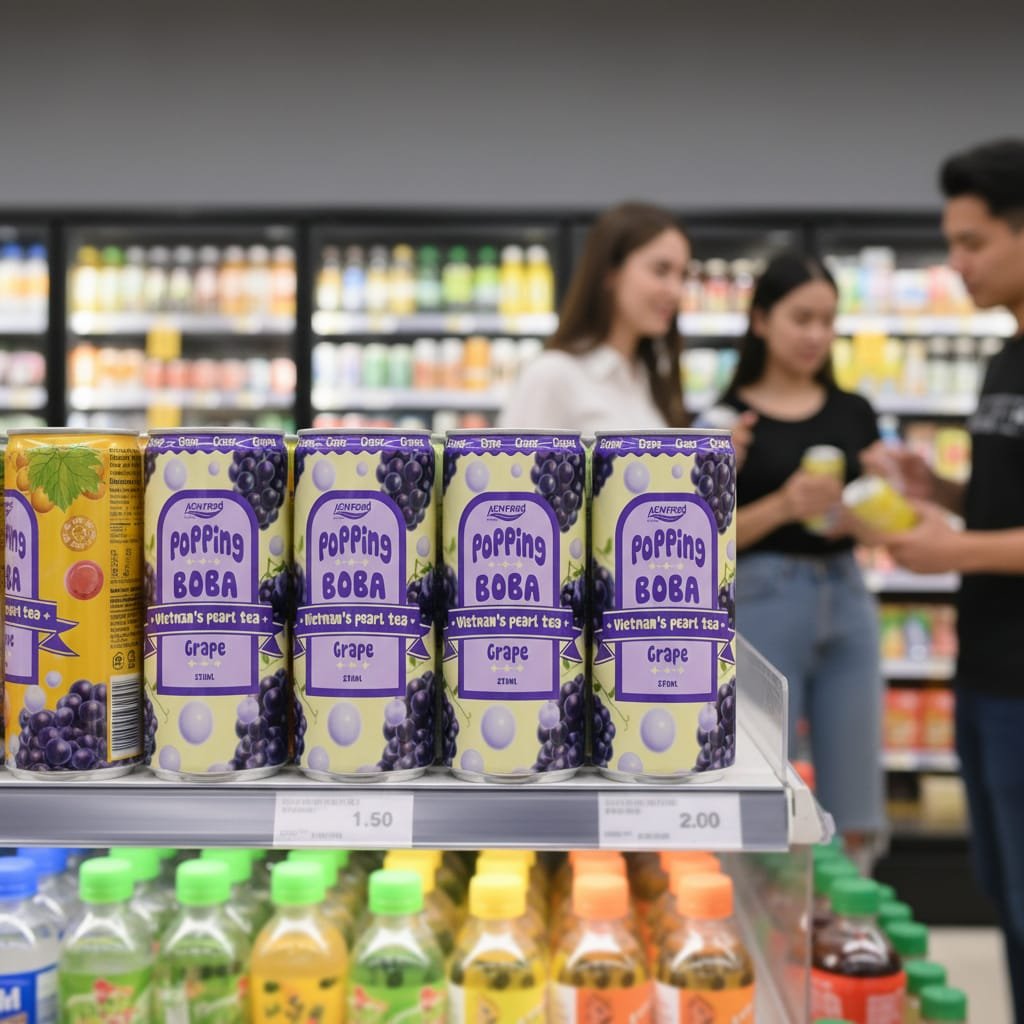
Traditional bubble tea requires specialized equipment and fresh ingredients. RTD versions like ACM Grape Bubble Tea with Popping Boba eliminate barriers to entry for convenience stores and supermarket chains. The popping boba provides an authentic tapioca-like texture without refrigeration constraints.
Market data indicates that bubble tea consumption outside Asia grew 240% between 2020 and 2024. The United States and Europe now represent 28% of global bubble tea sales. This trend creates immense opportunities for OEM manufacturers such as ACM to supply private label products to regional retailers.
For example, a Middle Eastern distributor recently launched a private label RTD bubble tea line using ACM’s manufacturing capabilities. The product achieved 40% sell-through within three months, demonstrating the market readiness for Asian-inspired beverages.
Popping Boba Technology as a Market Differentiator
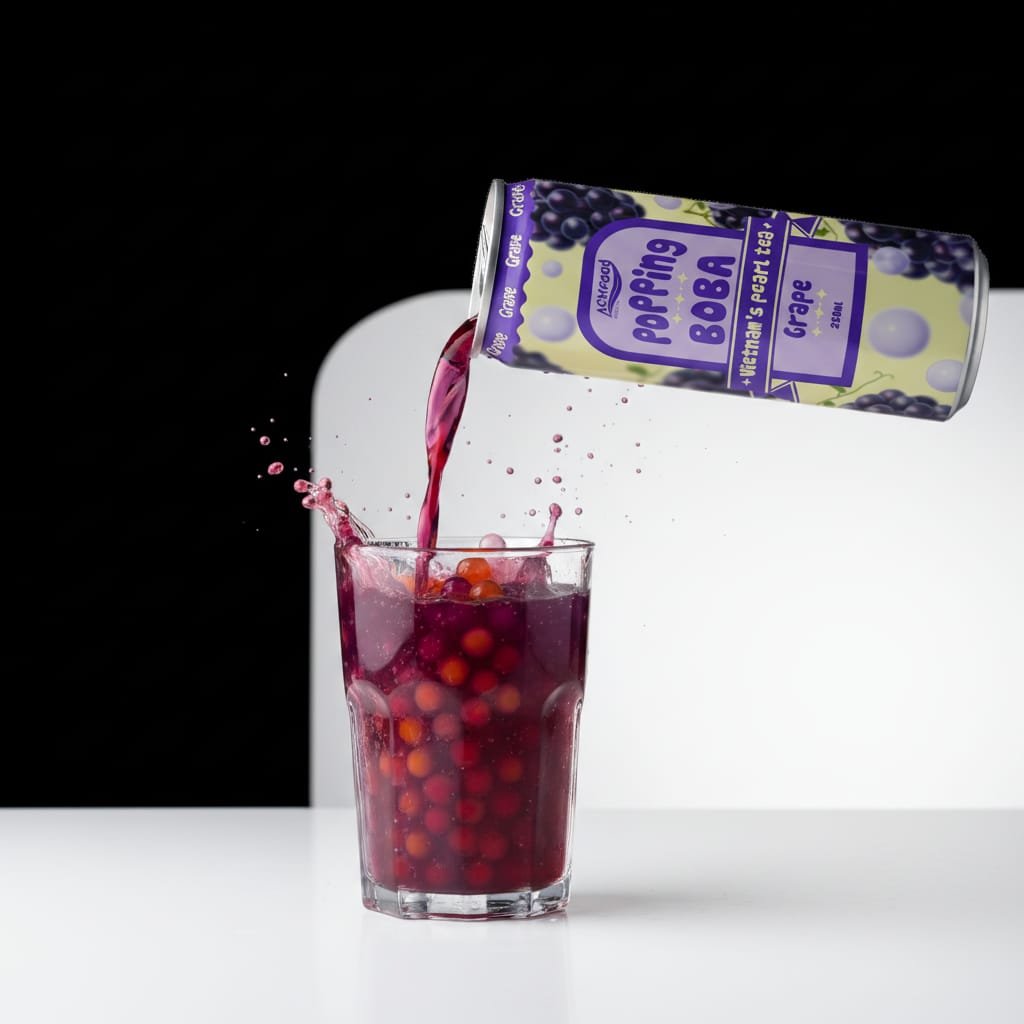
Popping boba represents a breakthrough in beverage texture innovation. Unlike chewy tapioca pearls, popping boba contains a liquid center that bursts upon consumption. This technology extends shelf life and simplifies supply chain logistics.
ACM Grape Bubble Tea with Popping Boba utilizes a proprietary encapsulation process that maintains the structural integrity of the spheres for up to 12 months. This durability is critical for export markets where temperature fluctuations occur during transit.
Beverage engineers note that the grape flavor profile aligns with consumer preferences for familiar yet exotic tastes. Combining grape juice with popping boba creates a sensory experience that stands out in the crowded RTD aisle.
Distributors seeking product differentiation should evaluate how popping boba technology can be adapted to other fruit flavors. The same manufacturing platform used for ACM Grape Bubble Tea with Popping Boba can produce strawberry, mango, or lychee variants with minimal formula adjustments.

OEM Flexibility Enables Rapid Market Entry
ACM Beverage offers comprehensive OEM services that reduce time-to-market for bubble tea products. Their production lines can handle orders as low as 5,000 units for initial test runs, allowing importers to validate demand before scaling.
For a European supermarket chain, ACM customized the sugar level and packaging design within three weeks. The resulting private label product achieved listing in 600 stores across Germany and Austria. This agility is possible because ACM maintains dedicated R&D teams for RTD beverage development.
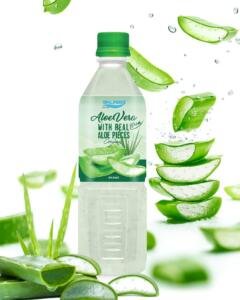
Private label buyers should consider that OEM partners with popping boba expertise can also supply complementary products in the same category. ACM’s lineup includes fresh aloe vera juice and various tea drinks, enabling cross-promotion strategies.
The flexibility extends to packaging formats: 250ml cans, PET bottles, and Tetra Paks are all available. This range helps distributors tailor products to specific retail channels, from vending machines to premium supermarket shelves.
Export Market Opportunities for ACM Bubble Tea
ACM Grape Bubble Tea with Popping Boba is already exported to 12 countries, including the UAE, Poland, and the Philippines. The product’s Halal certification opens doors to Middle Eastern and Southeast Asian markets.
In the US, bubble tea consumption among Gen Z grew 55% year-over-year. Asian grocery chains and mainstream retailers like Walmart are expanding their bubble tea sections. OEM partnerships with certified Vietnamese manufacturers like ACM offer cost advantages without compromising quality.

European importers benefit from ACM’s proximity to Asian raw material suppliers. The popping boba ingredient is sourced from sustainably harvested seaweed, aligning with clean label trends. This transparency is increasingly demanded by European retailers.
For distributors targeting the Middle East, the existing tea drink portfolio from ACM provides a seamless entry point. Combining bubble tea with traditional tea products can create a comprehensive Asian beverage offering.
Strategic Considerations for B2B Buyers
When evaluating OEM partners for RTD bubble tea, focus on manufacturing certifications (FDA, ISO, HACCP) and confirmed popping boba supply chain resiliency. ACM’s facilities in Vietnam meet these standards and offer competitive MOQs.
Importers should also examine the partner’s ability to support marketing claims. Popping boba can be marketed as “bursting juice pearls” to appeal to adventurous consumers. ACM provides approved copy and images for private label use.
The company’s fresh aloe vera juice line offers another cross-selling opportunity. Retail buyers appreciate suppliers that can consolidate multiple SKUs from a single source, reducing logistics complexity.
A German distributor recently commented that ACM’s bubble tea product “fills a gap between premium cafes and mass-market sodas.” This positioning reinforces the value proposition for boutique retailers and specialty chains.
Future Outlook and Innovation Pipeline
The next wave of RTD bubble tea innovation will focus on functional ingredients and reduced sugar options. ACM is already testing a stevia-sweetened version of the grape bubble tea, targeting health-conscious demographics.
Popping boba flavors will expand beyond fruit to include coffee and matcha. Manufacturers that invest in this technology now will lead the market as bubble tea becomes a staple in global beverage portfolios.
For B2B partners, early engagement with ACM’s R&D team can secure exclusive formulas for specific regions. The ACM Grape Bubble Tea with Popping Boba serves as a benchmark for quality and innovation in the category.
Distributors evaluating a new line should request samples and compare the popping boba texture against competitors. The difference in mouthfeel and storage stability can determine repeat purchases.
Frequently Asked Questions
What is the global market size for RTD bubble tea?
The RTD bubble tea segment was valued at $1.8 billion in 2023 and is expected to grow at a CAGR of 12.5% through 2030. This growth is fueled by convenience trends and international flavor experimentation.
How does popping boba technology improve distribution?
Popping boba has a longer shelf life than traditional tapioca pearls and does not require cooking or refrigeration. This simplifies cold chain logistics, making it suitable for export to regions with limited refrigeration infrastructure.
What are the minimum order quantities for ACM bubble tea OEM?
ACM offers flexible MOQs starting from 5,000 units for initial trials. For established distributors, container-sized orders (20,000+ units) receive preferential pricing and faster turnaround times.
Can I create a private label grape bubble tea with custom flavor intensity?
Yes, ACM’s OEM service allows adjustments to grape juice concentration, sweetness level, and popping boba quantity. The R&D team can replicate existing formulas or develop proprietary blends within 2-3 weeks.
Which regions are most promising for importing RTD bubble tea?
The Middle East, Eastern Europe, and the US underpenetrated bubble tea market present the highest growth potential. Halal-certified products like ACM’s grape bubble tea have a competitive advantage in Muslim-majority countries.
How do I ensure the popping boba maintains quality during shipping?
ACM uses vacuum-sealed aluminum cans that protect the popping boba from pressure changes. Export packages include temperature loggers, and the recommended storage range is 5-30°C to preserve texture.
What marketing support does ACM provide for private label partners?
ACM supplies high-resolution product photography, shelf talker templates, and social media content. They also offer co-branding opportunities for joint trade show participation at events like SIAL or Gulfood.


Related blogs insights
ACM Carbonated Energy Drink Functional Benefits Drive OEM Innovation in Global Markets
Discover how ACM's OEM carbonated lemon-lime energy drink leverages functional benefits to drive global growth. [...]
1 Comment
May
Pure Mango Juice Innovation Drives Global RTD Beverage Market Growth
Explore how pure mango juice innovation is reshaping the global RTD beverage market. Analysis of [...]
May
Introduction to ACM Food Sparkling Fruit Juice Brands
Contents1 Exploring the Trend of Sparkling Water in Coconut Flavor and Fruit2 The Rise of [...]
1 Comment
May
Kiwi Sparkling Drinks A Refreshing and Flavorful Choice
Contents1 The Health Benefits of Kiwi Sparkling Water1.1 The Nutritional Value of Kiwi Sparkling Water1.2 [...]
1 Comment
Mar
The health benefits of Soya
Top 5 health benefits: Source of protective antioxidants: Soya beans contain natural compounds called “isoflavones”. [...]
1 Comment
Sep
Strawberry Sparkling Drink The Ultimate Guide
Contents1 330ml Canned Strawberry Sparkling Drinks1.1 Nutritional Information1.2 Health Benefits2 330ml Canned Strawberry Sparkling Drink [...]
1 Comment
Mar