





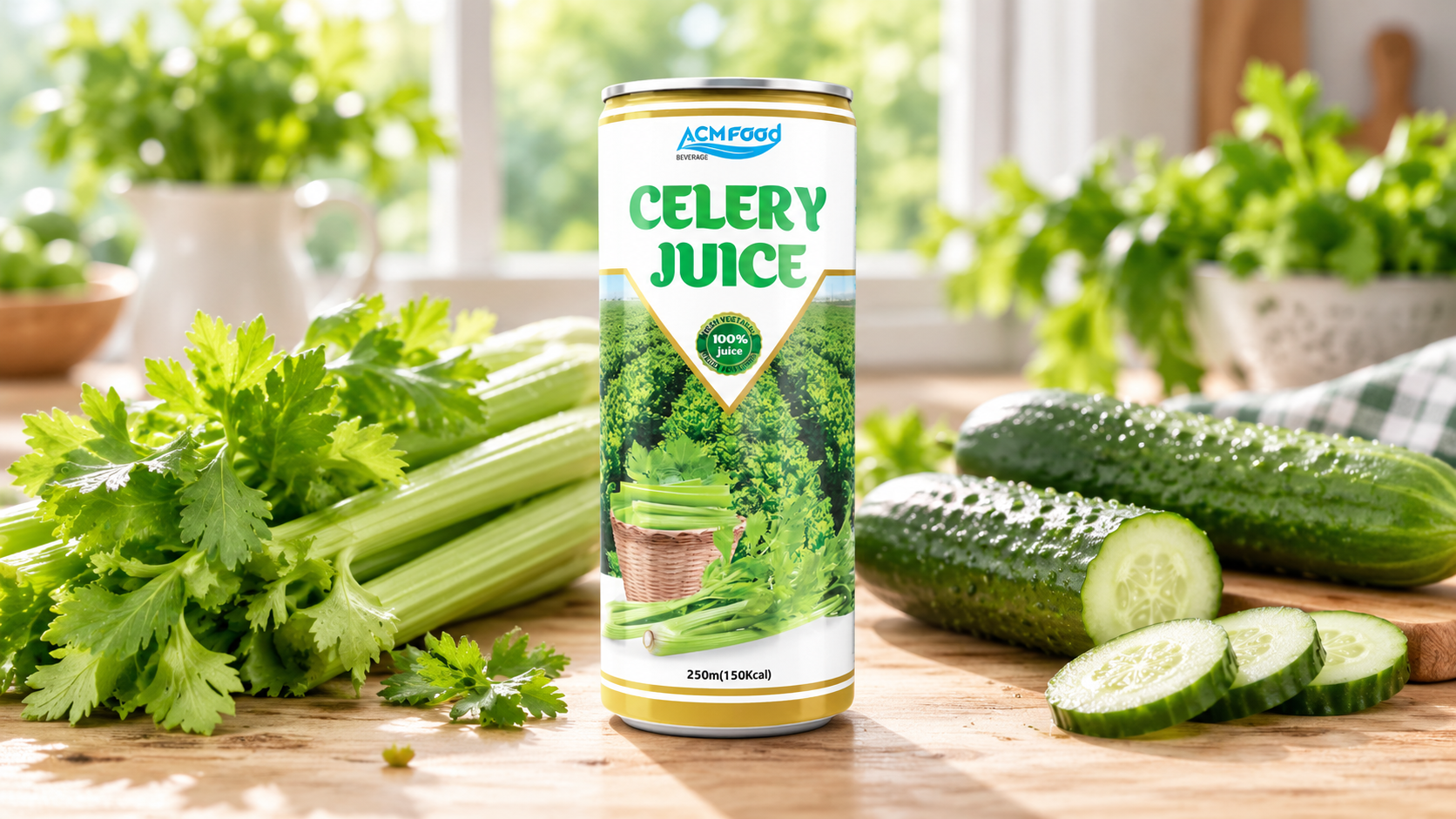
Celery and cucumber juice is a pale green blend that pairs the savoury, aromatic edge of celery with the mild, watery freshness of cucumber. On their own, celery juice can taste sharp and salty-green, while cucumber juice can taste thin; together they balance each other and make a drink that is clean, light and easy to place on a menu or shelf. This guide covers ratios, flavour balance, colour stability and the pack decisions for a ready-to-drink version.
The ratios and directions below are starting points for tasting trials. Crop, season and processing change the result, so every blend needs bench testing.
Why do celery and cucumber work well together?
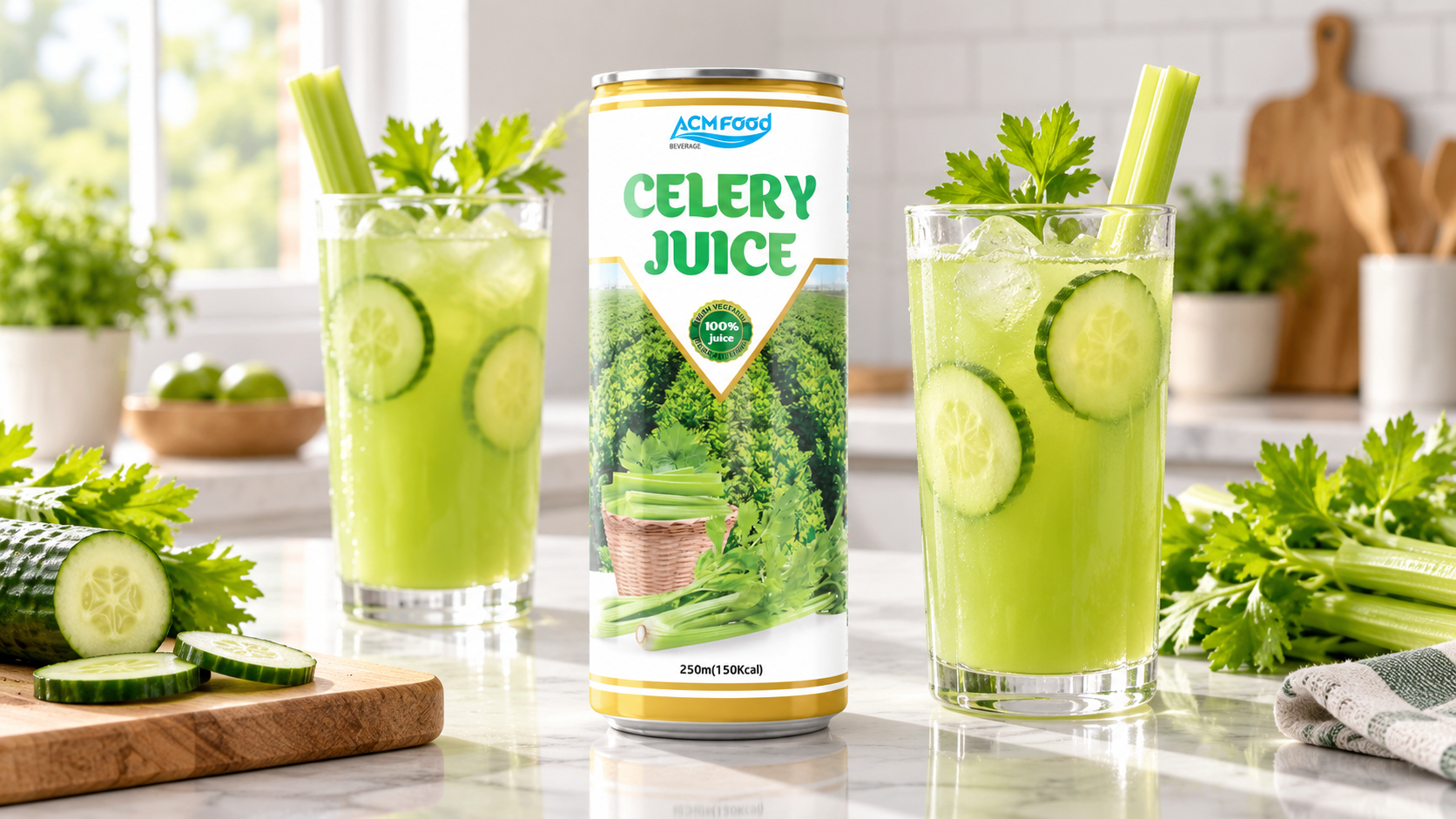
Celery has a distinct aroma, a savoury note and a slight bitterness. Cucumber is mild, high in water and gently sweet, with a cooling character. Blended, cucumber softens celery’s edge and adds volume and smoothness, while celery gives the drink backbone so it does not taste like flavoured water.
The pairing also looks and sounds simple. Two familiar vegetables, one light green colour and a clean flavour make it easy to describe on a can in a few words.
What ratio of celery to cucumber should you start with?
Start cucumber-led and add celery in small steps, because celery flavour is strong and quickly takes over.
| Starting direction | Character | Who it suits |
|---|---|---|
| Cucumber-led, a little celery | Mild, cooling, lightly savoury | Newcomers to green juice, broad appeal |
| Balanced celery and cucumber | Fresh, green, clearly vegetal | Green juice drinkers |
| Celery-led, a little cucumber | Savoury, bold, aromatic | Consumers who already like celery juice |
Prepare at least three versions around your target, taste them chilled and write down aroma, bitterness and finish in plain words. Change only one variable at a time so that the result is interpretable.
How do you balance celery’s savoury edge?
Celery contributes aroma compounds that give it its recognisable savoury character, and it also naturally contains some sodium, which adds to the impression of savouriness. A drink that is too celery-forward can taste like soup stock, which is not what most people want from a chilled juice.
Tools for balancing:
- Cucumber share: more cucumber means a milder, more refreshing drink.
- Acidity: a small amount of lemon or lime brightens the flavour and lifts the finish.
- A touch of sweetness: a little green apple can soften bitterness, though it changes the label and sugar line.
- Herbs: a hint of mint or parsley can add freshness, but each addition changes the concept.
Taste at serving temperature. Chilling tends to reduce savoury perception, while room temperature emphasises it.
Should you add lemon, apple or mint?
Add a fourth ingredient only if the taste goal needs it. A simple two-ingredient drink has a clean label and a clear story. A third ingredient makes the drink easier to like for hesitant drinkers but moves it toward a flavoured product.
- Lemon or lime: the most common and least intrusive addition, lifting taste with little change.
- Green apple: adds gentle sweetness and softens bitterness.
- Mint: adds a cooling note that suits cucumber, but can dominate if over-dosed.
- Ginger: adds warmth; use carefully because it shifts the drink toward a spiced style.
Test with and without each addition. Many successful green blends need only the two vegetables plus a touch of citrus.
How do you keep the green colour?
Green colour comes from chlorophyll, which is sensitive to heat and acid. Over time, and especially with heat treatment or higher acidity, bright green tends to shift toward olive or brownish tones. This is one of the biggest visual challenges for a green juice.
Practical measures include controlling acidity so that it is bright but not harsh, minimising heat exposure, limiting oxygen at filling, protecting the drink from light and testing colour at the end of the intended shelf life. Accept that some colour change is natural and agree in advance what level of change is acceptable, using photographs taken under standard light.
Why does celery need a suitable process?
Celery and cucumber are both low-acid vegetables, and low-acid products need processing designed for them. Adding citrus lowers the pH, which can affect what treatment is appropriate. The right process depends on the final pH, the pack and the storage plan, and it must be confirmed by the producer and verified by testing, not assumed from the recipe name.
Ask for the final pH, the heat treatment and the storage conditions of any sample you evaluate, and record them in the specification. Do not transfer a process from another product just because the ingredients look similar.
How do you handle cloud, fibre and separation?
Celery contains fibre, and fine particles from both vegetables can give a cloudy appearance or settle over time. Decide whether you want a clear-ish, lightly cloudy or pulpy drink, and ask how the texture will be kept stable. A natural drink that settles may need a shake-before-use note, but good formulation reduces separation.
Which pack suits a celery and cucumber blend?
| Format | Strengths | Points to check |
|---|---|---|
| Slim or sleek aluminium can | Opaque, protects chlorophyll colour, single-serve | Line compatibility, lining |
| Glass bottle | Shows pale green colour, premium | Light exposure, weight |
| PET bottle | Light, practical | Barrier needs, recycling rules |
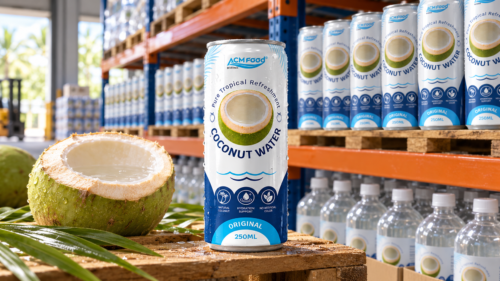
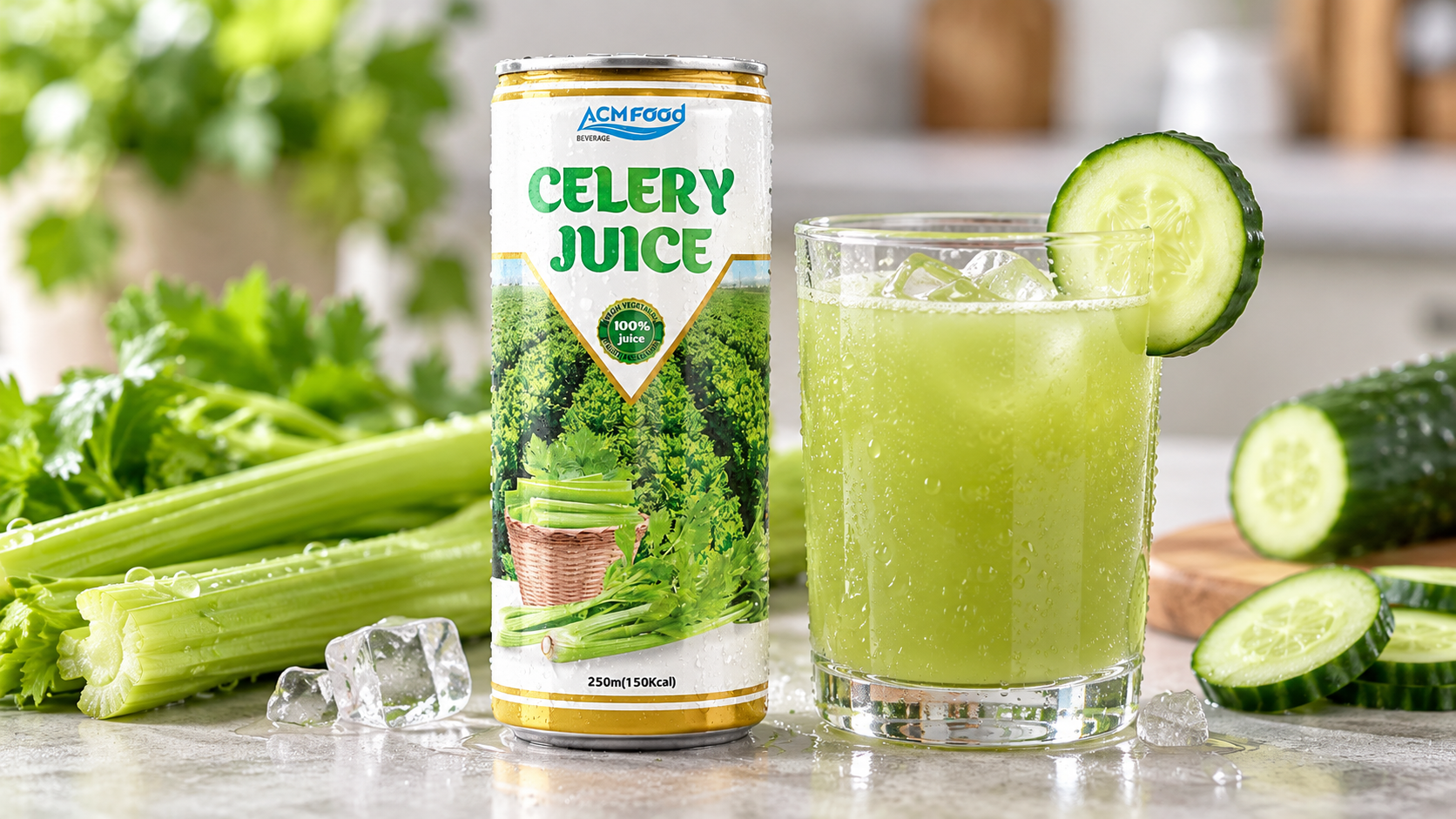
ACM Beverage supplies finished drinks in cans and bottles. Cans are a natural fit for a green drink because they block light, which helps colour stability.
What should a product brief include?
- Lead ingredient and ratio direction.
- Optional additions: lemon, apple, mint or ginger.
- Taste target in plain words, such as “clean, green and lightly savoury”.
- Cloud and fibre preference.
- Sugar positioning and ingredient list goals.
- Pack type and size.
- Target markets and labelling rules.
Claims and labelling depend on the final recipe, tested values, serving size and the rules of the destination market. For home preparation tips see the guide to making celery juice taste good, which is aimed at home use and differs from product development.
How do you run a development trial?
- Choose the lead: cucumber-led, balanced or celery-led.
- Prepare three ratio versions and taste them chilled.
- Add a small amount of citrus to the best one and compare.
- Decide whether a third ingredient is needed and test with and without it.
- Check colour in the real can or bottle under shop lighting.
- Store samples at the intended temperature and re-evaluate over time.
- Approve a written reference description and a physical reference sample.
Keep a log with sample codes so that results can be reproduced.
Positioning without health claims
Describe taste, ingredients and the occasion, such as a light lunchtime drink or a spa-style refresher. Avoid statements about detox, weight or disease. Such claims need evidence and market-specific approval, and they are best left out unless you hold both. For background on how label terms are used responsibly, see what organic juice means and the overview of vegetable and fruit juice benefits.
Common mistakes with celery and cucumber juice
- Starting celery-led and ending with a drink that tastes like stock.
- Ignoring how heat and acidity shift green colour.
- Using a process suited to a high-acid juice without checking the low-acid base.
- Judging taste at room temperature when the drink is sold chilled.
- Printing health claims that the recipe and market do not support.
Frequently asked questions
Is celery and cucumber juice salty?
Celery naturally contains some sodium and has a savoury note, so the drink can taste slightly salty. Cucumber dilutes this, and the impression depends on the ratio.
Does the green colour fade?
It can. Chlorophyll shifts toward olive with heat, acid and time. Packaging and process choices help, and colour should be tested at the end of shelf life.
Can it be sold in cans?
Yes. Cans suit green drinks because they block light. The process and pH must be confirmed for the specific formula.
Summary
A good celery and cucumber blend balances savoury celery with cooling cucumber, protects its green colour and uses a process suited to low-acid vegetables. Choose a lead ingredient, test in the pack you will sell and keep a record of every version. If you are planning a finished green drink for your own label, ACM Beverage can discuss can and bottle formats and recipe options once you share your brief.