



Noni tea is a hot-water infusion made from dried noni fruit slices or from noni leaves, sold as tea bags or loose pieces. It sits beside noni juice as a second product family built on the same plant, Morinda citrifolia, but it behaves differently: it is a dry, shelf-stable ingredient with its own flavour, preparation method, sales channels and regulatory questions. This guide covers the dry formats a buyer is likely to meet and how to position them.
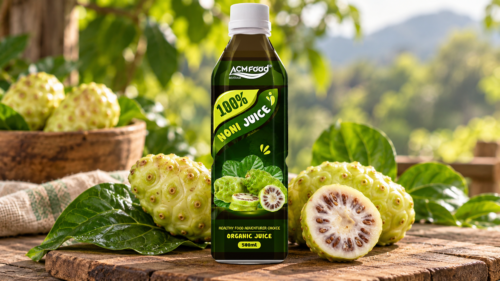
It also brings dried noni and noni fruit leather into one place, since buyers usually ask about them together. One point is stated early to avoid misunderstanding: the published ACM Beverage range lists a ready-to-drink noni juice drink but no dried noni, noni leaf tea or fruit leather. Any of these would be a sourcing or development project, not a catalogue item.
What forms does noni take outside the bottle?
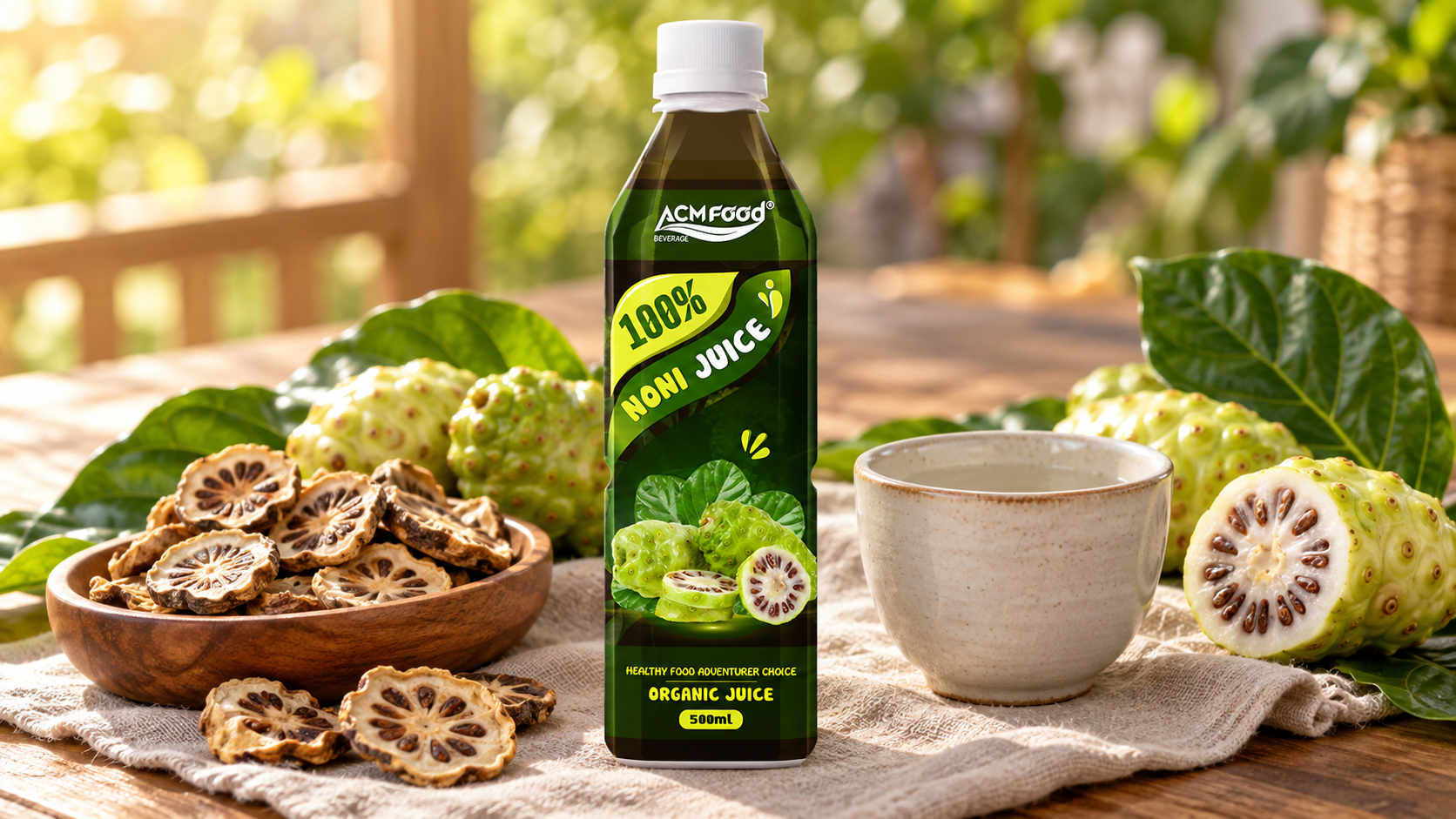
Outside the bottle, noni is sold as dried fruit slices, dried or crushed leaves, tea bags, loose infusion blends and a chewy dried product often called fruit leather. Each form uses a different part of the plant or a different level of processing, which changes taste, price and the rules that apply.
| Format | Plant part | Typical use | Flavour direction |
|---|---|---|---|
| Dried fruit slices | Fruit | Steeped as an infusion or eaten as a snack | Strong, sour, bitter and slightly fermented |
| Noni leaf tea | Leaf | Steeped as a herbal infusion | Grassy, mild bitterness, more tea-like |
| Tea bags | Fruit or leaf | Single-serve infusion | Depends on cut size and blend |
| Loose pieces | Fruit or leaf | Teapot or infuser preparation | Fuller, adjustable by steeping time |
| Fruit leather | Fruit pulp | Snack or gift item | Concentrated, often sweetened to soften taste |
Because the fruit and the leaf are different raw materials, treat them as two products when you brief a supplier, even when they share a name on the shelf.
How does noni tea taste compared with noni juice?
Noni tea is usually milder than noni juice and more variable. Dried fruit infusions keep a sour, bitter note with a fermented edge, while leaf infusions taste closer to a conventional herbal tea. Juice carries the full, pungent character of the fruit, which is why it is nearly always blended.
A tea gives the buyer more control than juice does. The drinker can lengthen or shorten steeping, add honey or lemon, or mix with another tea, so the product tolerates a strong base flavour better. Sweeteners or complementary ingredients such as ginger, lemongrass or hibiscus are common in blends, and the final taste is a design choice rather than a fixed property of noni. The article on noni juice and what brands may claim gives context on the fruit’s character and the safety notes that apply to the whole family of noni products.
How should noni tea be brewed?
Use hot water and a short first steep, then adjust in small steps after tasting. Because cut size, drying method and the plant part all change extraction, a supplier’s own brewing guidance for the specific product is more reliable than a general rule.
A practical way to write brewing instructions for a pack is:
- Start with the supplier’s recommended dose. Dose depends on whether the product is cut fine in a bag or in larger pieces.
- Use freshly heated water and a covered cup. Covering keeps volatile aroma in the drink.
- Steep for a few minutes first. Taste, then extend in small steps if a stronger cup is wanted.
- Remove the infusion material. Over-steeping increases bitterness.
- Offer serving suggestions. Honey, lemon or a milder tea blend can soften the cup for first-time drinkers.
Test the instructions on the finished product with several people, since perceptions of bitterness vary widely. Record the water temperature and time you used, because those parameters become part of the pack copy.
What can a buyer expect from dried noni slices and fruit leather?
Dried noni slices and fruit leather share a raw material but serve different roles. Slices are an ingredient or an infusion material, while fruit leather is a finished snack that usually relies on added sweetness or other fruit to be palatable.
When you evaluate these products, check the following:
- Drying method and moisture. These control stability, colour and the risk of mould during storage.
- Ingredient list. Fruit leather often contains added sugar or other fruit, which changes its name, its label and its target consumer.
- Appearance. Colour varies from pale to dark brown depending on ripeness and drying, so agree a reference sample.
- Aroma. A strong fermented smell can be a normal feature or a defect, so define what is acceptable.
- Packaging. Dried products need barrier packs to protect against moisture and light.
Ask the supplier for a specification sheet and test reports, including microbiological results and checks for contaminants relevant to dried plant material.
Which sales channels suit noni tea and dried noni?
Noni tea and dried noni sell best where shoppers already look for botanical and traditional products: health food shops, herbal and wellness retailers, pharmacy-adjacent shelves in some countries, specialty tea sellers and gift sets. They are less suited to mainstream supermarket beverage aisles, where consumers expect a familiar flavour.
| Channel | Fit for noni tea | What the channel usually asks for |
|---|---|---|
| Health food and wellness shops | Strong | Clear ingredients, organic status where relevant, conservative claims |
| Herbal and tea specialists | Strong | Origin story, cut and grade, brewing instructions |
| Pharmacy-adjacent retail | Depends on market | Compliance documents and cautious label language |
| Gift and travel retail | Moderate | Attractive packaging and clear provenance |
| Mainstream grocery | Limited | Familiar flavour and price competitiveness |
Choose the channel before the format. A tea bag for grocery and a loose leaf tin for a herbal specialist need different cut sizes, packs and price points.
What regulatory and labelling points apply?
Dried noni, noni leaf and noni tea are not regulated in the same way as noni juice, and the position differs between markets. In some places the fruit, the leaf and extracts have separate rules, and some markets treat these products as food supplements rather than teas.
Before development, ask your regulator, broker or compliance adviser how the specific plant part and format are classified. The answer decides which documents you need, what the label may say and whether prior authorisation is required. Wording on pack should stay factual: name the product, the plant part and the preparation. Statements about effects on health depend on the final formula, tested content, serving size and local rules, and traditional use is not the same as an authorised claim.
Noni is naturally high in potassium, and some regulators have commented on rare liver-related reports for noni products. For that reason, serving guidance and cautionary wording on the pack should follow the rules of the destination market, and marketing copy should avoid language that suggests treatment or a remedy.
What can ACM Beverage supply today?
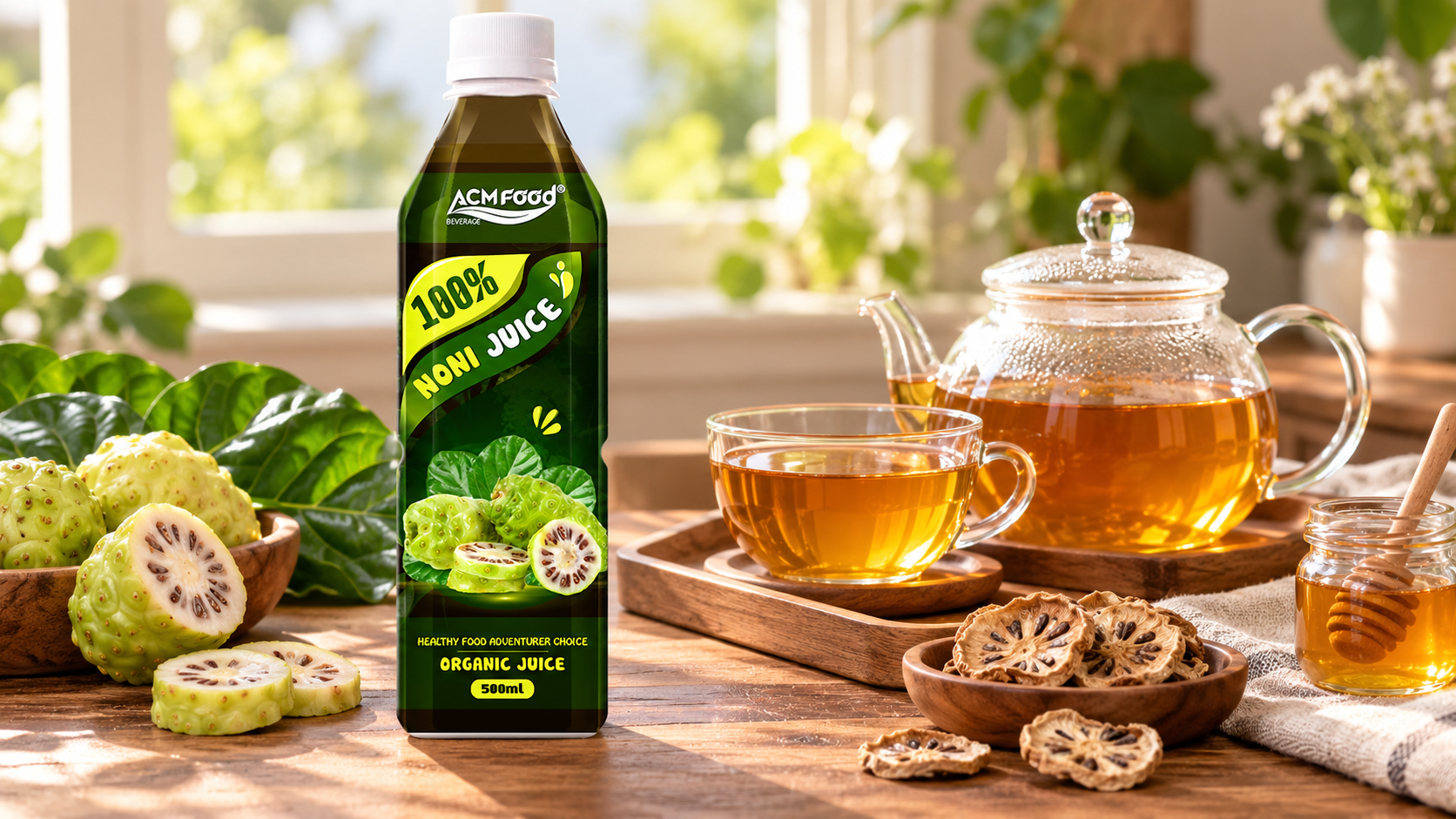
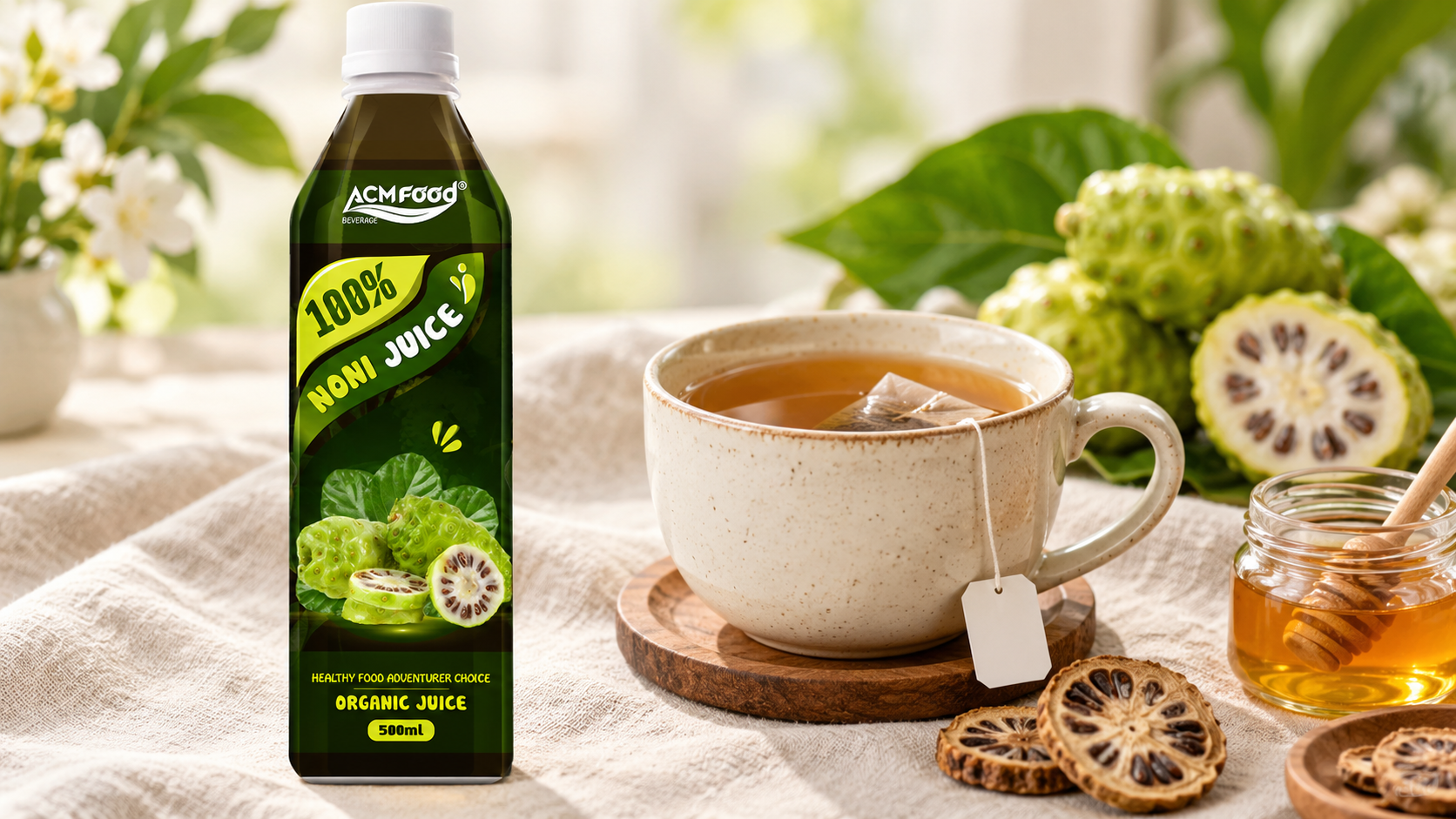
The published range includes a 500ml noni juice drink in a PET bottle with an 18-month shelf life, and several ready-to-drink teas such as hibiscus and ginger blends. Dried noni, noni leaf tea and fruit leather are not listed, so they should be treated as a sourcing or development enquiry.
Which of these can be arranged depends on raw material availability, the processing partner and the target market, and that cannot be answered from the website. The accurate approach is to describe the product, the channel and the destination, and let the team confirm what is feasible. The guide on custom beverage development explains how a project moves from idea to prototype sample, and the contact page is the place to start the conversation.
How do you write a brief for a noni tea project?
A brief for a dry noni product should state the plant part, the format and the market, because these three decisions determine nearly everything else. Add a reference product and a target retail price so that a supplier can propose something realistic.
- Plant part and form. Fruit slice, leaf, tea bag, loose pack or fruit leather.
- Origin and processing. Where the raw material comes from and how it is dried.
- Specifications. Moisture, cut size, colour and aroma, with a reference sample.
- Documents. Test reports, certificates and any organic or other status you require.
- Pack and label. Bag material, tin or pouch, and the wording planned for the market.
- Claims. Any statement you intend to make, checked in advance against local rules.
How should dry noni products be packed and stored?
Dry noni products should be packed in barrier packaging that blocks moisture, light and odour, and stored in a cool, dry place. Moisture is the main risk, because it can lead to mould, colour change and loss of aroma in dried plant material.
Ask the supplier which packaging material is used and what barrier properties it has, whether the bag is resealable and what the stated shelf life assumes. For tea bags, the inner bag material, the string, the tag and the outer carton all form part of the specification and the label. Gift packs and tins add a visual dimension but should not compromise the barrier.
What quality checks apply to dried plant material?
Dried botanicals need checks that differ from those for liquid drinks. Buyers usually ask for moisture content, foreign matter limits, microbiological results and, depending on the market, tests for contaminants such as pesticide residues and heavy metals.
Request a certificate of analysis for the lot and compare it with your market’s requirements, because limits differ by country. Ask how the supplier handles lot traceability from harvest to packing, and how they respond if a result falls outside the agreed limits. A supplier that can show records for each step is easier to qualify than one that offers a general description.
Frequently asked questions
Is noni tea made from the fruit or the leaf?
Both exist. Fruit-based tea uses dried slices and tastes sour and bitter, while leaf tea is milder and more herbal. They are separate raw materials with separate regulatory treatment.
Does noni tea taste like noni juice?
It tastes related but milder and easier to adjust. The drinker controls strength through steeping time, which is not possible with a bottled juice.
Can dried noni and fruit leather be sold together with tea?
Yes, many specialty sellers group them as a botanical range. Each item still needs its own specification, label and compliance check.
Summary and next step
Noni outside the bottle is a family of dry products: fruit slices, leaf tea, tea bags, loose blends and fruit leather. Choose the plant part and the channel first, check classification and labelling in your market, and keep claims factual. The published ACM Beverage range does not include these dry formats, so they should be raised as a development enquiry.
To discuss a noni tea or dried noni project, describe the format, market and reference product through the Beverage Builder or send the brief to ACM Beverage directly.