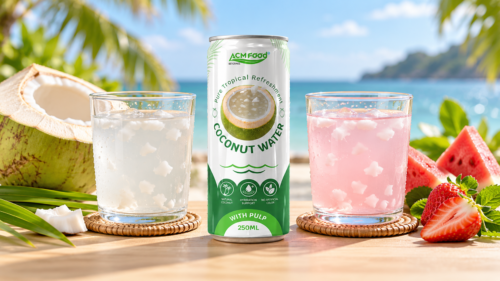

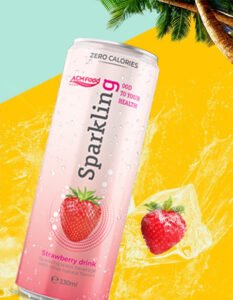
Sparkling coconut water is coconut water carbonated to roughly 2–3 volumes of CO₂, positioned as a lower-sugar alternative to soft drinks. The hard part is technical: coconut water is low-acid (pH about 5.0–5.4), so it must be either acidified or fully sterilised, and both change the flavour. Per 100 ml, the coconut base supplies about 19 kcal and 250 mg of potassium.
Key facts at a glance
- Position: between still coconut water (hydration) and soda (refreshment).
- Carbonation: usually 2–3 volumes CO₂ — lighter than cola (about 3.5) so the coconut flavour still shows.
- Safety route: acidify below pH 4.6 and pasteurise, or retort-sterilise in the can.
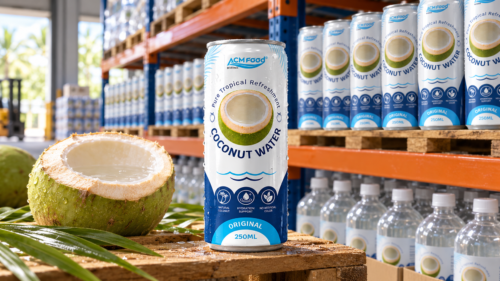
- Format: aluminium cans dominate — they hold pressure and block light.
- Consumer versions are covered in our coconut sparkling water guide; this article is for brands and buyers.
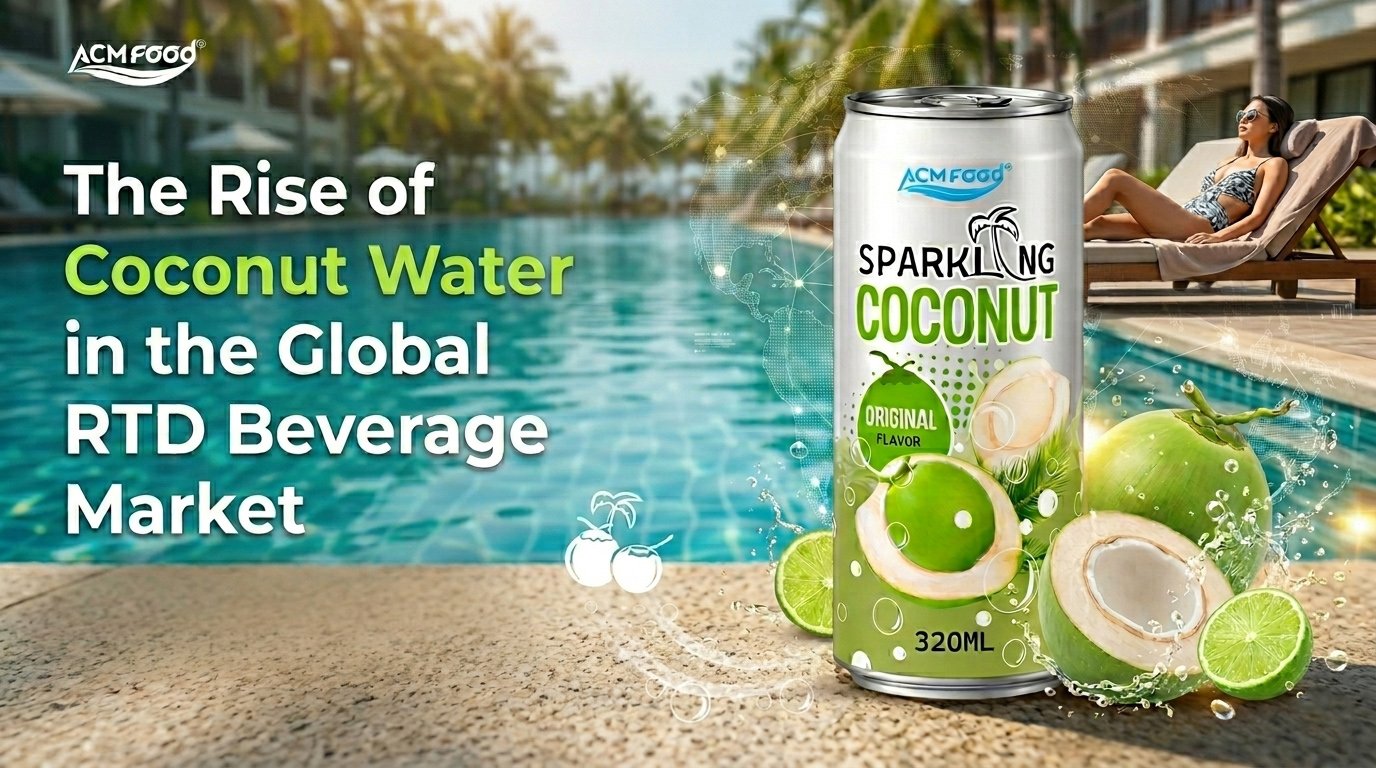
Why the category is growing
- Sugar reduction. Sugar taxes in the UK, Mexico, Saudi Arabia and many other markets push brands to drinks under 5–8 g of sugar per 100 ml. Coconut water naturally sits around 2.5–6 g.
- Short ingredient lists. A drink of coconut water plus CO₂ meets clean-label expectations.
- Soft-drink occasions. Carbonation lets coconut water compete with soda and sparkling water, not just sports drinks.
How it is produced
| Step | What happens | Watch-out |
|---|---|---|
| Extraction | Water drained from young coconuts, filtered | Oxidises within hours; must be chilled fast |
| Standardisation | Brix and acidity adjusted | Seasonal sugar variation between batches |
| Acidification (if used) | Citric acid brings pH below 4.6 | Sharpens flavour; must appear on label |
| Carbonation | CO₂ dissolved at low temperature | Coconut proteins can cause foaming at filling |
| Filling and heat treatment | Tunnel pasteurisation or retort | Heat on a pressurised can needs validated limits |
What brands should specify
- Coconut water content. 100% coconut water, or diluted with carbonated water? The label must reflect it.
- Carbonation level in volumes of CO₂, with a tolerance.
- Sugar and acidity targets, including whether added sugar or flavour is allowed.
- Flavour variants — original, or with fruit juice versus fruit flavouring.
- Can size — 250, 320 and 330 ml are the most common export formats.
- Shelf-life data covering CO₂ retention and flavour, not only microbial safety.
Market opportunities by region
| Region | Driver | Requirement to plan for |
|---|---|---|
| North America | Better-for-you soft drinks | FDA low-acid or acidified food filing |
| Europe | Sugar reduction, natural claims | Strict rules on nutrition and health claims |
| Middle East | Heat, sugar taxes, non-alcoholic premium drinks | Halal certification, Arabic labelling |
| East Asia | Premium, novel formats | Local additive lists and labelling |
Frequently asked questions
What is sparkling coconut water?
Coconut water with added carbon dioxide, sometimes with fruit juice or flavouring. It keeps coconut water’s electrolytes and adds fizz.
Does carbonation reduce the electrolytes?
No. CO₂ does not affect mineral content; only added water dilutes it.
Why is sparkling coconut water harder to make than still?
Because it combines a low-acid, perishable base with a pressurised package. The product must be made safe by acidification or sterilisation while keeping both the carbonation and the delicate coconut flavour.
Does sparkling coconut water need preservatives?
Not if the process is validated. Acidification with pasteurisation, or retort sterilisation, makes it shelf-stable without them.
What is a typical MOQ?
It depends on the manufacturer, can size and whether custom printed cans or sleeves are used. Ask suppliers for both the minimum run and the can-printing minimum, which is often the larger constraint.
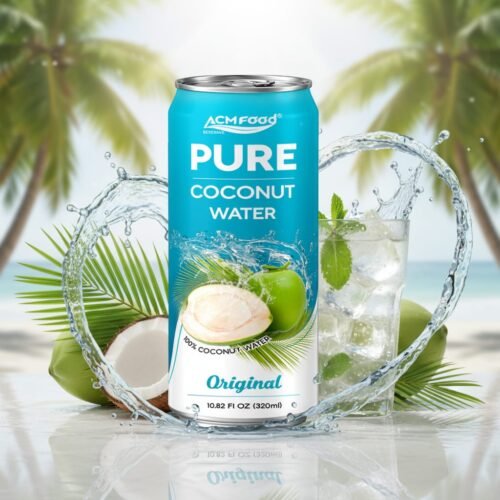
Sparkling coconut water from ACM Beverage
ACM Beverage manufactures sparkling coconut water in Vietnam for OEM and private label customers, in facilities certified to ISO 22000, FSSC 22000 and HACCP, exporting to more than 40 countries. See the 320 ml sparkling coconut water original, the sparkling drink range or the still coconut water range. Related reading: sparkling coconut water with blueberry. To discuss a formulation, contact our export team.