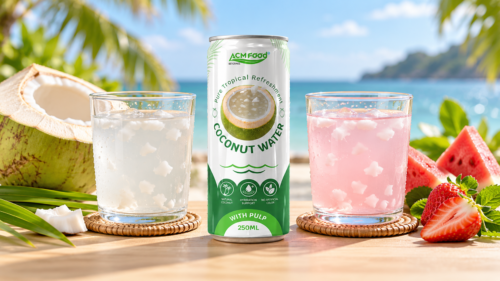

Blueberry coconut water is coconut water blended with blueberry juice or blueberry flavouring, and the sparkling version is that blend carbonated with CO₂ — keeping its ~250 mg of potassium per 100 ml and ~19 kcal. The blueberry element is where labels diverge: blueberry flavouring contributes taste only, while blueberry juice contributes anthocyanins. These are different products with the same name on the front.
Key facts at a glance
- Base: real coconut water, carbonated — not flavoured water.
- Potassium: ~250 mg per 100 ml in the coconut water base, diluted by carbonation.
- Blueberry flavouring ≠ blueberry juice. Only the latter brings anthocyanins.
- Check for added sugar. Coconut water needs none; some flavoured versions add it anyway.
- Carbonation causes bloating in some people — the main practical drawback.
- Bến Tre is Vietnam’s main coconut-growing province, not a brand name.

What sparkling coconut water is
Young coconut water — the clear liquid from green coconuts harvested at five to seven months — is filtered, heat-treated and carbonated. The CO₂ adds effervescence and a slight acidic edge that shortens the finish.
Two things follow:
- The nutrition is coconut water’s. Potassium, sodium, magnesium and natural sugars carry over, diluted only by whatever water is added.
- Carbonation changes flavour perception. CO₂ sharpens the profile, which is why a sparkling version can carry less sugar than a still one and still taste finished.
Blueberry flavouring versus blueberry juice
This is the distinction that decides what you are actually buying, and most packaging does not make it obvious.
| Blueberry flavouring | Blueberry juice | |
|---|---|---|
| Contributes taste | Yes | Yes |
| Contributes anthocyanins | No | Yes |
| Contributes vitamins | No | Small amounts |
| Adds sugar | No | Yes, naturally |
| Colour | Added colour or none | From the fruit |
| On the label as | “natural flavouring” | “blueberry juice” with a % |
How to tell: look for a declared juice percentage. If blueberry appears only under “natural flavouring”, the antioxidant claims attached to blueberries do not apply to that can. Flavouring is used at parts-per-million levels and contributes nothing nutritionally.
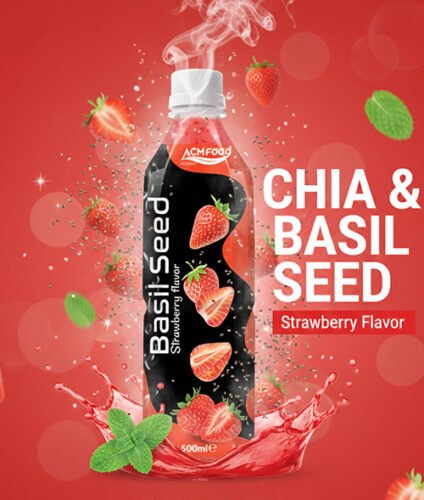
This is not a criticism of flavoured versions — a zero-sugar flavoured sparkling coconut water is a perfectly good drink. It is a caution against reading fruit imagery as fruit content.

Blueberries and coconut water: what the combination contains
Blueberries and coconut water bring different things to the drink. Coconut water supplies the base: fluid, natural sugars and minerals such as potassium. Blueberry contributes colour, a tart-sweet berry taste and, only when real juice is used, the natural pigments called anthocyanins found in the fruit.
- With blueberry juice: the drink contains some of the fruit’s own components, in amounts that depend on the declared juice percentage.
- With blueberry flavouring only: the drink tastes of blueberry but contains essentially none of the fruit itself.
- Either way: it is a refreshing drink, not a substitute for eating whole blueberries or for a varied diet.
For anyone searching for the benefits of blueberries and coconut water together, the honest answer is that the label decides it: check the juice percentage and the sugar line before assuming the drink delivers what whole fruit does.
Where the coconuts come from
Bến Tre province in Vietnam’s Mekong Delta is the country’s largest coconut-growing area, often called the land of coconut trees. It is a geographic origin, not a brand — many manufacturers source there, and “Bến Tre coconut” on a label indicates provenance rather than a specific producer.
Origin genuinely affects taste. Soil salinity, distance from the sea and rainfall shift the mineral and sugar balance of the water, which is why coconut water from different regions has a measurably different profile.
Sparkling versus still coconut water
| Still coconut water | Sparkling coconut water | |
|---|---|---|
| Texture | Smooth, flat | Effervescent |
| Taste | Mildly sweet, faintly saline | Sharper, shorter finish |
| Electrolytes | Full strength | Same, slightly diluted |
| Occasion | Hydration, post-exercise | Soft drink replacement |
| Suits sensitive stomachs | Yes | Carbonation may cause bloating |
What to check before buying
- First ingredient. Coconut water, or carbonated water? This separates the two categories entirely.
- Juice percentage. A declared figure means real fruit; silence usually means flavouring.
- Added sugar. Coconut water does not need it. Some flavoured versions add it regardless.
- Sodium. Coconut water contains ~105 mg per 100 ml naturally; some products add more.
- Potassium on the panel. A meaningful figure confirms real coconut water is in there.
Who should be careful
- People prone to bloating or IBS. Carbonation is the most common complaint about this category.
- People on potassium-restricted diets. Real coconut water contributes meaningful potassium.
- Anyone watching sodium. Check the label; levels vary between products.
Frequently asked questions
Does blueberry coconut water contain real blueberries?
Often not. “Blueberry flavoured” usually means flavouring rather than fruit, which contributes taste but no anthocyanins or vitamins. Look for a declared blueberry juice percentage on the ingredient list to know which you are buying.
Is sparkling coconut water as healthy as still?
Nutritionally they are close — carbonation does not remove electrolytes. The differences come from what else is added: some sparkling versions include sugar or flavouring that the still product does not.
Does carbonation reduce the electrolytes?
No. Dissolved CO₂ does not affect mineral content. Any reduction comes from dilution if water is added, not from the carbonation itself.
Can sparkling coconut water cause bloating?
Yes, in some people. The CO₂ introduces gas into the digestive tract, which is the most frequent complaint about carbonated drinks generally. Still coconut water avoids this entirely.
Is it good for post-workout recovery?
For light activity, yes — it provides fluid and potassium. For heavy or prolonged sweating, a higher-sodium drink is better matched, since sweat loses more sodium than potassium. Carbonation also makes it less comfortable to drink quickly.
Is it suitable for vegans?
Yes. Coconut water, carbonation and fruit flavouring are all plant-derived or synthetic. Check the label only if the product includes unusual additives.
Sparkling coconut water from ACM Beverage
ACM Beverage manufactures sparkling coconut water and flavoured sparkling drinks in Vietnam under OEM and private label terms, in facilities certified to ISO 22000, FSSC 22000 and HACCP, exporting to more than 40 countries. Carbonation level is the critical specification: too high and it masks the coconut, too low and the product reads flat on shelf.
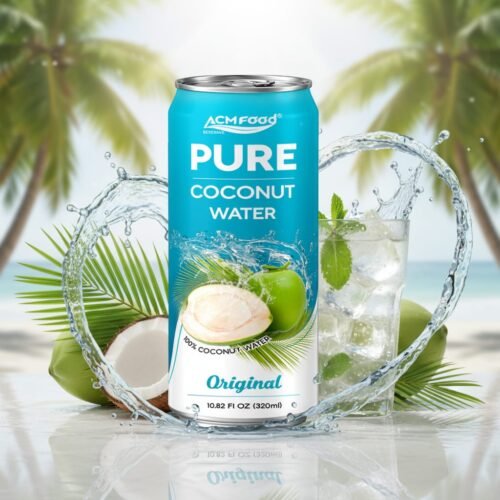
See the 320 ml sparkling coconut blueberry, the sparkling drink range, or the still coconut water range. For the category distinction see coconut sparkling water explained. To discuss a formulation, contact our export team.
This article is general nutrition information, not medical advice. Consult a qualified healthcare professional about your own diet.