














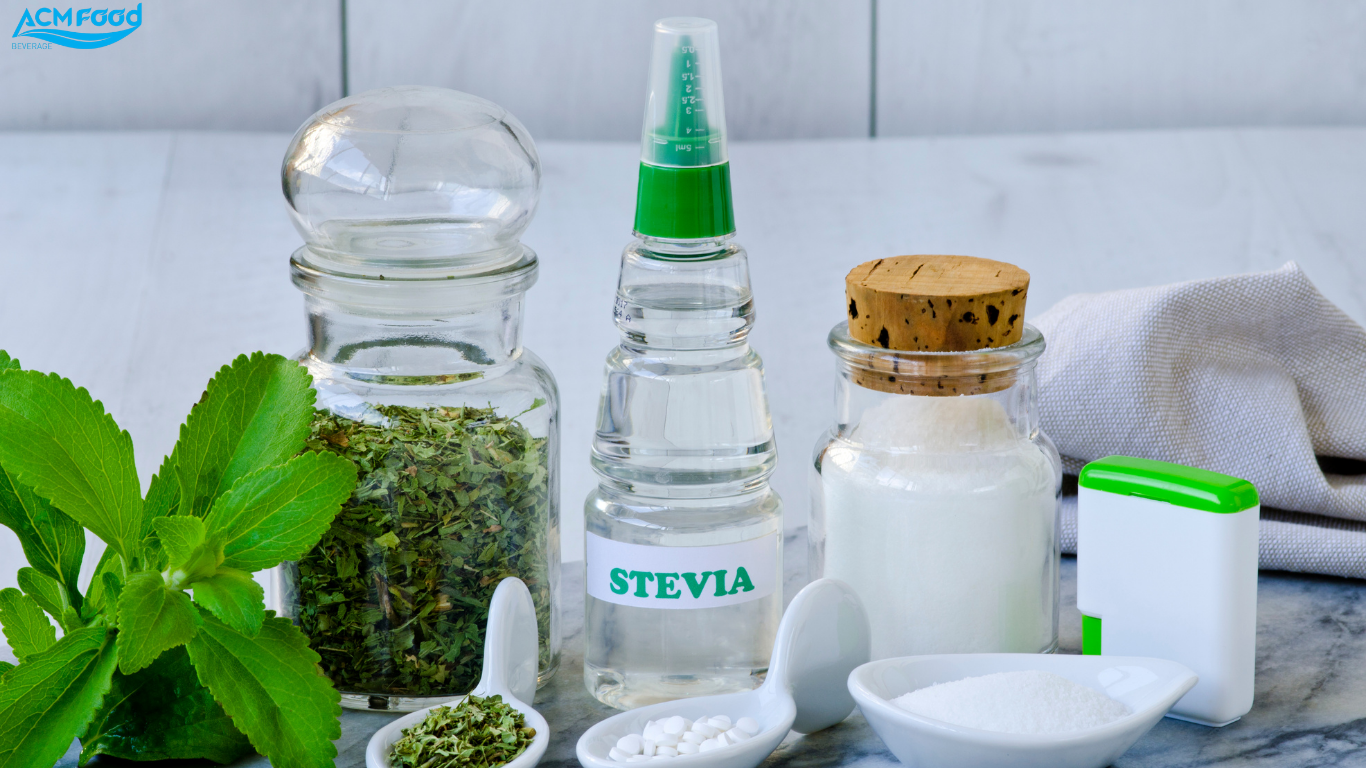
Stevia sweeteners are purified steviol glycosides from the leaves of Stevia rebaudiana, around 200–300 times sweeter than sugar with virtually no calories and no effect on blood sugar. They are approved in the EU, US and many other markets, with an acceptable daily intake of 4 mg per kg of body weight. Drink makers often blend it with other sweeteners to soften its aftertaste.
What is stevia?
Stevia is a plant in the daisy family native to Paraguay and Brazil, where its leaves were traditionally used to sweeten maté tea. The sweet compounds, called steviol glycosides (mainly rebaudioside A and stevioside, plus newer ones such as Reb M), are extracted and purified for food use. High-purity extracts are approved as additives (E960 in the EU); crude whole-leaf stevia is not approved as a food additive in the US or EU.
Stevia vs sugar vs other sweeteners
| Sweetener | Sweetness vs sugar | Calories | Notes |
|---|---|---|---|
| Sugar (sucrose) | 1× | 4 kcal/g | Reference taste; raises blood sugar |
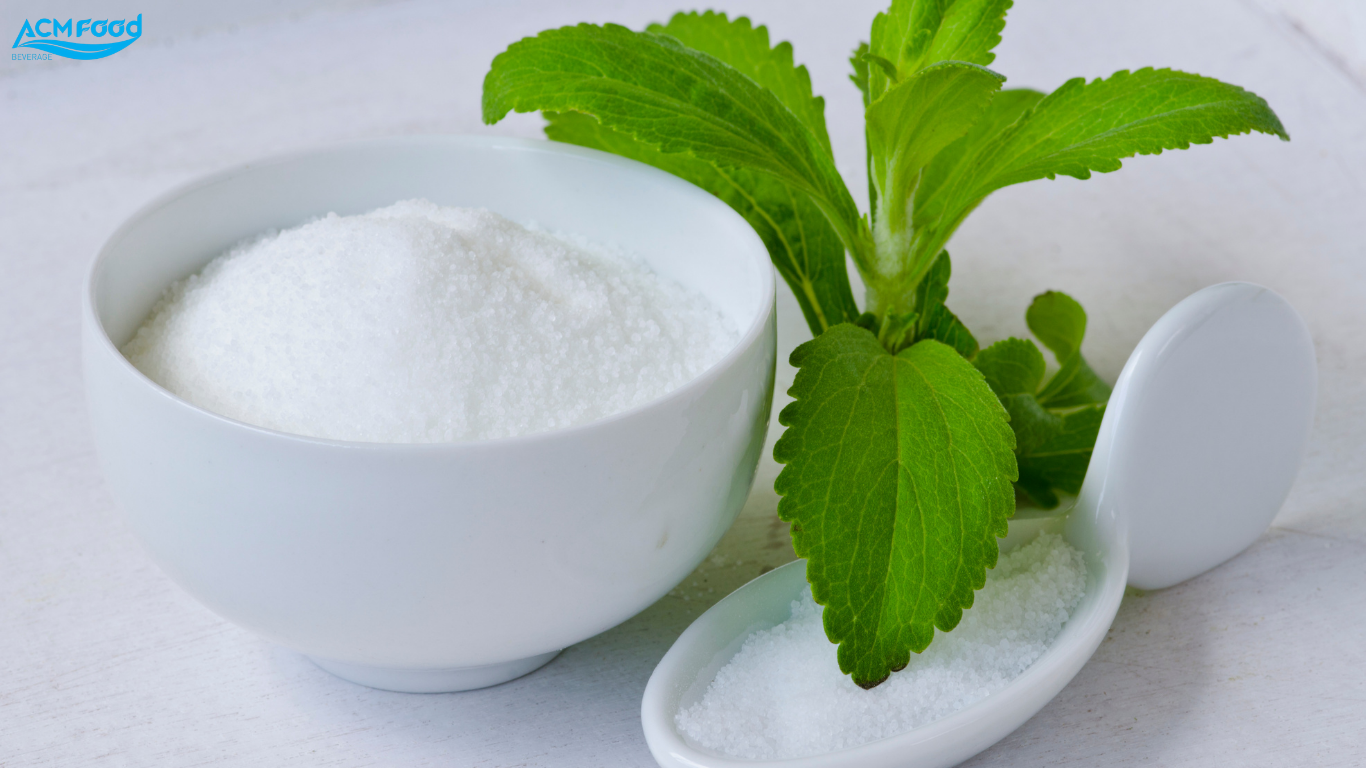
| Stevia (steviol glycosides) | 200–300× | ~0 | Plant-derived; can taste bitter or liquorice-like at high levels |
| Sucralose | ~600× | ~0 | Clean, sugar-like taste |
| Aspartame | ~200× | ~0 at use levels | Not heat-stable; must be labelled for people with PKU |
| Erythritol | ~0.7× | ~0.2 kcal/g | Often blended with stevia to round out taste |
All of these are approved by food safety authorities within their acceptable daily intakes. The WHO advises against relying on any non-sugar sweetener for long-term weight control, so stevia is best seen as a way to reduce sugar, not a health product.
How is stevia used in drinks?
- Reduced-sugar juice drinks: part of the sugar is replaced to reach “reduced sugar” or lower sugar-tax bands.
- RTD teas: green, herbal and fruit teas with little or no sugar.
- Zero-sugar sodas and energy drinks: usually stevia blended with erythritol or other sweeteners.
- Flavoured waters: a light touch of sweetness.
Formulation tips
- Replace 30–50% of sugar with stevia first; full replacement is harder to make taste right.
- Use newer glycosides (Reb M, Reb D) or blends to cut bitterness.
- Balance with acidity and fruit aroma, which mask aftertaste.
What are the benefits and limits of stevia?
| Benefit | Limit |
|---|---|
| Almost no calories | Aftertaste at high doses |
| No blood sugar spike – suitable in diabetic diets | No proven weight-loss effect on its own |
| Does not cause tooth decay | Costs more per unit of sweetness than sugar |
| Plant origin appeals to “natural” positioning | Highly purified extract, not simply dried leaves |
Stevia-sweetened drinks from ACM
ACM develops reduced-sugar and zero-sugar versions of juices, teas and energy drinks with sweeteners permitted in each target market. See what “low sugar” means on a label, custom beverage formulas and the tea drink range.
Frequently asked questions
Is stevia safe?
Yes. Purified steviol glycosides are approved by EFSA, the US FDA (as GRAS) and JECFA within an acceptable daily intake of 4 mg/kg body weight.
Does stevia raise blood sugar?
No. Steviol glycosides are not absorbed as sugar.
Why does stevia sometimes taste bitter?
Some glycosides, especially stevioside, have a bitter or liquorice note. Newer glycosides and blends reduce this.
Is stevia “natural”?
It comes from a plant, but commercial stevia is a purified extract. Whether it can be called “natural” depends on local labelling rules.






