
Introduction: The global ready-to-drink landscape is being rewritten by a fundamental return to purity. At the intersection of booming health consciousness and sophisticated supply chain logistics, simple, authentic products are commanding premium shelf space and B2B attention. This analysis delves into the strategic market position of 100% pure red grape juice, examining it not merely as a consumer product but as a case study in modern beverage manufacturing, private label potential, and export-driven growth. We explore the ingredients for success in a sector where transparency is currency and manufacturing agility defines competitive edge.
Contents
- 1 Market Dynamics and the Rise of Functional Juices
- 2 Analyzing the 100% Pure Red Grape Juice Proposition
- 3 Strategic Implications for B2B Partnerships and OEM
- 4 Navigating Global Export Markets and Future Trends
- 5 Expert Insights on Category Evolution
- 6 Future Outlook and Concluding Analysis
- 7 FAQ
- 7.1 What are the key health benefits of 100% pure red grape juice?
- 7.2 What are the primary considerations for OEM production of fruit juices?
- 7.3 What is a typical MOQ for private label beverage production?
- 7.4 Which export markets show the highest growth potential for premium RTD juices?
- 7.5 How does a product like pure grape juice align with current sustainability trends?
Market Dynamics and the Rise of Functional Juices
Global beverage consumption patterns are shifting dramatically. This evolution is driven by a consumer base demanding more than just refreshment. The RTD beverage sector is at the epicenter of this change, with health-conscious choices reshaping portfolios. Pure fruit juices, once a simple commodity, are now strategic assets for brands.
Manufacturers are responding with sophisticated formulations. They leverage advanced processing to preserve nutritional integrity. This focus on quality opens new avenues for private label beverage development. The market rewards those who can deliver authenticity at scale.
Consumer Demand for Transparency and Purity
Today’s shoppers scrutinize labels with unprecedented care. They seek products with minimal, recognizable ingredients. This trend elevates simple, high-quality offerings like pure juice. It creates a significant opportunity for beverage manufacturer partners who prioritize clean labels.
Trust is built through ingredient declaration and sourcing stories. Brands that communicate these elements effectively gain loyalty. The demand extends across both retail and foodservice channels. This holistic shift is redefining value in the juice aisle.
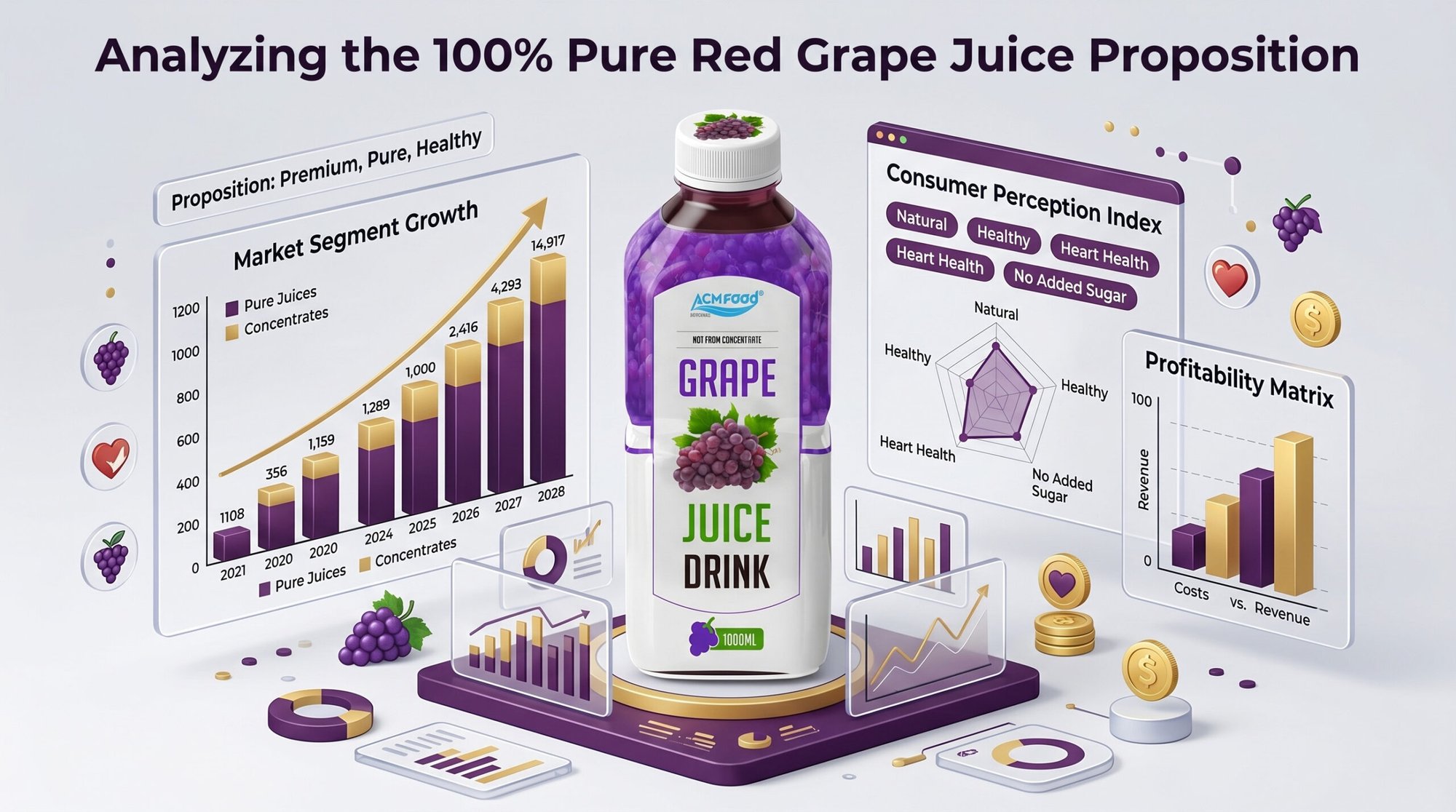
Analyzing the 100% Pure Red Grape Juice Proposition
The 100% Pure Red Grape Juice exemplifies a modern market response. Its formulation centers on a single, powerful ingredient. This simplicity is its most compelling functional drink attribute. It directly addresses the clean-label movement without compromise.

Red grapes are a rich source of polyphenols and antioxidants. The juice format makes these compounds readily accessible. This positions the product within the wellness-oriented RTD beverage segment. It serves as a foundational ingredient for more complex private label beverage lines.
Packaging and Preservation Innovations
The 1L PET bottle choice reflects a keen understanding of convenience and safety. PET offers durability for supply chain logistics. It also provides an excellent barrier against oxygen, preserving flavor and nutrients. This is a critical consideration for any beverage manufacturer targeting export markets.
Lightweight packaging reduces transportation costs and environmental footprint. It aligns with broader sustainability goals within the industry. For OEM beverage partners, such packaging solutions are a key value-add. They demonstrate a manufacturer’s capability to balance performance with practicality.
Strategic Implications for B2B Partnerships and OEM
The success of a single-SKU product often hinges on backend flexibility. For distributors and brands, a reliable beverage manufacturer is paramount. The ability to customize recipes, like adjusting sweetness or fortification, is no longer a luxury. It’s a baseline expectation for serious OEM beverage collaboration.
Scalability defines market readiness. Partners must navigate from small pilot runs to full-scale production seamlessly. This agility allows brands to test concepts with lower financial risk. Evaluating a potential manufacturer’s MOQ structure is therefore a crucial first step in any partnership.
The Private Label and White-Label Opportunity
Private label growth is accelerating beyond traditional retail. Hotels, airlines, and corporate wellness programs seek branded solutions. A product like pure red grape juice serves as an ideal canvas. A skilled beverage manufacturer can help tailor it for these exclusive channels.
White-label services empower entrepreneurs to launch brands rapidly. They provide access to R&D, regulatory compliance, and production expertise. This lowers the barrier to entry in the competitive functional drink space. The focus shifts from capital-intensive infrastructure to brand building and marketing.
Export potential for premium juices is vast but nuanced. Regions like the EU and North America have stringent standards for imports. Compliance with these regulations is a core competency for export-ready beverage manufacturer partners. Success hinges on documentation and consistent quality audits.
Emerging markets in the Middle East and Asia present different dynamics. Here, growth is fueled by rising disposable incomes and health awareness. Product positioning must adapt to local taste preferences and consumption occasions. A flexible OEM beverage partner is essential for this localization.
Sustainability as a Core Business Driver
Future-proofing a beverage business now requires a sustainability roadmap. This extends from sourcing ethically grown grapes to implementing circular packaging initiatives. Consumers and B2B clients increasingly factor these practices into procurement decisions. Manufacturers leading in this area will secure long-term partnerships.
Investment in water stewardship and energy-efficient processing is critical. It reduces operational costs while enhancing brand equity. For companies exploring the fresh fruit juice category, these considerations are integral. They translate a ethical stance into a tangible competitive advantage.
Expert Insights on Category Evolution
Industry analysts note a convergence between juice and functional beverage categories. The line between a simple pure red grape juice and a wellness shot is blurring. This creates fertile ground for innovation. Manufacturers with strong R&D capabilities are best positioned to capitalize.
Supply chain resilience has become a top boardroom concern. Diversifying sourcing regions and securing transparent supplier relationships is paramount. For brands, this means selecting manufacturing partners with robust and agile supply networks. It’s a strategic hedge against global volatility.
The Role of Digital Integration
Traceability from orchard to shelf is becoming a marketable feature. Blockchain and IoT technologies enable this level of transparency. Forward-thinking beverage manufacturer operations are integrating these tools. They provide brands with a compelling story to tell consumers.
Direct-to-consumer (DTC) channels are supplementing traditional retail. This shift requires different packaging formats and fulfillment logistics. A manufacturer’s willingness to adapt production lines for DTC-specific runs is a key differentiator. It reflects a partnership-oriented, rather than transactional, mindset.
Future Outlook and Concluding Analysis
The trajectory for the pure juice segment points toward premiumization and functionality. Products will be judged on their nutrient density and ethical provenance. This elevates the role of the co-manufacturer from a mere producer to a innovation partner. The collaboration depth defines market success.
For businesses eyeing expansion, a phased market entry strategy is advised. Start with regions that have favorable trade agreements and familiar standards. A versatile product like sparkling water drink or pure juice can serve as a low-risk entry point. Success here builds the capital and confidence for broader portfolio launches.
The most successful brands will be those that master both storytelling and science. They will pair authentic narratives with clinically-backed benefits. Achieving this requires a symbiotic relationship with a technically proficient manufacturing partner. In this evolving landscape, the strength of the supply chain is the ultimate brand asset.
FAQ
What are the key health benefits of 100% pure red grape juice?
Pure red grape juice is rich in polyphenols like resveratrol and flavonoids, which act as antioxidants. These compounds are linked to supporting cardiovascular health and reducing oxidative stress. The juice provides a convenient source of these nutrients without the alcohol content of wine. It fits within a balanced diet focused on whole-food ingredients.
What are the primary considerations for OEM production of fruit juices?
Key considerations include recipe customization flexibility, adherence to food safety standards (like HACCP and ISO), minimum order quantity (MOQ) feasibility, and packaging options. The ability to scale production up or down efficiently is crucial. Partnering with a manufacturer experienced in fresh fruit juice processing ensures quality and consistency.
What is a typical MOQ for private label beverage production?
MOQs vary significantly based on the product complexity, packaging, and manufacturer. They can range from a few thousand units for standard PET bottle runs to tens of thousands for more specialized formats. Progressive manufacturers are offering lower MOQs to accommodate brand startups, viewing them as strategic long-term partners rather than one-off clients.
North America and Western Europe remain strong due to high health awareness. The Asia-Pacific region, particularly China, Japan, and Southeast Asia, shows explosive growth driven by urbanization and wellness trends. The Middle East, with its high per-capita spending on imported healthy foods, also presents a lucrative opportunity for stable, high-quality products.
How does a product like pure grape juice align with current sustainability trends?
It aligns through potential for sustainable sourcing (e.g., certified grapes), lightweight PET packaging that reduces transportation emissions, and water-efficient production processes. The simplicity of the ingredient list also appeals to consumers seeking minimal processing. Manufacturers leading in carbon-neutral production will have a distinct advantage in B2B partnerships.