
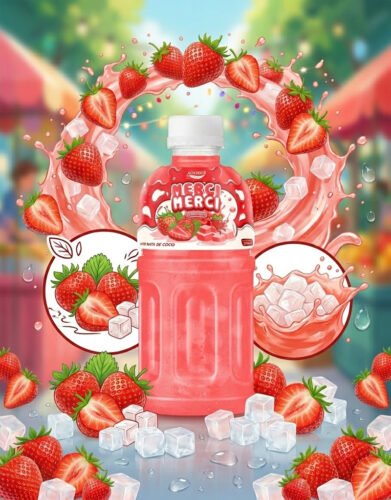
Fruit milk is milk blended with fruit juice or purée, usually with added sugar, giving about 2–3 g of protein and useful calcium per 100 ml; coconut milk drinks are dairy-free and lactose-free but typically contain under 1 g of protein and more saturated fat. Both are snack-style drinks rather than straight replacements for plain milk.
Key facts at a glance
- Fruit milk: dairy, protein and calcium, often sweetened.
- Coconut milk drink: dairy-free, creamy, low protein.
- Popular flavours: strawberry, banana, mango, melon; coconut with nata de coco.
- Stabilisers keep fruit and milk from separating.
- Glass or PET bottles and cartons are common.

How they compare
| Per 100 ml (approx.) | Fruit milk (dairy) | Coconut milk drink |
|---|---|---|
| Energy | 60–80 kcal | 40–70 kcal |
| Protein | 2–3 g | 0.2–0.8 g |
| Fat | 1–3 g | 2–5 g, mostly saturated |
| Calcium | about 90–120 mg | Only if fortified |
| Lactose | Yes | No |
| Suits | Children’s snacks, general | Vegans, lactose intolerance |
How to choose
- Sugar per 100 ml — many exceed 8 g.
- Real fruit content versus flavouring.
- Protein and calcium if replacing milk.
- Allergens — dairy in fruit milk; coconut in coconut drinks.
Frequently asked questions
Is fruit milk healthy for children?
It provides protein and calcium but usually added sugar. Plain milk with fresh fruit is a lower-sugar option.
Is coconut milk drink a good milk substitute?
Not nutritionally, unless fortified: it is low in protein and calcium. It works well as a dairy-free treat.
Why doesn’t fruit milk curdle?
Manufacturers control acidity and use stabilisers such as pectin to keep milk proteins stable.
Milk drinks from ACM Beverage
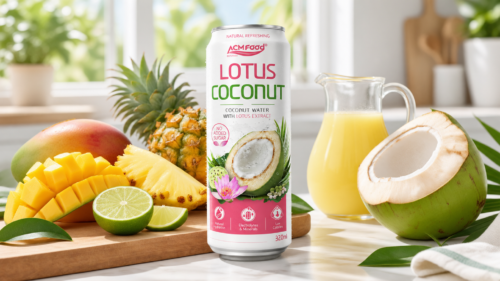
ACM Beverage produces coconut milk drinks in Vietnam for OEM and private label customers. See the 290 ml coconut milk drink with and without nata de coco. Related reading: coconut milk drink with pineapple and juice vs coconut water vs fruit milk.