

Coconut Milk Pineapple Drink Drives OEM Innovation in Plant Based Tropical Beverage Market

Feature banner for article about coconut milk pineapple drink OEM innovation in plant-based tropical beverage market

The global beverage industry is witnessing a surge in plant-based tropical drinks, with coconut milk emerging as a star ingredient. Pairing it with pineapple creates a functional, craveable RTD that appeals to health-conscious consumers worldwide. For OEM manufacturers and distributors, this flavor innovation represents a lucrative opportunity to capture market share in a segment growing at double-digit rates.

Understanding the dynamics behind this trend—from consumer demand for clean labels to the operational advantages of flexible OEM production—is essential for any business looking to compete in the evolving beverage landscape. This analysis delves into how products like the coconut milk pineapple drink are reshaping procurement strategies and opening new export corridors.

The Rise of Plant-Based Tropical RTD Beverages

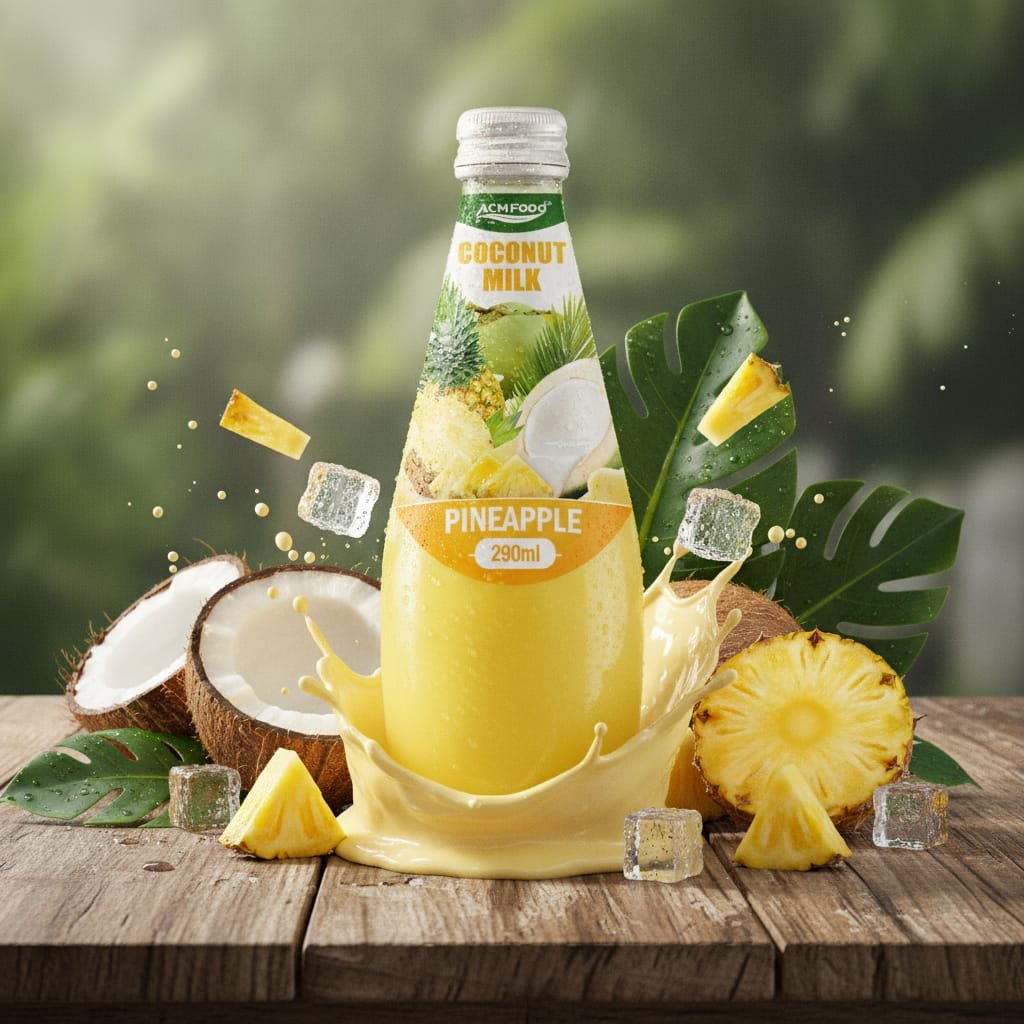
The global shift toward plant-based diets has reshaped the beverage landscape, with coconut milk emerging as a versatile dairy alternative. This trend is especially pronounced in tropical regions, where local flavors meet global demand for natural, functional drinks. The Coconut Milk Pineapple Drink exemplifies this convergence, offering a creamy, nutrient-rich base combined with the bright, enzymatic profile of pineapple. Market analysts project the plant-based milk sector to exceed $60 billion by 2030, and tropical variants are capturing an outsized share of that growth. For OEM partners, this represents a clear opportunity to align production with consumer cravings for exotic, health-forward hydration.

Coconut milk pineapple drink in glass bottle with fresh coconut and pineapple on wooden table
Coconut milk pineapple drink with fresh tropical ingredients
For illustrative purposes only

Innovation in ready-to-drink (RTD) formats is accelerating, and the coconut milk pineapple drink stands out for its dual appeal: the coconut milk provides creaminess and medium-chain triglycerides (MCTs), while pineapple contributes bromelain and vitamin C. This functional synergy positions the product not just as a refreshment, but as a wellness tool. OEM manufacturers that can replicate such complex flavor profiles at scale are gaining leverage in negotiations with global distributors. The ability to deliver consistent taste and texture in a 290ml glass bottle further reinforces premium positioning, a key factor in markets like the EU and North America.

Flavor Innovation: Why Coconut and Pineapple Resonate

Tropical fruit combinations have long been crowd-pleasers, but the pairing of coconut milk with pineapple takes indulgence to a new level. The natural sweetness of pineapple balances the subtle earthiness of coconut, creating a harmonious profile that appeals to both Western and Asian palates. This flavor innovation is not accidental; it reflects deep consumer research showing that hybrid plant-based tropical drinks outperform single-fruit offerings in repeat purchase rates. For brands seeking to differentiate their SKU lineup, investing in such unique blends is a strategic move. OEM partners can leverage existing formulations or co-develop new variations with R&D teams.

Flavor development, however, must be paired with smart packaging. The 290ml glass bottle used for this product offers several advantages: it preserves the delicate flavor profile, provides a tactile premium feel, and aligns with sustainability goals as glass is infinitely recyclable. This combination of taste and packaging resonates particularly in the premium RTD segment, where consumers are willing to pay a higher price for perceived quality. Distributors targeting upscale retail channels or specialty grocery stores should prioritize products with this aesthetic and functional alignment.

Consumer Behavior and Health Claims

Modern consumers actively seek beverages with clear health benefits and transparent ingredient lists. The coconut milk pineapple drink meets these clean-label expectations: no artificial flavors, no preservatives, and natural sugars only. This positions it well for the growing functional beverage category, which is expected to grow at a CAGR of 8.5% through 2028. OEM producers that can offer certified organic or non-GMO versions tap into an even higher-margin segment. The pineapple component also allows brands to make subtle wellness claims around digestion and immunity, further boosting shelf appeal.

OEM Flexibility: A Competitive Advantage for Global Brands

One of the most compelling aspects of the milk drink category today is the flexibility afforded by OEM production. Manufacturers like ACM Food offer comprehensive services, from concept to container, enabling even small-batch entrants to compete alongside established giants. The coconut milk pineapple drink is a case study in this agility: its recipe can be adjusted for sweetness level, fortification with vitamins, or even carbonation—all while maintaining the core tropical identity. OEM partners can choose from various packaging formats (glass, can, PET) depending on target market and distribution channel.

Low minimum order quantities (MOQs) further lower the barrier to entry. A distributor testing a new tropical line can start with a modest order, gather market feedback, and scale quickly without idle inventory risk. This approach is especially valuable in emerging markets where consumer preferences are still crystallizing. Moreover, private label services allow brands in the US, Europe, or Middle East to launch their own unique SKUs without investing in factory infrastructure. The combination of formulation expertise, packaging flexibility, and supply chain reliability positions OEM producers as indispensable partners in a fast-moving industry.

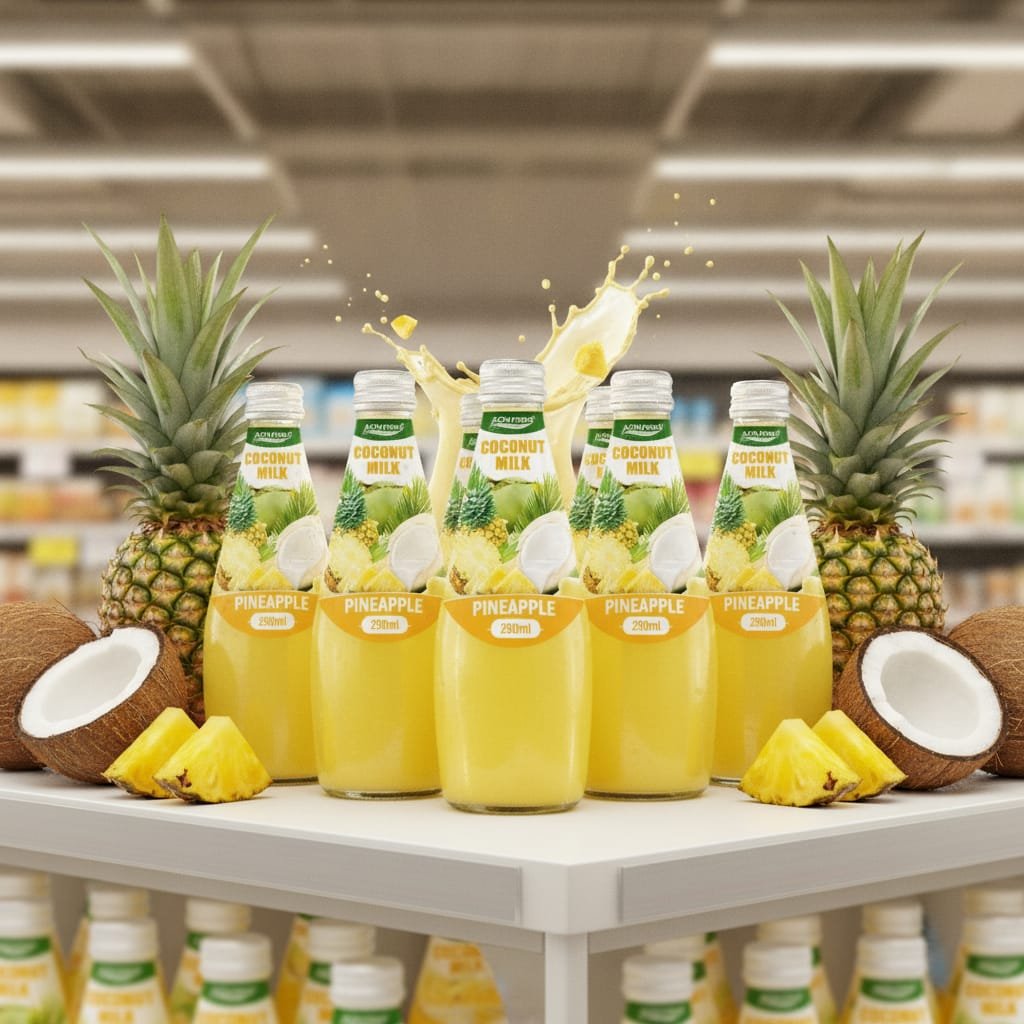
Multiple glass bottles of coconut milk pineapple drink on a supermarket shelf with tropical decor
Retail display of coconut milk pineapple drink in glass bottles

Export Potential and Regulatory Compliance

Navigating international food regulations can be daunting, but certified OEM producers simplify the process. ACM Food holds FSSC 22000, ISO, HALAL, KOSHER, and USDA Organic certifications, ensuring smooth entry into key markets. The fresh coconut water segment has already paved the way for mainstream acceptance of tropical beverages, and the milk drink extension benefits from this established trust. Export documentation, label approval, and customs clearance are all managed by seasoned logistics teams, reducing lead times and compliance risks. For importers seeking reliable, high-margin products, aligning with an experienced OEM partner is a prudent business decision.

Strategic Partnerships: Capitalizing on the Trend

The confluence of plant-based growth, tropical flavor innovation, and OEM agility creates a fertile ground for strategic alliances. Distributors and retailers should evaluate potential partners not only on price but also on R&D capability, certification portfolio, and responsiveness. The coconut milk pineapple drink illustrates how a single SKU can serve as a strategic anchor for a broader tropical lineup. OEM producers that invest in modular production lines can quickly shift between formats (e.g., 250ml can, 1L paper carton) to match channel demands. This adaptability is a critical success factor in today’s volatile retail environment.

For brands considering a foray into the tropical plant-based RTD space, the time to act is now. First-mover advantages are substantial, especially in regions like Southeast Asia, Latin America, and parts of Africa where coconut culture is already familiar. An OEM partner with proven export experience and a track record of innovation can turn a concept into a market-ready product in weeks, not months. The milk drink category is evolving rapidly, and those who leverage OEM capabilities will capture disproportionate value.

Frequently Asked Questions

1. What are the key market drivers for tropical plant-based RTD beverages?
Increasing health consciousness, demand for dairy alternatives, and curiosity about exotic flavors are primary drivers. The coconut milk pineapple drink specifically addresses the need for a creamy yet tropical refreshment that fits both clean-label and functional trends. Market data shows a 12% annual growth for such products in North America and Europe.

2. How does OEM production reduce risk for new beverage brands?
OEM partners handle formulation, scaling, packaging, and compliance, allowing brands to test products with minimal upfront investment. Flexible MOQs and private label options mean brands can launch, iterate, and expand without owning factories. This is particularly valuable in the volatile RTD segment.

3. What certifications are important for exporting tropical beverages?
FSSC 22000 and ISO for food safety, HALAL and KOSHER for specific religious markets, and organic certifications (USDA, EU) for premium channels. ACM Food holds all these, enabling access to over 50 countries. Compliance with local labeling laws is also handled.

4. Can the coconut milk pineapple drink be customized for different markets?
Yes. OEM partners can adjust sweetness, fortify with vitamins, modify packaging size (e.g., 250ml can for on-the-go, 1L for family), and even create carbonated versions. Flavor intensity and pulp content can also be tailored to regional preferences.

5. What is the typical lead time for OEM orders of this product?
From concept to first shipment, lead times range from 30 to 60 days depending on complexity. ACM Food’s monthly export capacity of 300+ containers ensures scalability. Distributors should plan for an initial sampling phase before bulk ordering.

Related blogs insights

Stevia – Natural Sweetener Opens New Trends for Beverage Industry

Contents1 Stevia – Natural Sweetener Opens New Trends for Beverage Industry2 What is stevia?3 ⚖️ [...]

1 Comment

Sea Moss Superfood Trend Reshapes Functional Beverage Landscape

Explore the sea moss superfood trend reshaping the functional beverage market. A case study on [...]

ACM Herbal Ginger Tea Drink Drives Functional Beverage Growth Through Wellness Innovation

Discover how ACM Herbal Ginger Tea Drink exemplifies the booming functional beverage trend, offering OEM [...]

ACM Yuzu Juices Drive Flavor Innovation in Low Sugar Beverage Market

Explore how ACM Yuzu Juices lead flavor innovation in the low-sugar beverage market. Discover OEM [...]

Chia Seed Drink Lychee Flavor Captures Health Conscious Market Growth

Discover how chia seed drinks with lychee flavor are driving growth in the functional beverage [...]

How to Combine Mango with Other Fruits to Boost Vitamin C and Natural Energy

Contents1 1. Mango + Orange – Immune Booster and Energy Refresher2 2. Mango + Pineapple [...]

1 Comment

Leave a Reply

Your email address will not be published. Required fields are marked *