
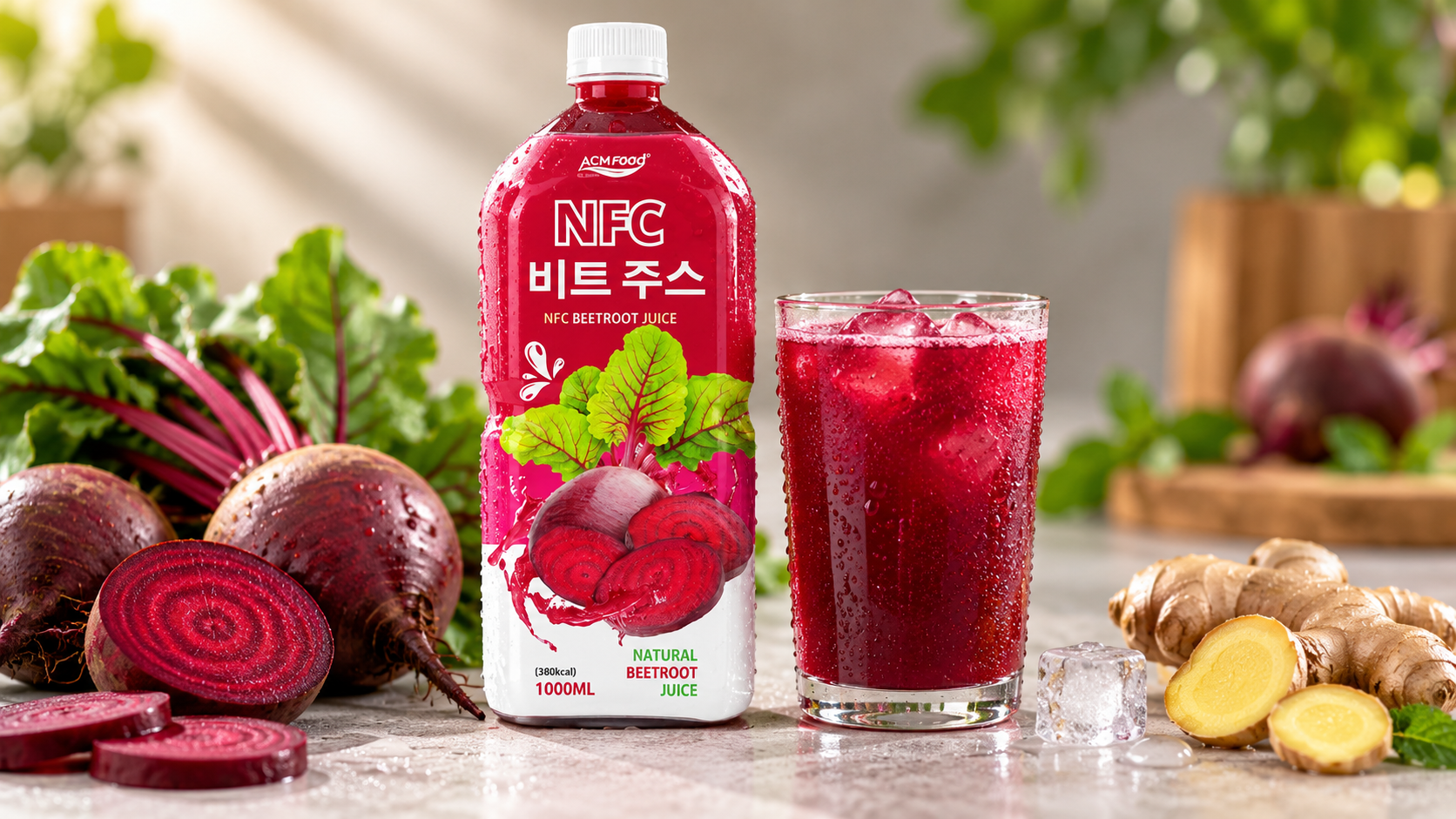
Beetroot and ginger juice pairs the earthy depth of beetroot with the warm bite of ginger, and when the balance is right the drink tastes lively and clean instead of heavy. The challenge for a developer is ginger dosing: too little disappears and too much overpowers. This article covers the flavour logic, optional additions such as turmeric and lemon, and what to define in a brief for a finished can or bottle.
Everything below is a starting point for tasting trials. Ginger intensity varies by source and processing, so there is no universal dose.
Why do beetroot and ginger work together?
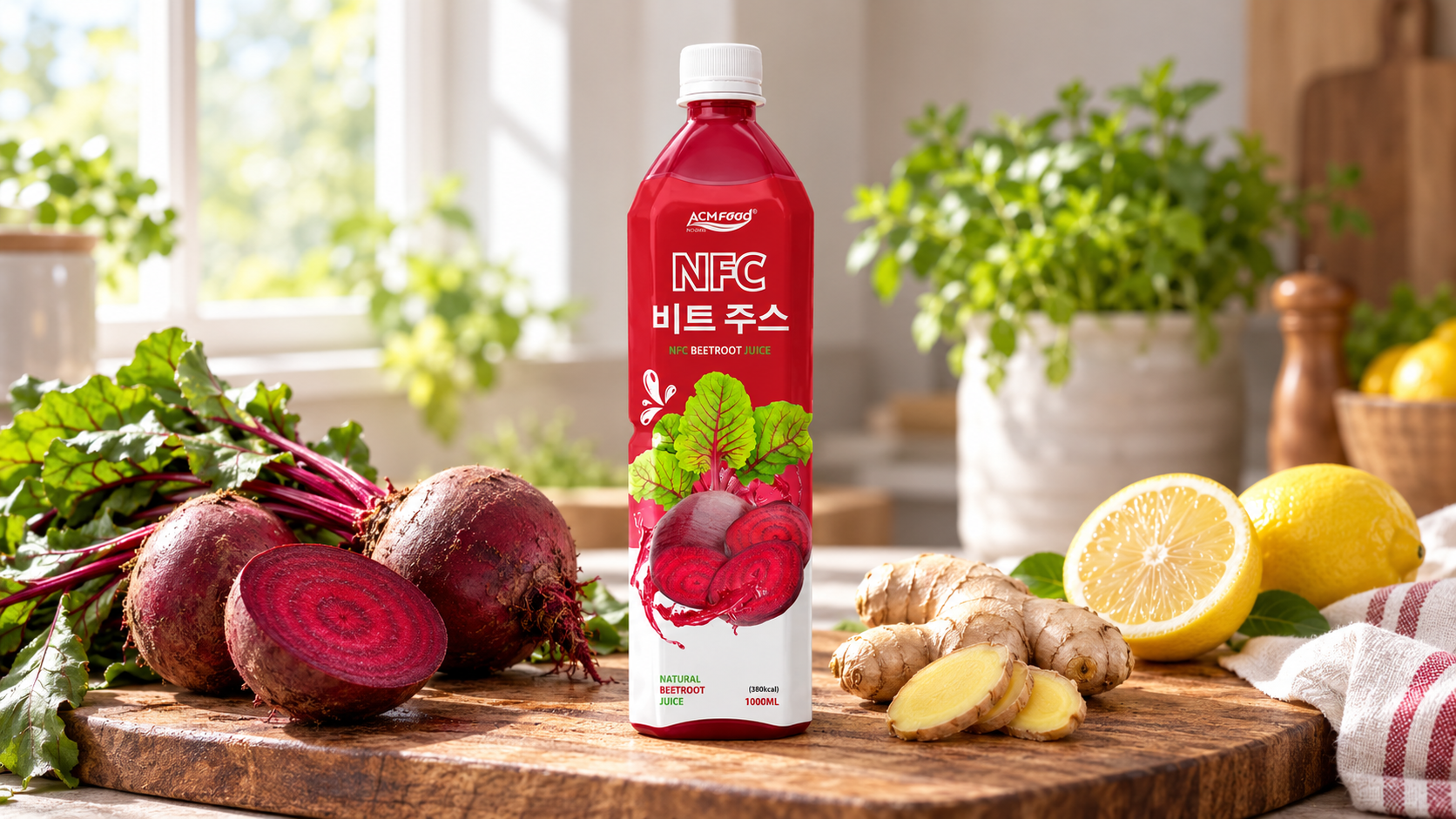
Beetroot is earthy and slightly sweet. Ginger is warm, aromatic and pungent. The pungency cuts through the earthiness and gives the drink a clean finish, while beetroot rounds off the sharpness of ginger. The result is more interesting than either alone.
The pairing also reads as a coherent concept to consumers: root vegetables and spice. It gives a brand a taste story that does not rely on health claims.
How much ginger should you use?
Start low and increase in small steps. Ginger’s heat builds in the throat after swallowing, so a drink that seems mild on the first sip can feel strong at the end.
| Ginger level | Taste effect | Best for |
|---|---|---|
| Light | A background warmth, beetroot leads | Everyday drinks, broad appeal |
| Medium | Noticeable warmth, balanced with beet | Adults who like spice |
| Strong | Ginger leads, beet gives colour and depth | Niche shot-style products |
Taste each trial chilled and at room temperature, because heat is perceived differently at different temperatures. Record the finish, not just the first impression.
Can you add turmeric or lemon?
Yes, and both are common additions. Turmeric adds an earthy, slightly bitter note and a yellow tone that shifts the colour of the blend. Lemon adds acidity that brightens the taste and supports colour stability.
- Lemon or lime: sharpens the taste, helps balance earthiness and keeps the red tone vivid.
- Turmeric: adds depth but can compete with beet; use sparingly and check the colour result.
- Apple: softens the taste and adds sweetness if the blend is too sharp.
Each addition changes the ingredient list, so decide which label you want before you choose the recipe. A simple beet, ginger and lemon drink has a clean label that is easy to explain.
How do you keep colour and flavour stable?
The beetroot pigment fades with heat, light and oxygen, and ginger aroma is also lost over time. In a finished can or bottle, both need protection.
- Control acidity in a mildly acidic range to protect colour.
- Limit oxygen during filling and seal tightly.
- Choose packaging that blocks light, such as cans, or protect clear bottles from light in storage.
- Test taste and colour at the end of the intended shelf life, not only when freshly made.
Ginger aroma may soften over storage, so some brands slightly adjust the starting level. This must be checked in testing, not guessed.
Which pack suits a beetroot and ginger drink?
| Pack | Strength | Consideration |
|---|---|---|
| Slim or sleek aluminium can | Opaque, modern, convenient | Filling line compatibility, lining |
| Glass bottle | Shows deep red colour | Light exposure, weight |
| PET bottle | Light and practical | Barrier needs, market recycling rules |
Cans and bottles are the formats ACM Beverage supplies. Pick the pack that fits the channel and ask for samples in that pack, since a recipe can behave differently in a can than in a lab bottle.
Positioning without health claims
Beetroot and ginger drinks are often described as “functional-style,” but that phrase should refer to the feel of the product and not to a medical promise. Safe positioning describes ingredients, taste and use occasions, such as a morning drink or an afternoon refresher.
Claims on a label depend on the final recipe, tested values, serving size and the rules of the destination market. A blog article is not a basis for them. For background on how label terms such as organic are used responsibly, see what organic juice means.
What should a brief for this blend include?
Before you ask for samples, define:
- Lead ingredient: beetroot-led or ginger-led.
- Ginger level in plain words: light, medium or strong.
- Optional additions: lemon, turmeric or apple.
- Sugar positioning and ingredient list goals.
- Pack format and size.
- Target markets and labelling rules.
- Whether you want a still drink or a lightly carbonated variant, to be checked for feasibility.
A short brief with clear taste language speeds up sampling. For wider context on finished beetroot products, read the beetroot juice OEM and private label overview.
How do you develop a beetroot and ginger recipe step by step?
Follow a short sequence so that each decision builds on the one before.
- Choose the lead: beetroot-led gives a deeper colour and earthier taste; ginger-led gives a sharper, more tonic character.
- Set a baseline with light ginger and taste it chilled.
- Increase ginger in small steps, tasting after each, and note the point where it becomes uncomfortable in the throat.
- Add citrus in small amounts and record how it changes the finish.
- Decide whether apple or another juice is needed for sweetness.
- Check colour in the intended pack and after storage.
- Fix the recipe, then repeat the best version to confirm that the result is consistent.
Tasting should always be done by more than one person. Ginger sensitivity varies a lot between people, and a recipe approved by a single enthusiast is often too strong for the general market.
Which ginger form is best for a drink?
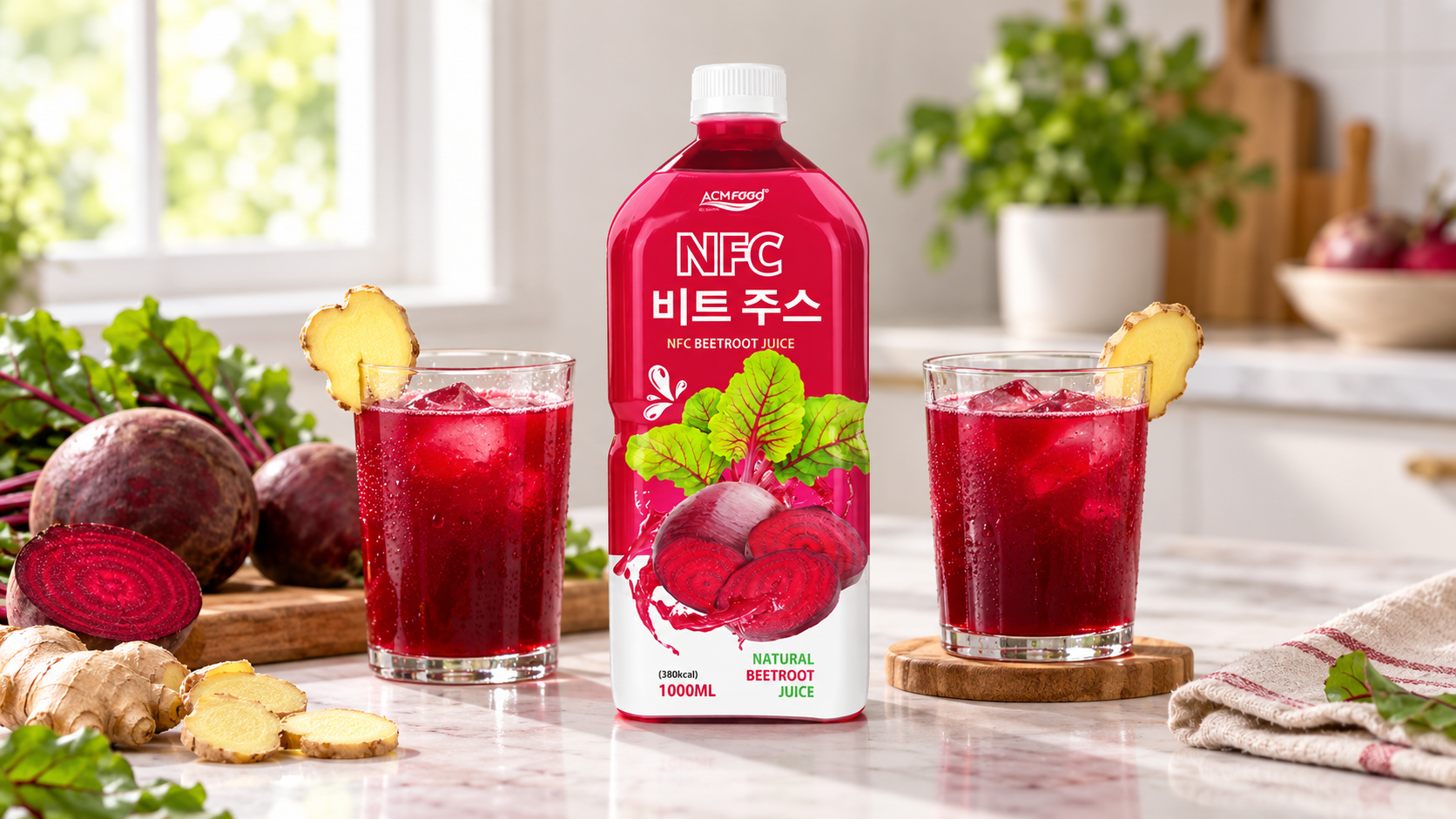
Ginger can be used as fresh juice, as an extract or as a flavour component, and each form behaves differently in a finished drink. Fresh ginger juice gives a lively, natural aroma but varies by batch. Extracts can give a more consistent heat. The right choice depends on the taste target, label wording and the process, so confirm what is available and how it will appear in the ingredient list.
| Form | Taste character | Consideration |
|---|---|---|
| Fresh ginger juice | Bright, aromatic, natural | Batch-to-batch variation |
| Ginger extract | Consistent heat | Ingredient wording on the label |
| Ginger with turmeric | Warm and earthy | Colour and bitterness shift |
Whichever form you choose, confirm it in the formula and the label together, because the way the ingredient is described can affect how the product is understood.
What serving situations suit this blend?
Beetroot and ginger fits well as a morning drink, an afternoon refresher or a pairing with lighter meals. Chilled, it is crisp; at room temperature the ginger heat is more noticeable. In cafes and juice bars, a can or bottle of this blend works as a grab-and-go option next to more fruit-forward drinks. For product planning, think about the occasion the drink serves and let that guide the ginger level, sweetness and pack size.
How do you avoid common problems?
- Separation: natural juices can settle, so check how the drink looks after storage and whether a “shake before use” note is appropriate.
- Off-notes: ginger aroma can change with heat or storage, so test after the intended shelf life.
- Colour drift: protect from light and oxygen, and avoid acidity so low that the taste becomes harsh.
- Overstated claims: keep wording to taste, ingredients and format.
Common mistakes with beetroot and ginger juice
- Setting the ginger level from a lab sample and not from the real drink at the real temperature.
- Using too much turmeric, which can mask the beetroot and muddy the colour.
- Copying a competitor’s claim without checking that your recipe supports it.
- Skipping a storage test and discovering colour or aroma changes only after launch.
How do you present a beetroot and ginger drink to buyers?
Buyers respond to a clear, simple story. A good short description names the two ingredients, describes the taste in plain words and states the pack. For example, a drink can be introduced as a vegetable-forward blend with a gentle ginger warmth, in a can or bottle. Avoid adjectives that cannot be verified, and avoid statements about health outcomes.
When you present samples, serve them chilled in the same glass, and explain which ginger level you chose and why. Buyers appreciate hearing the reasoning, because it shows that the recipe is a decision and not an accident.
What should you confirm before approving production?
- The final recipe and ingredient list, including the form of ginger used.
- The colour and taste reference sample.
- The pack, closure and label.
- The storage conditions and shelf life from testing.
- The labelling rules of the target market.
How does ginger interact with acidity and sweetness?
Ginger heat is perceived differently depending on the background taste. More sweetness softens the sensation of heat, while more acidity makes ginger taste sharper and brighter. That is why a drink with the same amount of ginger can feel mild in one recipe and strong in another. When you adjust one element, re-taste the whole drink, not just the ingredient you changed.
A useful habit is to prepare a small matrix: three sweetness levels crossed with three ginger levels, tasted in a single session. The matrix shows which combinations feel balanced and which feel unbalanced, and it gives your team a shared language for discussing the recipe.
Can the blend work as a lightly sparkling drink?
Some brands explore beetroot and ginger in a lightly carbonated format. It can work, because ginger pairs naturally with fizz, but it adds several development questions: how carbonation changes the perceived sweetness and heat, how the colour looks in a clear or semi-clear pack, and whether the can or bottle is suited to a pressurised drink. If you are interested, treat it as a separate project with its own trials and ask for feasibility feedback before committing to artwork.
Frequently asked questions
Is beetroot and ginger juice spicy?
It can be. The heat comes from ginger and depends on the dose. A light level gives a gentle warmth, while a strong level gives a clear bite.
Does ginger change the colour of beetroot juice?
Ginger itself has little effect, but turmeric and fruit juices can shift the colour. Acidity also affects how red the drink looks.
Can I make a sugar-free version?
A recipe with only beetroot, ginger and lemon contains natural sugar from the beetroot. Whether a “no added sugar” statement is possible depends on the formulation and the rules of your market.
Summary
Beetroot and ginger make a clean, lively blend if ginger is dosed carefully and the colour is protected. Define the ginger level, decide on lemon or turmeric, and test in the pack you will actually use. If you are planning a finished beetroot and ginger drink for your own label, ACM Beverage can discuss can and bottle formats and recipe options once you share your brief.